

Continuing the agenda of the 7th Session of the 15th National Assembly , on the afternoon of May 28th, the National Assembly discussed in the plenary hall several remaining points of disagreement in the draft Law on the Capital City (amended).
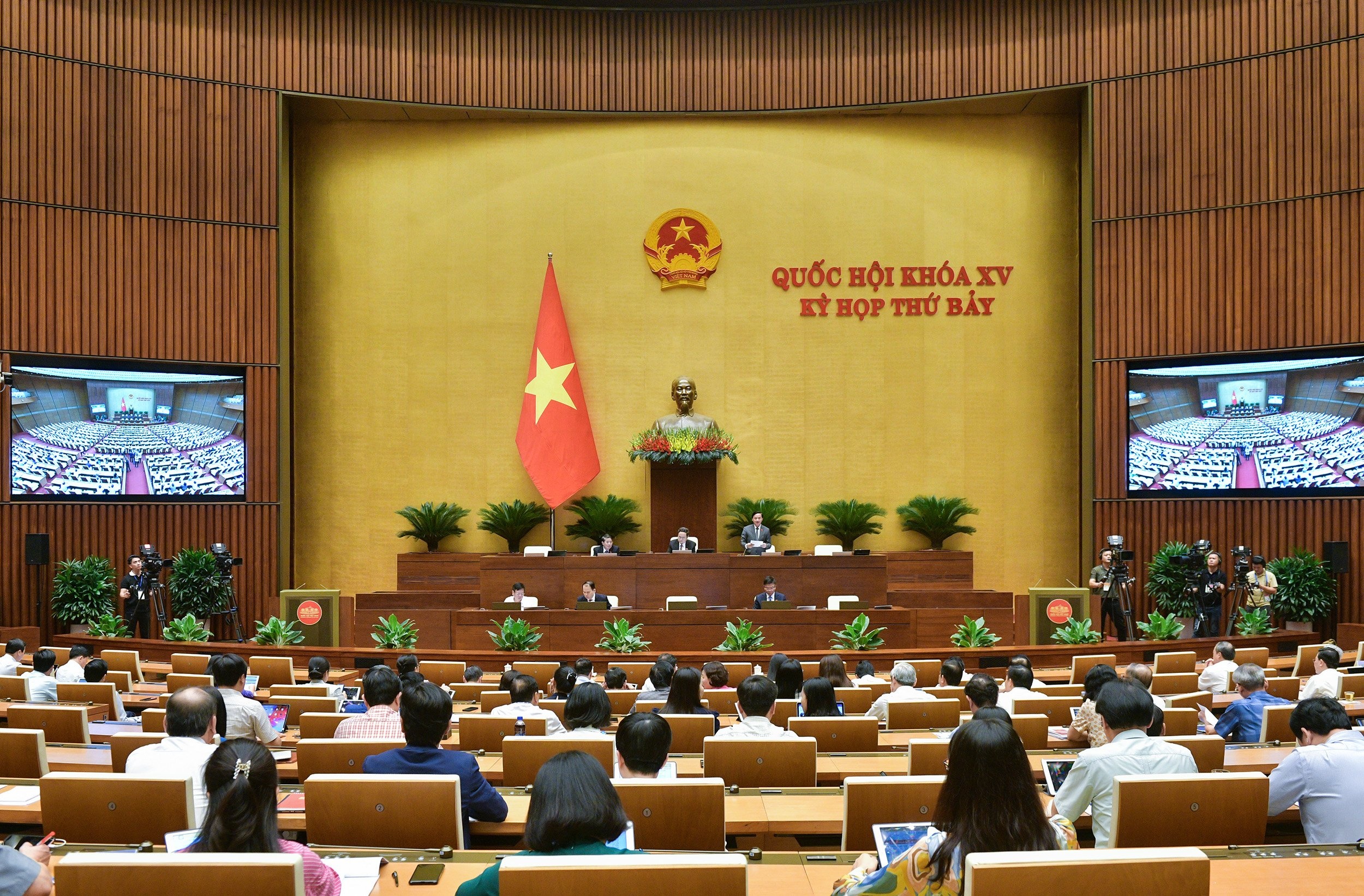 |
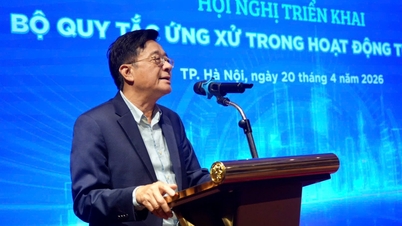
Before commencing the discussion, the National Assembly heard a report presented by Hoang Thanh Tung, member of the Standing Committee of the National Assembly and Chairman of the National Assembly's Law Committee, explaining, receiving feedback, and revising the draft law.
Decentralize power significantly to the Hanoi city government.
Specifically, the draft Law has been revised to only stipulate specific and special mechanisms and policies, demonstrating strong decentralization of power to the Hanoi City government, while simultaneously placing greater responsibility on the city government in building, protecting, and developing the capital; it does not reiterate content or issues already regulated in other laws. At the same time, the draft Law has been reviewed and revised to rearrange the order of some articles and clauses to ensure greater logic and consistency.
Regarding the application of the Capital City Law (Article 4), the draft Law has been revised and amended as follows: It continues to stipulate that in cases where a law or resolution of the National Assembly (issued after the Capital City Law comes into effect) contains different provisions on the same issue that need to be applied, these provisions must be specifically included in that law or resolution.
To ensure the effective implementation of legal documents detailing the contents of the Law on the Capital City, and legal documents issued to exercise the authority assigned in the Law on the Capital City, the draft Law stipulates that these documents shall be given priority in application in cases where multiple legal documents have different provisions on the same issue.
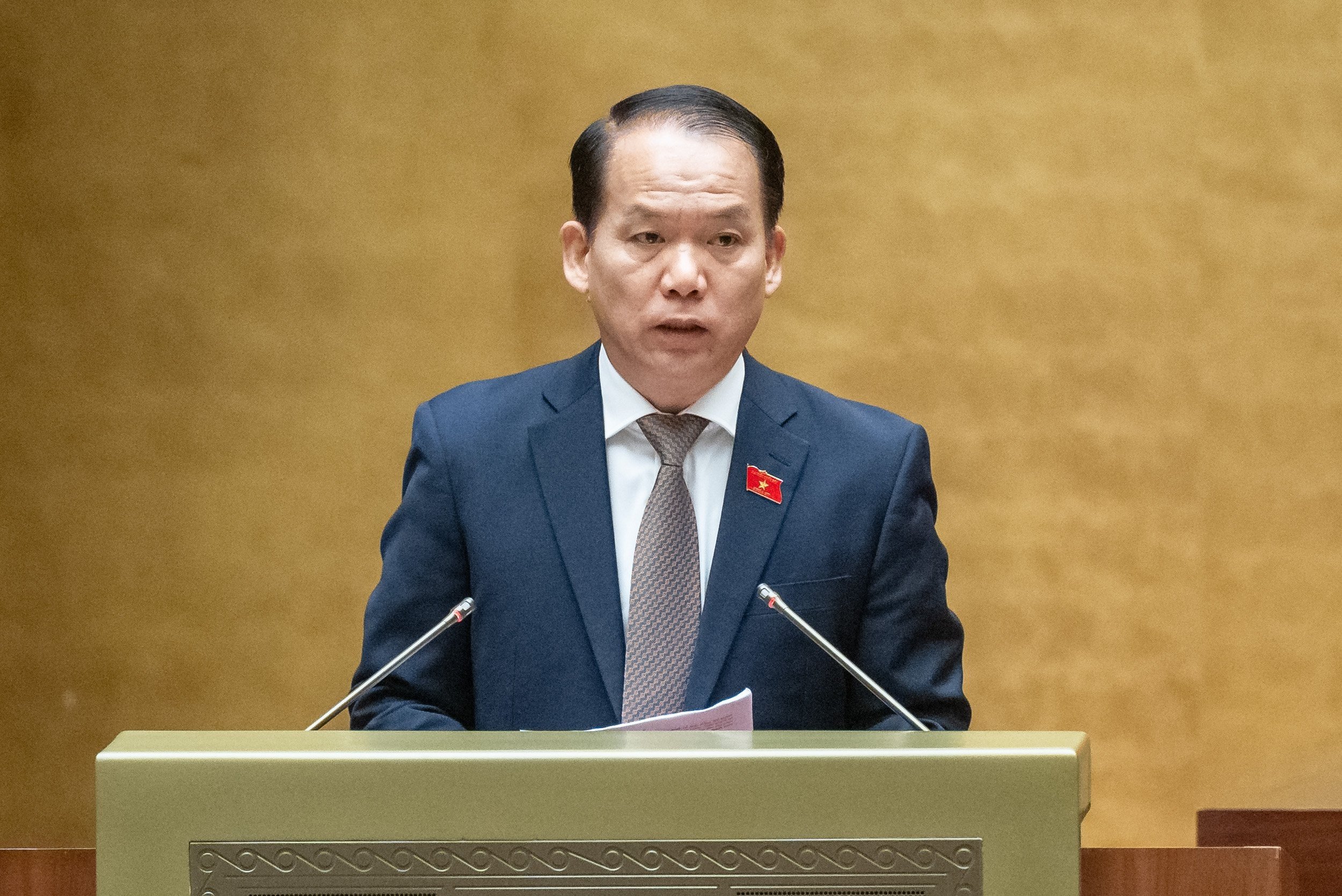 |
| Chairman of the National Assembly's Law Committee, Hoang Thanh Tung |
Regarding the model of government organization in Hanoi, Chairman Hoang Thanh Tung stated that the urban government model in Hanoi is built on the basis of inheriting the regulations of Resolution No. 97/2019/QH14, according to which, there are no People's Councils in wards belonging to districts, towns, and cities within Hanoi.
Regarding the organizational structure of the Hanoi City People's Council and the People's Councils of districts, towns, and cities under the City (Articles 9 and 11), the draft Law has been revised and amended to strengthen the organizational structure of the Hanoi City People's Council and the People's Councils of districts, towns, and cities under the City, ensuring that the city's authorities at all levels can handle the increased tasks and powers.
The draft Law has been revised and amended to strongly decentralize power to Hanoi, enabling the city government to be more proactive in organizing its structure and staffing to effectively fulfill its unique role and responsibilities as the capital of Vietnam. It has also been revised to place higher demands and responsibilities on Hanoi compared to other localities to ensure the achievement of the goals and tasks of building, developing, managing, and protecting the capital as defined in Resolution No. 15-NQ/TW. The revised Law clearly defines the specific policies that need to be applied, specifies the subjects of application, the responsibilities and authority of the agencies, and the procedures for implementation, thereby demonstrating strong decentralization to the city government while also providing mechanisms for organizing and controlling implementation.
Specifically, it allows the Hanoi People's Committee to make localized adjustments to the city's general urban plan, general construction plan for functional areas, and specialized technical infrastructure plans; stipulates the principles for managing and using underground space in the city; delegates authority to the People's Committee to decide on the establishment and expansion of high-tech zones, issue regulations on the operation of high-tech zones established by the People's Committee, and stipulate some specific mechanisms for public service units in high-tech zones, including mechanisms applicable to the National Innovation Center located in the Hoa Lac High-Tech Zone (Clause 2, Article 24)...
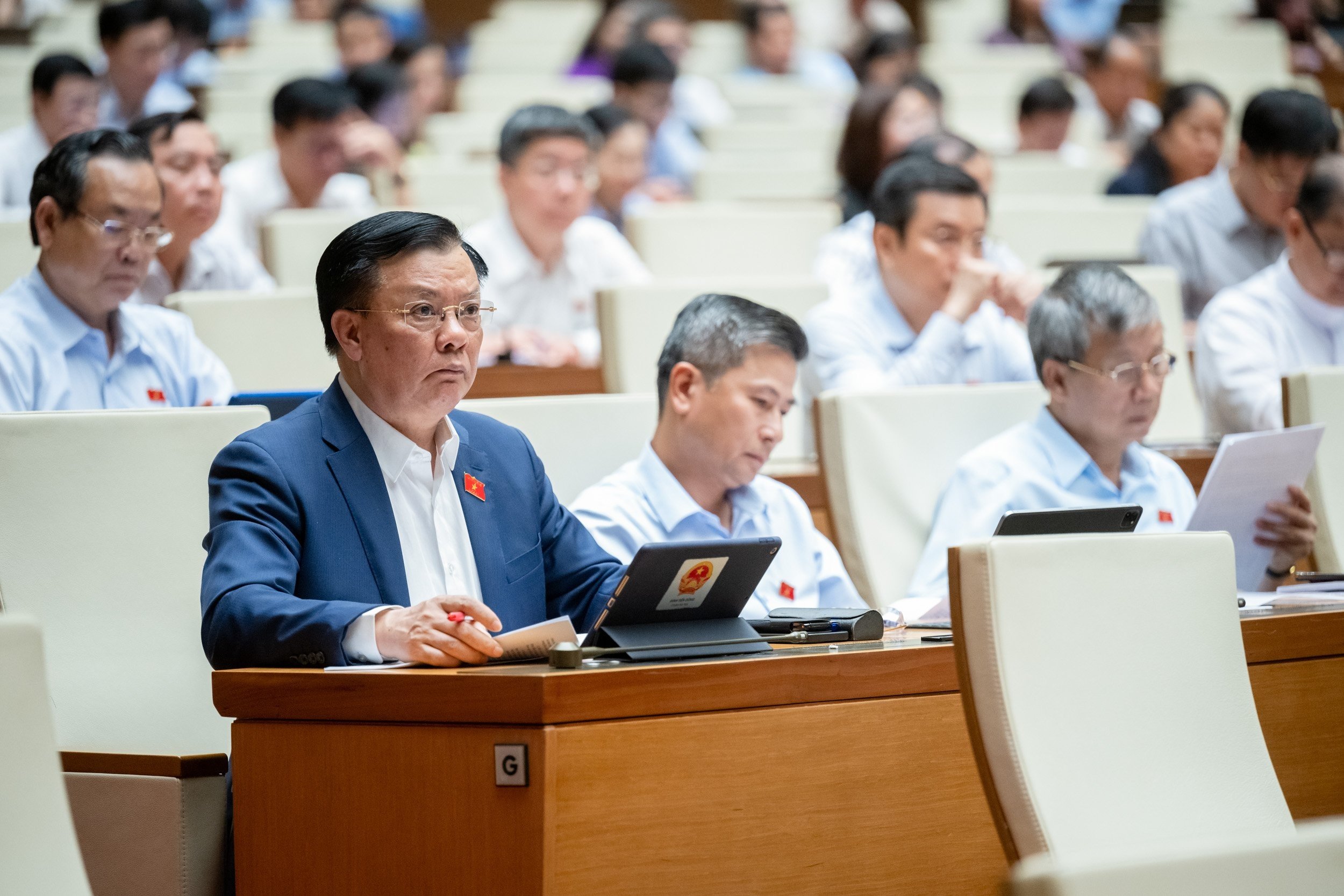
Expanding the areas in which the City People's Council is authorized to impose higher fines for administrative violations; supplementing the powers of the City People's Council and City People's Committee in deciding and implementing solutions related to the development of culture, sports, tourism, education, training, health, science and technology, innovation, digital transformation, environmental protection, agriculture , rural areas, and urban renovation and beautification…
 |
The draft law also incorporates and revises certain specific contents and measures to attract and mobilize social resources, promote innovation, and attract high-quality human resources for the development of the capital city.
Design a separate chapter on regional linkages and development, which more clearly demonstrates the role of Hanoi as the center and driving force for linkages and development, and as a growth pole for the Capital Region; identify priority policies for investment in regional linkage and development programs and projects implemented in Hanoi and other provinces and cities, not just limited to the Capital Region.
Regarding the implementation provisions, Chairman Hoang Thanh Tung stated that the draft Law on the Capital City is expected to take effect from January 1, 2025 (except for 7 specific provisions stipulated in Clause 2, Article 53, which will take effect from July 1, 2025, to allow relevant agencies time to issue detailed regulations). At the same time, the draft Law has added transitional provisions to ensure continuity in the application of the law.
It is necessary to apply the contents of urban governance in a synchronized and unified manner.
Presiding over the discussion, Vice Chairman of the National Assembly Nguyen Khac Dinh requested delegates to focus on several major issues such as: principles of law application; regulations on the organization of urban government; construction, development, management and protection of the capital; finance, budget, and resource mobilization for the development of the capital; and other issues of concern to the delegates.
Contributing to the discussion on government organization in Hanoi, delegate Ha Sy Dong (Quang Tri) stated that the Party's policy and documents from the 11th National Congress to the present have all affirmed that local governments must be organized in a manner consistent with the characteristics of urban, rural, and island areas. In reality, Ho Chi Minh City and Da Nang have both implemented a single-tier urban government model, which has proven very effective and suitable to their urban characteristics.
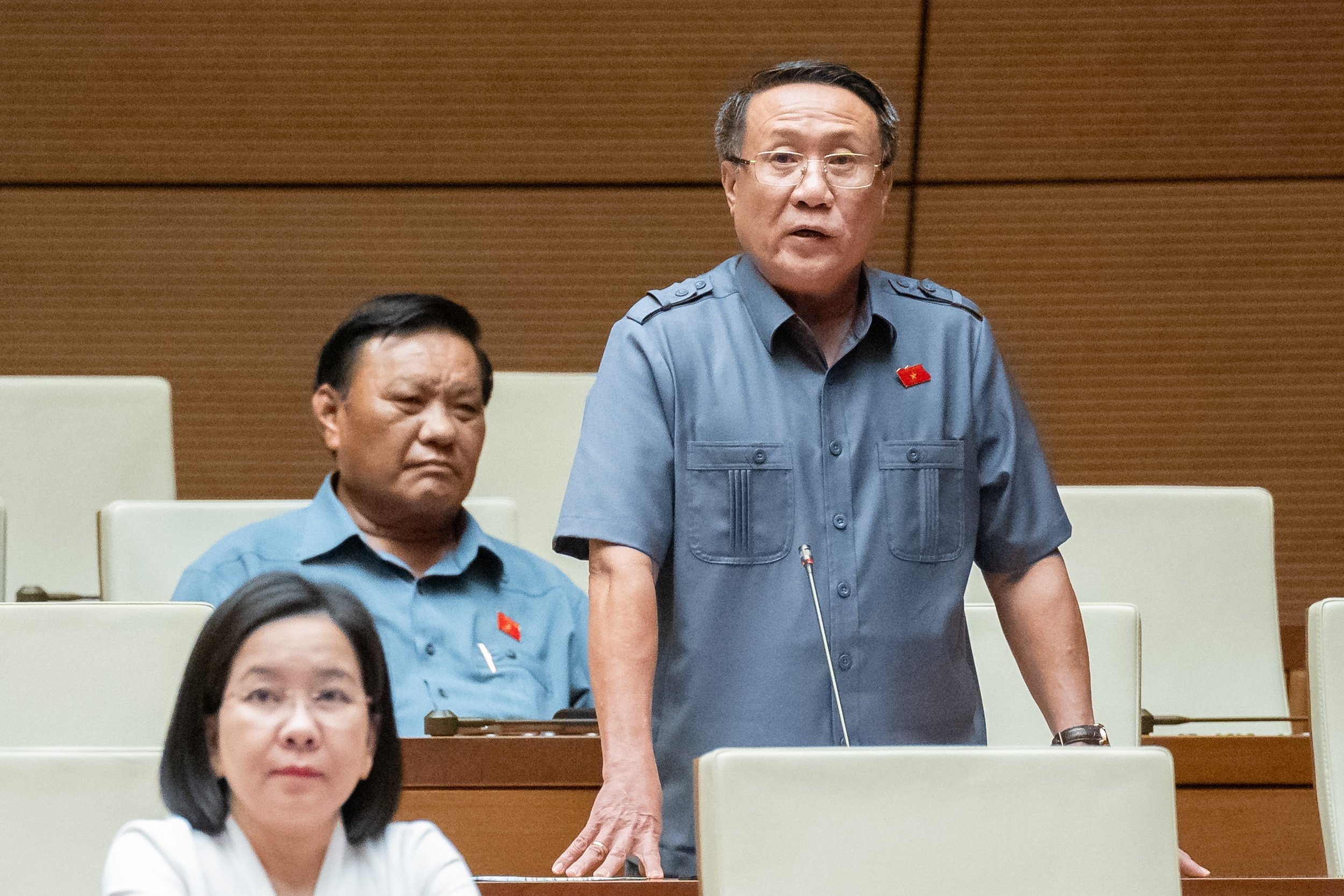 |
| Representative Ha Sy Dong |
Meanwhile, Hanoi is piloting a model of not organizing People's Councils at the ward level. Representative Ha Sy Dong argued that if the draft is approved, Hanoi's urban government structure would be two levels, meaning there would be no People's Councils at the district and ward levels, while Ho Chi Minh City and Da Nang would have a single level of government. Therefore, the representative suggested that the model of urban government organization in the capital as outlined in the draft needs careful consideration to ensure consistency in urban government organization across Vietnam.
Offering a different perspective, delegate Le Hoang Hai (Dong Nai) agreed with the regulations on the organization of government in Hanoi as stipulated in Article 8 of the draft Law. Accordingly, not organizing People's Councils in wards belonging to districts, towns, and cities within Hanoi will contribute to making the government at the commune and ward levels more streamlined and dynamic.
However, according to Representative Le Hoang Hai, this model differs from the urban government model in Da Nang and Ho Chi Minh City. Therefore, Representative Le Hoang Hai suggested that research, summarization, evaluation, and consideration should be given to amending and supplementing the Law on Organization of Local Government or developing a separate Law on Urban Government to create a basis for the consistent, stable, and unified application of urban government regulations.
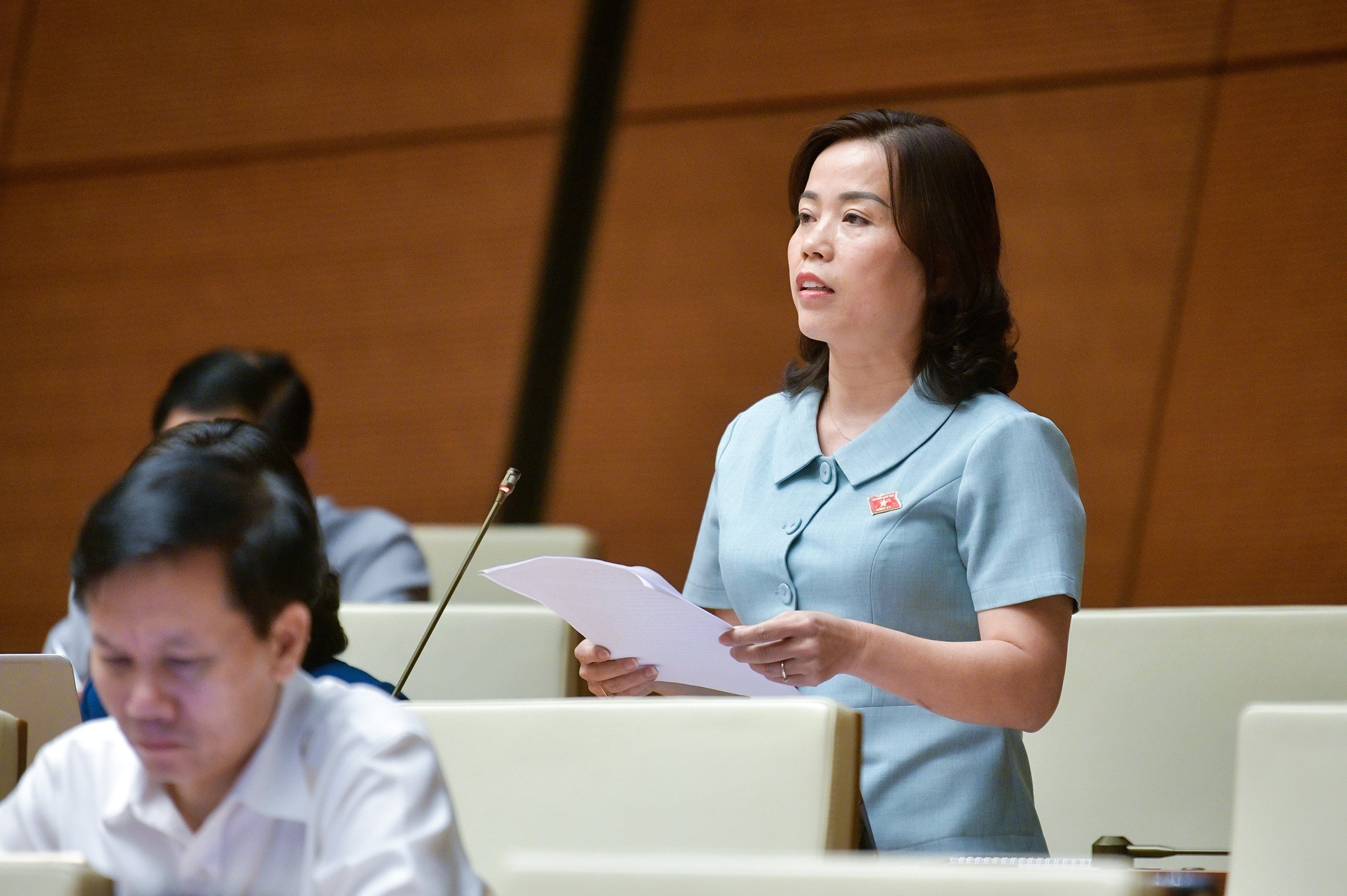 |
| Representative Ly Thi Lan |
Agreeing with the outstanding regulations in the draft Law for the synchronous development of high-tech zones in the capital city, delegate Ly Thi Lan (Ha Giang) said that this will help perfect specific measures for the Hoa Lac high-tech zone to develop sustainably and make breakthroughs after being transferred to the Hanoi People's Committee for management, commensurate with its position and role.
The delegates also strongly agreed with the principle of applying the highest level of investment incentives and support for projects and investment activities in high-tech zones, and preferential measures to attract high-quality human resources to work in high-tech zones.Source: https://thoibaonganhang.vn/quoc-hoi-thao-luan-du-thao-luat-thu-do-152096.html


![[Photo] General Secretary and President To Lam meets with National Assembly delegates from ethnic minorities.](https://vphoto.vietnam.vn/thumb/1200x675/vietnam/resource/IMAGE/2026/04/20/1776696701056_a1-bnd-8331-3342-jpg.webp)


![[Image] National Assembly discusses the implementation of the socio-economic development plan.](https://vphoto.vietnam.vn/thumb/1200x675/vietnam/resource/IMAGE/2026/04/20/1776696707422_ndo_br_img-20260420-185419-jpg.webp)


















































































Comment (0)