

This was the opinion of Associate Professor Dr. Bui Thi An at the seminar themed " The National Assembly and constitutional and legislative activities - From the 1946 Constitution to institutional reform in the new development era," organized by the People's Representatives Newspaper.
The National Assembly plays a central role in creating the legal framework.
The constitutional and legislative history of Vietnam is a process closely linked to the struggle for national independence, the building and protection of the Fatherland. From the 1946 Constitution – the first Constitution of the Democratic Republic of Vietnam – to the 2013 Constitution, the National Assembly has always played a central role in creating the legal foundation of the State, ensuring the people's right to self-governance, and promoting socio-economic development.
As the country enters a new era of development with rapid and profound changes, the National Assembly faces the mission of continuing to improve the institutional framework in a way that is synchronized, stable yet flexible; rigorous but not hindering development; and ensuring predictability, feasibility, and high adaptability. "Renewing legislative thinking, shifting strongly from 'management' to 'development creation'; improving the quality of lawmaking; and promoting the application of digital technology in the National Assembly's operations – these are strategic requirements."
.jpg)
Beginning with the landmark Constitution of 1946 – the first Constitution of the new Vietnam – the constitutional ideology, the spirit of the rule of law, and the values of national independence, democracy, and happiness for the people have been clearly affirmed. From that foundation, the modern Socialist Republic of Vietnam has gradually taken shape and developed on the basis of the supremacy of law and the people's right to self-governance.
Following the 1946 Constitution, Vietnam's legislative work has continuously evolved and developed, paralleling the ups and downs of the nation's history. Each legislative period clearly reflects the requirements of socio-political tasks, from resistance and national reconstruction to reform and integration, creating a legal foundation for national development.
Each Constitution is a historical milestone.
According to Associate Professor Bui Thi An, a member of the 13th National Assembly and Director of the Institute of Resources, Environment and Community Development, each Constitution and each legislative period marks a historical milestone and a turning point for the country.
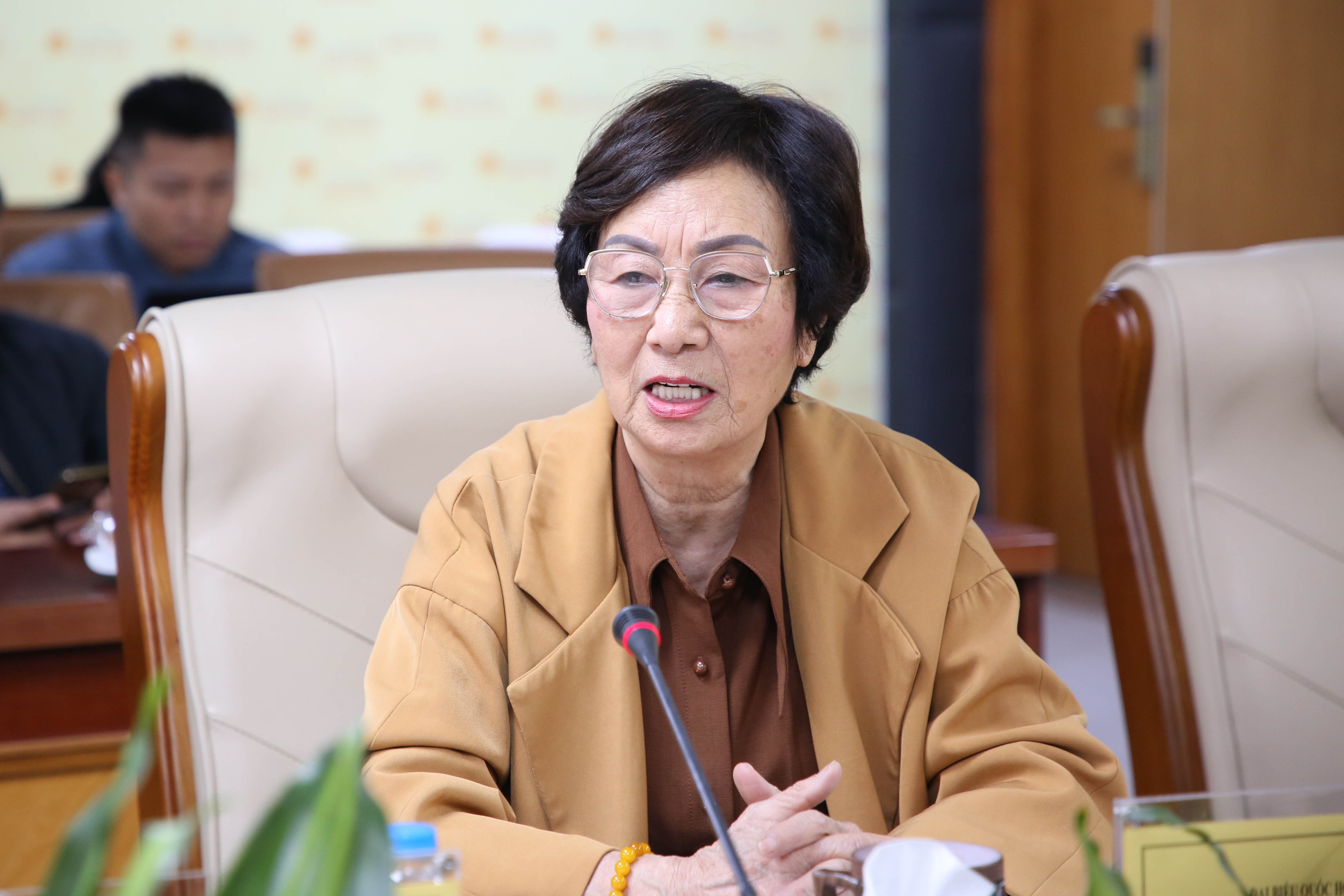
The period from 1959 to 1980 was an extremely important time, marked by many changes in our country. “This was an extremely difficult period when the country faced the demands of both resistance, national liberation, and reunification, while simultaneously building socialism. Therefore, the National Assembly had to amend the 1946 Constitution to promulgate the 1959 Constitution. This was a very important milestone to begin a new phase,” Ms. An emphasized.
According to Ms. An, the 1959 Constitution is valuable because it reflects a historical turning point for the country in many aspects. At that time, the National Assembly had carefully prepared and promulgated a Constitution that guided the country's development and was implemented for a long period. This Constitution was suitable to the realities of Vietnam at that time, in that context.
Building upon and developing the 1946 and 1959 Constitutions, the 1980 Constitution summarized and affirmed the achievements of the Vietnamese people's revolutionary struggle over the past half-century, reflecting the will and aspirations of the Vietnamese people and ensuring the brilliant development of Vietnamese society during that period.
Source: https://daibieunhandan.vn/quoc-hoi-va-su-menh-lap-phap-10402387.html


![[Photo] Nhan Dan Newspaper celebrates the 96th anniversary of the founding of the Party.](/_next/image?url=https%3A%2F%2Fvphoto.vietnam.vn%2Fthumb%2F1200x675%2Fvietnam%2Fresource%2FIMAGE%2F2026%2F02%2F03%2F1770093917726_z7495755471262-66d965cdf06fce4e837f306802ae37b1-7408-jpg.webp&w=3840&q=75)


![[Video] Party and State leaders visit the Mausoleum of President Ho Chi Minh on the occasion of the 96th anniversary of the founding of the Party.](/_next/image?url=https%3A%2F%2Fvphoto.vietnam.vn%2Fthumb%2F402x226%2Fvietnam%2Fresource%2FIMAGE%2F2026%2F02%2F03%2F1770105925172_1-1-4456-jpg.webp&w=3840&q=75)


![[Photo] President Luong Cuong receives Special Envoy of the Cuban Party and State Rodriguez Parrilla](/_next/image?url=https%3A%2F%2Fvphoto.vietnam.vn%2Fthumb%2F402x226%2Fvietnam%2Fresource%2FIMAGE%2F2026%2F02%2F03%2F1770103749566_anh-man-hinh-2026-02-03-luc-14-28-47.png&w=3840&q=75)


Comment (0)