

The government has just issued Decree No. 29/2023/ND-CP dated June 3, 2023, regulating personnel reduction, effective from July 20, 2023. The policies and regulations stipulated in this Decree will be applied until December 31, 2030.
Target groups for implementing the workforce reduction policy.
The decree stipulates that the following groups are subject to the downsizing policy:
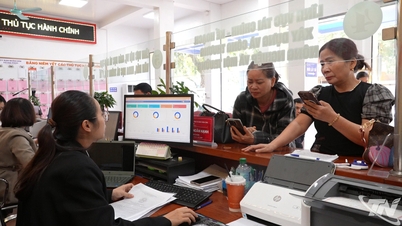
1. Officials, civil servants, and public employees; commune-level officials and civil servants; and those working under indefinite-term labor contracts in administrative agencies are subject to the same regimes and policies as civil servants as prescribed by the Government, if they fall into one of the following cases:
a) Redundancy resulting from the review and reorganization of the organizational structure and personnel according to the decision of the competent authority, or redundancy resulting from the reorganization of the organizational structure and personnel by public non-profit units to implement the autonomous mechanism;
b) Redundancies resulting from the reorganization of district and commune-level administrative units according to decisions of competent authorities;
c) Redundancies resulting from the restructuring of cadres, civil servants, and public employees according to job positions, but where it is not possible to assign them to other jobs, or where it is possible to assign them to other jobs but the individual voluntarily chooses to reduce the workforce and this is approved by the agency, organization, or unit directly managing them;
d) Not having attained the required professional and technical training standards for the position currently held, but there is no other suitable position to assign them to, and retraining to standardize their professional and technical skills is not feasible; or the agency has assigned them to another position, but the individual voluntarily chooses to participate in the downsizing process and receives the approval of the directly managing agency, organization, or unit;
d) For two consecutive years immediately preceding the time of consideration for downsizing, the official, civil servant, or public employee has one year rated as having completed their duties and one year rated as not having completed their duties, but cannot be assigned to another suitable job; or in the year immediately preceding or in the year of consideration for downsizing, the individual's performance rating is rated as having completed their duties or lower, but the individual voluntarily chooses to undergo downsizing and is approved by the agency, organization, or unit directly managing them;
e) Having two consecutive years immediately preceding the time of considering workforce reduction, in each year the total number of days of absence from work equals or exceeds the maximum number of sick leave days as stipulated in Clause 1, Article 26 of the Social Insurance Law, with confirmation from the Social Insurance agency paying sick leave benefits according to current legal regulations; in the year immediately preceding or in the year of considering workforce reduction, the total number of days of absence from work equals or exceeds the maximum number of sick leave days as stipulated in Clause 1, Article 26 of the Social Insurance Law, with confirmation from the Social Insurance agency paying sick leave benefits according to current legal regulations, the individual voluntarily participates in workforce reduction and receives the approval of the agency, organization, or unit directly managing them;
g) Officials, civil servants, and public employees holding leadership and management positions who cease to hold their positions or titles due to organizational restructuring or administrative unit reorganization according to decisions of competent authorities, and who voluntarily participate in workforce reduction and are approved by their directly managing agency, organization, or unit;
h) Officials, civil servants, and public employees who are currently under disciplinary action but not to the extent of dismissal or forced termination of employment according to the law at the time of considering downsizing, and who voluntarily agree to downsizing, with the approval of their directly managing agency, organization, or unit.
2. Employees working under indefinite-term employment contracts performing professional duties within the list of specialized and common professional job titles and positions in public non-profit organizations as prescribed by the Government, who are redundant due to organizational restructuring or personnel reorganization of the unit as decided by the competent authority.
3. Non-professional personnel at the commune level who become redundant due to the reorganization of commune-level administrative units, and non-professional personnel at the village/neighborhood level who become redundant due to the reorganization of villages/neighborhoods when commune-level administrative units are reorganized, shall retire within 12 months from the date of the reorganization decision by the competent authority.
Personnel reduction policy
The decree clearly stipulates the policies for downsizing the workforce: policies for early retirement; policies for transferring to work in organizations that do not receive regular salaries from the state budget; policies for termination of employment; policies for early retirement for redundant commune-level officials and civil servants due to the reorganization of commune-level administrative units, where the retirement age is at least 10 years lower and at least 5 years lower than the retirement age stipulated by the law on social insurance; policies for redundant personnel due to the reorganization of district and commune-level administrative units, who retire from the date of the reorganization decision by the competent authority until before the end of the reorganization process...
Specifically, regarding the policy on early retirement, the Decree stipulates:
1. Individuals subject to workforce reduction who are at least 5 years younger and at least 2 years younger than the retirement age stipulated in Appendix II of Government Decree No. 135/2020/ND-CP dated November 18, 2020, on retirement age (Decree No. 135/2020/ND-CP), and who have contributed to compulsory social insurance for 20 years or more, including at least 15 years working in arduous, hazardous, or particularly arduous and hazardous occupations or jobs listed by the Ministry of Labour, Invalids and Social Affairs, or who have worked for at least 15 years in areas with particularly difficult socio-economic conditions as listed by the Ministry of Labour, Invalids and Social Affairs, including time working in areas with a regional allowance coefficient of 0.7 or higher before January 1, 2021, are entitled to benefits in addition to their entitlement to benefits. In addition to the retirement benefits stipulated by social insurance law, individuals with a pension are also entitled to the following benefits:
a) No reduction in pension rate due to early retirement;
b) Receive a subsidy equivalent to 3 months' average salary for each year of early retirement compared to the retirement age stipulated in Appendix II issued with Decree No. 135/2020/ND-CP;
c) Receive a subsidy equivalent to 5 months' average salary for the first twenty years of service, provided that mandatory social insurance contributions have been fully paid. From the twenty-first year onwards, for each year of service with mandatory social insurance contributions, receive a subsidy equivalent to 1/2 month's salary.
2. Individuals subject to workforce reduction who are at least 5 years younger and at least 2 years younger than the retirement age stipulated in Appendix I of Decree No. 135/2020/ND-CP, and who have contributed to compulsory social insurance for 20 years or more, are entitled to a pension as prescribed in Article 54 of the 2014 Social Insurance Law (amended and supplemented in 2019). In addition to the retirement benefits as prescribed by the law on social insurance, they are also entitled to the following benefits:
a) Receive a subsidy equivalent to 3 months' average salary for each year of early retirement compared to the retirement age stipulated in Appendix I issued with Decree No. 135/2020/ND-CP;
b) Entitled to the benefits stipulated in points a and c of section 1 above.
3. Individuals subject to workforce reduction who are at least two years younger than the retirement age stipulated in Appendix II of Decree No. 135/2020/ND-CP and have contributed to compulsory social insurance for 20 years or more, including at least 15 years working in arduous, hazardous, or particularly arduous and hazardous occupations or jobs listed by the Ministry of Labor, Invalids and Social Affairs, or at least 15 years working in areas with particularly difficult socio -economic conditions as defined by the Ministry of Labor, Invalids and Social Affairs, including time working in areas with a regional allowance coefficient of 0.7 or higher before January 1, 2021, are entitled to retirement benefits according to the law on social insurance and will not have their pension reduced due to early retirement.
4. Individuals subject to workforce reduction who are at least two years younger than the retirement age stipulated in Appendix I of Decree No. 135/2020/ND-CP and have contributed to compulsory social insurance for 20 years or more (for female officials and civil servants at the commune level, this is at least 15 years) are entitled to retirement benefits according to the law on social insurance and will not have their pension reduced due to early retirement.
5. The target for downsizing is female officials and civil servants at the commune level who are no older than 5 years and no younger than 2 years compared to the retirement age stipulated in Appendix I of Decree No. 135/2020/ND-CP, and who have contributed to compulsory social insurance for 15 to less than 20 years. In addition to receiving retirement benefits as prescribed by the law on social insurance, they are also entitled to the following benefits:
a) No reduction in pension rate due to early retirement;
b) Entitled to a subsidy equivalent to 5 months of average salary and benefits as stipulated in point a, section 2.
Regarding the policy on transferring to work in organizations that do not receive regular salaries from the state budget, the Decree stipulates:
1. Individuals whose positions are downsized and who transfer to work in organizations that do not receive regular funding from the state budget are entitled to the following allowances:
a) Receive a subsidy equivalent to 3 months of their current salary;
b) Receive a subsidy equivalent to half a month's average salary for each year of service with mandatory social insurance contributions.
2. The policy stipulated in item 1 above does not apply to those who have worked at a public service unit when the unit is converted to a public service unit that is self-financing for recurrent expenditures, or a public service unit that is self-financing for both recurrent and investment expenditures, or to an enterprise, or is privatized, but are still retained to work there; Those subject to workforce reduction who are at least 3 years younger than the retirement age stipulated in Appendix II of Decree No. 135/2020/ND-CP, have contributed to compulsory social insurance for 20 years or more, including at least 15 years working in arduous, hazardous, or particularly arduous, hazardous, or dangerous occupations or jobs listed by the Ministry of Labor, Invalids and Social Affairs, or have worked for 15 years or more in areas with particularly difficult socio-economic conditions as listed by the Ministry of Labor, Invalids and Social Affairs, including time working in areas with a regional allowance coefficient of 0.7 or higher before January 1, 2021; Those subject to workforce reduction who are at least 3 years younger than the retirement age stipulated in Appendix I issued with Decree No. 135/2020/ND-CP, and who have contributed to compulsory social insurance for 20 years or more.
Source link




















![[Photo] The General Secretary and the Prime Minister attend the groundbreaking ceremony for multiple-level boarding schools in border areas.](https://vphoto.vietnam.vn/thumb/1200x675/vietnam/resource/IMAGE/2026/03/19/1773888999705_vna-potal-tong-bi-thu-va-thu-tuong-du-le-khoi-cong-dong-tho-dong-loat-cac-truong-noi-tru-lien-cap-bien-gioi-8649904-3885-jpg.webp)
![[Photo] Tran Cam Tu, Standing Member of the Secretariat of the Central Committee, presides over the first meeting of the Central Steering Committee on the Development of Vietnamese Culture.](https://vphoto.vietnam.vn/thumb/1200x675/vietnam/resource/IMAGE/2026/03/19/1773895004549_ndo-br-bnd-1195-2-jpg.webp)

































































Comment (0)