

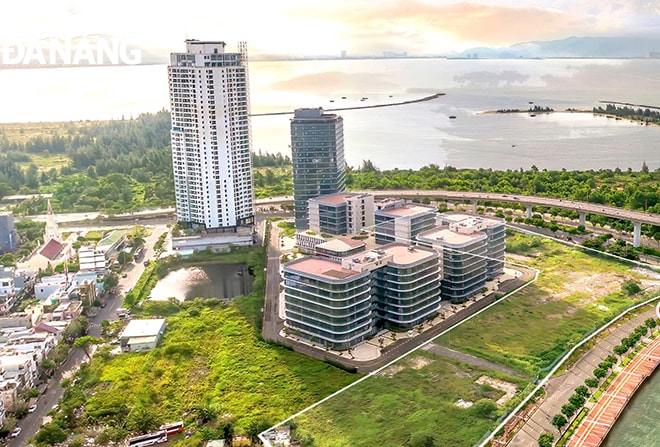
If urban planning is the overall picture, then the urban development program is the action plan, concretizing that vision with goals, targets, and a list of priority projects. This is the stage where planning ideas are transformed into specific, measurable steps with a roadmap and linked resources. Thanks to the urban development program, the city knows where to focus, what the priorities should be, and how to ensure synchronization between different sectors.
Be flexible with new opportunities and trends.
The close integration of urban planning and development programs ensures that strategic, driving, and key projects are implemented not in isolation, but become integral components within a harmonious whole. Da Nang can develop its technical, social, digital, and ecological infrastructure in a comprehensive manner. The city maintains a long-term vision while flexibly adapting to new opportunities in each stage.
Only when positioned within the framework of urban planning and development programs can projects have a clear place, exert their ripple effect, connect with technical, social, digital, and ecological infrastructure, and effectively mobilize domestic and foreign resources. However, planning is not a rigid, immutable framework. On the contrary, strategic, driving, and key projects – with their breakthrough and leadership potential – become the starting point for creating new plans or adjusting existing ones. Thanks to this, planning maintains a long-term vision while also being able to adapt flexibly to new opportunities and development trends.
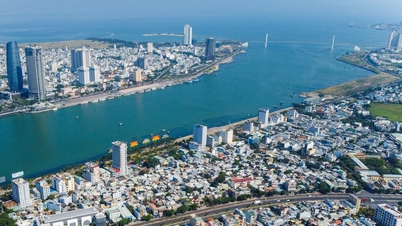
In the context of Da Nang's expanded development space after its merger with Quang Nam , this need has become even more urgent. The city requires a list of strategic, driving, and key projects that both adhere to the master plan and shape major development directions until 2045, ensuring that Da Nang not only addresses immediate pressing needs but also rises to become a center of innovation and a livable coastal city of Asian caliber.
In modern management thinking, urban planning and development programs are both the starting point and the destination of projects. This relationship is two-way, creating a mechanism that both guides and responds, helping cities develop sustainably and flexibly. On the positive side, planning acts as a framework vision, while urban development programs are action plans, from which specific projects and initiatives are formed. As a result, all key, strategic, or priority projects are placed within a consistent overall framework, ensuring infrastructure synchronization, rational resource allocation, and avoiding fragmented development.
Conversely, key strategic projects, with their groundbreaking nature and strong ripple effects, can become the basis for adjusting or supplementing planning. This is how planning avoids being "stuck in place" and always adapts to new contexts. A strategic project such as land reclamation, an international financial center, or a high-speed railway, when proposed, will force the city to review and update its planning to integrate and maximize its advantages.
This two-way operation helps the city achieve balance. Stability and long-term sustainability: Thanks to comprehensive urban development planning. Flexibility and adaptability: Thanks to breakthrough projects that become the driving force for renewing planning. Synchronization and creativity: Having both a sustainable "backbone" and a dynamic "bloodline," ensuring the city is always moving forward.
Identify strategic, driving, and priority project categories.
To accurately determine the role and impact of each project within the overall urban development, a clear classification is necessary.
Strategic projects: projects that shape the long-term, changing the socio -economic and urban development structure of an entire region or country; have long-term impacts (20-50 years); and are linked to national, regional, or global urban development strategies. Key projects: projects capable of creating a "boost," promoting the development of related sectors, and having a leading and ripple effect; have rapid impacts and medium-term durations (5-15 years). Priority projects: projects identified by the state or locality as special priorities, receiving concentrated resources and specific guidance mechanisms; large-scale projects addressing urgent needs; have short- to medium-term impacts (3-10 years).
Identifying key strategic projects for Da Nang, in addition to technical considerations, is based on clear legal grounds, development context, and practical needs. Da Nang needs to use planning as a foundation, key projects as the core, and strategic projects as turning points to achieve breakthroughs by 2045.
To ensure that strategic, key, and priority projects are implemented effectively and in sync with urban development plans and programs, Da Nang needs to build a modern, transparent, and adaptable management tool system.
Firstly, the KPI system and urban dashboard. KPI (Key Performance Indicators): Establish specific measurement indicators for each project, from progress, cost, socio-economic efficiency, to environmental impact and the degree of alignment with planning objectives. Urban dashboard: Integrates online data and visualizes it on a digital platform, helping the government, investors, and citizens monitor project implementation. It ensures transparency and builds trust within society and the international community.
Secondly, CDE and BIM in project management. CDE (Common Data Environment): A common data platform for the entire project lifecycle, from design and construction to operation. BIM (Building Information Modeling): A comprehensive digitalization tool that ensures accuracy, reduces costs, and minimizes technical conflicts. For large-scale, strategic, and high-impact projects, CDE and BIM are prerequisites for ensuring information synchronization, inter-industry connectivity, and transparent management.
Thirdly, the policy sandbox. This mechanism tests policies within a limited scope, timeframe, and space before expanding comprehensively. In Da Nang, this involves testing new investment mechanisms for digital infrastructure, finance, logistics, and innovation. It helps the city "stay one step ahead" in adopting technologies, business models, and global development trends.
Fourth, Digital Governance and Smart Government. Digital Government: Applying AI, Big Data, and cloud computing to urban management and administration. Digital Governance: Not only optimizing internal processes but also enhancing the participation of citizens and businesses in monitoring and decision-making. This creates a foundation for Da Nang's sustainable, equitable, and transparent development, aiming to become a global city.
A historic opportunity to break through.
In the context of increasingly fierce global competition, a city aiming for prominence cannot simply address immediate needs, but must define a long-term vision and clearly position itself in the region and the world. Da Nang, with its advantageous geo-economic location, expanded land resources after its merger with Quang Nam, and potential in digital infrastructure and human resources, is facing a historic opportunity to break through.
Da Nang aims for an overall goal by 2045 of being a "Center for Innovation, a livable coastal city of Asian class". This is not just a goal for the city, but a national mission, because a globally developed Da Nang will become a driving force for the entire Central region and Vietnam. To realize that goal, Da Nang needs to clearly define its project portfolio. The list of strategic, driving, and key projects for Da Nang by 2045 is divided into 8 major groups, including: (1) Transportation - logistics - regional connectivity group; (2) Digital infrastructure - technology group; (3) Finance - commerce - dynamic urban group; (4) Innovation - experimental sandbox group; (5) Education - development of elite human resources group; (6) Energy - environment - green urban group; (7) Culture - tourism - quality of life group; (8) National defense - security project group.
Key, strategic, and high-impact projects, when integrated into an overall framework, will become a synergistic nucleus, addressing urgent needs while creating medium-term momentum and shaping long-term strategies. With its defined objectives, Da Nang needs to flexibly utilize the two-way relationship between planning and projects, clearly classifying them as key, strategic, and high-impact projects, and applying modern management tools (KPIs, Dashboards, BIM, CDE, Sandbox) to ensure transparency, efficiency, and sustainability.
Da Nang, with its advantageous geographical location, expansive space, and aspiration to become a "Center for Innovation and Creativity, a livable coastal city of Asian caliber," needs to consider its list of strategic, driving, and key projects until 2045 not just as an investment plan, but also as a "development manifesto." With planning as the backbone, programs as the bloodstream, projects as the muscles, and strategic projects as the brain, Da Nang will create a new image: Modern, green, smart, deeply rooted in identity, worthy of the region and reaching out to the world.
Source: https://baodanang.vn/quy-hoach-va-chuong-trinh-phat-trien-do-thi-cua-da-nang-trong-ky-nguyen-moi-3302986.html




























































Comment (0)