

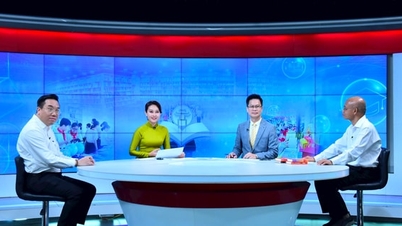
Intellectuals offer suggestions to improve the document.
The 14th National Congress of the Party is a significant political milestone, opening up opportunities for intellectuals to participate more deeply in the process of formulating the vision and development strategy of the country in the new period.
Mr. Hoang Minh Son, Director of Hanoi National University, affirmed that the 14th National Congress of the Communist Party of Vietnam is a turning point, not only summarizing 40 years of reform and 35 years of implementing the National Construction Program, but also establishing a development vision until 2045, aiming to make Vietnam a developed, high-income country.
In the context of a profoundly changing world, increasingly fierce strategic competition, and rapid and unpredictable scientific and technological development, preparing the Congress documents requires strong innovative thinking, a long-term vision, and a higher level of strategic forecasting capability.
Evaluating the draft documents for the 14th National Congress, Mr. Hoang Minh Son emphasized that placing education and training, science and technology, innovation, and human development at the center of the new growth model reflects the consistent and overarching thinking of the Party. This is not only a correct orientation but also opens up opportunities for higher education institutions, especially research universities, to leverage their roles and advantages in the new development phase.
According to Mr. Hoang Minh Son, the requirements for the coming period are: Continuing fundamental and comprehensive reforms in education and training; developing an open, modern, and internationally integrated education system; strengthening university autonomy coupled with accountability; reforming governance models; and closely linking training with labor market needs, digital transformation, and green transformation.
With its strengths in basic sciences, social sciences and humanities, and interdisciplinary fields, Hanoi National University is well-positioned to make profound contributions to the development of theories on innovation, the building of cultural values, the proposal of sustainable development models, and the improvement of institutions. Through this, it contributes to realizing the vision and goals set forth by the 14th National Congress of the Communist Party of Vietnam.
The core driving force for sustainable development
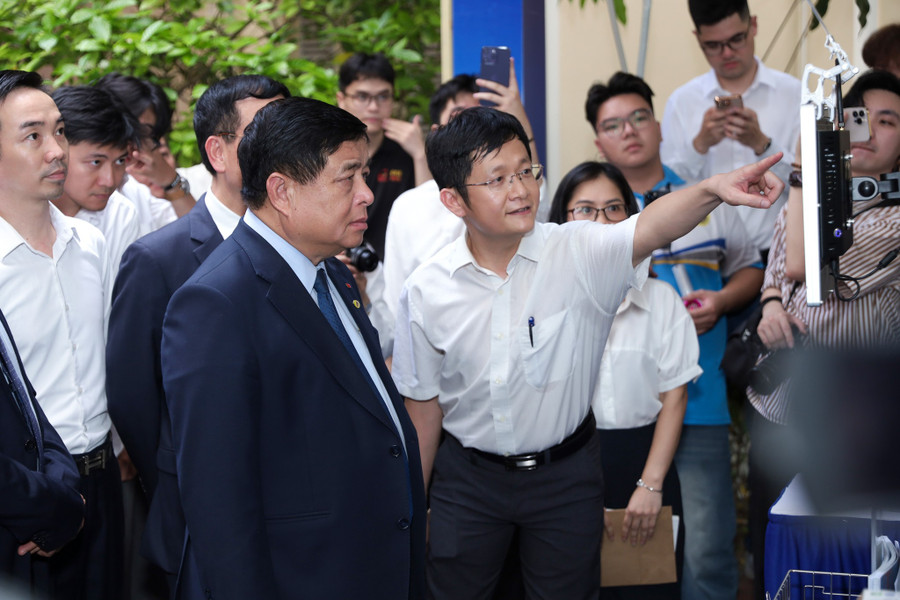
According to Professor Chu Duc Trinh, Rector of the University of Technology (Vietnam National University, Hanoi), science and technology need to be established as the key pillar of the new growth model.
However, in practice, many businesses currently face considerable difficulties in research and development, mainly due to obstacles related to mechanisms and institutions. Therefore, it is necessary to quickly develop strong mechanisms and policies to enable businesses to truly become the center of the innovation ecosystem, gradually participating deeply in the global value chain at high value-added stages.
Referring to digital transformation, Professor Chu Duc Trinh emphasized that it is not just a supporting tool, but should be considered a new method of production, and needs to be implemented decisively immediately after the 14th National Congress of the Communist Party of Vietnam. According to him, Vietnam needs to link investment in science and technology with tangible results, aiming to create products and services that are commercially viable and competitive in the market.
Furthermore, developing high-quality human resources plays a particularly important role in leading and effectively operating the national digital ecosystem. Based on this requirement, Professor Chu Duc Trinh believes that the XIV National Congress Document needs to clearly quantify strategic objectives related to science and technology, the digital economy, and green institutions, such as the contribution of the digital economy to GDP, the level of investment in science and technology, and the growth targets of key technology sectors.
According to Professor Chu Duc Trinh, specifically defining goals and targets not only helps improve the feasibility of policies but also creates momentum for science and technology to truly become a driving force for sustainable national development in the new era.
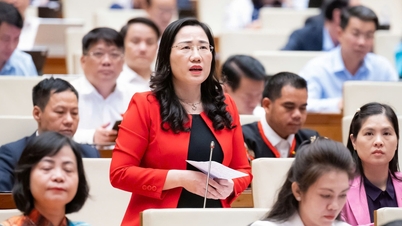
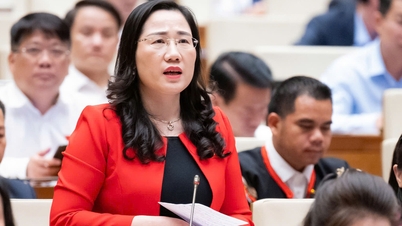
Ms. Tran Thi Tuyet Nga, a National Assembly representative from Quang Tri province, highly appreciated the preparation of the draft documents for the 14th Party Congress, noting that both the content and presentation showed many clear innovations. The reports were developed in a concise and clear manner, reducing academic rigor and increasing quantitative and actionable aspects, reflecting new thinking, especially the draft Political Report.
According to Ms. Tran Thi Tuyet Nga, theoretical issues, summarized from 40 years of practical experience in reform, have been distilled and generalized into guiding principles, lessons learned, key tasks, and strategic breakthroughs for the 2026-2030 term, meeting the requirements for rapid and sustainable national development in the new period.
Notably, the draft document has established a new growth model in which science and technology, innovation, and digital transformation are identified as the main driving force and central content of the development model. This approach closely links economic, cultural, and social fields; from national governance and economic development to ensuring national defense and security and addressing urgent social issues.
Commenting on the content of human resource development, especially education and training, Ms. Tran Thi Tuyet Nga stated that the draft document has shown many new points, aiming at a dual goal: both improving the quality of human resources to serve socio-economic development and ensuring social equity in accessing and benefiting from educational policies, realizing the spirit of "education for all" in the context of the Fourth Industrial Revolution.
National Assembly representatives from Quang Tri province acknowledged that the fundamental and comprehensive reform of education and training in recent years has achieved significant results. The content and methods of education continue to be reformed; the quality of education at all levels is gradually improving; and international cooperation in the field of education and training is expanding.
In particular, many humane policies have been implemented, such as tuition fee exemptions and subsidies for preschool and primary school students; and investment in building multi-level boarding schools in border communes and disadvantaged areas. However, according to Ms. Tran Thi Tuyet Nga, when evaluating the achievements of education and training, the document should focus on major, fundamental issues, avoiding a broad list of specific results; and at the same time, select typical achievements with strategic significance.
Regarding the goal of building a modern national education system, on par with the region and the world, linked to breakthroughs in human resource development, Ms. Tran Thi Tuyet Nga emphasized that this is a new, major, and urgent requirement to enhance national competitiveness, develop high-quality human resources, promote innovation, and ensure sustainable development of the country.
Accordingly, it is necessary to build an open, modern, and integrated education system, aiming to train a generation of citizens with the knowledge, skills, and qualities to meet the demands of the times, ensuring fairness, creativity, and comprehensive development.
Quantify targets, improve institutions.
While generally agreeing with the proposed solutions in the draft document, Ms. Tran Thi Tuyet Nga stated that breakthroughs in human resources should be identified as the "soul" of strategic breakthroughs, and therefore must be more clearly concretized in the orientation and action program.
From human resource development to building national capacity based on people, it is necessary to focus on solutions to improve the quality of vocational and higher education in line with the country's development needs; prioritize training and developing a team of science and technology personnel, teachers, and healthcare professionals; and at the same time, have policies to attract, value, and retain talent in the public sector and key fields.
According to Ms. Tran Thi Tuyet Nga, the action plan for a breakthrough in human resources in the draft is still too general and unclear. Therefore, it is necessary to soon develop a comprehensive strategy for human resource development, especially high-quality human resources, so that this breakthrough truly becomes a core driving force for the country's development in the coming period.
Associate Professor Dr. Le Trung Thanh from the University of Economics (Vietnam National University, Hanoi) believes that establishing a new growth model, restructuring the economy, promoting industrialization and modernization, and using science, technology, innovation, and digital transformation as the main driving forces are inevitable steps, demonstrating the political acumen and wisdom of the Party.
To realize that vision, Associate Professor Dr. Le Trung Thanh suggested that Vietnam needs a dynamic institution, a creative workforce, and a robust science and technology ecosystem, in which the State, businesses, universities, and the entire society participate in shaping the future of development.
In their comments on improving the institutional framework, the Area Studies research group of the Vietnam Institute of Studies and Development Science (Vietnam National University, Hanoi) emphasized that the Party and the State need to research and select a model of a developmental state to leverage institutional advantages and build an effective national governance and administration system.
Two core elements ensuring the success of this model are comprehensive digital transformation, creating a foundation for modern national governance; and training and developing a new generation of leaders and managers with innovative capabilities, capable of leading development in the new context.
Source: https://giaoducthoidai.vn/ro-net-dot-pha-ve-phat-trien-nguon-nhan-luc-post763077.html

![[Photo] General Secretary and President To Lam meets with National Assembly delegates from ethnic minorities.](https://vphoto.vietnam.vn/thumb/1200x675/vietnam/resource/IMAGE/2026/04/20/1776696701056_a1-bnd-8331-3342-jpg.webp)
![[Image] National Assembly discusses the implementation of the socio-economic development plan.](https://vphoto.vietnam.vn/thumb/1200x675/vietnam/resource/IMAGE/2026/04/20/1776696707422_ndo_br_img-20260420-185419-jpg.webp)
































































Comment (0)