A team of experts at ETH Zurich has demonstrated an AI-powered, four-legged robot capable of automatically playing badminton against a human opponent.
Báo Khoa học và Đời sống•07/06/2025
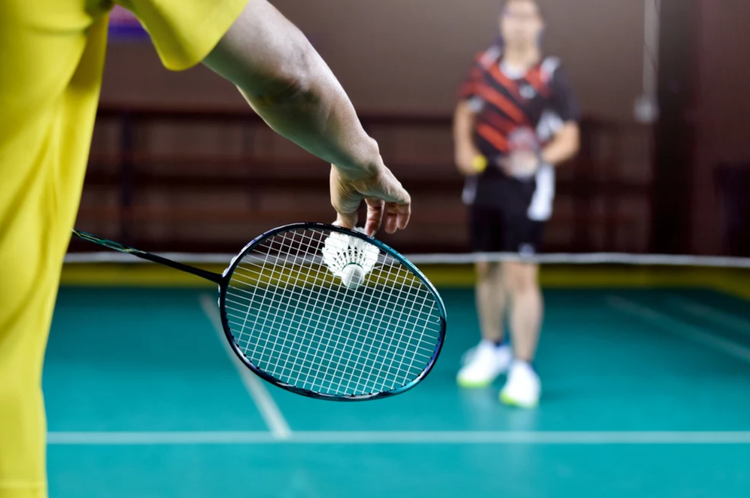
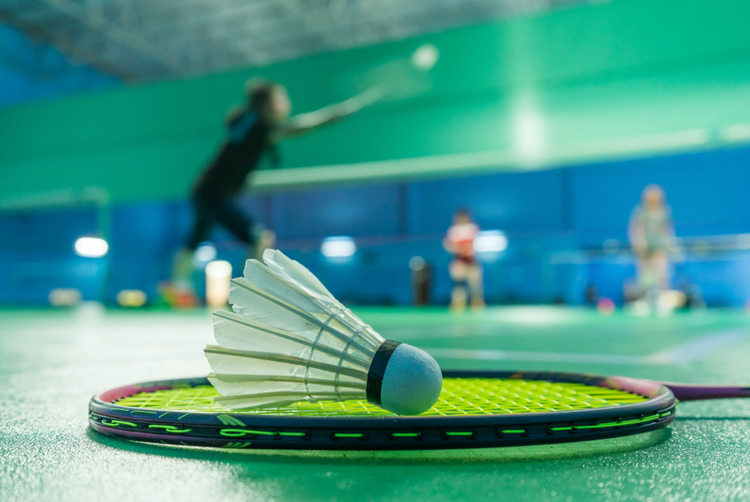
Badminton is a sport similar to tennis, the main difference being the use of a shuttlecock instead of a tennis ball. The goal is the same: to hit the shuttlecock over the net placed in the middle of the court where the opponent is waiting. Photo: @Badminton HQ. Playing badminton requires skillful footwork to quickly get into the desired position, and dexterity of the arms and hands to hit the shuttlecock accurately and send it over the net to the desired location. Therefore, providing robots with such capabilities requires certain technological advancements. Photo: @Colchester Leisure World.
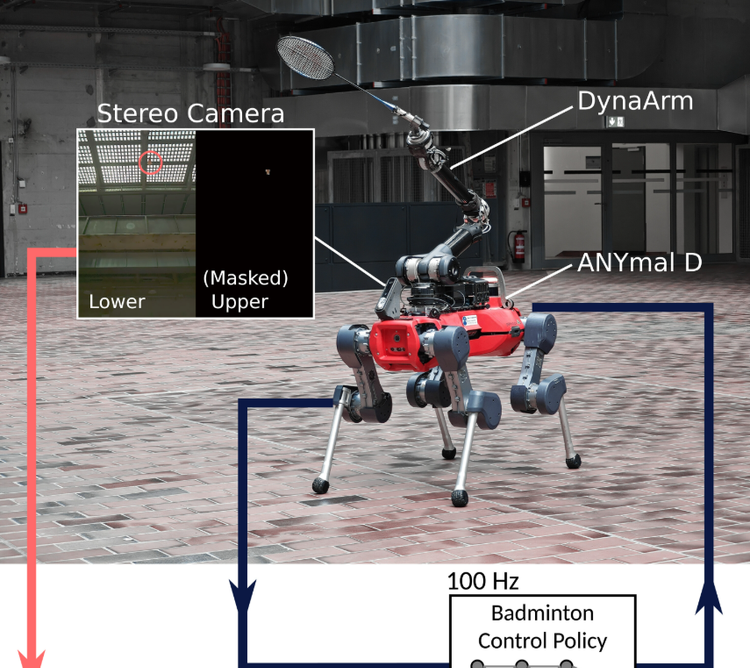
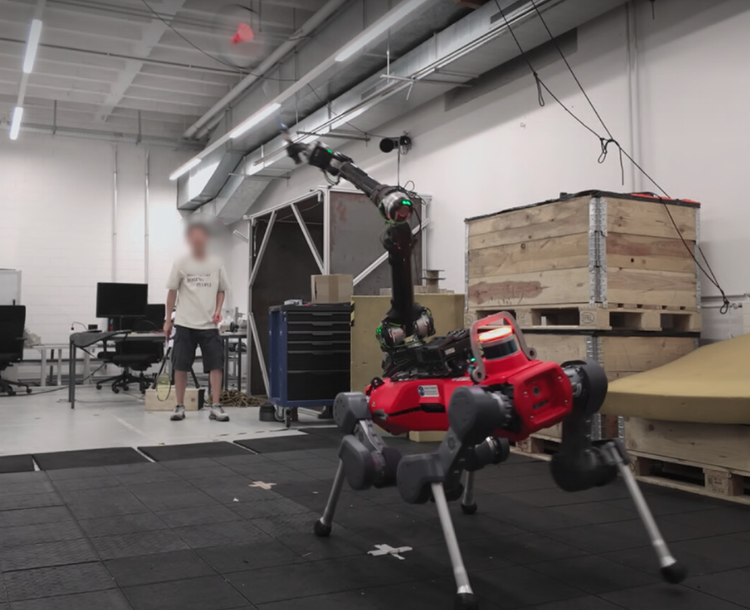
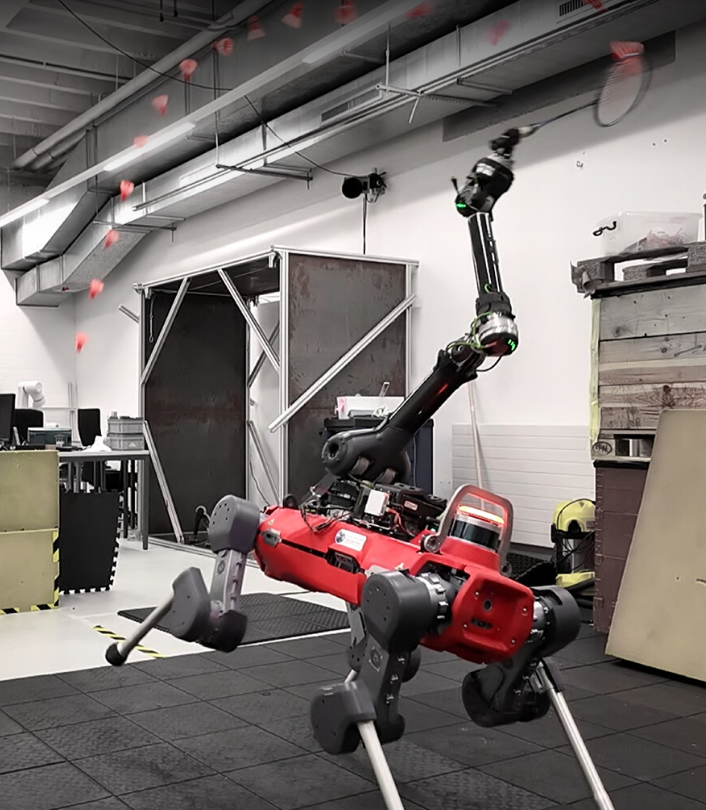
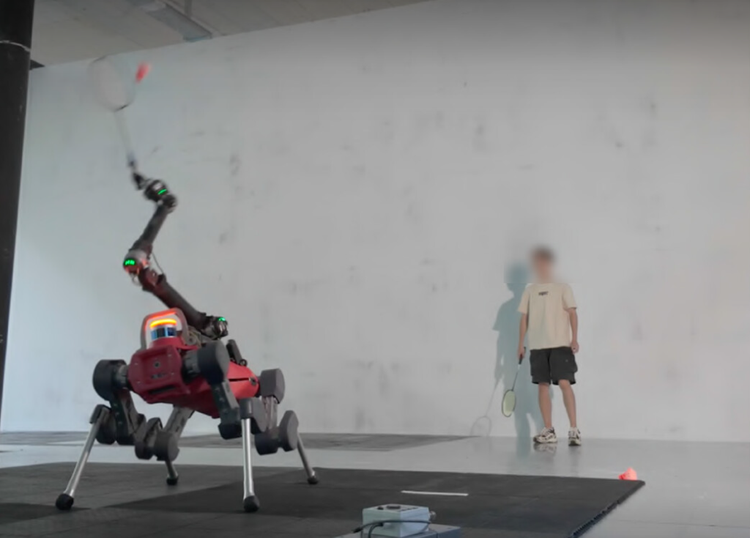
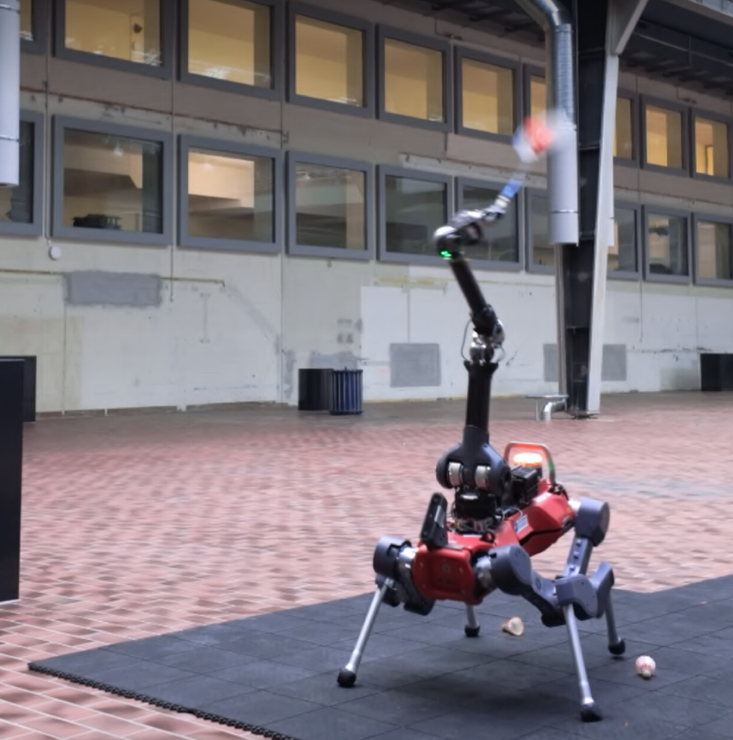
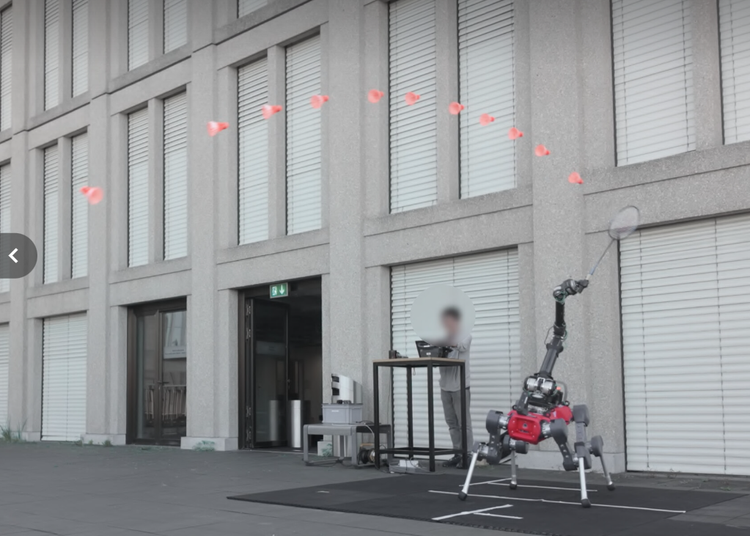
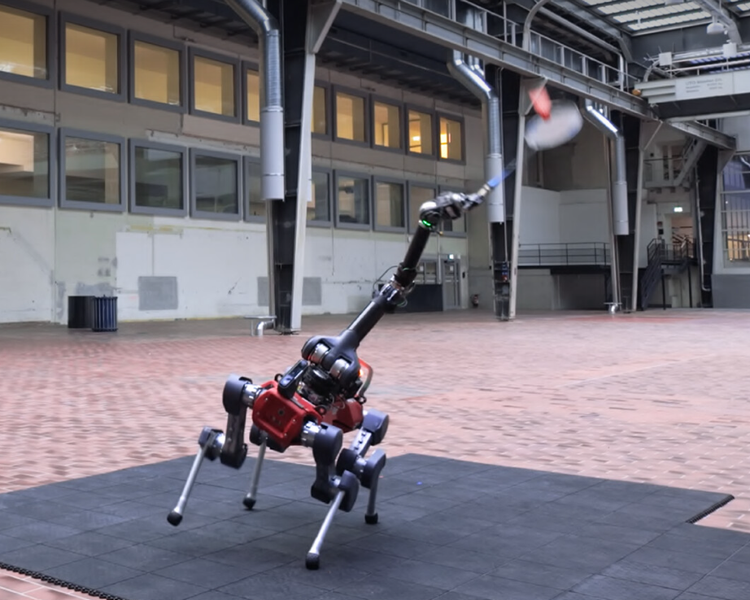
Recently, a team of robotics researchers at the Robotics Systems Laboratory of the Swiss Federal Institute of Technology (ETH Zurich) designed, built, and tested a four-legged robot capable of playing badminton with humans, named ANYmal-D. Photo: @ETH Zurich. To give the robot ANYmal-D the agility needed for this sport, researchers equipped it with a stereo camera and a movable arm designed to swing a badminton racket. Photo: @ETH Zurich. The team of experts also provided the robot with a controller based on AI-enhanced machine learning technology to allow it to self-position and react appropriately to the badminton shuttlecock, as well as helping the robot accurately track the shuttlecock's flight path, predict its trajectory, and move on the court to block and return shots. Photo: @ETH Zurich.
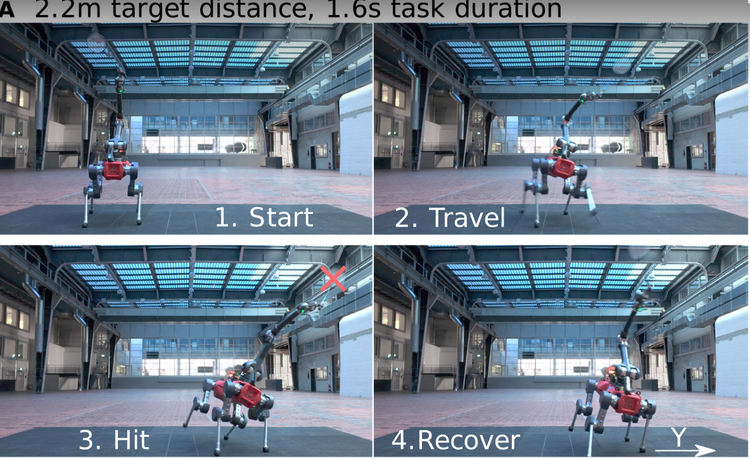
Tests have shown that the training process for the ANYmal-D robot has been quite effective. Photo: @ETH Zurich. The robot can move around the arena quite well and maintain duels with players for up to 10 consecutive hits. Photo: @ETH Zurich. The research team tested the robot with human players and found that it could move on the court to return the ball at various speeds and angles. Photo: @ETH Zurich.
Although the ANYmal-D robot performed well in these test demonstrations, it struggled with fast or powerful shots, such as a hard smash of a badminton shuttlecock. Photo: @ETH Zurich. According to the research team, this stems from limitations in the cognitive capabilities of the stereo camera hardware and the speed of the actuator, which will need further upgrades and adjustments in the future. Photo: @ETH Zurich.
We invite our readers to watch the video : Horrifyingly Realistic Humanoid Robot - Will It "Usurp" Humanity's Throne in the Future? Video source: @Top 1 Khám Phá.

 Báo Khoa học và Đời sống•07/06/2025











![[Photo] Closing Ceremony of the 15th Conference of the Central Committee of the 13th Party Congress](/_next/image?url=https%3A%2F%2Fvphoto.vietnam.vn%2Fthumb%2F1200x675%2Fvietnam%2Fresource%2FIMAGE%2F2025%2F12%2F23%2F1766462841764_a1-bnd-3731-1647-jpg.webp&w=3840&q=75)












































































Comment (0)