Humanoid robots crave batteries; the AI dream remains a distant reality.
Humanoid robots are booming thanks to AI, but weak battery life, high operating costs, and physical limitations could set the industry back another decade.
Báo Khoa học và Đời sống•24/05/2026
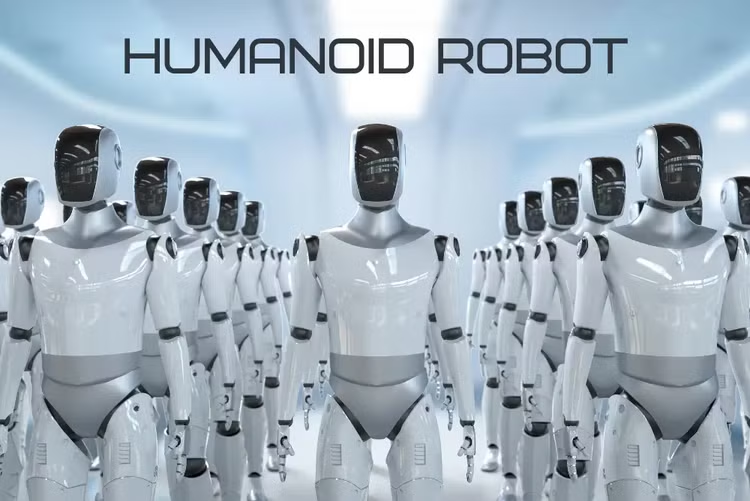
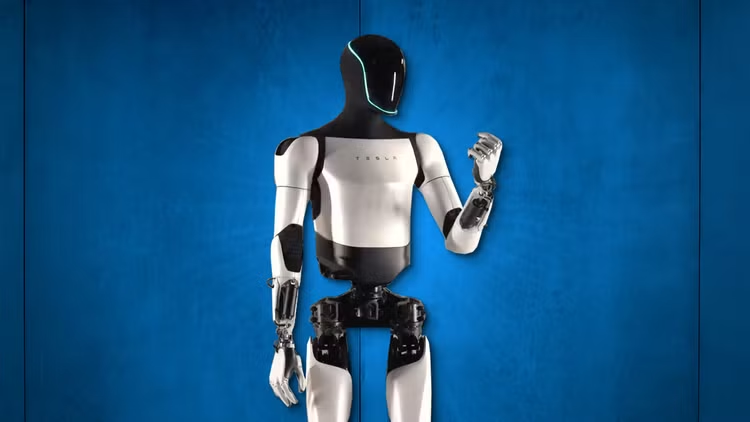
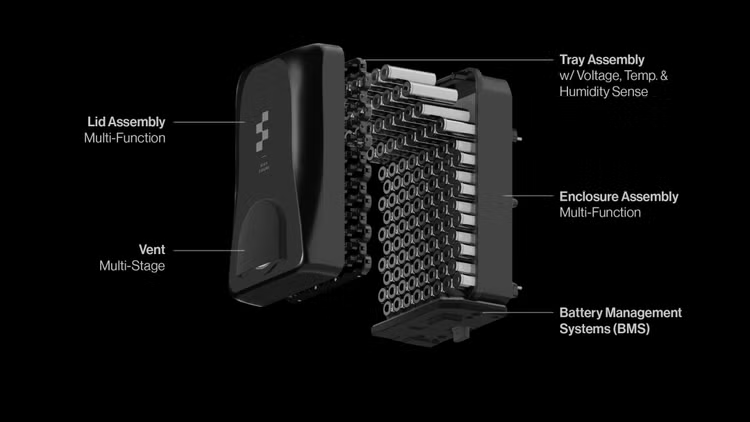
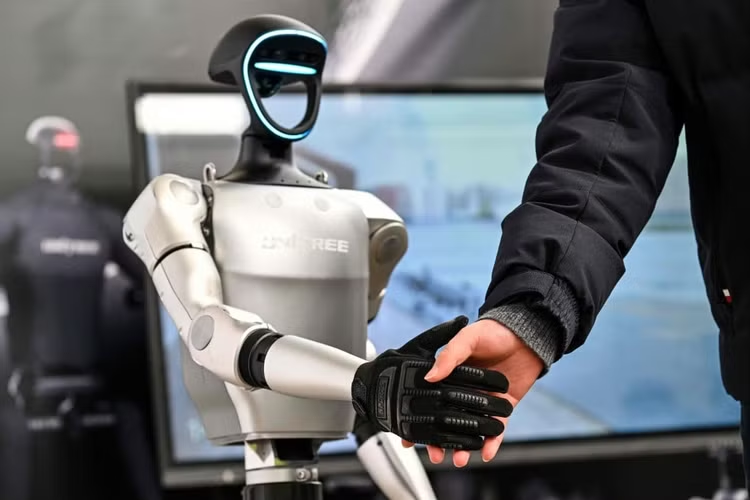
Humanoid robots are being touted as the "final piece" to bring artificial intelligence into the real world , but behind the impressive demo videos of Tesla or Boston Dynamics lies a far more serious problem: batteries are becoming the biggest obstacle preventing this trillion-dollar industry from moving toward large-scale commercialization. While the tech world constantly talks about mobility, dexterity, and general artificial intelligence (AGI), the battery life of humanoid robots is almost completely overlooked, even though this is the deciding factor in whether a machine can work like a human in a real-world environment. Advanced robots like Optimus or Figure F.03 can only carry batteries of about 2.3 kWh because increasing the battery weight would cause the robot's body to become unbalanced, consume more energy, and make it difficult to maintain stable movement for extended periods.
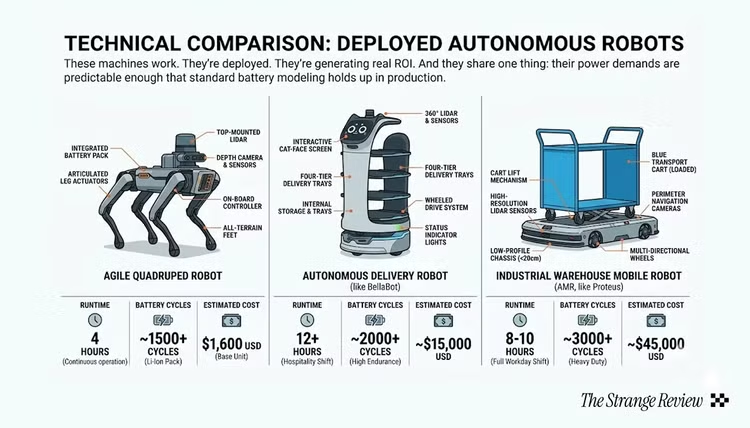
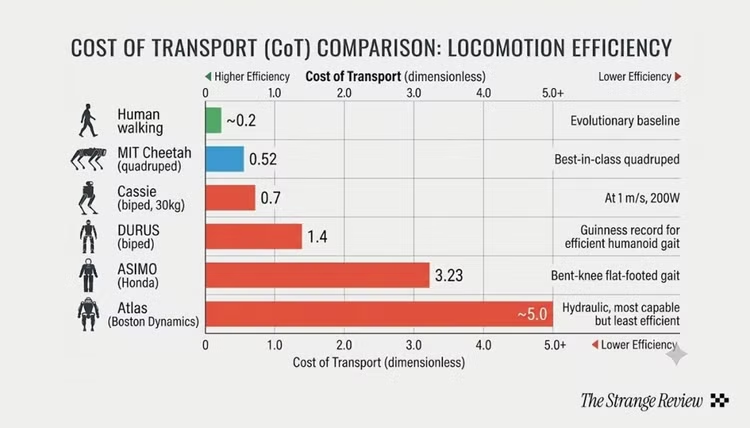
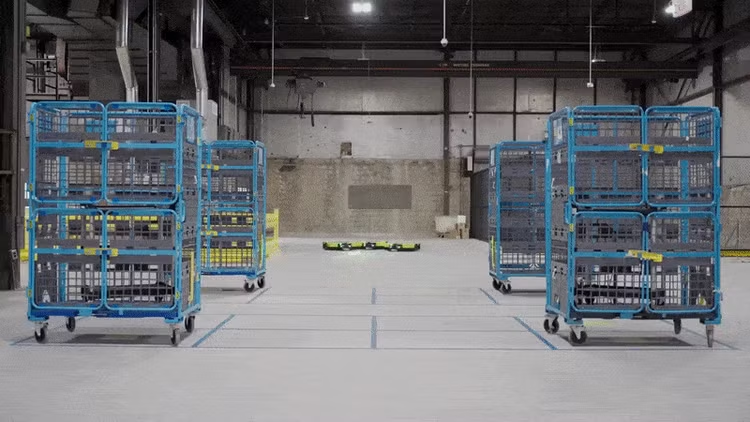
Unlike humans, who have evolved over hundreds of millions of years to optimize biological movement, bipedal robots must use motors continuously to maintain balance, counteract gravity, and sustain each step, resulting in significantly higher power consumption than most people imagine. In warehousing or industrial assembly line environments, robots not only walk but also have to lift heavy objects, turn, handle collisions, and react in real time, generating power load peaks of up to 2,500-3,000W—an extremely demanding level for today's commercially available lithium batteries. The worrying thing is that the published battery life figures are often only ideal for light load operation, while in reality many robots have to return to the charging station after only about 30 minutes to a few hours of operation to maintain a safe battery level, leading to increased operating costs and downtime. Beyond just battery life, the charging cycle lifespan is also a new "nightmare" for the robotics industry. A machine working two shifts a day can consume hundreds of battery cycles in just one year, forcing businesses to constantly replace batteries, calibrate, and accept thousands of hours of production downtime each year. Although many companies are experimenting with robots that can change batteries themselves, integrating batteries into their body frames, or awaiting breakthroughs from solid-state batteries from Toyota or BYD, experts still believe that for humanoid robots to truly work a full 8-hour shift like humans, the industry may need nearly another decade to overcome the physical limitations of current battery technology.

 Báo Khoa học và Đời sống•24/05/2026









![[INFOGRAPHIC] Ugreen FineTrack 2 Soccer Design](https://vphoto.vietnam.vn/thumb/402x226/vietnam/resource/IMAGE/2026/05/25/1779680273219_info-bongdinhvi-a-thumb-jpg.webp)














![[GALLERY] Elon Musk shocks with the statement that people may not need to go to work.](https://vphoto.vietnam.vn/thumb/402x226/vietnam/resource/IMAGE/2026/05/24/1779625359765_el-png.webp)

































































Comment (0)