


Every January, as spring blankets the mountains and forests of Northwest Vietnam, Hoa Binh – the capital of the Muong ethnic group – becomes bustling with festivals. The resounding gongs echo through the mountains, the vibrant brocade costumes, and the joyful atmosphere of the people create a colorful spring scene, attracting numerous tourists to experience it.

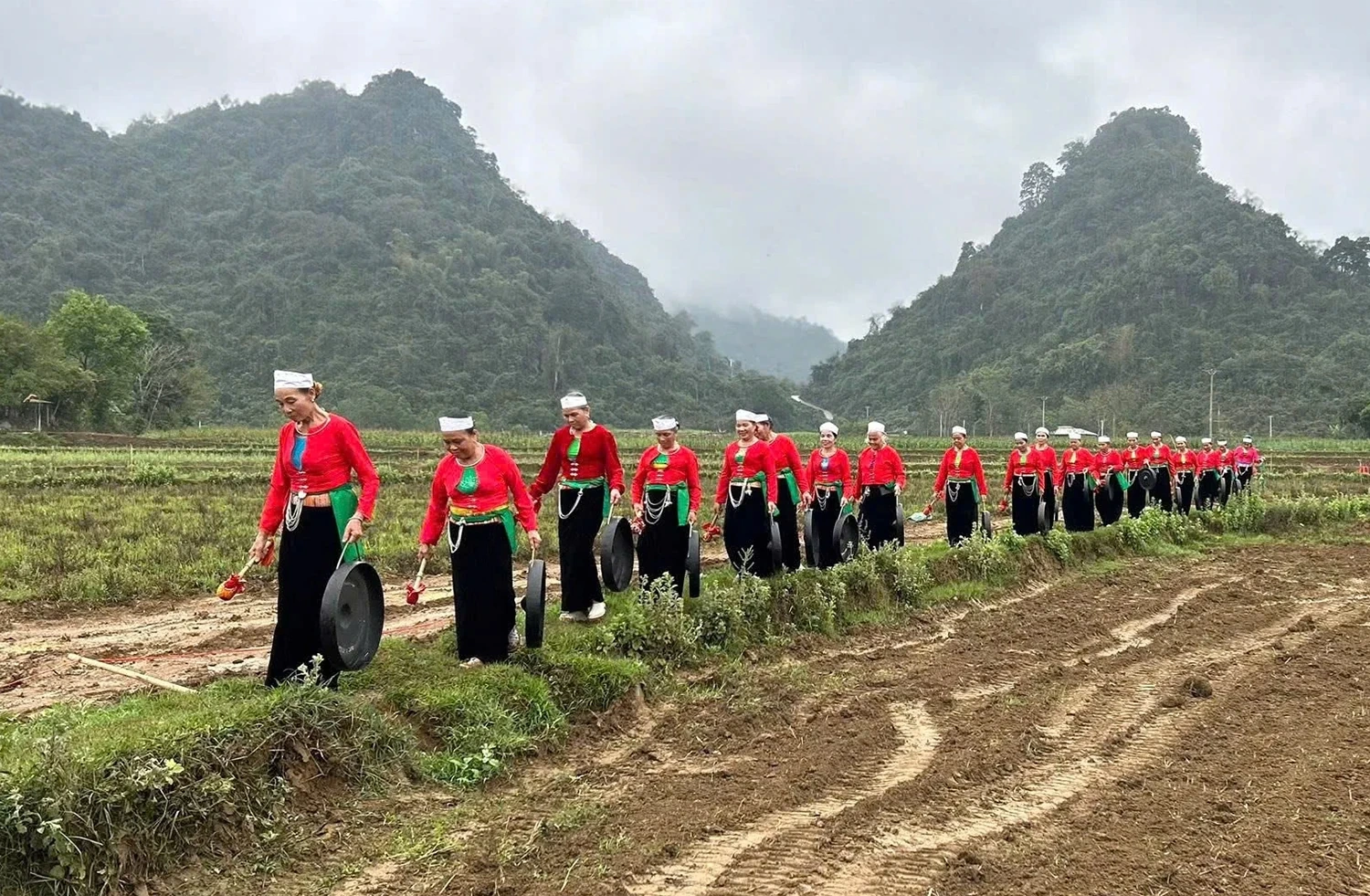
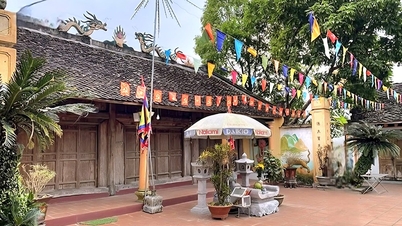
Currently, the Hoa Binh region has hundreds of festival venues at the beginning of the year. Among them, nearly 40 major festivals are still maintained and preserved, such as: Tien Pagoda Festival, Bo Temple Festival, Muong Dong Festival, and the Spring Festival of the Year of the Horse 2026. The Spring Festival of the Year of the Horse 2026 continues to be marked by many typical festivals such as: Tien Pagoda Festival (An Nghia commune), Bo Temple Festival (Thung Nai commune), Ngoi Temple Festival (Hoa Binh ward), Muong Dong Festival (Kim Boi commune), Coi Temple Festival (Lac Son commune), and the Khai Ha Festival of the Muong people in Muong Bi commune.
The spring festivals are not only traditional cultural activities but also opportunities to honor the unique historical and cultural values of the Muong region. At the same time, they are also a chance to promote the image and cultural identity of the ethnic groups to tourists.


In the sacred space of the festival, the ceremonial part is always held solemnly, expressing the people's reverence for the gods and ancestors. According to the Muong people's beliefs, deities closely associated with their lives, such as the earth god, the water god, or those who contributed to the founding and development of the village and the Muong community, are all worshipped and remembered.
The rituals in the ceremony were conducted according to traditional customs, with the participation of elders and a large number of people. Amidst the tranquil atmosphere of the mountains and forests, prayers resounded, conveying hopes for a new year of favorable weather, abundant harvests, peaceful villages, and a prosperous and happy life.


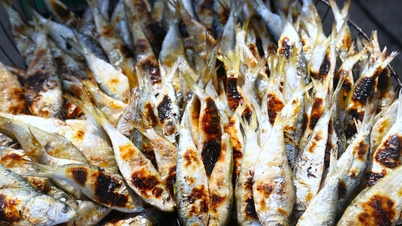
One of the highlights of the Muong spring festival is its culinary space, imbued with the flavors of the mountains and forests. At the festivals, stalls selling local agricultural products are simply but attractively arranged, featuring many familiar specialties. Visitors can easily find traditional tube-shaped cakes and snail-shaped cakes, bamboo tubes containing fermented fish – a rustic dish of the Muong people – along with many kinds of fresh wild vegetables. All these elements combine to create the simple yet rich flavors of mountain cuisine.
At the festivals of the four famous Muong ethnic groups—Bi, Vang, Thang, and Dong—food stalls are always a popular stop for visitors. Using familiar ingredients like stream fish, bamboo shoots, wild vegetables, free-range chicken, free-range duck, and upland sticky rice, locals create many delicious dishes that reflect the unique cultural identity of the highlands. In particular, many characteristic agricultural products of the Muong region that have achieved OCOP (One Commune One Product) certification are also showcased at the spring festivals, becoming meaningful gifts embodying the essence of the local villages.


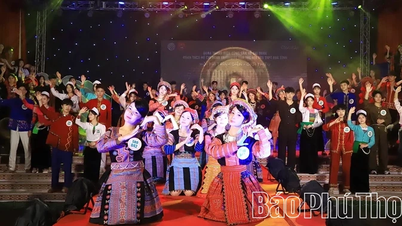
More than just a celebration, the festival is also a community-building event for the Muong people. From early morning, villagers eagerly flocked to the festival area. Elderly people, young men and women alike donned their most beautiful traditional costumes. The vibrant brocade dresses, meticulously woven scarves, and blouses with distinctive patterns added to the lively atmosphere of the spring festival.
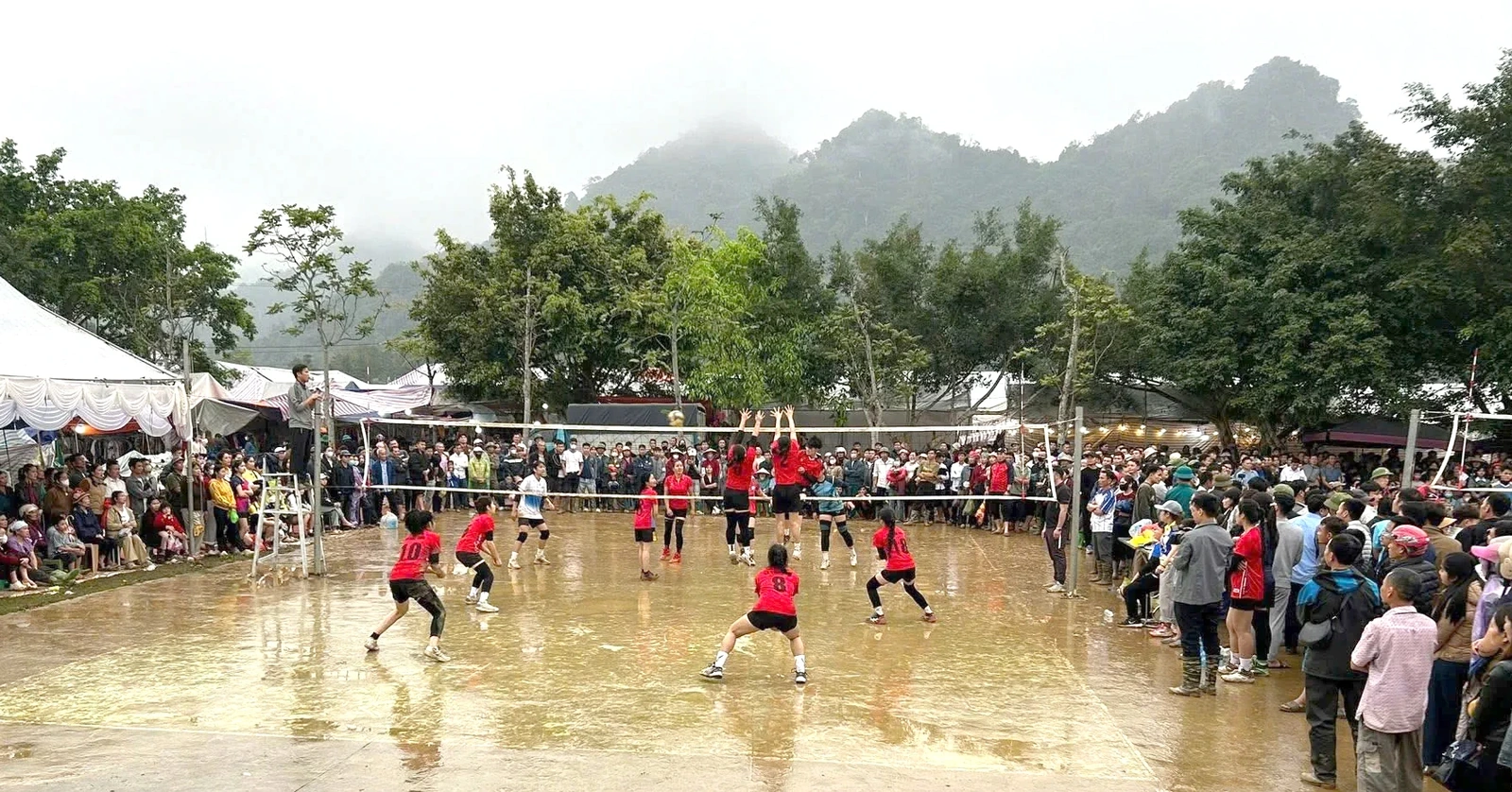
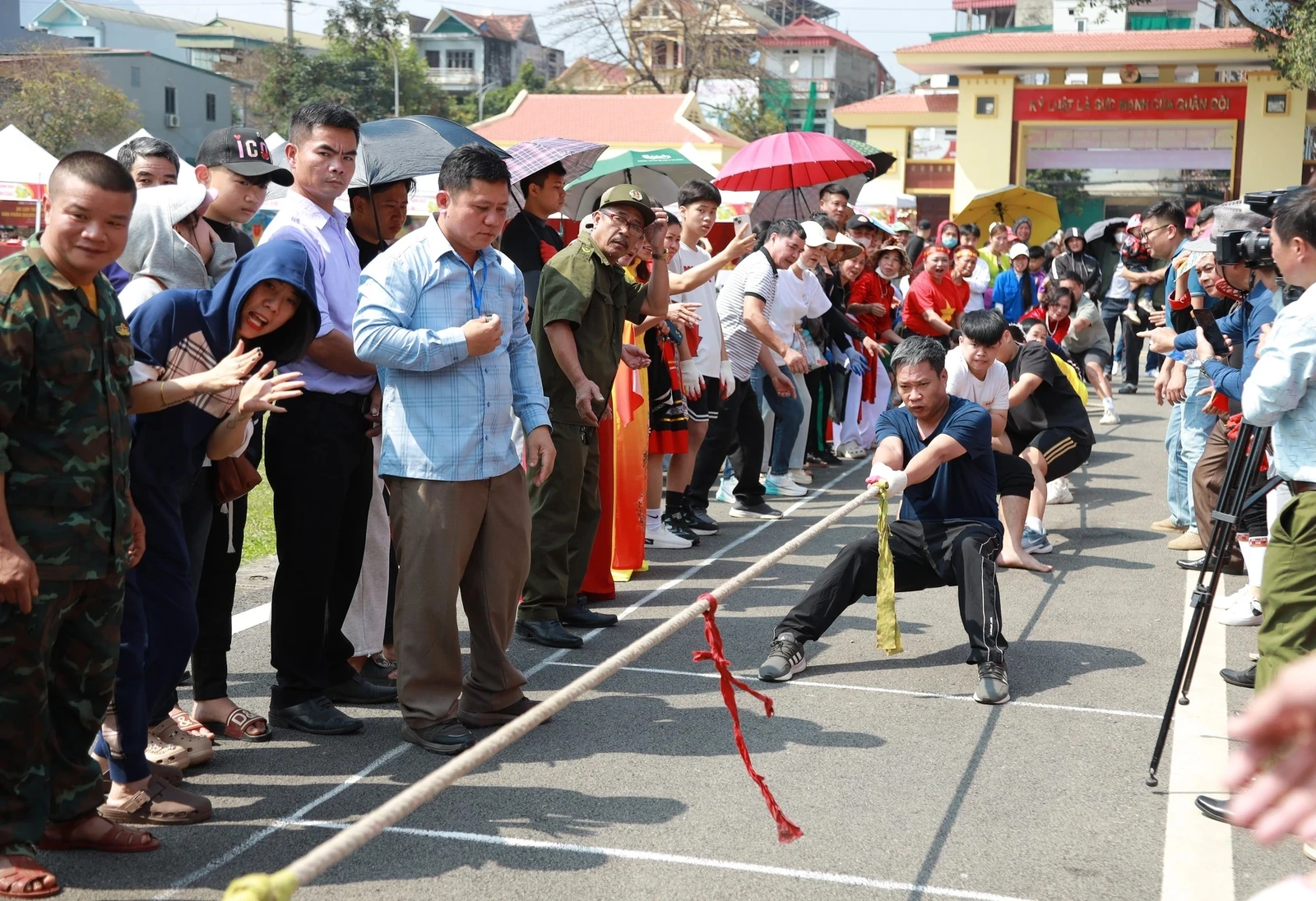
Amidst the resounding gongs and drums, everyone immersed themselves in the lively atmosphere of the festival. Following the solemn ceremony, the festivities continued with many exciting cultural, sporting, and folk games such as board games, swinging, throwing the ball, stick pushing, crossbow shooting, tug-of-war... Cheers and shouts of encouragement echoed throughout the village, creating a joyful and warm atmosphere.
As the festival season draws to a close, the resounding gongs of the Muong people seem to linger in the mountains and forests. The spring festival in the Muong region is not only an occasion for people to remember their origins and express their hopes for a peaceful and prosperous life, but also a place to preserve and spread unique traditional cultural values.
Every spring, the New Year festivals become familiar gathering places for the people of the Muong ethnic group to reunite, preserve and pass on their cultural identity, so that these values continue to be nurtured and endure over time.
Content and photos: Duong Lieu - Presentation: Ngoc Tung
WILLOW AND PINE TREE
Source: https://baophutho.vn/ron-rang-hoi-xuan-xu-muong-250069.htm

![[Image] 500 regional dishes introduced to the people of Ho Chi Minh City and tourists.](https://vphoto.vietnam.vn/thumb/1200x675/vietnam/resource/IMAGE/2026/03/27/1774576163392_001-jpg.webp)












































Comment (0)