

The aroma of traditional village wine rises to the city.
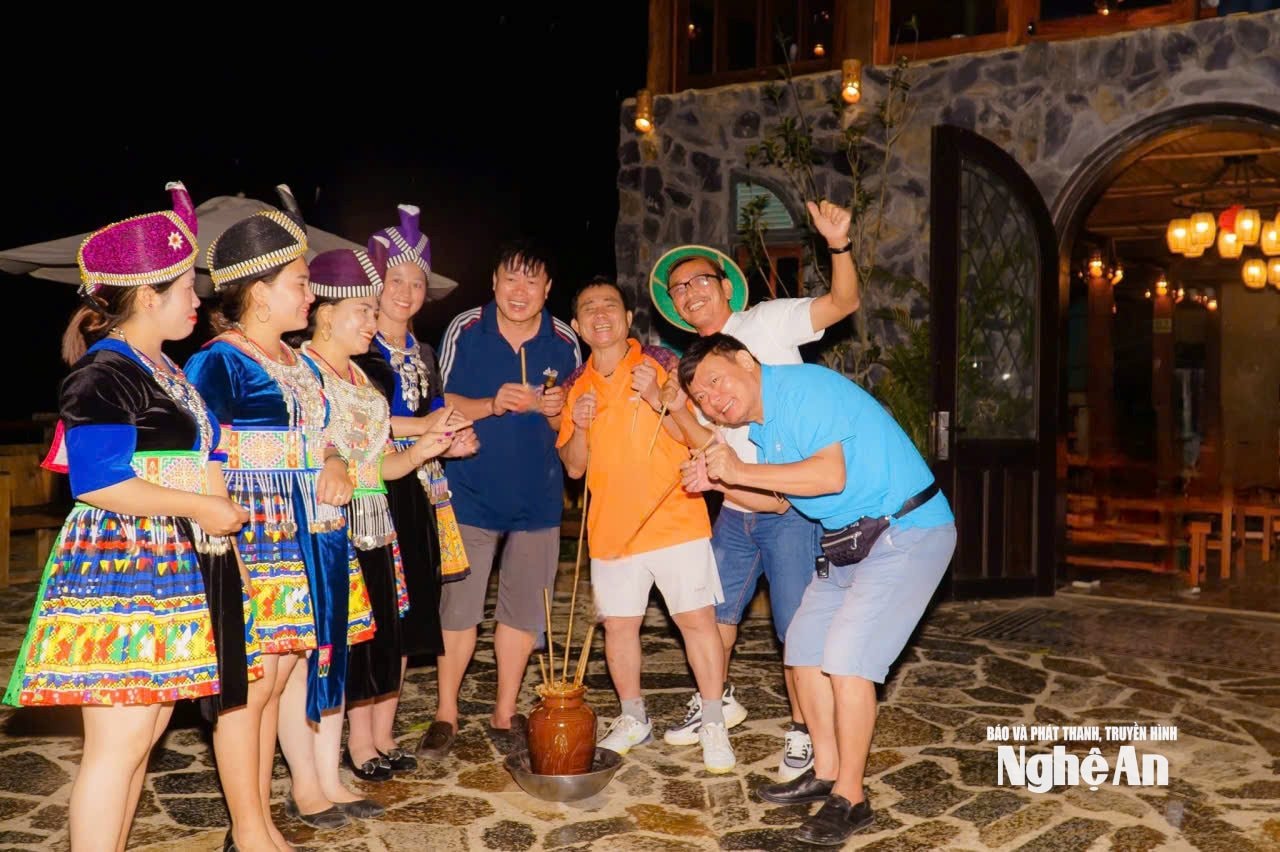
For the Thai people, rice wine is not simply a beverage. It is a ritual, a ceremony, a traditional cultural practice that binds the community together. During Tet (Vietnamese New Year), beside the ancestral altar, by the warm fire, or during spring festivals, the jar of rice wine placed in the center of the stilt house serves as a warm invitation. Drinking rice wine is about gathering together, bending over a single jar of wine, raising the bamboo straw to share joys and sorrows, and strengthening the bonds of community.
Rice wine is present in most important activities of the Thai people: from rituals to worship deities, housewarming parties, weddings, welcoming honored guests to traditional New Year celebrations. Those who drink rice wine must follow the "drinking rules," avoiding爭搶 (搶搶 -爭搶 means to snatch or compete for the wine), drinking according to rank and in a circle, to show mutual respect. These conventions create a warm, harmonious, and unique festive atmosphere in this mountainous region.
Today, the aroma of mountain-grown rice wine is no longer confined to the villages of the Thai ethnic group. On stalls in the lowlands, in grocery stores, or in specialty gift shops for the end of the year, jars of rice wine are increasingly sold, carrying the scent of forest leaves, upland rice, and the distinctive flavor of the mountainous region. Many organizations and units also proactively order it to serve at year-end parties and celebrations.
.jpg)
Mr. Nguyen Duy Nam, director of a pharmaceutical company in Thanh Vinh ward, shared: “This year, all branches organized year-end parties with singing and dancing, so I ordered 20 jars of rice wine and organized a bonfire. I chose rice wine not only for its distinctive flavor, but also because drinking it helps people gather together, raising their glasses to share joys and sorrows. The atmosphere around the jars of wine becomes more intimate and friendly, creating a sense of camaraderie among colleagues.”
The surge in demand towards the end of the year is also observed at business outlets. Ms. Truong Tuyet Oanh, a rice wine distributor in Dai Dong commune, said that the closer it gets to Tet (Lunar New Year), the more orders she receives. From residential areas and neighborhoods to agencies and organizations, everyone is ordering rice wine for their year-end parties. To meet the high demand, Ms. Oanh has to contact rice wine producers early, selecting batches that meet quality standards and ensure the distinctive yeast flavor of the village. “Customers place orders a week, even a month in advance, so I have to plan early so that it’s readily available when they need it. I usually import rice wine from the Thai ethnic group in Tien Dong, Mau Thach, and Tuong Duong, ensuring the wine retains its original flavor and authentic wild leaf yeast. This satisfies the needs of people from the lowlands while also contributing to spreading the unique culture of the Thai people,” Ms. Oanh shared.
Busy with production season .
In Phay Thai Minh village, Tien Dong commune, the craft of making rice wine has been intertwined with the lives of the Thai people for generations. This is also where Tien Dong rice wine is recognized as a 3-star OCOP product, with clear codes, barcodes, and traceability labels. Remarkably, even after entering the market, the rice wine here still retains its traditional production methods. Previously, due to difficult living conditions, the Thai people in Thai Minh made rice wine from cassava or regular rice. Now, the main ingredient is traditional upland glutinous rice, a fragrant and sticky variety grown only in the highlands.
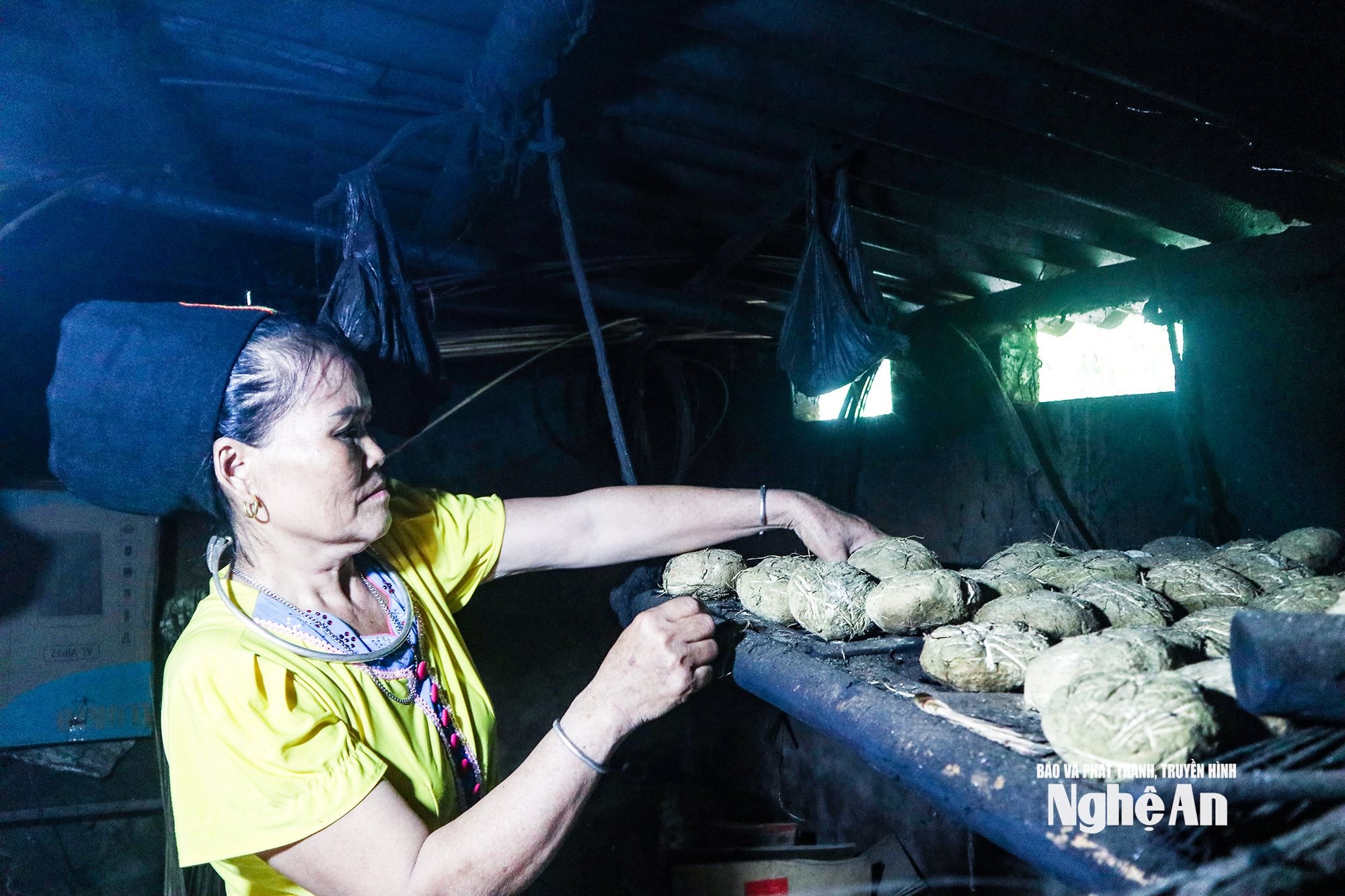
The yeast for rice wine is made from the leaves of the *Nham* plant, cinnamon leaves, and many other forest leaves, ground into a fine powder, mixed according to a secret ratio, and then carefully fermented in straw. Ms. Vo Thi Thu, who has nearly 40 years of experience making rice wine in Thai Minh, shared that making rice wine is not difficult, but making it delicious requires meticulous effort. From selecting fresh rice husks, sifting them clean, soaking and washing them many times, to steaming the glutinous rice, mixing the yeast, and fermenting the wine… each step requires meticulousness and experience. "Just by opening the jar and smelling the aroma, you know the yeast is ready. If there is a strange smell or sourness, it's ruined," Ms. Thu said.
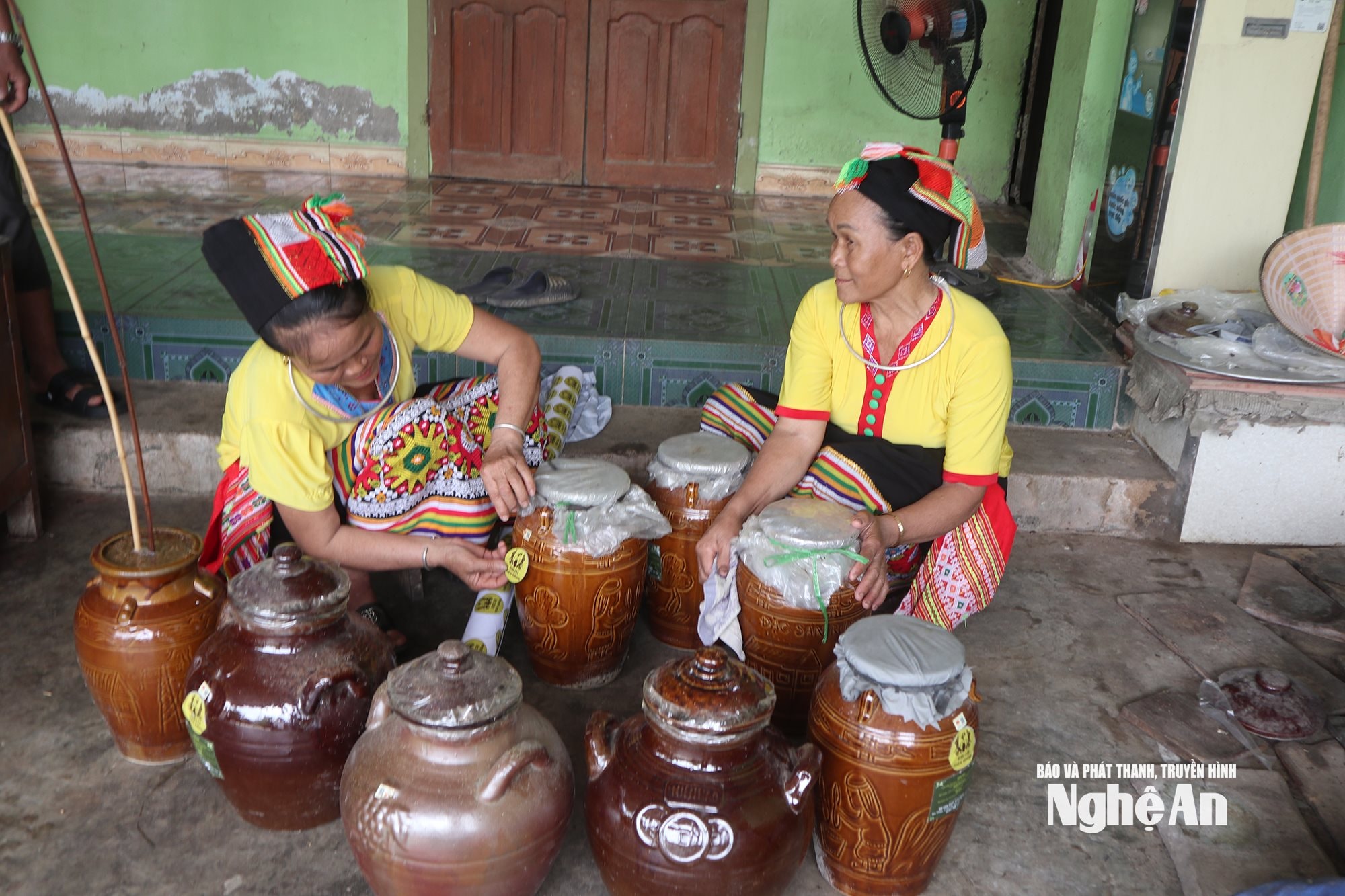
Thai Minh rice wine tastes best after 3 months, but the longer it's aged, the richer the flavor. Some jars are aged for a whole year, reserved for Tet (Lunar New Year) or major festivals. Along with the wine, the Thai people also place great importance on making the drinking straws. Village elder Vi Van Bich said that from selecting the bamboo, hollowing out the tube, bending, drilling holes, drying, and hanging it over the kitchen fire… everything must be done correctly. A standard straw ensures the wine flows evenly and retains its distinctive flavor.
Not only in Thai Minh, but the atmosphere surrounding the year-end rice wine making season is also bustling in Chom Muong village, Mau Thach commune. These days, families making rice wine here hardly have a day off. All the preparation of ingredients has been done a month in advance. Ms. Ngan Thi Hanh, a household making a large quantity of rice wine in Chom Muong, said: “During the New Year, I sold about 100 jars, and for the Lunar New Year, the number of orders increased to 200-300 jars because many agencies and families organized celebrations and bonfires to welcome the New Year. The price of each jar ranges from 400,000 to 600,000 VND, depending on the capacity.”
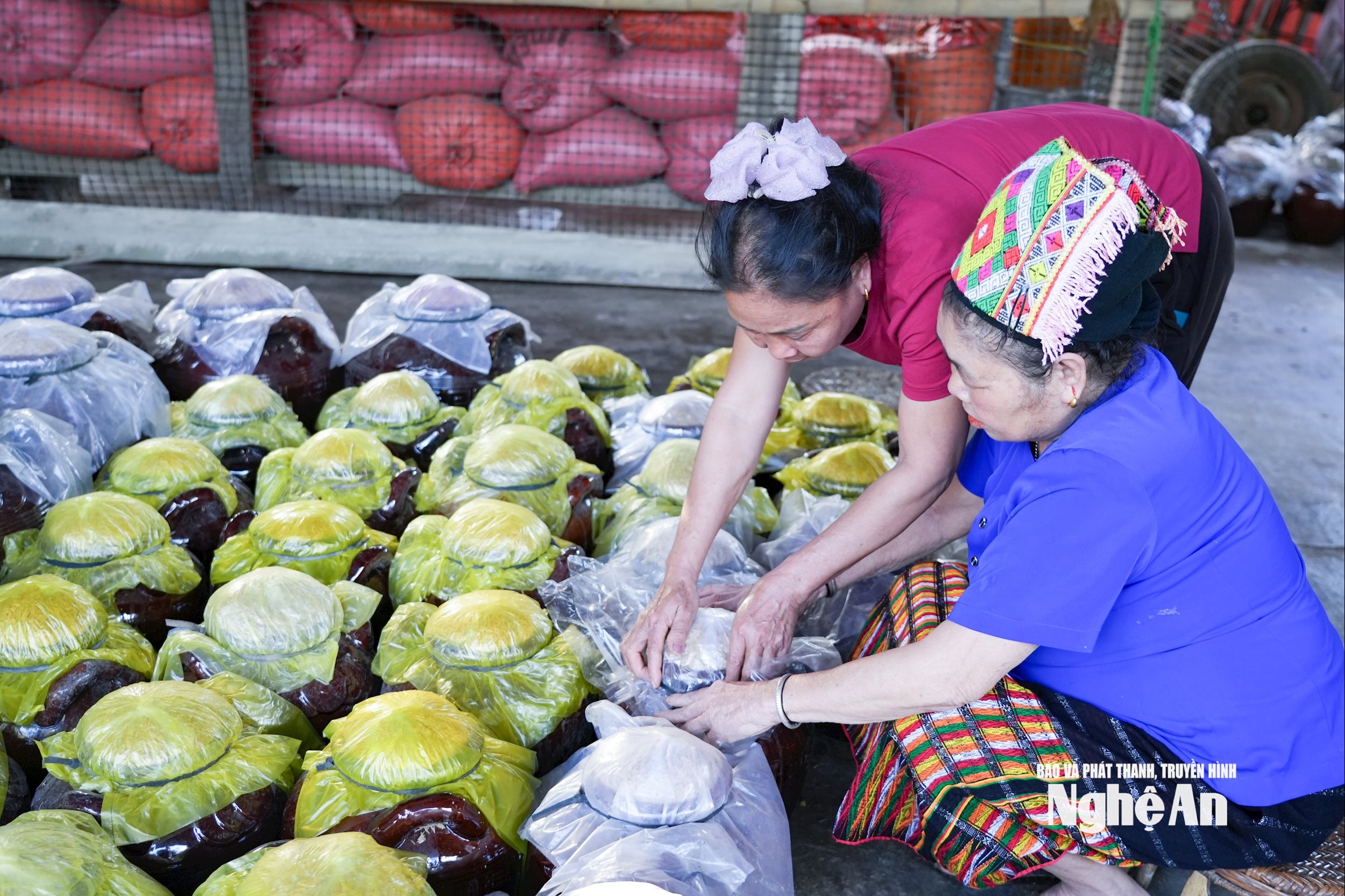
Currently, the village has 12 groups engaged in the craft, producing 50-60 jars of rice wine daily, generating revenue of 25-30 million VND. In 2022, the Chòm Muộng rice wine making village was recognized as a traditional craft village, a significant milestone for the preservation and sustainable development of the craft.
For 30 years as a daughter-in-law in the village, Mrs. Ngan Thi Thom has been dedicated to the craft of making rice wine. From a few jars of wine made for home use, Chòm Muộng rice wine has now become a sought-after product by customers everywhere. The rice wine production group, led by Mrs. Thom, has 12 members. During Tet (Lunar New Year), the busiest time of year, Mrs. Thom said: “These days, the work is twice or three times as busy. We have to prepare everything from the glutinous rice and husks to the fermentation process a month in advance to ensure timely delivery to customers. Each jar of wine must be fragrant, delicious, and have the authentic village yeast flavor to meet the high demand from customers at the end of the year.”
.jpg)
According to Mr. Ngan Duc Hoi, head of Chom Muong village, the unique flavor of the local rice wine comes from the forest leaf yeast and the local water source. “These factors make it different, unlike rice wine from other places, which is why the product is popular and sells well in the market. Thanks to the rice wine making profession, many households in the village have stable jobs, with an average income of 16-17 million VND per person per year, while also preserving the distinctive cultural features of the community,” Mr. Hoi affirmed.
Tet is fast approaching. Along the winding roads leading to the mountain villages of Nghe An , the aroma of rice wine blends with the fragrance of freshly harvested sticky rice, the smoke from cooking fires, and the sounds of joyful laughter. These earthenware jars of rice wine, fermented with forest leaves and mountain-grown sticky rice, not only intoxicate people during Tet but also open up livelihoods and ignite hope for prosperity for the people in these remote mountainous areas…
Source: https://baonghean.vn/ruou-can-dat-hang-mua-tet-10318544.html
![[Image] "Journey of Hope" promotes the organ and tissue donation movement in Vietnam.](https://vphoto.vietnam.vn/thumb/1200x675/vietnam/resource/IMAGE/2026/05/20/1779294400833_1-8910-jpg.webp)
![[Photo] General Secretary and President To Lam works with the Party Committee of the Ministry of Health on the work of Vietnamese traditional medicine.](https://vphoto.vietnam.vn/thumb/1200x675/vietnam/resource/IMAGE/2026/05/20/1779294323718_a1-bnd-2978-3319-jpg.webp)


































































Comment (0)