

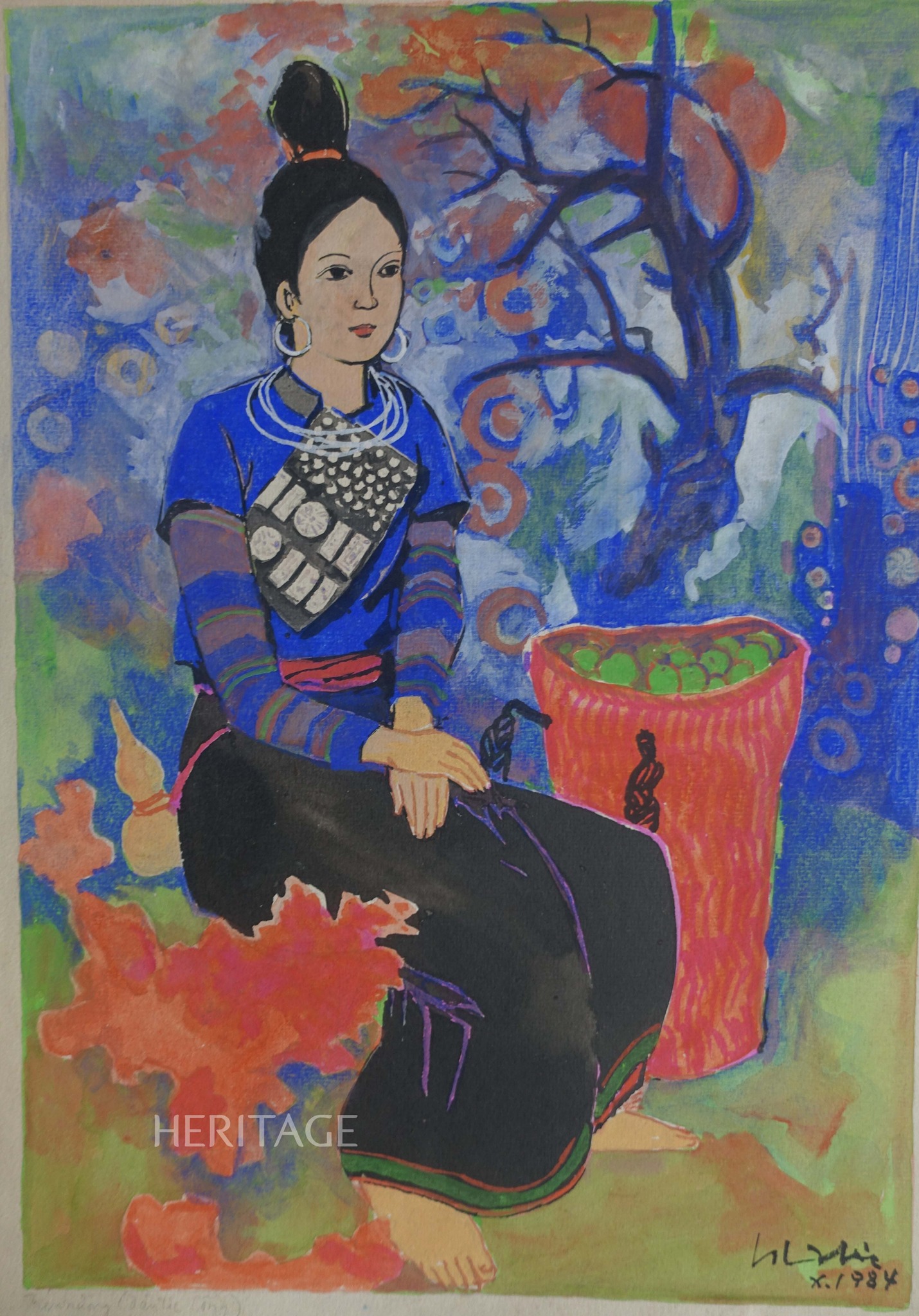
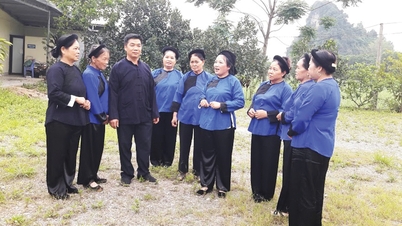
The color red is used in the costumes of ethnic minorities as a symbol of the spirit of life, as a signal of eternal life.
In the traditional clothing of mountain people, red is almost indispensable in embroidered or patchwork patterns. Look around: from the Pà Thẻn, Dao, H'Mông, Xá Phó, Lô Lô, and Pu Péo ethnic groups in Northern and Northeastern Vietnam, to the Thái, Khơ Mú, and Lự in the Northwest, and even the Central Highlands regions like the Xơ-đăng, Ba-na, and Ê-đê – red is everywhere. In some places, it's a torrential downpour; in others, it's a subtle accent amidst white, green, yellow, and purple. Red is always the dominant color. It's like plain rice in the meals of those who cultivate wet rice.
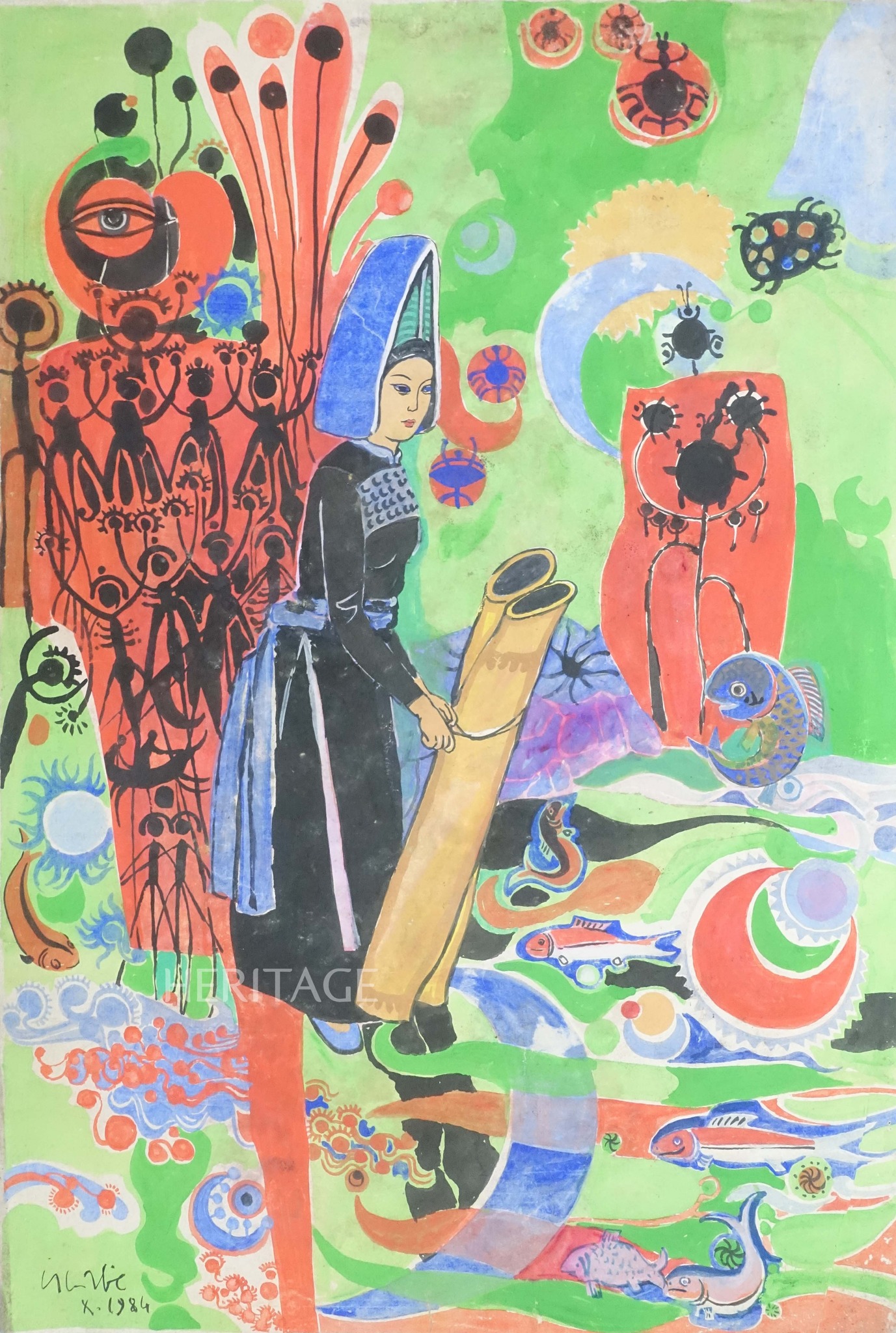
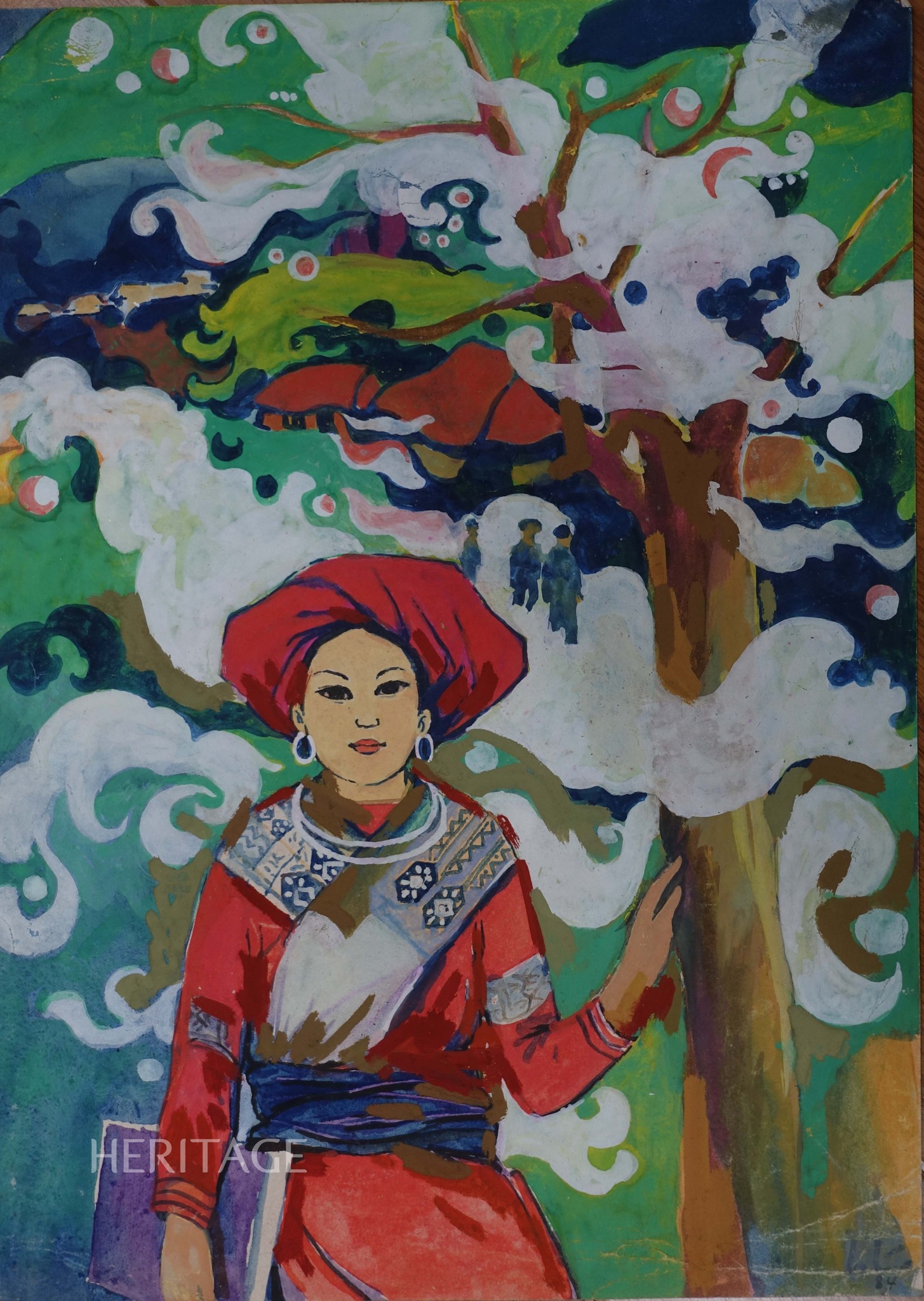
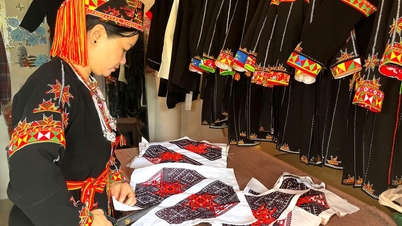
The most striking feature is the vibrant red color on the traditional clothing of the Pà Thẻn people. While other ethnic groups primarily use indigo black on their shirts, trousers, and skirts, the Pà Thẻn attire is dominated by red. The red clings to the Pà Thẻn people from their shirts and skirts to their headscarves. Only the white belt serves as a dividing line, but even that acts as a catalyst to further enhance the red.
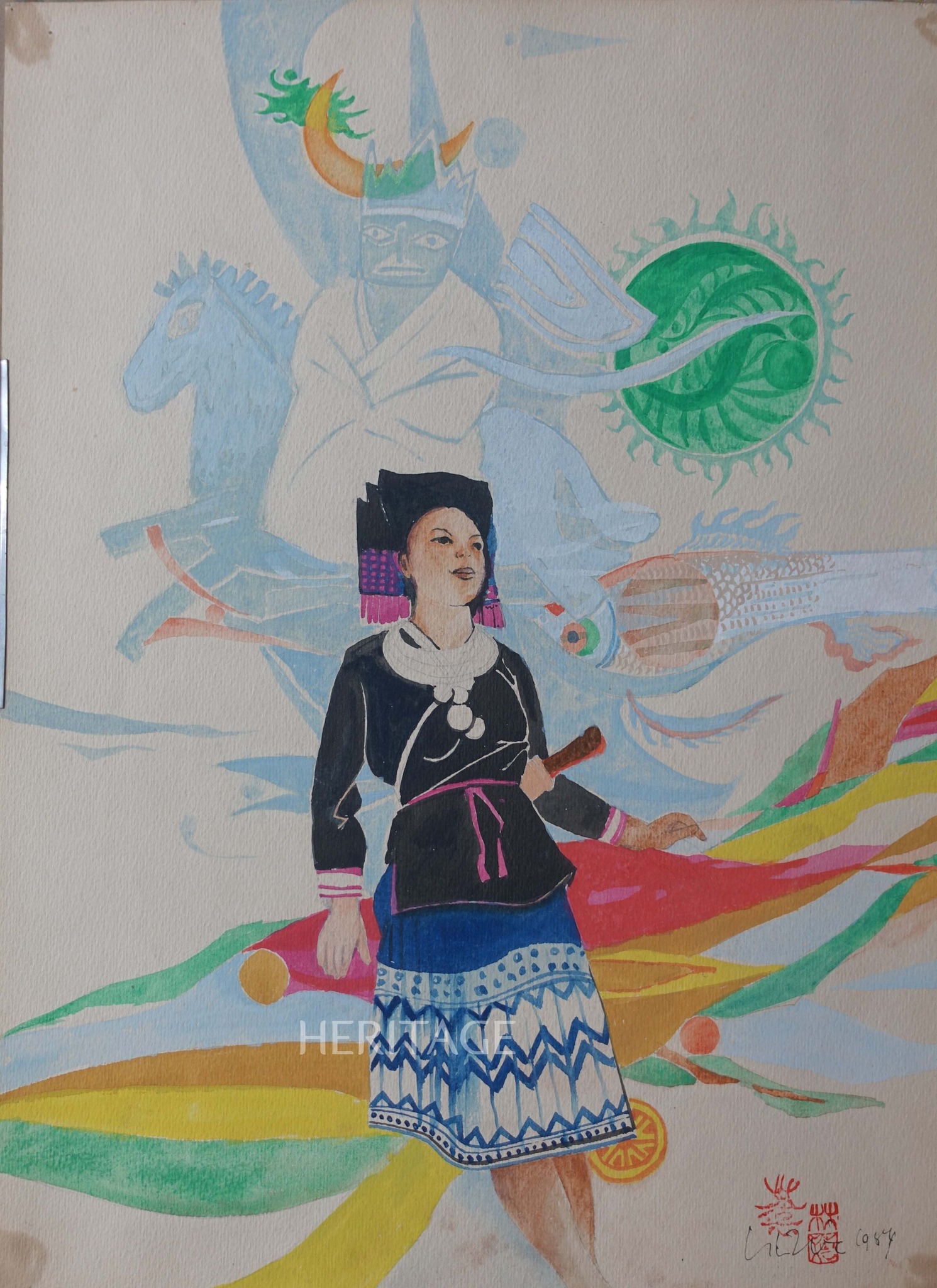
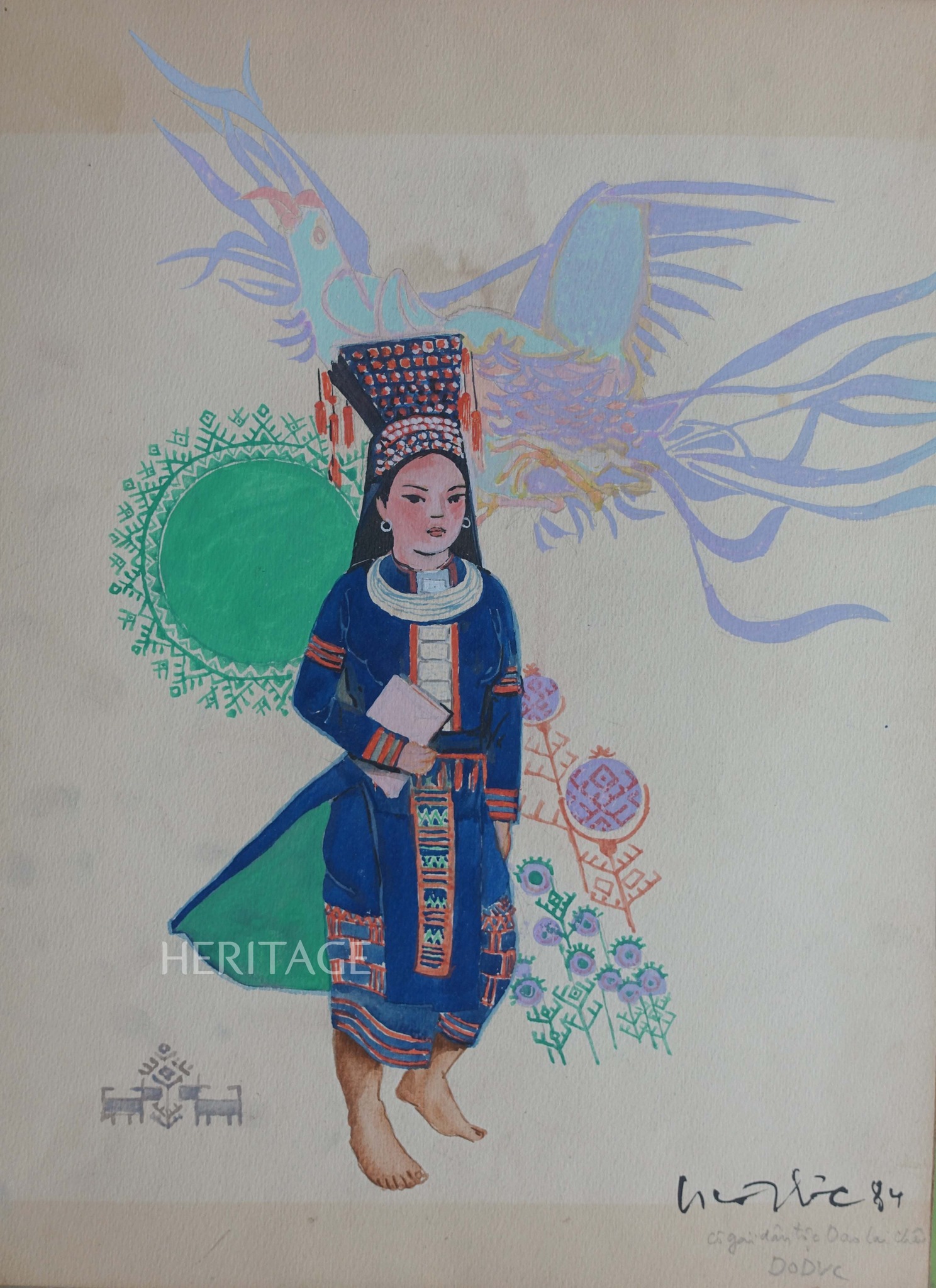
Among the more than a dozen Dao ethnic groups, the Red Dao, Dai Ban Dao, and Tieu Ban Dao are also resplendent in red. The two rows of bright red cotton batting on the chests of the Red Dao people in Cao Bang are visually striking. The two hexagonal-shaped trousers, divided into red sections, also control this shade of red. The Hmong people have the Hoa Hmong branch, whose clothing features the most abundant and diverse shades of red.
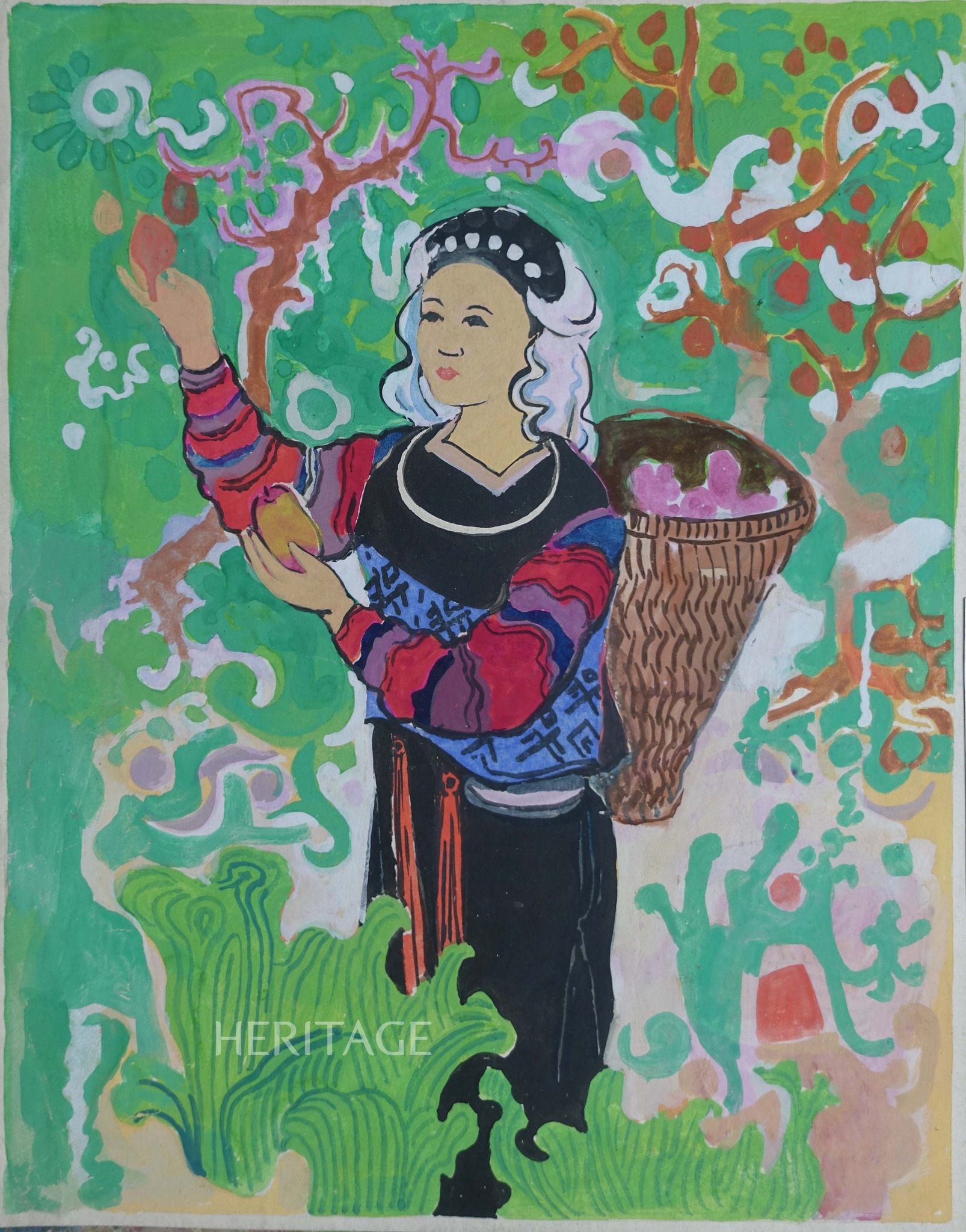
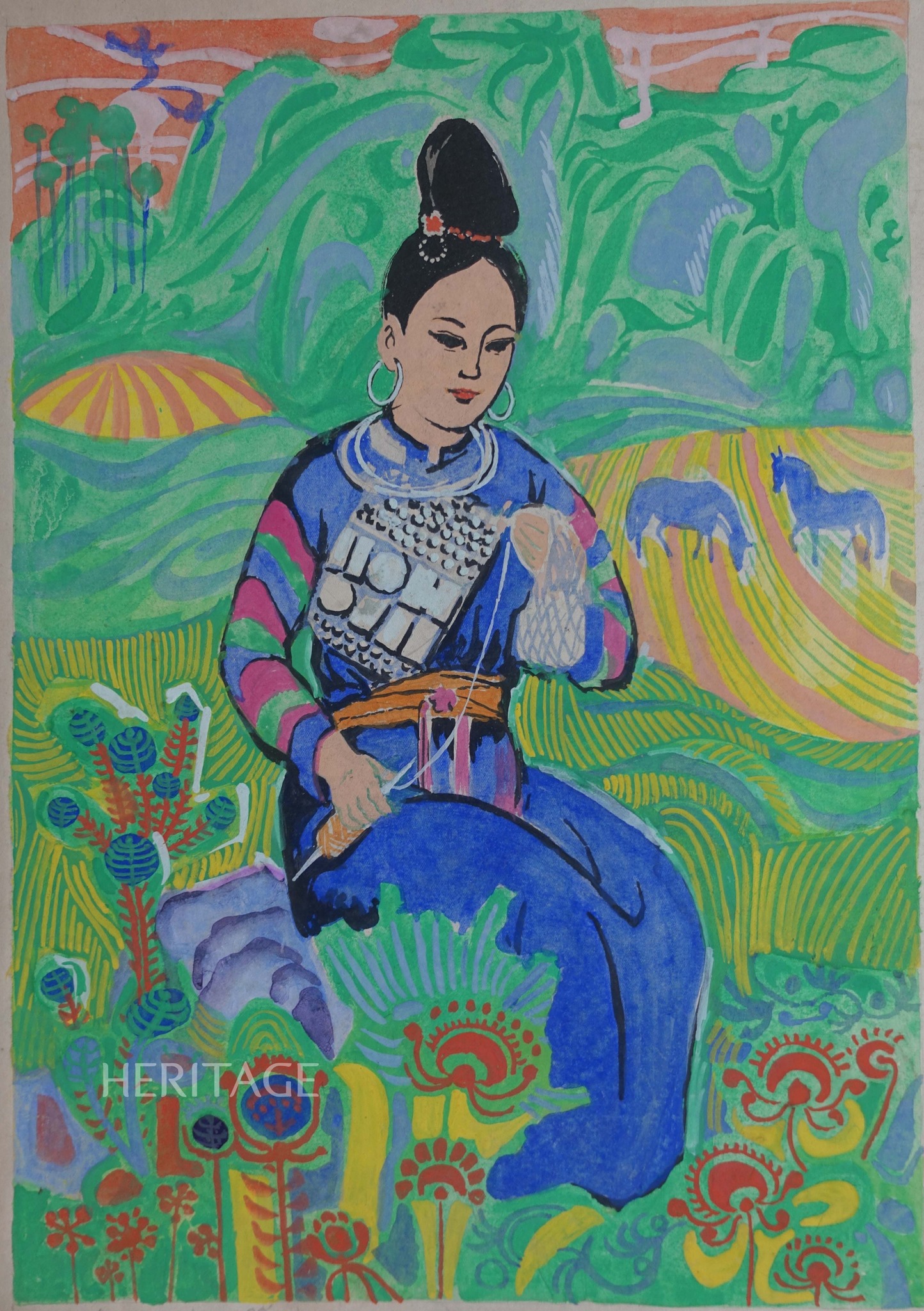
The H'Mong, Dao, Xa Pho, and Lo Lo Hoa people's dresses and blouses also feature some of the most exquisite embroidery and use red in the most refined way. When interspersed with white, blue, yellow, and purple, red always plays a dominant role. In the Central Highlands, the traditional clothing of the Xo-dang men, with its two crossed flaps across the chest, also features a striking red color.
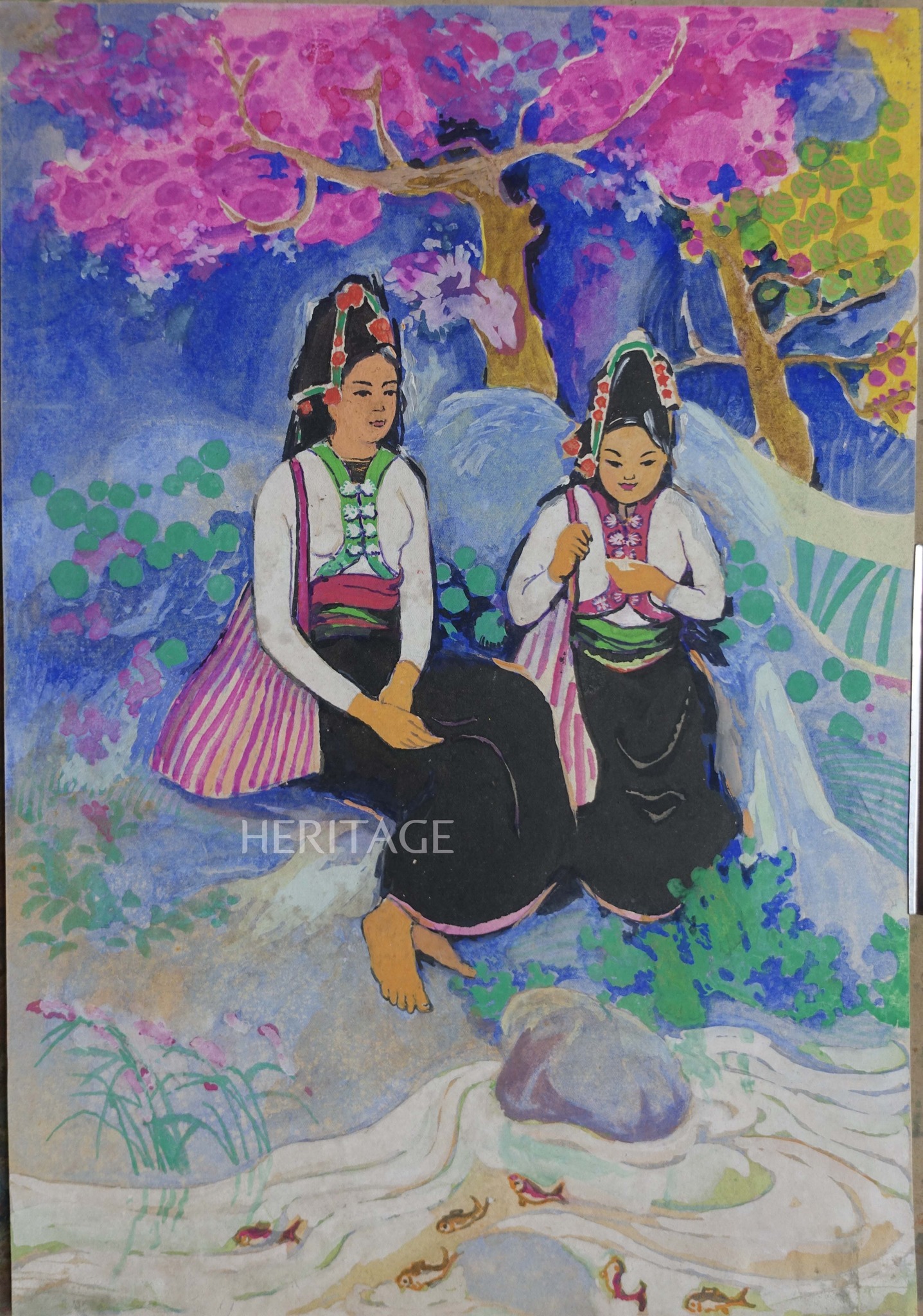
The fiery red color blends seamlessly with the green foliage amidst the mountains and forests. The warm red hues on the clothing seem to balance the cool green of nature. It serves as a reminder that, though humans are small, they are not overwhelmed by nature, but remain in harmony with a unified whole. Looking at the embroidery on the Hmong women's skirts and blouses, the stitching on the scarves and blouses of Dao women and other ethnic groups, one sees a miniature map of nature, where the white, green, yellow, red, and purple represent flowers, leaves, and the very breath of nature. The garments, belts, and headscarves are formed from observing nature, allowing people to find peace within it, and nature, in turn, shares its essence with them through these embroidery and colorful threads.
On their wedding day, the Dao bride's wedding attire is truly elaborate. Even without the wedding dress, the headscarf alone is a solemn symbol of happiness. All Dao ethnic groups follow this tradition; the bride's headscarf, worn before the wedding ceremony and the bridal chamber, is always a vibrant red, representing strength, confidence, and pride.
Red is the color of fire, the color of life. In the beliefs of many ethnic groups, red is a color that wards off evil spirits and brings good luck and happiness.
Why is that?
In the deep, desolate forest, a single ember, a single flame, however distant, is easily recognizable and confirms its location. The color red evokes a feeling of warmth, like sitting by a hearth in a home. In the mountains, fire is kept burning year-round in the house, never letting the hearth go out. Mountain people light incense using fire from the hearth. The fire from the hearth is the source of the flame. The Kinh people keep the oil lamp turned down low on the altar, also using firewood from the hearth. Since the Kinh people don't have forests to provide firewood to keep the fire burning day after day, they know how to keep it burning using straw, not unlike the mountain people who keep their fires burning in piles of firewood.
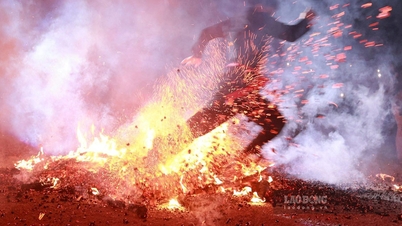
That fire is the source fire. Extending this further, every Olympic torch relay takes its flame from Olympia, passes it through other countries, and then lights the Olympic torch of the host country. So how does this global custom differ from the customs of Vietnam and the highland ethnic groups regarding the role of fire? Red represents fire, the color of the source of life. The most powerful color in the traditional attire of the Pà Thẻn people is red, and they also have a fire-jumping festival celebrated with vibrant red. Among the fire-jumping festivals of the Dao-Pà Thẻn groups, the Pà Thẻn's fire-jumping festival is the most spectacular.
Where there is water, there is life. Alongside water, there is fire, protecting humanity. Fire not only provides safe food and drink, but also keeps people warm during the harsh winter in the desolate wilderness and even in dark, gloomy caves. There, the red fire dispels the cold. The wilderness and cold are the evil spirits of death. Perhaps that is why the color red is used in clothing as a form of spiritual protection, on scarves and belts, as a symbol of eternal life. Red is like a charm to ward off evil and drive away all misfortune. Is it because of this that red is used like salt in meals, indispensable in the clothing of every mountain tribe, because it brings good luck and happiness!
Heritage Magazine
![[Photo] General Secretary and President To Lam presides over a working session with the Central Policy and Strategy Committee on the development of the materials industry.](https://vphoto.vietnam.vn/thumb/1200x675/vietnam/resource/IMAGE/2026/05/21/1779359935432_a3-bnd-3129-1412-jpg.webp)



























































Comment (0)