

The drawing tells the story of spring.
From early morning, the "Tet Painting on Ao Dai" experience area for children was bustling with laughter and chatter. Long tables were placed close together, laden with drawing paper, watercolors, crayons, and markers. Little faces tilted slightly, concentrating on completing their designs. Against the backdrop of white ao dai dresses, images of peach blossoms, apricot blossoms, banh chung (traditional Vietnamese rice cake), red envelopes, and the horse mascot of the Year of the Horse (Binh Ngo) appeared in bright colors. Some children carefully blended colors, while others filled their paintings with whimsical details.
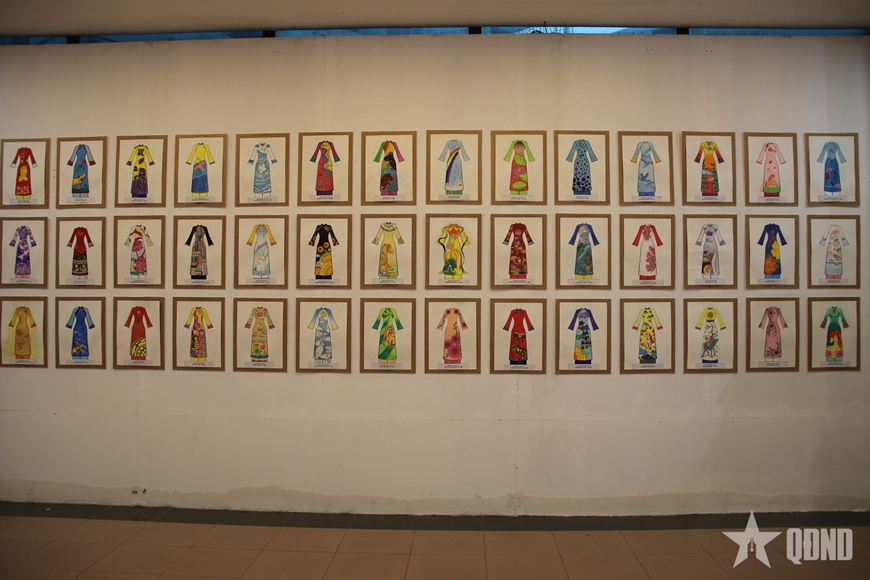 |
Paintings of children wearing traditional Vietnamese dresses for Tet (Lunar New Year). |
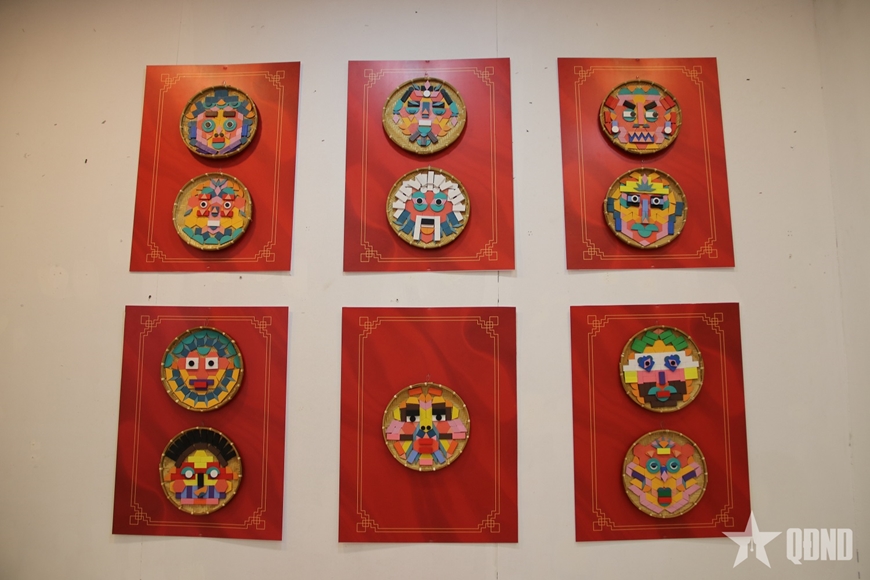 |
| Creative mask artworks made by children are on display in the art experience space as part of the 2026 Year of the Horse Spring Festival. |
Seven-year-old Pham Bao Anh, who lives in Hoan Kiem ward, Hanoi , excitedly shared after completing her design: “I like red ao dai (traditional Vietnamese dress) because I want Tet (Vietnamese New Year) to be vibrant. Here, I can color it myself and choose the patterns as I like. I'm happy because I got to design my own Tet ao dai.”
In another corner, the exhibition of horse paintings themed "Net Zero - Year of the Horse" became a popular stop for children and parents. Recycled cardboard and palm leaves became the materials for the children to freely create and express their ideas.
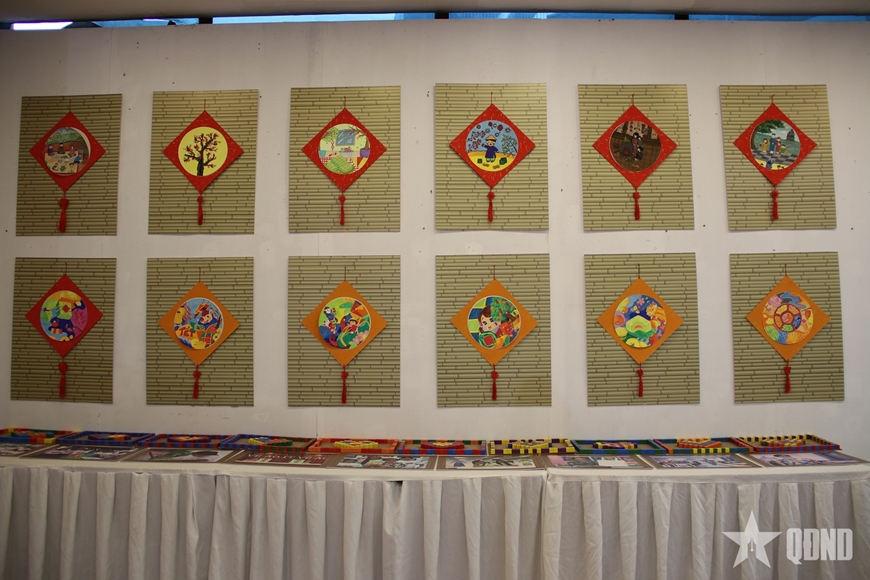 |
| The artworks recreate the Tet atmosphere through the innocent and lively perspective of children. |
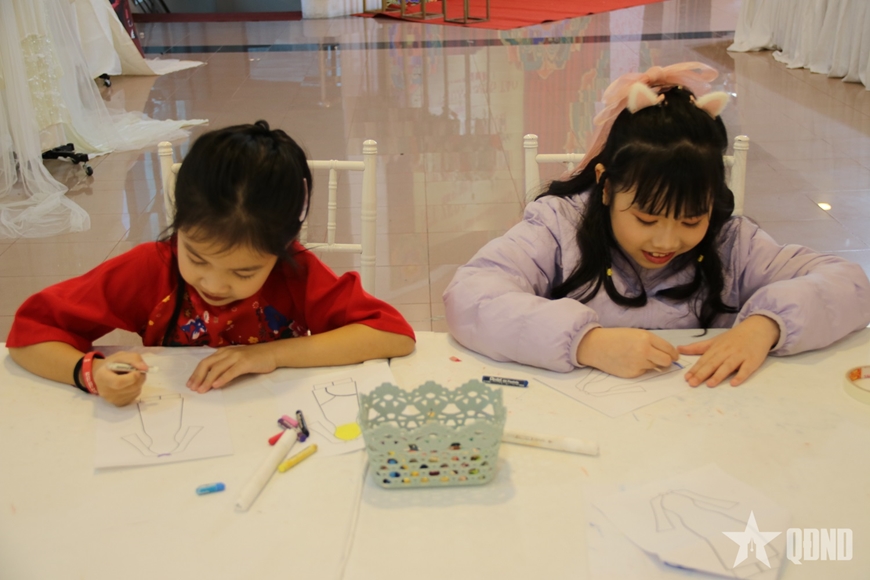 |
| The children excitedly completed their paintings of the traditional Vietnamese dress (áo dài). |
Under the guidance of artist Hoang Ngoc Truc, the children not only drew the New Year's mascot but also gained insights into living responsibly towards the environment. The image of the horse (the mascot of the Year of the Horse 2026) was expressed by the children in many different ways, conveying the message of living green and appreciating nature.
Ms. Nguyen Thu Ha (living in Cua Nam ward, Hanoi) shared: “When children get to create artwork on recycled cardboard and palm leaves, they understand that materials that seem like waste can still be useful. Through this, they gradually develop an awareness of environmental protection, learn to appreciate simple things, and think more about their responsibility to nature.”
 |
| Games at the children's experiential arts zone at the Spring Festival of the Year of the Horse 2026. |
 |
| The children's dancesport performance was full of spring-themed energy. |
Building on the green living message of "Net Zero - Year of the Horse," the creative journey of children continues at the "I Draw Spring" exhibition. Hundreds of paintings fill the space on the walls with vibrant colors. Tet (Vietnamese New Year) is depicted through the bright pink peach blossoms, the red lucky money envelopes, and the pot of banh chung (traditional rice cake) placed by the fire, its smoke rising in wisps. Through these simple drawings, spring is told in the language of children, innocent yet full of emotion.
Seven-year-old Nguyen Hoai An, who lives in Cua Nam ward, Hanoi, shared: "What I like most is when the whole family sits down to eat together. I even drew my grandparents because everyone has to be there for Tet."
 |
| The children enthusiastically decorated and painted spring motifs on their traditional ao dai dresses, imbuing them with familiar images of Tet (Vietnamese New Year). |
 |
| New Year's outfit designs for children. |
Beyond just pictures, children tell the story of spring through music and movement. On stage, programs like "Springtime Journey" and "Spring Welcome Dance" follow one another, featuring singing, dancing, children's ao dai (traditional Vietnamese dress) performances, and reenactments of the Tet holiday atmosphere. In their vibrant ao dai, the children sing melodies about spring, family, and the excitement of welcoming the new year.
Ms. Tran Mai Anh (living in Dong Da district, Hanoi) shared: “I love watching the children stand on stage and express themselves. When they wear ao dai (traditional Vietnamese dress), sing about spring, or perform scenes of Tet (Vietnamese New Year), I can clearly feel their excitement and confidence. Here, the children don't just sit and watch; they truly participate and tell their own stories about Tet.”
Cultural seeds sprout from spring festivals.
If art helps children recount the spirit of spring, then the series of experiential activities opens the door for them to delve deeper into the traditional Tet (Lunar New Year) atmosphere. At the folk games area, the atmosphere becomes more vibrant with laughter and cheers. Children eagerly try their hand at games like throwing the ball, bamboo pole jumping, and stilt walking… Each game attracts a circle of young spectators waiting for their turn. Some hesitate at first, while others boldly try many times until they master it. The rhythmic tapping of the bamboo poles on the ground, the nimble little feet, and the bursts of laughter when they miss a beat.
 |
| The little girl confidently strode across the stage during the art performance. |
 |
| The children were able to admire artwork depicting the horse, the mascot of the Year of the Fire Horse. |
Nguyen Gia Hung (11 years old, living in Hai Ba Trung ward, Hanoi) shared: “I like bamboo pole dancing the most because I have to look at and listen to the rhythm correctly. I feel happy because I get to play with many friends and learn more about this game.”
In addition, there is a Tet jam-making area, showcasing traditional folk treats where children can taste them and hear stories about the flavors of spring. In the handicraft and folk art workshop area, children take turns experiencing making lucky money envelopes, paper fans, clay figurines, printing folk art, calligraphy, making folk calendars, pottery, weaving sedge grass, and making scented candles. Each activity is a way for culture to enter the lives of young children through concrete, memorable, and emotionally evocative actions.
Mr. Pham Duc Thinh (living in Ba Dinh, Hanoi) said: "I brought my child here hoping that he could experience Tet (Vietnamese New Year). When he does things himself, asks questions, and experiences them firsthand, those values will stay with him longer."
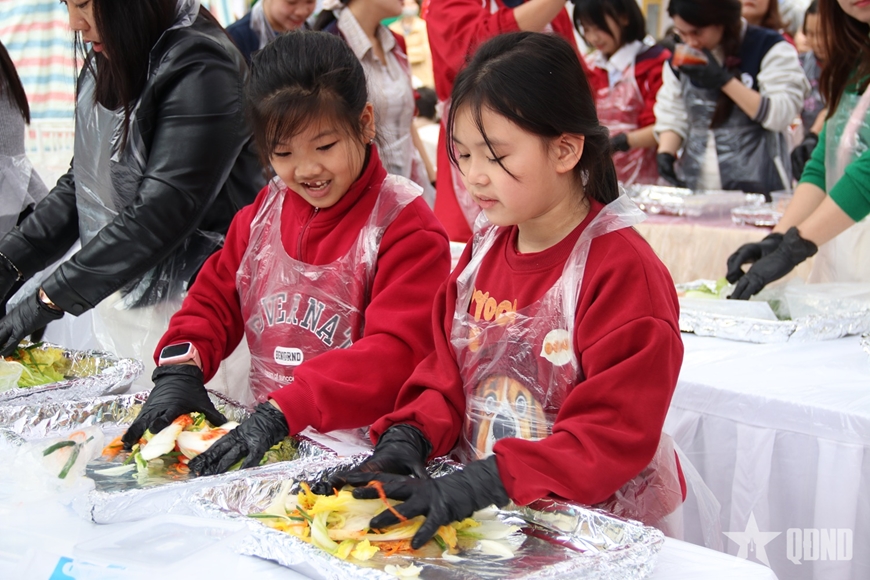 |
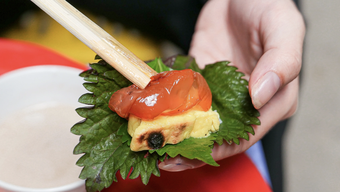
| Children had the opportunity to experience cooking at the Korean-Vietnamese cultural exchange program. |
Leaving the Spring Festival of the Year of the Horse 2026, what remains is not just the colorful flowers, music, or vibrant stalls, but the journey for children to gradually rediscover traditional cultural values. From painting on ao dai (traditional Vietnamese dress), participating in bamboo pole dancing and throwing the ball, to making lucky money envelopes and sculpting clay figurines, each activity revealed a specific aspect of traditional Tet (Lunar New Year), helping the children understand that behind the joy of spring lies a cultural tradition nurtured through generations.
Source: https://www.qdnd.vn/van-hoa/doi-song/sac-tet-qua-lang-kinh-tre-tho-1025847
![[Photo] Da Nang: Exploring the inside of Vietnam's largest "sail" symbol.](https://vphoto.vietnam.vn/thumb/1200x675/vietnam/resource/IMAGE/2026/03/31/1774964764698_ndo_br_anhcau1-jpg.webp)







![[E-Magazine]: Leaning on January](https://vphoto.vietnam.vn/thumb/402x226/vietnam/resource/IMAGE/2026/03/06/1772799934602_e-magazine-nghi-w1200t0-di2609d199d5155355t11920l1-nvtg-104.webp)











![[Photo] General Secretary To Lam attends the Conference summarizing the work of the election of deputies to the 16th National Assembly](https://vphoto.vietnam.vn/thumb/1200x675/vietnam/resource/IMAGE/2026/03/31/1774952471746_ndo_br_bnd-2315-6970-jpg.webp)





































Comment (0)