Na Tong Dream Realm
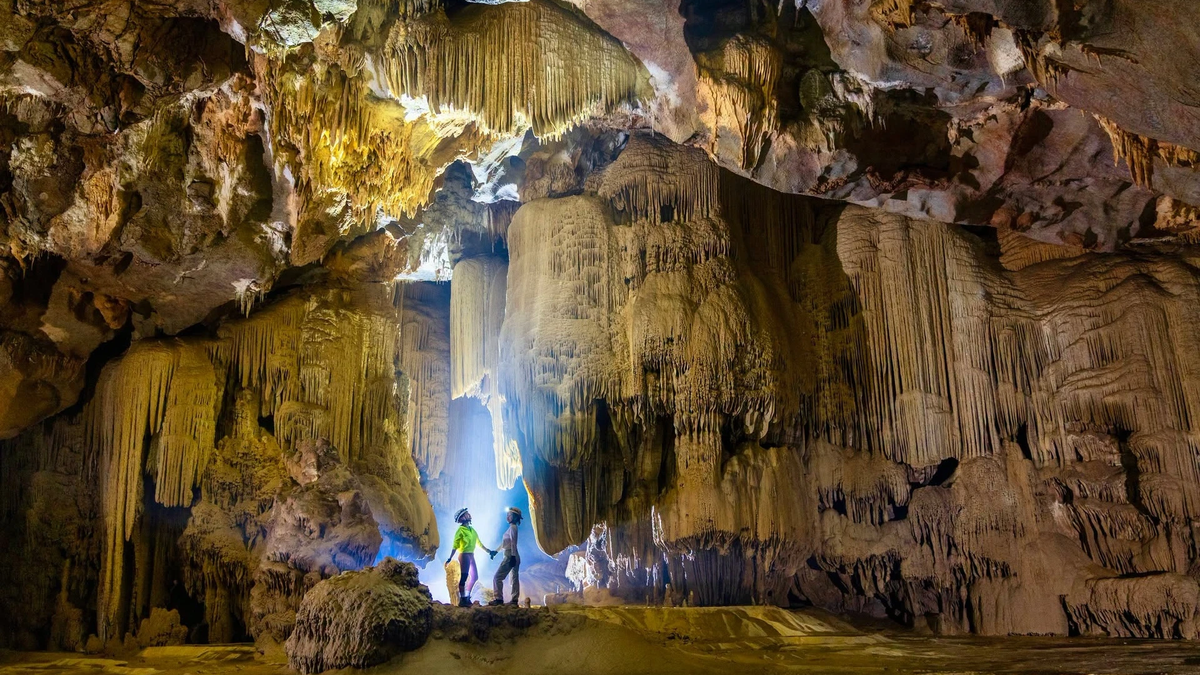
Spring arrives in the high mountains of Thuong Lam with wisps of mist drifting lazily across the slopes and tender young shoots awakening from their long winter slumber. Amidst this vast landscape, Na Tong village emerges like a fairytale land, home to Phuc Lam ancient temple – a silent witness to history spanning centuries.
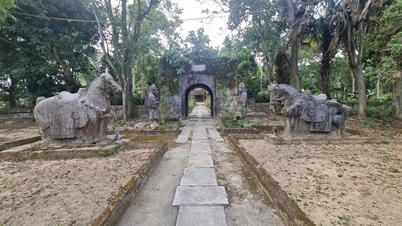
Phuc Lam Pagoda is situated on a high, spacious, and flat mound, facing southwest to receive the warm energy of the Na Tong fields during the early plowing season. Behind the pagoda, a majestic mountain, its head held high, casts a mysterious mist over the site. Pointing to the sacred mountain, Mr. Khoan Van Bien, a resident deeply connected to the Na Tong and Thuong Lam areas, shared that his ancestors passed down a song about the pagoda's origins: "This land was intended to be ruled by a king/ That's why there's a pagoda here/ Here there is a creature resembling a turtle/ People go to that side, people go to this side/ This field is called Na Tong."
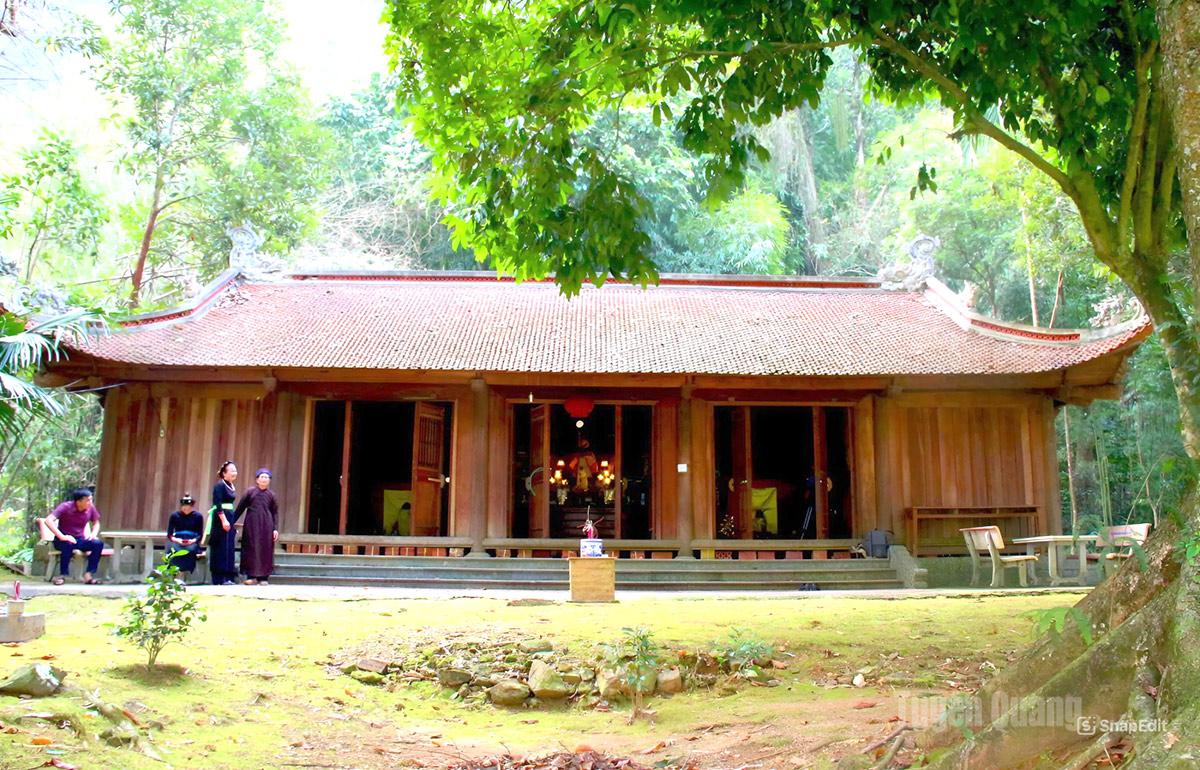 |
| Phuc Lam Tu ancient pagoda is located in Na Tong village, Thuong Lam commune. |
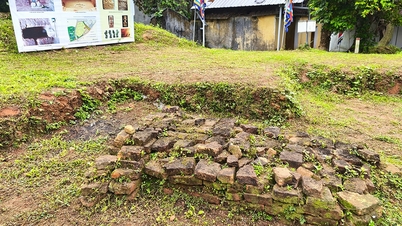
Beyond its legendary origins, Phuc Lam Pagoda – whose name means "bestowing blessings upon the mountains and forests" – also stems from the very desire for peaceful living of the people rooted in this remote mountain region. In particular, archaeological excavations have shed light on the mysteries hidden deep beneath the earth, confirming that the site was built during the Tran Dynasty, around the 13th-14th centuries. On a mound approximately 600 square meters in size, the original architectural plan in the shape of the Chinese character "Đinh" (meaning "to bless the mountains and forests") gradually emerges, along with 14 monolithic blue stones used to support the pillars, one of which is intricately carved with lotus motifs.
Assessing the heritage value of the pagoda, Dr. Nguyen Vu Phan, former Acting Director of the Department of Culture, Sports and Tourism of Tuyen Quang province, affirmed: “ Scientists have identified this as an ancient pagoda from the Tran Dynasty, 13th and 14th centuries, through the artifacts that have been preserved, such as the stone base with lotus flower motifs and the terracotta dragon manes. This shows that even in ancient times, in this borderland that we might think is remote and wild, our ancestors had a very prosperous period. And religion, especially Buddhism, was very developed.”
The ancient wooden temple with its tiled roof, though having faded into the past through countless upheavals, storms, and jungle rains, still retains the soul of a religious center. Standing amidst the atmosphere of Phuc Lam Temple on a spring day, breathing in the scent of incense mingled with the mist, travelers cannot help but feel a surge of pride in a glorious heritage, a beautiful blend of imperial Buddhism and age-old local culture.
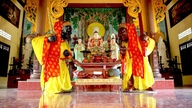


 |
| Ancient Buddha statues at Phuc Lam Tu Pagoda. |
The rustic charm creates uniqueness.
Through the years of rain and wind lashing down on this remote border region, the once grand temple is gone. However, on that sacred land, the people of Thuong Lam have together erected a small temple with a tiled roof and a simple truss structure to maintain their religious beliefs. Stepping into the Buddhist hall (Tam Bao) amidst the faint scent of incense in the early days of the year, travelers will be amazed by the system of statues bearing the distinct cultural imprint of the highland people.
Unlike the opulent displays often seen in the royal residences of the lowlands, dozens of Buddha statues here are carved from solid wood, left completely unpainted in a meditating posture on a lotus pedestal, without any gilding or painting. The statues have gentle female faces, with their hair tied in a bun, possessing a rough, simple appearance yet exuding an incredibly soulful and approachable aura. Explaining this unique feature, Dr. Nguyen Vu Phan analyzed: "In the lowlands, people make very large Buddha statues, with big ears and faces, majestically gilded and painted. But in the mountains, they only carve them from wood in a very simple, rustic way. This is very much in keeping with the character of the mountain people: simple, rustic, and very approachable." According to archaeologists, this is one of the few sets of worship statues in the northern mountainous region dating back to the 14th century that have been preserved intact to this day.
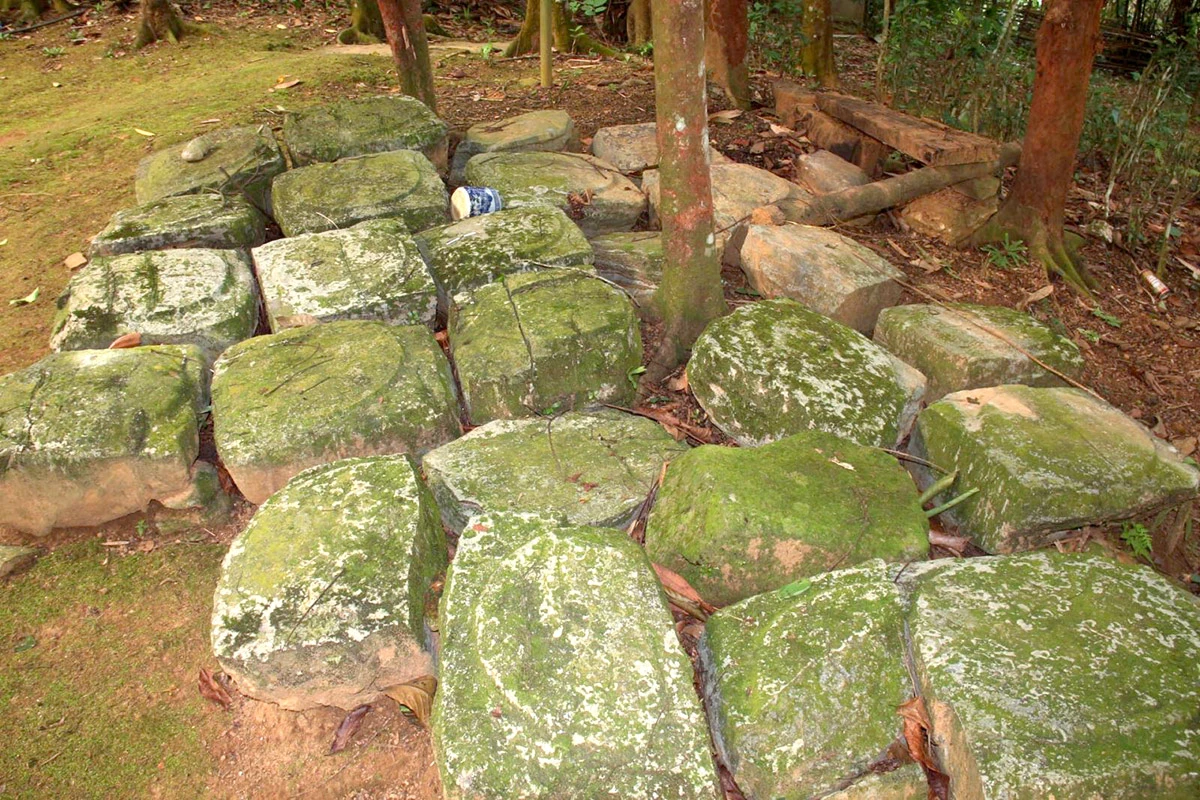 |
| Column bases are natural stone slabs that have been processed and shaped into various forms to support columns. |
The harmonious blend of Buddhism and indigenous beliefs shines even brighter each spring. On the 15th day of the first lunar month, when dew still clings to the tender young leaves along the roads of Lam Binh, locals and visitors from all over flock to the Long Tong festival. People gather at Phuc Lam Temple with sincere hearts, lighting incense sticks and praying for favorable weather, blessings for the mountains and forests, for all things to flourish, and for every household to be prosperous.
Leaving the tranquil monastic setting, the springtime landscape of Na Tong unfolds with a peaceful, vibrant rhythm of life. It's the gentle murmur of the graceful waterwheels tirelessly turning by the stream, the innocent laughter of children playing in the crystal-clear water, and the diligent figures of Tay and Dao women in their indigo-dyed attire at their looms or in the lush green terraced fields of young corn. Capitalizing on its natural advantages and rich heritage, Na Tong is emerging as a shining example of community-based tourism .
Mr. Chau Thanh Nga, owner of Tai Ngao Homestay in Na Tong village, Thuong Lam commune, happily shared: “Tourists come here not only to enjoy the scenery, but also to experience the daily life of the local people. Living in a traditional stilt house, wearing brocade blankets, observing weaving on looms, and going to the fields to harvest corn with the locals are very interesting experiences.”


Farewell to Na Tong as the spring twilight fades over the thatched roofs, the lingering echoes of the majestic Phuc Lam ancient temple and the warm hospitality of the land and people here remain. This heritage site is like a radiant rough gem amidst the vast forest, promising to always be a peaceful haven for wandering souls, opening a bright new chapter for highland tourism.
Giang Lam
Source: https://baotuyenquang.com.vn/van-hoa/202604/chua-co-phuc-lam-6c77275/