

We visited Phu Lac commune (Tuy Phong district), a newly developed rural area, in the autumn weather of August. Walking through the villages with their many spacious houses and beautiful architecture, and the long stretches of clean concrete roads, the peaceful countryside has donned a new look.
Meeting the locals revealed that the new rural development program in Phu Lac not only provides people with effective ways of thinking and doing business, but also better utilizes the existing potential and strengths of a land with a rich and distinctive cultural tradition.
Promoting the role of the main actors
Meeting with us, the head monk Thuong Xuan Huu in Lac Tri village expressed his feelings: "Everyone is happy and excited because the commune has achieved the new rural standard." According to the head monk, who is also the Chairman of the Council of Brahman Religious Leaders of Binh Thuan province, when implementing the new rural development policy in Phu Lac commune, the people in the commune were very supportive because everyone understood that they were both the subjects and the beneficiaries. This has awakened the spirit of initiative and positive action among the people, without any mindset of waiting or relying on the State.
On the day of the ceremony announcing Phu Lac commune's achievement of the new rural standard in 2022, the leaders of the Tuy Phong District People's Committee stated that Phu Lac's success stemmed from the effective application of the motto "The people know, the people discuss, the people do, the people inspect, the people contribute, and the people benefit." Vice Chairman of the Tuy Phong District People's Committee, Vo Duc Thuan, commented that in building the new rural area, Phu Lac relied on its internal resources and promoted the self-reliance of its officials, Party members, and all strata of the people. It is noteworthy that influential figures in the community contributed significantly, including many religious leaders who encouraged and motivated the people to work diligently and cooperate with the government in constructing numerous public and socio -economic projects to improve the lives of the people.
Looking back at the history of Phu Lac, we know that during the wars of resistance against foreign invaders and in defending the Fatherland, Phu Lac commune was one of the key areas targeted by enemy attacks. Overcoming countless losses and sacrifices, the people of various ethnic groups united wholeheartedly to follow the Party in the revolution, winning independence and freedom for their homeland. Now, that revolutionary tradition and spirit of unity continue to flourish, creating the strength for the people to "work together to build a new rural area," building Phu Lac into the prosperous homeland it is today.
The color green in the countryside
According to Mr. Qua Tu Chuyen, the Party Secretary of Lac Tri village and a member of the Cham ethnic group, Lac Tri village used to face many difficulties, with a high poverty rate and low per capita income. Transportation was difficult, with many unpaved roads, especially during the rainy season… “After 10 years, the lives of the villagers have completely changed. Everyone has fields and gardens, with lush fruit trees, and they have enough to eat and save,” Mr. Chuyen remarked. He recounted that during its peak, villagers earned hundreds of millions of dong from raising cattle and goats, and growing dragon fruit, grapes, and apples… Many invested in machinery and also provided agricultural services, from land preparation, harvesting, transportation, fertilization, and even acting as intermediaries for purchasing agricultural products… This resulted in surplus income to cover the living expenses of a rural family.
Upon inquiry, it was revealed that the reason the people of Phu Lac have been able to focus on strong economic development in recent years is because the rural transportation system has been completely paved with concrete or asphalt, along with the effective operation of roads xuyên the fields and irrigation canals. The electricity, water supply, schools, health stations, and village cultural centers have all received significant investment, creating favorable conditions for people to improve their cultural and spiritual lives and develop their economy.
Mr. Mai Duc Nghia, Vice Chairman of the People's Committee of Phu Lac commune, said that the commune has 9,077 inhabitants living in 3 villages: Phu Dien, Lac Tri, and Vinh Hanh, the majority of whom are Cham ethnic people. From 2012 to the present, the commune has mobilized resources to build new rural areas totaling over 165.3 billion VND, creating a clear transformation in socio-economic development and improving the lives of the people. According to Mr. Nghia, the commune has now achieved 19 out of 19 criteria for new rural areas. The criteria regarding transportation, culture, schools, health care, villages, markets, housing, clean water, environment, cooperatives, etc., are all quite good. In particular, the average per capita income of the commune has increased year by year, reaching 44.3 million VND/person; the poverty rate is only 4.9%, lower than the prescribed level.
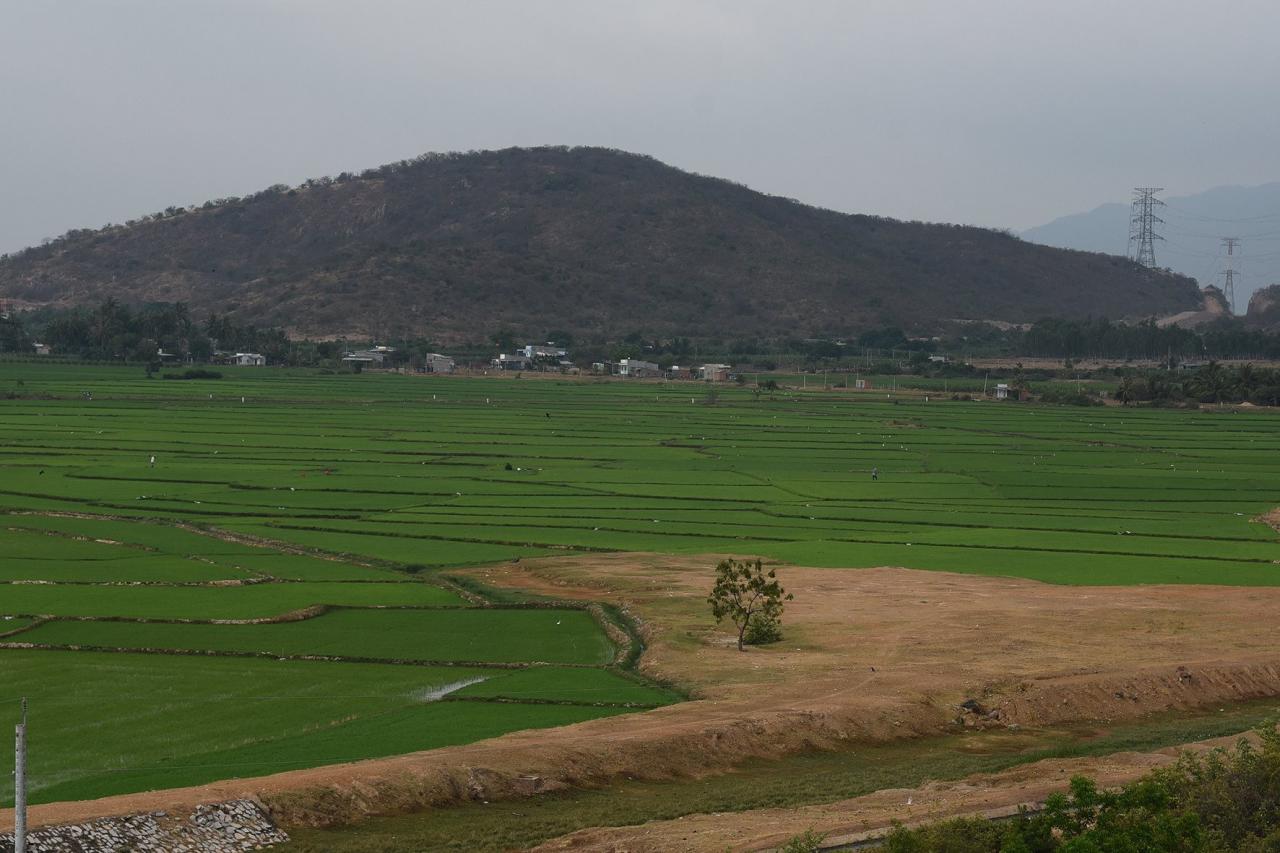
With its advantageous terrain of rivers and streams, irrigation systems, fertile land, and a creative and diligent workforce, Phu Lac has a prominent position in agricultural production, becoming a key agricultural area of Tuy Phong district today and even during wartime. Walking along the well-invested concrete canals and irrigation ditches, we were truly impressed by the development of agriculture, rural areas, and farmers here. Standing amidst the lush green rice fields of Lac Tri, alongside the swaying Hong Nhat grapes and apples, I felt a refreshing coolness in my heart. To further explain, Mr. Mai Duc Nghia, Vice Chairman of the Phu Lac Commune People's Committee, said that the commune places great emphasis on agricultural extension models, not only training and guiding farmers on scientific and technical advancements but also supporting them in accessing information, analyzing and evaluating markets, preserving agricultural products, and even guiding farmers to participate in agricultural services. "In the past few seasons, despite the high prices of fertilizers, agricultural supplies, and unfavorable market conditions, farmers still had a decent income, and everyone was happy," Mr. Nghia confided.
I know that in agriculture, the "fishing rod and fish" dilemma is always a concern for both the government and farmers, but Phu Lac is a vivid example of the results of investment and support for socio-economic development in ethnic minority areas and the construction of new rural areas. Pointing to the lush green fields, Mr. Nghia smiled happily and said, "Now that we have fishing rods, we farmers will catch more fish, and the bigger the fish, the happier we are."
In Phu Lac, a peaceful countryside filled with cheerful laughter and hospitable people, everyone is diligent in their work and works together to maintain security and order in the villages. The senior monks and religious leaders always set a good example, advising their families and descendants to live in unity, harmony, and filial piety. It is gratifying to see that the people of Phu Lac always preserve and promote the tradition of learning and cultural heritage from ancient times. The temples, pagodas, and shrines here are all unique architectural works of art, deeply imbued with the national spirit; they are not only places of cultural and religious activity but also reflect the economic development, cultural life, and the spirit of unity and love for their homeland of the people of Phu Lac.
According to local officials, the Cham people and other ethnic groups in Phu Lac live very closely together, sharing land and living together, supporting each other in all aspects of life in a practical and friendly way. This support brings the Cham and other ethnic groups closer together, as a natural complement to each other's lives. Such a harmonious and mutually supportive life has created cultural exchanges and transformations in all aspects between ethnic groups, such as food, clothing, language, religion, and beliefs. In particular, throughout the ups and downs of history, which have impacted the people's thoughts and feelings and tested their character across generations, the people of Phu Lac have always upheld the tradition of solidarity, self-reliance, and unity, building and nurturing good traditions in labor, production, and life, in fighting and in the struggle for survival against harsh nature to overcome poverty and backwardness.
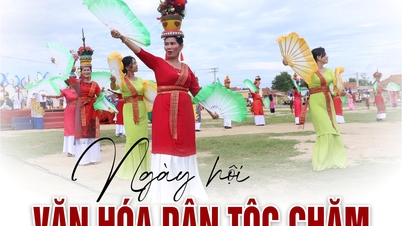
Farewell to Phu Lac - a land of lush greenery and prosperity. The Katê festival has arrived, and the countryside will be even more joyful with the graceful and fluid Cham dances, the rhythmic sounds of the Ghinang and Paranung drums, and the captivating melodies of the Saranai horns… enchanting the hearts of all.
Source



















































































Comment (0)