

 |
The Japanese yen stabilized in early Asian trading, edged slightly higher after recent volatile sessions, amid market suspicions that Japanese authorities intervened to support the currency last week.
Specifically, the yen rose 0.1% to 156.885 JPY/USD, after having gained about 1.4% over the past month – much of that gain coming from Thursday's sharp rebound, when the market assumed authorities had begun buying the yen.
Although Tokyo officials have not confirmed it, multiple sources indicate that Japan has intervened to buy yen for the first time in two years. However, the effectiveness of these unilateral measures remains questionable, especially since this is the third intervention in four years.
According to Mahjabeen Zaman, Head of Foreign Exchange Research at ANZ, the market is currently focused on whether Japan will continue to intervene, especially in light of the Golden Week holiday which may reduce liquidity. She also noted that the possibility of coordinated US support for Japan will be a key factor; if the yen continues to weaken, the likelihood of intervention could increase.
Market sentiment remains cautious as US President Donald Trump announced that Washington would launch a rescue operation for ships stranded in the Strait of Hormuz for "humanitarian" reasons, aimed at supporting neutral nations in the US-Israel conflict with Iran.
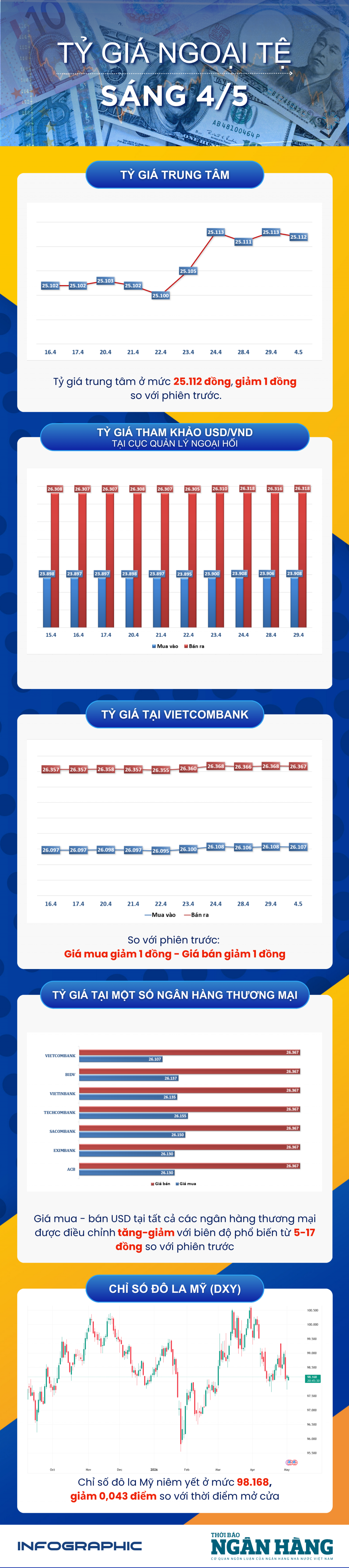
In the currency market, the US dollar index (DXY) remained almost unchanged at 98.144 points. The euro rose slightly to $1.1730, while the British pound also edged up to $1.3586.
Commodity currencies saw more positive movements, with the Australian dollar rising 0.1% to $0.7211 and the New Zealand dollar gaining 0.2% to $0.5905. Market attention is now focused on the Reserve Bank of Australia's (RBA) policy meeting, with most experts forecasting an interest rate hike to 4.35%.
Inflationary pressures in Australia are also rising as fuel and input costs escalate due to the impact of the Middle East conflict, forcing major retailers to warn of an upward price trend in the near future.
In Europe, the euro was supported as German Chancellor Friedrich Merz sought to de-escalate tensions with the US over new tariff plans. Berlin said it was coordinating with the European Commission in talks with Washington after the US announced it might raise tariffs on cars imported from the EU to 25%.
Source: https://thoibaonganhang.vn/sang-45-ty-gia-trung-tam-giam-1-dong-181420.html





































































































Comment (0)