According to statistics, Hai Phong currently has 3,086 villages and residential areas, of which 2,089 units do not meet the standards regarding the size of households as stipulated. After reorganization, the city is expected to have 1,723 villages and residential areas, a reduction of 1,363 units, equivalent to 44.2%. This is a large volume of work, impacting almost all localities in the city and directly related to the lives of the people as well as the operation of the political system at the grassroots level.
Looking at the practical development of the city in recent years, it is clear that the need to reorganize villages and residential areas is inevitable. Along with urbanization, the expansion of development space, and the formation of more and more new urban and residential areas, the population structure in many localities has undergone significant changes. In some places, the population size has increased rapidly, in others the residential area has expanded, while in some other areas the number of households no longer meets the prescribed standards.



This reality necessitates a review and reorganization of grassroots residential units to better suit the new situation. Without timely adjustments, inadequacies in scale, administrative areas, and community organization will continue to affect the effectiveness of the local political system and the implementation of socio-economic development tasks in the locality.
Set against the backdrop of Hai Phong entering a new phase of development with the goal of achieving double-digit economic growth, accelerating digital transformation, building a digital government and smart city, and improving the quality of services for citizens, the need to enhance the effectiveness and efficiency of management at the grassroots level becomes even more urgent.
In reality, the effectiveness of the administrative apparatus is not only determined at the city or commune level, but also depends greatly on the quality of operation of villages and residential areas. These are the places that directly understand the people's situation, organize the implementation of the Party and State's policies and guidelines, and serve as an important bridge between the government and the people.
Therefore, this reorganization is not simply aimed at ensuring compliance with regulations, but also at building more reasonably sized residential communities, facilitating management, organizing self-governing activities, and improving the quality of service to the people.
It is noteworthy that the city has determined that the reorganization must be carried out on the basis of harmonizing management requirements with historical, cultural, customary, and geographical characteristics. Encouraging the reuse of previously existing names and limiting the mechanical merging of names when establishing new units demonstrates attention to tradition and the consensus of the people. This is an appropriate approach because behind each village and residential area lies not only an administrative boundary but also a community that has been formed and bound together for generations. Therefore, the consensus of the people is always a crucial factor in determining the success of the reorganization process.
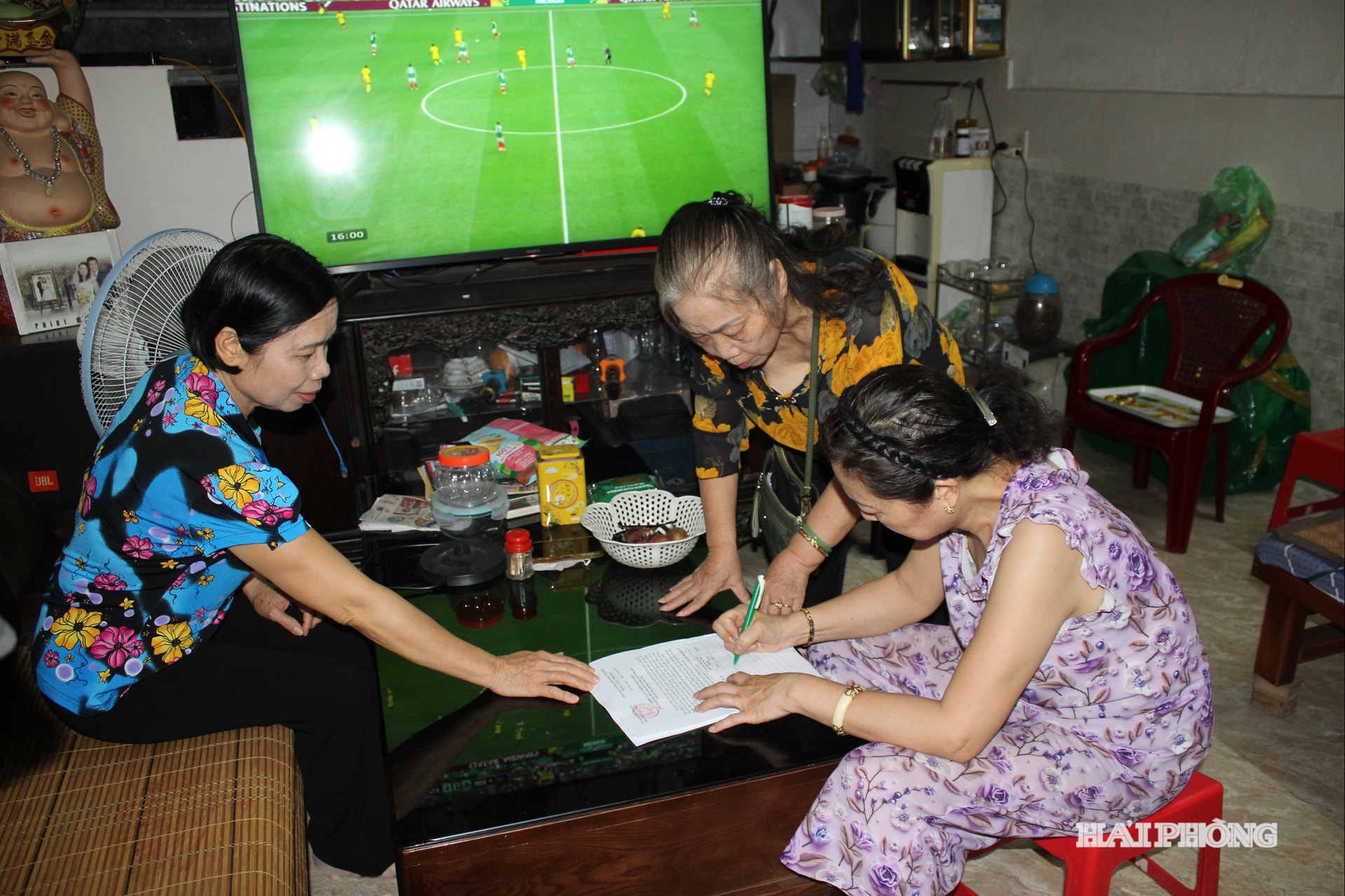
However, this is not an easy task. Besides localities with favorable conditions for reorganizing residential units, there are still special areas such as islands, isolated areas, areas with fragmented terrain, or areas linked to national defense, security, and socio-economic development requirements that need careful consideration based on practical realities. Therefore, the implementation process requires localities to proceed cautiously step by step, publicly disclose plans, organize public consultations in accordance with regulations, promptly address concerns arising from the grassroots level, and create a high level of consensus within the community.



From now until the end of June, localities will finalize the plans and submit them to the competent authorities for consideration and decision. The workload remains substantial, while the deadlines are very high. This requires proactive leadership and responsibility from local Party committees and authorities in directing and organizing the implementation. Successfully reorganizing villages and residential areas will not only contribute to improving grassroots organization but also create a foundation for the stable operation of the new communes and wards, enhancing the effectiveness and efficiency of state management and better meeting the city's development needs in the new phase.
LE HIEPSource: https://baohaiphong.vn/sap-xep-de-phat-trien-545486.html

![[Photo] "Hanoi Lotus Festival" honors the lotus flower that has been associated with Vietnam for thousands of years.](https://vphoto.vietnam.vn/thumb/1200x675/vietnam/resource/IMAGE/2026/06/27/1782516943048_sen-ha-noi-2026-minh-duy-1-jpg.webp)