At a discussion with the Agriculture and Environment Newspaper, Associate Professor, Doctor, and writer Nguyen The Ky - former member of the Central Committee of the Communist Party of Vietnam and former Director General of the Voice of Vietnam Radio - shared profound insights on the relationship between administrative reform and the preservation of the cultural identity of Vietnamese villages.
According to Associate Professor Dr. Nguyen The Ky, villages appeared very early in the history of the nation, closely linked to the formation of the rice-farming civilization. In Vietnamese cultural life, "villages" have a stronger presence than "hamlets." While "hamlets" are administrative concepts influenced by the Sino-Vietnamese system, "villages" are indigenous cultural entities deeply ingrained in the lives of Vietnamese people for many generations. In some ancient texts, there are villages that were both cultural entities and administrative entities.
He argued that in the traditional "family - village - state" structure, the village plays a particularly important role. It is not only a place of residence but also a space for preserving customs, beliefs, village regulations, moral values, and strong community relationships. "The village is a cultural unit that has existed for thousands of years. The hamlet, on the other hand, is an administrative unit serving state management. These two concepts are not entirely identical and should not be equated," he emphasized.

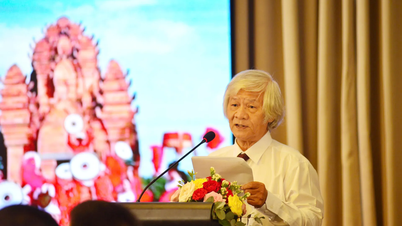
Associate Professor, Doctor of Science, Writer Nguyen The Ky - former Member of the Central Committee of the Communist Party of Vietnam, former Director General of the Voice of Vietnam Radio. Photo: Doan Phong.
It's inappropriate to call Bat Trang or Dong Ho just a "village".
According to Associate Professor and writer Nguyen The Ky, what worries many people today is not the reorganization of residential areas, but the risk of culturally significant names being replaced by purely administrative names.
He posed the question: If one day people were to call Bat Trang "Bat Trang village," Dong Ho "Dong Ho village," or Tien Dien "Tien Dien village," would these place names, which have become part of history, literature, and the national consciousness, still retain their original symbolic value? Because when mentioning Bat Trang, people think of the famous centuries-old pottery village. Mentioning Dong Ho brings to mind its distinctive folk paintings. Mentioning Tien Dien brings to mind the birthplace of the great poet Nguyen Du. These names have transcended the meaning of a mere residential unit. "People and tourists come to Duong Lam village, Bat Trang village, or Dong Ho painting village not because they are administrative units, but because they are cultural spaces bearing unique historical imprints," he said.



In reality, the reorganization of villages and residential areas is an objective requirement in the context of streamlining the administrative apparatus. With the abolition of the district level and the increase in the size of the commune level, the formation of more suitable residential units is necessary. However, according to Associate Professor Dr. Nguyen The Ky, the effectiveness of management and the preservation of cultural values are two factors that must be considered equally important. He proposes using the concept of "village and equivalent units" in administrative documents. This approach ensures uniformity in state management while also facilitating the maintenance of traditional names such as village, hamlet, and other similar cultural regions.

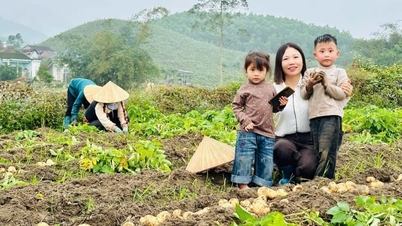
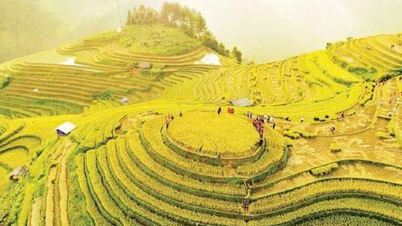
Vietnamese countryside. Photo: Truong Khanh Thien.
Preserving the spirit of the village for sustainable development in the new era.
From an economic development perspective, Associate Professor and writer Nguyen The Ky argues that village culture is not only a heritage that needs preservation but also a particularly important resource for the development of tourism and cultural industries. In the current trend, tourists are not only seeking modern resorts but are increasingly interested in experiential tourism, community tourism, agricultural tourism, and ecotourism. Ancient villages, traditional craft villages, and unique cultural spaces are key elements that create Vietnam's unique appeal on the world tourism map.

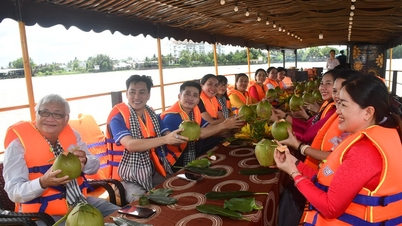
"Some foreign tourists prefer going down to the rice paddies, irrigating fields, and experiencing rural life rather than staying in luxurious hotels. That is the value that village culture brings," shared Associate Professor, Doctor Nguyen The Ky, a writer. Photo: Vietnam National Tourism Administration.
Furthermore, OCOP products, traditional craft villages, and community cultural activities are becoming important foundations for the development of the cultural industry and rural economy. The issue of naming residential units is not simply a matter of administrative technique but is directly related to history, culture, language, and community psychology. Therefore, relevant authorities need to listen to opinions from many sides, especially experts in history, culture, ethnology, and linguistics, as well as the people living in these localities.



He argued that organizing public forums, workshops, and seminars to gather public opinion is necessary to find the most reasonable solutions. "Listening is key to selecting, absorbing, and finding the optimal solution for the common good," he said. Looking more broadly, the issue of village and hamlet names today reflects a larger problem: How can modernization and administrative reform not disrupt the flow of national culture?
According to Associate Professor and writer Nguyen The Ky, Vietnamese history shows that our nation has always known how to absorb progressive elements from the outside while simultaneously preserving its cultural core. "Going out to the world while maintaining national identity is a guiding principle throughout the country's development," he affirmed.
In this context, the names of villages, hamlets, and communities are not merely administrative addresses. They are collective memories, cultural identities, and a thread connecting the past with the present. Therefore, innovation and reform, while respecting history, culture, and community sentiment, is the most difficult but also the most deeply rooted and enduring reform.
Source: https://nongnghiepmoitruong.vn/sap-xep-thon-lang-bao-ton-ban-sac-d815371.html



































![Official launch of the carbon exchange: [Part 1] Vietnam is ready](https://vphoto.vietnam.vn/thumb/402x226/vietnam/resource/IMAGE/2026/06/29/1782693127828_1715-vfs-nongnghiep-121703.jpeg)