

 |
Caster Semenya chose to stop. |
In the world of athletics, Caster Semenya is not only remembered as an icon of talent and achievement, but also as the center of ongoing debates regarding gender in modern sports .
From teen phenomenon to unbeatable star
Once the pride of South Africa and Africa as a whole, Semenya twice stood on the Olympic podium as the 800m champion, but her career was overshadowed by strict regulations related to "biological sex".
Caster Mokgadi Semenya was born in 1991 in a small village in Limpopo, South Africa. From a very young age, she showed exceptional talent in middle-distance races. The turning point came in 2009 when, at just 18 years old, Semenya won the gold medal in the 800m at the World Championships in Berlin. Her impressive achievement, along with her muscular physique and powerful demeanor, quickly drew international attention.
But along with the fame came the ordeal of undergoing "gender tests"—an unpleasant experience for any athlete. Semenya was diagnosed with a form of "sexual developmental disorder" (DSD), meaning she has the typical male XY chromosome set but exhibits the appearance and social gender of a female.
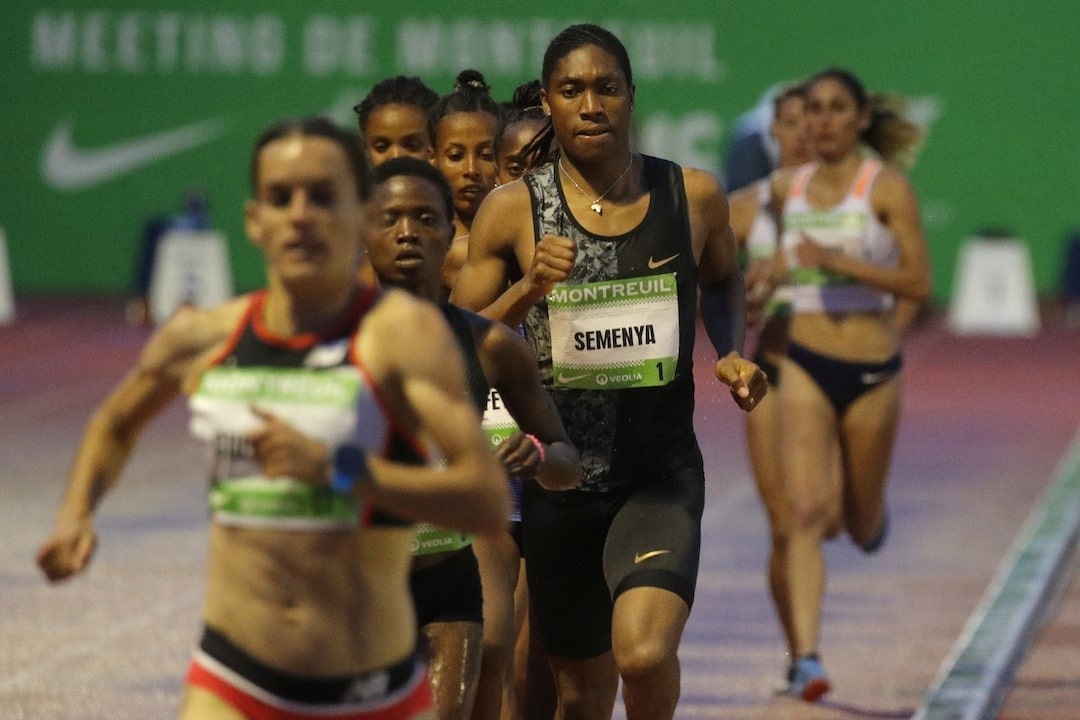 |
Semenya is said to be different from other female athletes. |
Importantly, she was identified as female from birth, grew up, and always identified herself as a woman. However, it was this unique biological factor that placed Semenya at the center of the biggest controversy in world sports for two decades.
The debate over testosterone and interrupted careers.
The World Athletics Federation began implementing regulations in 2011 regarding the "management of female athletes with naturally high testosterone levels." Semenya became a direct target of this policy. The governing body argued that her high testosterone levels gave her an unfair advantage over other female athletes, as this hormone is closely linked to muscle strength and cardiovascular performance.
Meanwhile, many scientists and human rights activists objected, arguing that this was discrimination and deprived women born with such bodies of their right to compete.
In 2016, Semenya reaffirmed her dominance by winning the 800m gold medal at the Rio Olympics, and subsequently continued to dominate international competitions. However, in 2019, she was officially banned from competing in her signature 800m event at the Olympics and world championships for refusing to use medication to artificially lower her testosterone levels. Semenya stated, "I will not change my natural body just to compete."
 |
Caster Semenya did not want to receive hormone-lowering injections. |
Since then, her career has essentially ended. At the peak of her form, undefeated in over 30 consecutive races, Semenya was forced to retire from racing.
The legal marathon and its conclusion.
Unwilling to accept being disqualified, Semenya sued World Athletics in 2018. She took the case to the Court of Arbitration for Sport (CAS), and then to the Swiss Federal Court, but both attempts failed. These courts ruled that World Athletics' regulations were necessary to ensure a "fair playing field".
The case seemed closed, but in July 2023, the European Court of Human Rights (ECHR) ruled that Semenya had not received a fair trial in Switzerland, and that some complex arguments had not been adequately considered. This victory rekindled hope for Semenya, and many believe she will appeal to the Swiss Federal Supreme Court.
However, in October 2025, Semenya's lawyers announced that she would no longer pursue the lawsuit. "Caster has taken the case to the highest court of jurisdiction and achieved a significant successful outcome. Under the current circumstances, the lawsuit will not continue," said lawyer Patrick Bracher.
At 34, Semenya transitioned to coaching, closing a glorious chapter in her running career, but the fight continues. She affirms that she will stand at the forefront, continue to speak out, and fight on behalf of DSD athletes who yearn for fair competition and respect.
Source: https://znews.vn/semenya-roi-duong-dua-nu-vi-thi-phi-gioi-tinh-post1590418.html



![[Photo] National Assembly Chairman Tran Thanh Man successfully concludes his participation in IPU-152](https://vphoto.vietnam.vn/thumb/1200x675/vietnam/resource/IMAGE/2026/04/18/1776502638199_vna-potal-chu-tich-quoc-hoi-ket-thuc-tot-dep-chuong-trinh-tham-du-ipu-152-8709975-jpg.webp)















































































Comment (0)