

These days, localities in Sin Ho district are carrying out preparations for the 2025 reforestation season. In barren areas and deforested hills, people are clearing undergrowth, improving the soil, digging holes for planting trees, and finding water sources and pathways to ensure the work proceeds smoothly. Many households have also registered to undertake contracts to protect newly planted forests, giving up their hillside land for reforestation, in order to meet the set targets early.
To effectively carry out the task, right from the beginning of the year, when the district was assigned a target of planting 810 hectares of forest by the Provincial People's Committee (including 100 hectares of cinnamon trees, 10 hectares of replacement forest, and 700 hectares of other forestry trees), the District People's Council and People's Committee issued resolutions and decisions on assigning targets for socio-economic development plans, with forest planting being a crucial target to be implemented. The district sent a working group to coordinate with the People's Committees of communes and towns to conduct field surveys, measure and assess soil quality and climate to determine which tree species are suitable; calculate implementation plans such as: the number of seedlings, the impact of weather, access roads, transportation, the number of participants, and then review and design the project for submission to the competent authority for approval. Furthermore, the district is stepping up its efforts to educate the people about the purpose and significance of reforestation, the benefits and drawbacks of having or losing forests, and mobilizing people to contribute by donating hillside land to increase forest area, while providing guidance on planting and caring techniques. In addition, it is coordinating with businesses and organizations to provide seedlings to achieve the set goals as soon as possible.
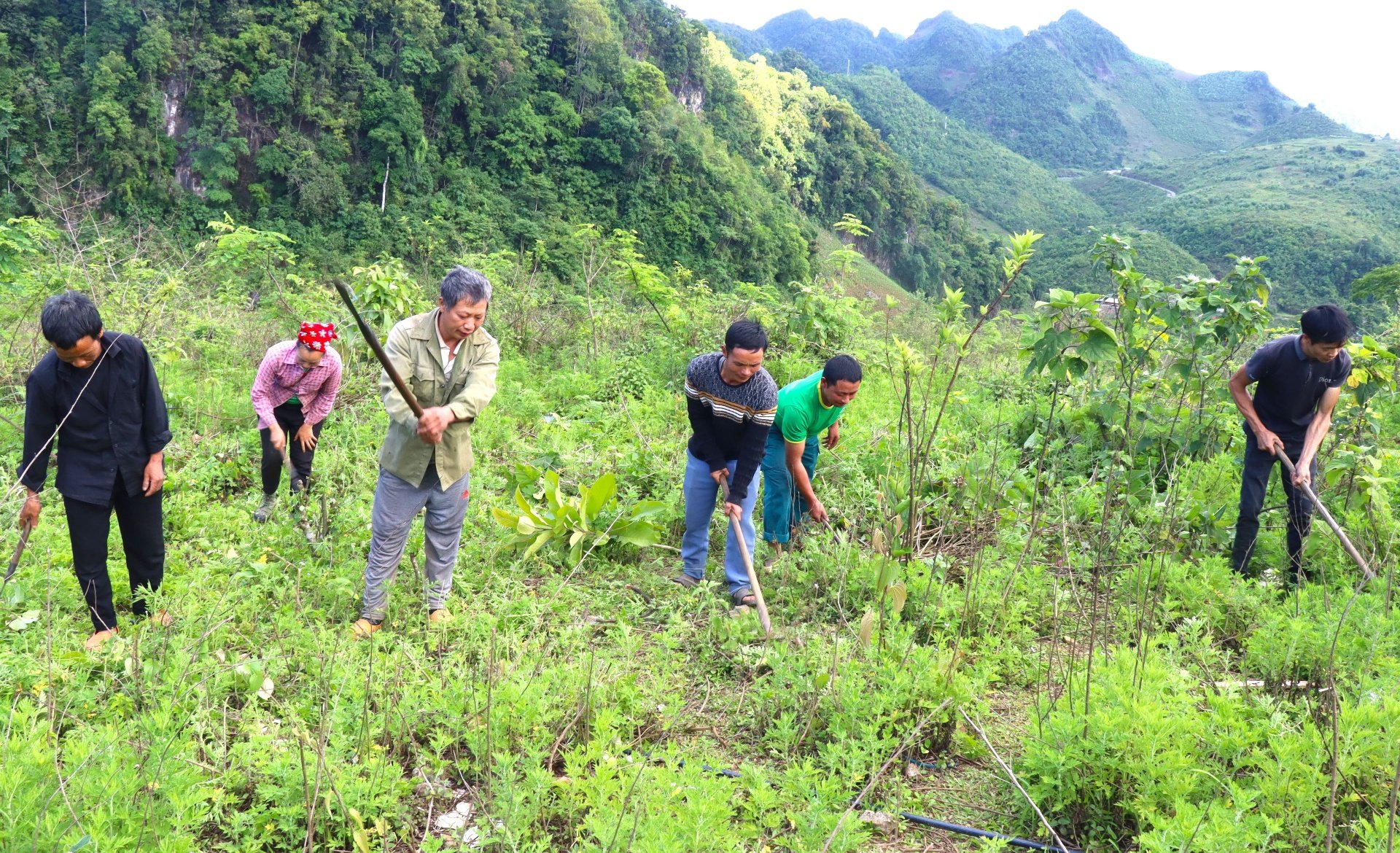
People in Nhieu Sang village (Lang Mo commune) are clearing undergrowth and preparing to plant trees.
Working together in unity, reforestation is gradually being implemented. It is expected that planting will begin in June and July to utilize rainwater resources and simultaneously prevent soil erosion, landslides, and flooding. Local authorities are mobilizing resources and manpower to build roads, open access routes for vehicles carrying seedlings, prepare equipment and tools, and arrange schedules appropriately. For areas with barren soil, people are being mobilized to supplement the soil with nutrients, compost green manure, and animal manure to help the trees take root and grow well. It is known that in 2024, Sin Ho district was assigned by the province to plant 200 hectares of forest, with the district assigning an additional 400 hectares to the communes. The results show that 267.24 hectares have been planted, achieving 133.6% of the provincial plan and 66.81% of the district plan, mainly consisting of cinnamon and rosewood trees, mostly in the lowland communes.
For seedlings, careful preservation is crucial. During transportation to the planting sites, the seedlings are placed in styrofoam boxes, neatly positioned, and easily transported to the locations. The reforestation process involves one year of planting, three years of care, and only in the fourth year is the forest assessed and included in the forest cover percentage. Therefore, during this period, communes and towns educate and guide people on protecting, caring for, and promoting forest regeneration. To date, the total forest area in the district is 67,933.8 hectares, with a forest cover rate of 42.4%. Each year, people benefit from over 31 billion VND in forest environmental service payments, contributing to poverty reduction and improving their lives.
Lang Mo is a mountainous commune in the district with 7 hamlets, mainly inhabited by the Mong and Dao ethnic groups. When assigned the target for reforestation, the commune intensified propaganda and mobilization efforts to gain the people's consensus and participation. They conducted land surveying and demarcation, mobilized villagers to participate in reforestation, and simultaneously cared for, protected, and strictly dealt with acts of vandalism. Currently, the commune's forest area is 5,205.7 hectares, with a forest cover rate of 50.5%. In 2024, the commune plans to plant 20 hectares of new forest, and this year they plan to plant 5 hectares, with planting expected to begin in June.
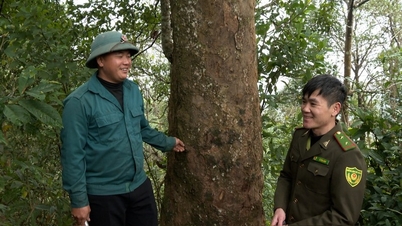
Mr. Tan Cu Cha (Nhieu Sang village, Lang Mo commune) said: "Forests not only bring economic benefits to the villagers but also protect the village from natural disasters. Therefore, when there was a plan to plant forests, the whole village participated, taking responsibility for forest conservation and protection. Many households even gave up their hillside land for forest planting. The village incorporated forest protection and development into its regulations, and anyone who violates them will be dealt with according to the rules."
Mr. Nguyen Khac Tiep, Head of the District's Agriculture and Environment Department, said: Currently, the district has more than 3,000 hectares of vacant land available for reforestation. With the assigned target for this year, the district will focus all resources to ensure timely progress, mobilize the people's participation in planting and protecting the land, contributing to bringing greenery to this mountainous, border district.
Source: https://baolaichau.vn/kinh-te/sin-ho-tang-dien-tich-rung-1289293















































![[Infographic] Vietnam's Economic Situation Report, Q1 2026: Strong Growth Momentum](https://vphoto.vietnam.vn/thumb/402x226/vietnam/resource/IMAGE/2026/04/04/1775298512042_tang-truong-kinh-te-viet-nam.jpeg)

![[Image] Close-up view of the 10-lane road connecting to Long Thanh Airport](https://vphoto.vietnam.vn/thumb/402x226/vietnam/resource/IMAGE/2026/04/04/1775291871988_ndo_br_1-resize-5690-jpg.webp)























Comment (0)