

The "Mother Goddess Worship Heritage" project byFPT University Ho Chi Minh City students offers a new experiential space, combining 2D mapping, motion capture, and digital displays to help Gen Z access Mother Goddess worship in a more accurate, comprehensive, and relatable way.
FPT students approach heritage in a modern way.
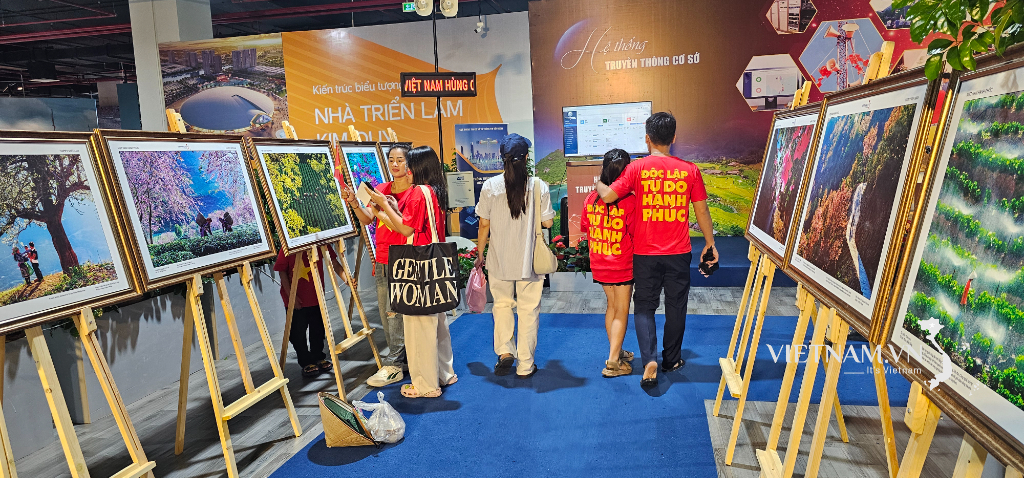
The art exhibition "Going Back to the Source, Who's Left?" organized by a group of students from the Multimedia Communication Management major at FPT University Ho Chi Minh City is taking place from November 22nd to 23rd at PARC Mall (Chanh Hung Ward). This activity aims to help young people access the intangible cultural heritage "The Practice of the Tam Phu Mother Goddess Worship of the Vietnamese People".
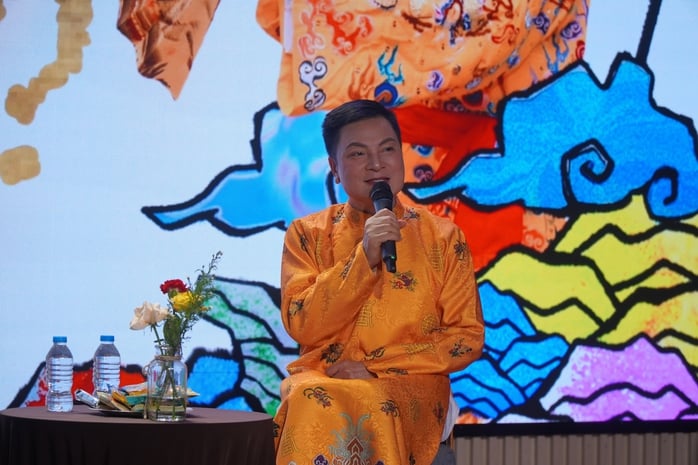
Dr. Nguyen Duc Hien stated that the worship of Mother Goddess helps young people find their roots and nurture Vietnamese pride.
At the program, Dr. Nguyen Duc Hien shared about the beauty of heritage, emphasizing its role in nurturing human values and Vietnamese identity. He argued that heritage exists in everyday life. Young people don't need to go to temples to understand Mother Goddess worship; they just need to start with an attitude of respect and gratitude.
Exhibition space and 3D motion capture technology.
Many participating students expressed their enthusiasm for seeing heritage from a more accessible perspective, rather than through complex ritualistic visualizations. They believe that experiential cultural education is an effective way to help Gen Z engage with heritage without feeling overwhelmed.
Technology creates bridges, bringing heritage closer to Gen Z.
The "Mother Goddess Worship Heritage" project was primarily carried out by four final-year FPT University students with the support of over 60 volunteers over seven months. The unique aspect of the exhibition is the strong application of digital technology to decipher the heritage in a way that is easily accessible to students.
The organizers stated that the biggest challenge was balancing tradition and creativity. "With heritage, even a small deviation can distort the original meaning; but with students, creativity is indispensable."
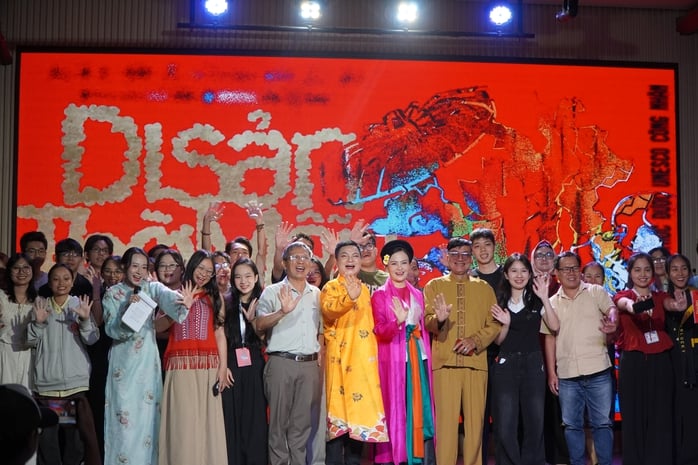
The project doesn't recreate the actual ritual but instead tells the story through light, graphics, and movement – languages that young people can access most easily.
"Therefore, the team's principle is to understand thoroughly first, then create," shared Ta Hieu Lam, the project leader. All colors, patterns, costumes, and image mapping were discussed with Dr. Nguyen Duc Hien to ensure accuracy.
The exhibition "Going Back to the Source, Who's Left?" includes six activities: a visual documentary presentation; a 2D mapping altar; a collection of ceremonial scarves and robes created using 3D motion capture; a display of creative works; a photo-taking and interactive area; and a merchandise booth.
Technology here doesn't replace tradition but acts as a bridge, allowing students to access heritage through light, movement, and color—languages familiar to Gen Z.
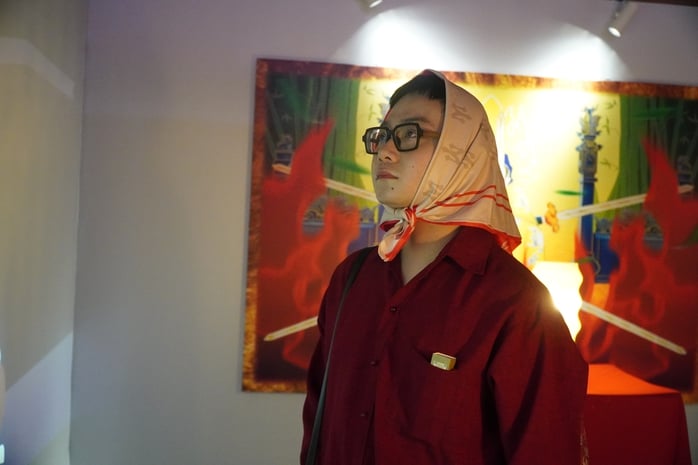
Pham Quoc Huy (born in 1999) commented that the exhibition was accessible, very suitable for young people, and that technology made everything more vivid and easier to understand, helping them learn more about their cultural roots.
Beyond its academic aspect, the project also serves as an experiential education model, helping FPT students hone their skills in event organization, content production, and working with experts. This is also a trend many universities are promoting: integrating heritage, culture, and history into the learning environment through creative methods.
Source: https://nld.com.vn/sinh-vien-giu-lua-di-san-van-hoa-qua-cong-nghe-196251122172743248.htm
![[Photo] Prime Minister Pham Minh Chinh presides over meetings of the Government Standing Committee to discuss several important issues.](https://vphoto.vietnam.vn/thumb/1200x675/vietnam/resource/IMAGE/2026/03/16/1773674631996_ndo_br_img-5789-jpg.webp)

















![[Photo] Prime Minister Pham Minh Chinh holds a phone call with Angolan President João Manuel Gonçalves Lourenço](https://vphoto.vietnam.vn/thumb/1200x675/vietnam/resource/IMAGE/2026/03/16/1773674632171_ndo_br_dsc-4772-jpg.webp)



































Comment (0)