

The recent "bleeding" of artifacts and theft of royal decrees at several historical sites in Phu Tho province and across the country has raised questions about the management and preservation of valuable Han Nom (Sino-Vietnamese) documents, including royal decrees. The digitization of Han Nom documents, including royal decrees, has received attention from site management boards and local authorities. This move is not only expected to better preserve these valuable documents dating back hundreds of years, but also to contribute to promoting heritage to the public.
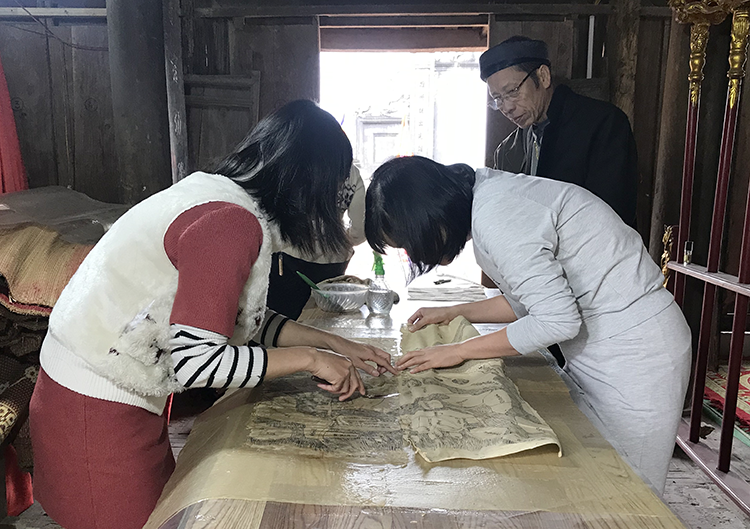
The village's "treasure".
Returning to the International Temple (Di Nau commune, Tam Nong district), three years have passed since 39 royal decrees and several ancient artifacts were stolen by thieves, yet the elders in the management board of the historical site remain deeply concerned about the lost "treasures." Mr. Ta Dinh Hap, a member of the management board, said: "Even though they were stored in a large, modern safe with double locks and security systems in the inner sanctuary of this sacred site, which is over 2,300 years old, thieves were able to brazenly and audaciously break into the safe and steal 39 royal decrees, 40 ancient Han Nom books, a register of temple allocations, ancient land registers, 3 ancient cups, and 7 ancient plates. Frankly, we never imagined this would happen."
Tragically, however, fortunately, a few months before the theft, the Dị Nậu commune received assistance from the State Archives and Records Department (Ministry of Interior) to restore the damaged and torn parts of the royal decrees at the Quốc tế Temple. At the same time, the Department photographed and color-photocopied the decrees, translated them into Vietnamese, and bound them into two volumes for safekeeping. This story raises the issue that only copies of historical relics should be displayed and preserved, while original artifacts should be stored in secure locations, away from public view.
Lam Thao District is an ancient land rich in long-standing historical and cultural traditions. The district currently has 134 relics of various cultural, historical, religious, and belief types, and 3 archaeological sites. Of these, 20 relics are classified at the national level and 35 at the provincial level. At these sites are hundreds of royal decrees, numerous sets of horizontal plaques, couplets, stone steles, bells, gongs, thousands of pages of village regulations, customs, legends, divine decrees, and valuable Han Nom documents.
In Xuan Lung commune, visiting the temple dedicated to the scholar Nguyen Man Doc, the Nguyen Tam Son family still preserves 10 royal decrees from the Le Trung Hung and Nguyen dynasties, bestowed upon this loyal official of the "eight-tier diamond rank." With utmost care and meticulousness, Mr. Nguyen Trung Moc, head of the family's temple management committee, opened a box of B40 shell casings and took out the 10 decrees, tightly wrapped in multiple layers of plastic. Mr. Moc confidently stated that even if the casings were thrown into fire or dropped into water, they would remain undamaged.
Of the 10 royal decrees that have been preserved, the oldest dates back to the 6th year of the Vinh Thinh era of King Le Du Tong, 1711. Over nearly 400 years, through wars and natural disasters, the people and the family have passed down many strange spiritual stories about these decrees. Mr. Nguyen Ngoc Nghi, Chairman of the Tam Son Tiet Nghia family, said: “The 1971 flood submerged the temple area in a vast sea of water. The door, the laterite stone wall, and the iron box containing the royal decrees, along with the throne and horizontal plaques, were all swept away. Yet, three days later, the box containing the royal decrees and the ceremonial objects floated back to the temple, and I personally retrieved them.”
Among the hundreds of historical, cultural, and religious relics in the province, the number of relics with royal decrees translated into the Vietnamese Quốc ngữ script can be counted on the fingers of one hand. Furthermore, although those entrusted with managing the temples and their families have paid great attention to preserving these decrees, limitations in specialized knowledge only allow them to keep the decrees from being damaged by termites or torn. The preservation of these "treasures" and the "essence of the relics" for the long term requires the attention of specialized agencies and all levels of government and local authorities.
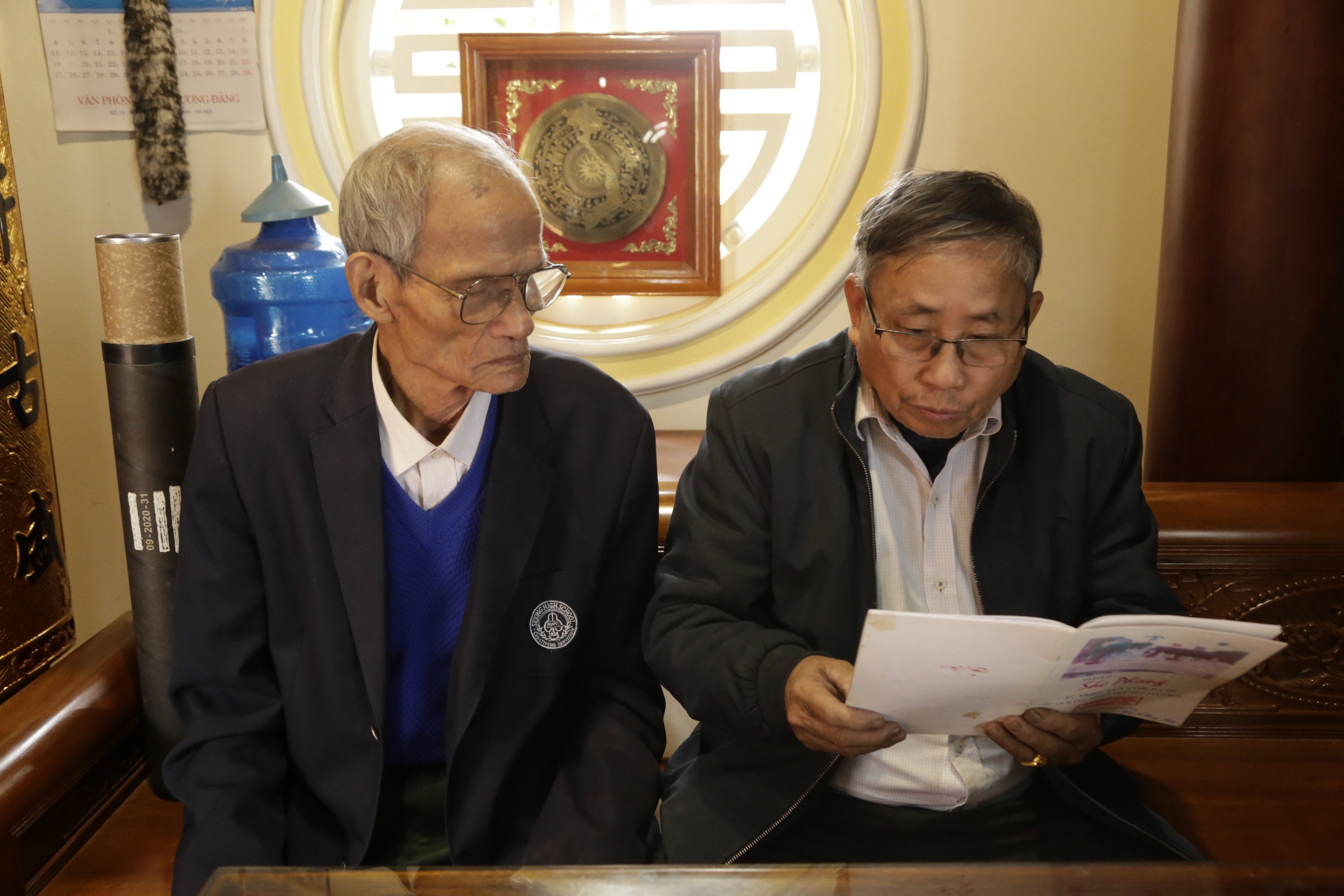
Digitization to bring heritage to the public.
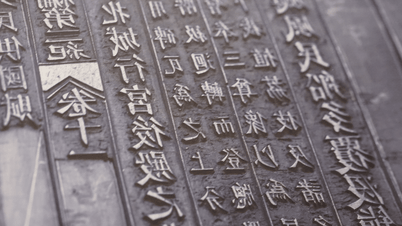
Royal decrees (also known as imperial edicts) are invaluable, unique assets, carrying within them the stories of thousands of years of historical sites and villages. These decrees are the king's recognition of a village's worship of a deity (decree conferring a deity) or the title bestowed upon an official (decree conferring a title). Royal decrees, presented in Han Nom script, describe villages in Vietnam. The place names recorded on these decrees provide crucial information on changes in the names of Vietnamese villages over time, contributing to the study of ancient place names. The dates on the decrees are important markers confirming the nation's history. Therefore, royal decrees are a very important and rare source of information with immense significance in the research and construction of village history.
In today's mass media era, royal decrees, carrying the story of historical relics, are no longer confined to the family or village sphere but need to be disseminated to the people, especially the younger generation, to inform them about history and foster pride and gratitude. Mr. Ta Dinh Hap shared: “Promoting and communicating about heritage is essential so that future generations know the value of these relics. Royal decrees not only convey the message written on the paper but also live on in the consciousness of the people. That is how cultural values endure. Digitizing royal decrees and other valuable Han Nom documents will be the key to solving the problem of preserving this precious heritage.”
The first step in digitizing the imperial decrees is to inventory, research, transcribe, and translate the Sino-Vietnamese (Hán Nôm) heritage at historical sites. Currently, only Lam Thao district in Phu Tho province has planned for this. Ms. Nguyen Thi Thuy Linh, Head of the Culture and Information Department of Lam Thao district, informed: “The district will review, collect, and compile a list of Sino-Vietnamese documents at ranked historical and cultural sites and some unranked sites with significant influence in the community. Simultaneously, we will coordinate with the Provincial Museum, the Institute of Sino-Vietnamese Studies, and the Vietnam Academy of Social Sciences to transcribe and translate the researched and collected Sino-Vietnamese texts and documents into the Vietnamese Quốc ngữ script. Afterward, we will systematize and digitize the translated documents to facilitate information access through digital files on various devices.”
In the modern era, cultural heritage preservation is no longer limited to simply safeguarding and passing it on to future generations. It can also be exploited through copyright and transformed into intellectual property, creating commercial value. On December 2nd, 2021, the Prime Minister approved the program for digitizing Vietnam's cultural heritage for the period 2021-2030. The overall goal is to build a national database system on cultural heritage based on a unified digital technology platform, serving the archiving, management, research, preservation, exploitation, and promotion of heritage, and fostering sustainable tourism development.
Digitizing valuable Sino-Vietnamese documents, including royal decrees, is an inevitable and objective reality in the preservation of cultural heritage. However, the financial and human resources required for this are considerable. Although a plan has been issued, Lam Thao district still needs to develop a project and conduct bidding. At the earliest, it will take years for the plans on paper to be implemented in practice.
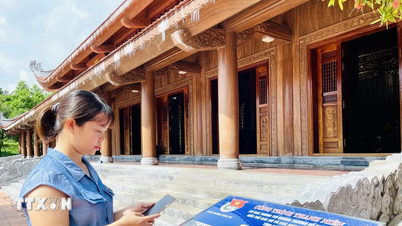
Responding to press inquiries about the preservation of royal decrees in villages and communes today, Associate Professor Bui Xuan Dinh - Institute of Ethnology, Vietnam Academy of Social Sciences, stated: “It is necessary to apply digital transformation early to digitize heritage. We need to build interactive systems on smart devices, using QR codes, image recognition, 3D recognition, and multimedia experiences... to serve the people and tourists who want to visit, experience, and explore historical sites or learn about historical artifacts in the most convenient and comfortable way, right on their smartphones. This will also contribute to the synchronized preservation of information in the national database system and prevent the loss of information that cannot be recovered.”
Royal decrees are invaluable, unique assets, containing historical stories spanning hundreds and thousands of years of Vietnamese villages and communes. In the modern age of technology, the preservation of royal decrees also needs to be digitally transformed to contribute to safeguarding them for future generations and promoting this heritage to the international community.
Thuy Trang
Source: https://baophutho.vn/so-hoa-sac-phong-225196.htm
![[Photo] National Assembly Chairman Tran Thanh Man attends the groundbreaking ceremony for the National Highway 1A spatial axis project.](https://vphoto.vietnam.vn/thumb/1200x675/vietnam/resource/IMAGE/2026/05/19/1779161360398_ndo_br_bnd-1412-jpg.webp)
![[Photo] Capturing the moment the tide recedes at Yen Binh Son rapids - a million-year-old scenic spot in Quang Ngai.](https://vphoto.vietnam.vn/thumb/1200x675/vietnam/resource/IMAGE/2026/05/19/1779175463885_yen9-1199-jpg.webp)















































![[Photo] General Secretary and President To Lam receives Indian Defense Minister Rajnath Singh](https://vphoto.vietnam.vn/thumb/402x226/vietnam/resource/IMAGE/2026/05/19/1779184046302_anh-man-hinh-2026-05-19-luc-16-46-58.png)























Comment (0)