


EQUALITY THROUGHOUT HISTORY
It wasn't until the first World Cup of the 21st century, the 17th World Cup in 2002, that South Korea became the first Asian team to reach the semi-finals. They couldn't progress further, finishing 4th overall. The biggest reason: South Korea successfully capitalized on their home advantage in that World Cup.
At the most recent World Cup, when the 2022 finals were held in Asia, a historic breakthrough once again belonged to Africa. Morocco became the first African team to reach the semi-finals. Like South Korea before them, Morocco couldn't advance further, settling for fourth place overall.

South Korea hopes to achieve a high ranking at the 2026 World Cup.
Photo: Reuters
Surprisingly, South Korea didn't face any African opponents on their way to a fourth-place finish at the 2002 World Cup. Similarly, Morocco didn't encounter any Asian opponents on their way to a fourth-place finish at the 2022 World Cup. Due to seeding regulations, Asian and African teams rarely met in the group stage in past World Cups (both regions were placed in the bottom group, the "underdog" group). Occasionally, a team would advance from the group stage, but their opponents in the knockout phase were usually strong teams from Europe or South America.
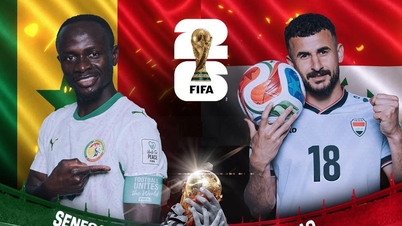
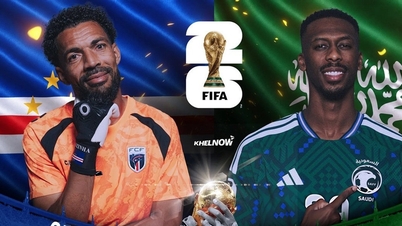
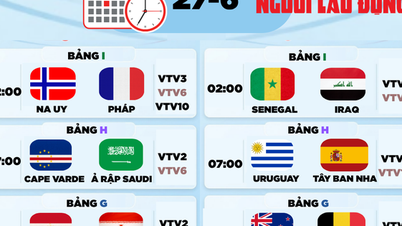
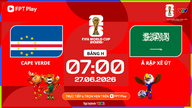
Asian and African teams rarely clash in the World Cup. Recently, however, due to the expansion of the World Cup to include more Asian and African teams, representatives from these two continents have been meeting more frequently. The 2026 World Cup is a record-breaking milestone: there will be at least seven Asian-African encounters, specifically in the group stage (South Africa - South Korea, Tunisia - Japan, Egypt - Iran, Cape Verde - Saudi Arabia, Senegal - Iraq, Jordan - Algeria, Democratic Republic of Congo - Uzbekistan).
Historically, there have been a total of 20 clashes between Asia and Africa in the World Cup. The results are fairly balanced: Asian representatives have won 7, lost 6, and drawn 7. As mentioned, the best performances of both continents are also equal - each side has had a team finish 4th.
Africa has a uniform distribution , while Asia has a "sharp nose" .
We must face the reality: although a few (very rare) teams have shown remarkable progress at one time or another, the overall performance of Asian and African football in the World Cup remains "modest". The consequence: with FIFA allocating 19 World Cup 2026 qualifying spots between Asia (9 teams) and Africa (10 teams), commentators must take note of an important factor: the influence of these teams on the race for top rankings among the European or South American "giants".
On the other hand, due to the opportunity to compete directly against each other (because there are so many teams), Asian and African teams also find it easier to advance further (compared to the old World Cup, when Asian and African teams rarely met in the group stage). For the first time in history, Japan advanced beyond the group stage when they beat Tunisia in the decisive match at the 2002 World Cup. Algeria's first advance was when they beat South Korea at the 2014 World Cup. Saudi Arabia's first advance was when they beat Morocco at the 1994 World Cup. There are quite a few other similar cases.



Looking ahead, with a record of at least seven Asian-African clashes at the 2026 World Cup, it's easy to predict that this will be the World Cup with the most Asian or African teams reaching the knockout stage ever. And once in the knockout stage, with the significant element of luck in the draw, it's highly likely that an Asian or African football miracle will occur at this World Cup.
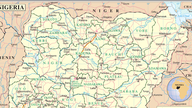
Overall, African football is more evenly matched in terms of professional quality than Asian football. Despite 10 African teams qualifying for the finals, Nigeria, a regional powerhouse, is absent from the 2026 World Cup. Meanwhile, Asian football stands out for its focused strength, with two leading nations: South Korea and Japan. Since their debut in 1998, Japan has never missed a World Cup. South Korea has also participated consistently since 1986. African football, with its noticeable ups and downs, lacks such consistency. Which will be more successful at this World Cup: Asia or Africa?
Source: https://thanhnien.vn/so-tai-a-phi-o-dau-truong-world-cup-185260604224134216.htm