I kept gazing at it, feeling as if I were listening to an ancient piece of music, where each pattern was a musical note, and each color was the sound of the mountains and forests.
From flax to cloth - a journey of patience.
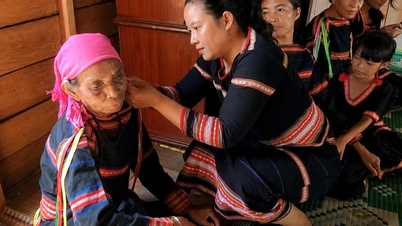
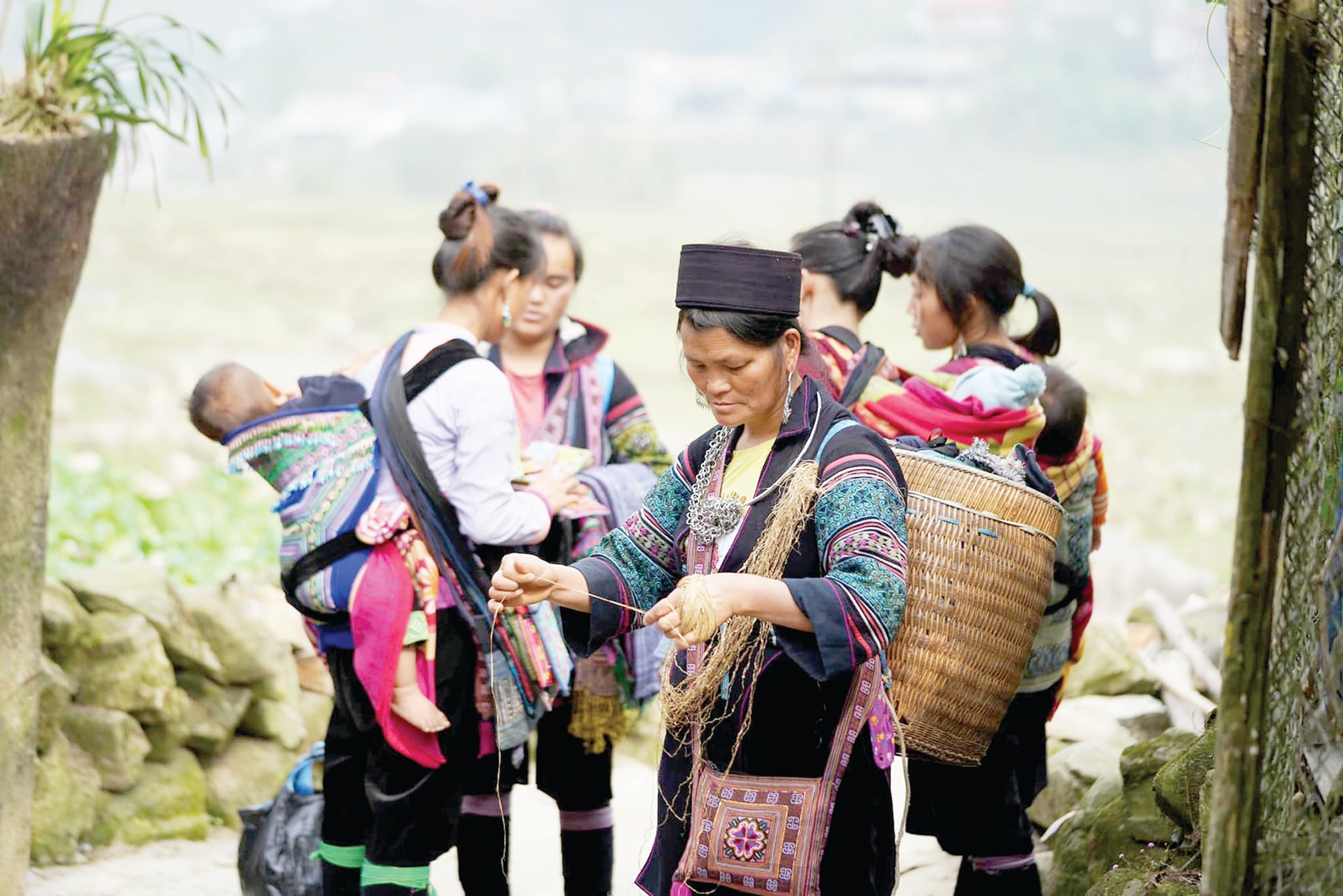
How much time and effort did it take to weave that cloth? I asked, and she smiled gently: “It took almost two months to finish. Growing flax, stripping the bark, spinning the yarn, dyeing, and then weaving. I did a little each evening, singing to my children to sleep as I worked.”
It turns out that a piece of brocade is not just fabric; it's a memory, a lullaby, a harvest, and the rhythm of life for the whole family.
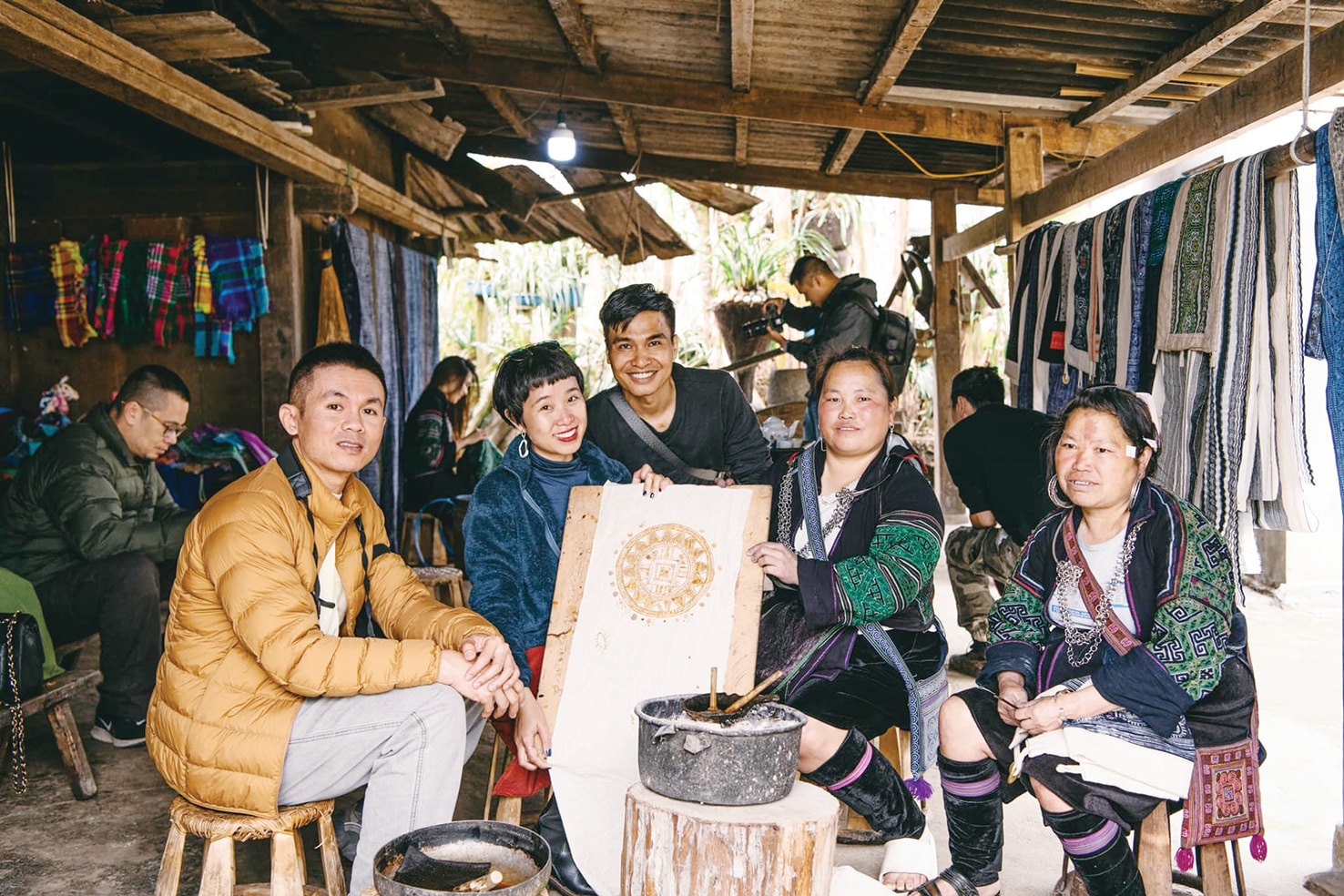
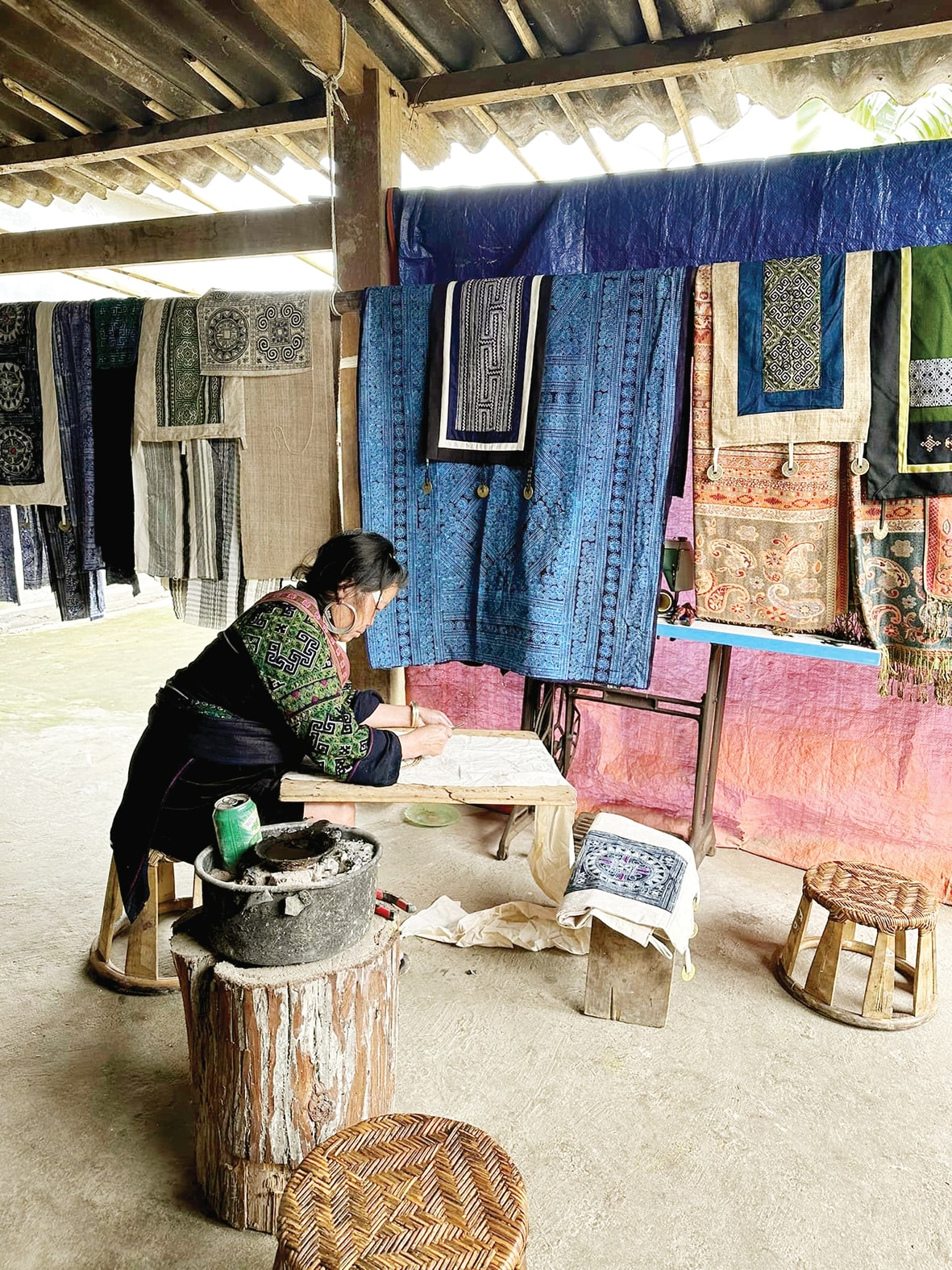
According to studies on Hmong brocade art, the main material is flax – a small plant, only waist-high. When the flax ripens, the people uproot it, dry it for several days, then strip the bark, crush it, pound it, and spin it into threads. The flax threads are boiled with wood ash to soften and whiten them before being dyed.
The traditional brocade fabric of the H'Mông people uses dyes made from natural ingredients such as indigo leaves, tree bark, turmeric, and young mud. Completing a single brocade fabric with intricate patterns can take several months.
Each type of brocade fabric has its own unique characteristics and production process. The brocade fabric of the Ede people, for example, has cotton as its main ingredient. The cotton is fluffed, spun into threads by hand, and dyed with tree roots, forest leaves, or mud and snail shells to create colors.
The colors red, yellow, black, white, and blue all have their own meanings: red symbolizes vitality, yellow represents the ripening rice harvest, black represents the earth, and white represents purity. To weave a piece of brocade sufficient for a loincloth or shirt, an Ede artisan needs at least three to four months.


Patterns - the silent language of the mountains and forests
Looking closely at a piece of brocade, you'll see that the pattern is the most important part. Among the Hmong people, the patterns are often stylized from nature: flowers, mulberry leaves, pumpkins, bird footprints, spirals, hooks, and jagged edges of rocks. These patterns are not only decorative but also carry messages: prayers for a bountiful harvest, good health, and many descendants.
The Ede people have a very harmonious arrangement of patterns: parallel lines create a sense of stability, zigzag lines represent strength, and small dots symbolize rice grains. The fabric background is usually black or indigo blue, highlighting the red, yellow, and white stripes. The entire composition is balanced, suggesting solemnity and order.
I enjoy looking at the patterns as if I were reading a book without words. The zigzag lines are like the rhythm of footsteps climbing a mountain, the spirals like the wind blowing through the village, the red like a kitchen fire, the white like morning mist. Sometimes, just a small section is enough to remind me of a morning in the village, when the crowing of roosters mingled with the rhythmic tapping of the weaving loom.
One of the most memorable trips my wife and I took was to Lao Chai village (Ha Giang). It was cold, and the mountains were covered in white clouds. We visited a family weaving brocade in preparation for the market day. The mother sat by the loom, her hands moving swiftly, her feet pedaling steadily. I asked her if she was tired, and she said, "Weaving is when I can feel at peace. Sitting by the loom, listening to the rhythmic sound of the shuttle, the worries in my heart lessen."
I suddenly exclaimed, "How interesting!" It seems that all the philosophies of life lie in simple tasks.
Traditional brocade weaving is not just a product, but also a form of meditation. Each stitch is a breath, a way for the weaver to connect with themselves. This feeling reminds me of evenings at home, when my husband and I cook together, talk, everything slows down, a way of "weaving" our own happiness.
Bringing the pieces of brocade back to the city, I placed them on the black sofa. In the modern urban room, the vibrant pattern was like a gentle ray of sunshine. Some days I would just sit and gaze at that ray of sunshine, sipping tea, feeling as if I were sitting in a village. A small piece of fabric had preserved within me a sky full of memories of my wandering days.
Each piece of fabric is a fragment of memory.
We keep many pieces of brocade fabric in our cupboard, from the many places we've traveled to. Each piece of fabric usually reminds me of a person or a scene. Once, I folded a small piece of brocade to give to a friend. She unfolded it and exclaimed, "It's so beautiful, it looks like a map!" I laughed. Indeed, each piece of fabric is a map of memories. Harvest seasons, markets, moonlit nights, the sound of flutes, the laughter of children. When you bring it home, you're carrying an entire region with you.


As I write this, I suddenly realize I'm "weaving" this piece of writing like a tapestry of words. Each paragraph is a thread, each memory a stitch, all connected to form a long piece of fabric.
As you read these lines, you have touched that fabric, touched what I have seen, heard, and touched in those remote villages.
Brocade is more than just a handicraft. It's a place where memories reside, where lullabies, the sound of rice pounding, and the rhythmic tapping of the weaving loom become colors and patterns. It's a message that, amidst the hustle and bustle of life, we can still cherish a peaceful corner, a piece of memory.
With just a scarf, a bag, or a tablecloth, you can bring a piece of the mountains and forests into your home. And perhaps that's what makes brocade such an emotionally evocative material, stirring a warm feeling every time you think of it.
Source: https://baodanang.vn/soi-chi-giu-gin-ky-uc-3305551.html