The Legend of the Secret Comb
The village of Hoạch Trạch (also known as Vạc village) in Thái Học commune (Bình Giang district) has a centuries-old tradition of making bamboo combs (used for detangling lice). Although the craft is no longer in its heyday, bamboo combs still hold a place in the market and provide income for the local people.
 Hành trình Đất Việt•08/03/2025
A comb, preserving the spirit of the past.
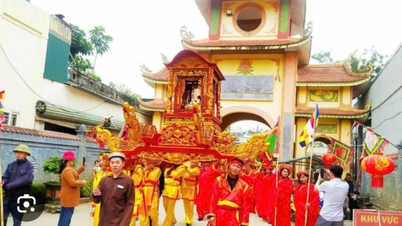
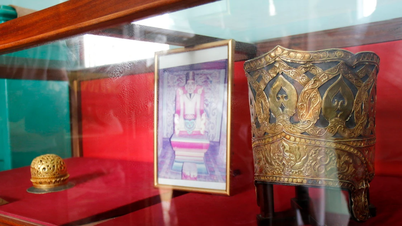
According to local historical records and the "Hoạch Trạch Nhữ Genealogy," compiled by Doctor Nhữ Đình Toản (1701-1773) in the mid-18th century, Mr. Nhữ Đình Hiền, from Hoạch Trạch village, passed the doctoral examination in the year Canh Thân (1680). In the year Đinh Sửu (1697), he served as deputy envoy to pay tribute to the Qing dynasty, accompanied by his wife, Mrs. Lý Thị Hiệu. In China, the two men encountered a village known for its bamboo comb making craft and sought to learn the trade. Upon returning to Vietnam, they guided the villagers in practicing the craft. The villagers revered them as the patron saints of the comb-making craft and erected an altar in the village temple, worshipping them alongside the village's guardian deity. The Nhữ family temple in the former Thái Lạc Dinh, which also serves as the ancestral shrine for the comb-making craft, was classified as a National Monument in 1993.
You may also like

Bringing Vietnamese goods into the retail system of Japan and the region:Ten years ago, the first Vietnam Goods Week was held in Japan with the main goal of creating opportunities for Vietnamese goods to reach consumers in one of the world's most demanding markets.

A thank you and the final issues in Ho Chi Minh City.Tomorrow (June 30th) will be the last printed issue of Tuoi Tre, Phap Luat TP.HCM, and Nguoi Lao Dong newspapers before Ho Chi Minh City's press operates under the new organizational structure according to the City Party Committee's Decision on the establishment of the Ho Chi Minh City Press, Radio, and Television Agency.

The person who contributed to the revival of Chu Dau pottery.Having known Dr. Tang Ba Hoanh, a historian and researcher, for a long time, I finally had the opportunity to chat with him. At 85 years old, his love for history is still evident in his every gesture and word. And when I mentioned Chu Dau pottery, a look of excitement appeared in his eyes. Perhaps that is his pride in his years of dedication to the craft...?
In the early 19th century, comb-making became famous and was included in the local history. Indeed, the "Hai Duong Phong Vat Khuc Khao Thich" records the following:
"Lược Hoạch Trạch's contribution was insignificant,
"The scent of sunflowers is carried on the wind."
Mr. Nhữ Đình Thắng, an official at the People's Committee Office of Thái Học commune, is the 17th-generation descendant of the founder of the comb-making craft village. Therefore, he has known the history of the craft village by heart since he was a novice, thanks to the elders in his family who passed on this knowledge to instill pride in their descendants.

Senior Party and State leaders send letters and telegrams congratulating the United States on its National Day.In congratulatory letters and messages on the US Independence Day, senior leaders of the Vietnamese Party and State reaffirmed that Vietnam considers the United States one of its strategically important partners.
Senior leaders of the Vietnamese Party and State send letters and telegrams congratulating the United States on its National Day.In congratulatory letters and messages on the US Independence Day, senior leaders of the Vietnamese Party and State reaffirmed that Vietnam considers the United States one of its strategically important partners.

Strengthening the friendship between Vietnam and the United States.On July 3rd, as part of the Pacific Partnership - Friends of the Pacific 2026 program, the U.S. Army Pacific delegation, led by Lieutenant General Joel Vowell, Deputy Commander of the U.S. Army Pacific, paid a courtesy visit to the Quang Tri Provincial Military Command.
Accordingly, the village of Vạc was formerly called Hoạch Trạch. "Hoạch" means cauldron and "trạch" means favor or grace, so Hoạch Trạch means "the grace of the cauldron used to cook rice." The elders still recall that the village once cooked rice to feed the king's army using cauldrons, hence the name. Later, it was shortened to Vạc village.