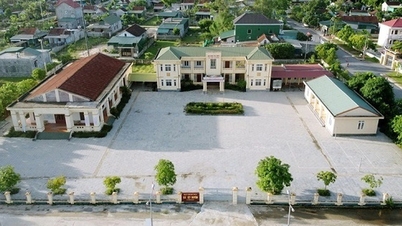
At the Cardiology Department of Dong Nai General Hospital, doctors have received many cases of serious heart rhythm disorders.
 |
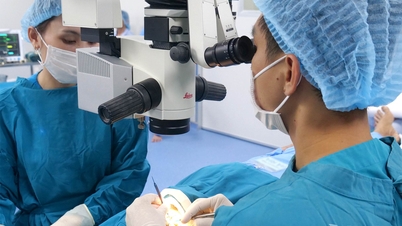
| Dr. Lam Hong Duc (Department of Cardiology, Dong Nai General Hospital) advises a patient before performing the permanent pacemaker implantation procedure. Photo: Hanh Dung |
Hearts out of sync
Mr. LVS (65 years old, residing in Tran Bien ward) has suffered from hypertension and diabetes for many years. In recent months, during self-monitoring of his blood pressure at home, he noticed a gradual decrease in his heart rate, down to only about 42 beats per minute, significantly lower than the normal range (60-100 beats per minute). Notably, Mr. S. did not experience fatigue, shortness of breath, or dizziness. If this condition had not been detected by the blood pressure monitor, it could have persisted without treatment.
After being hospitalized, extensive tests and an electrocardiogram revealed that Mr. S. had a third-degree atrioventricular block. This is a condition where electrical signals from the atria do not travel to the ventricles, causing the heart to beat abnormally slowly. When the heart beats too slowly, the amount of blood pumped is insufficient to nourish the body, and the patient may experience fatigue, dizziness, lightheadedness, fainting, or even sudden death if not treated promptly.
Another case involves Mr. TR (64 years old, residing in Xuan Loc commune). Mr. R. was hospitalized after several sudden fainting spells. Most recently, while feeding chickens at home, Mr. R. suddenly collapsed to the ground, unconscious for over 10 seconds. After regaining consciousness, he told his family, who promptly took him to the hospital for examination. At the hospital, doctors determined that Mr. R. suffered from alternating fast and slow heart rate, causing his heart to beat too fast at times and too slow at others, leading to heart failure. This is a complex type of arrhythmia that is very difficult to control with medication alone.
"Correcting" heart problems with a pacemaker.



Dr. Lam Hong Duc, Department of Cardiology, Dong Nai General Hospital, said: "For patients with severe bradycardia like Mr. S., the first step is to determine the cause."
"Many cases of bradycardia are due to side effects of medication, electrolyte imbalances, or myocardial ischemia. If the underlying cause is treated, the heart rate can recover. But if the condition persists and does not improve, the most effective solution is to implant a permanent pacemaker," Dr. Duc explained.
The Cardiology Department of Dong Nai General Hospital is currently treating 75 inpatients, including 4 with severe cardiac arrhythmias. To ensure effective treatment, the hospital's doctors regularly consult with specialists from Cho Ray Hospital ( Ho Chi Minh City) to develop the best treatment plan.
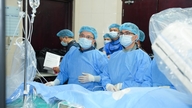
A pacemaker is a small device implanted under the skin of the left chest. This device continuously monitors the heart rate and delivers electrical impulses when the heart beats too slowly, helping to maintain a stable heart rate. The pacemaker implantation procedure is not major surgery; it only requires local anesthesia with a small incision of about 3 cm. The procedure takes 1-2 hours. After about 4 hours, the patient can sit up and eat normally.
According to Doctor Duc, implanting a pacemaker significantly improves symptoms such as fatigue and dizziness, reduces the risk of stroke and sudden death, and enhances the quality of life for patients.
For patients with transient ischemic attack (TR), treatment is more complex because the heart beats both fast and slow. Using only medication to slow the heart rate can lead to the heart becoming too slow. Conversely, increasing the heart rate with medication can sometimes lead to the heart beating too fast. The optimal solution is to implant a pacemaker to control the bradycardia, then combine this with medication to treat the tachycardia episodes. This provides comprehensive control, limits heart failure, and prevents dangerous complications.
According to cardiologists, heart rhythm disorders can occur in many people, especially the elderly, those with hypertension, diabetes, coronary artery disease, or a history of heart disease.
Dr. Lam Hong Duc advises: People should have regular health checkups, especially checking their blood pressure and heart rate frequently. If you notice a pulse that is too slow (below 50 beats/minute), or experience symptoms such as palpitations, dizziness, fainting, or prolonged fatigue, you should go to a medical facility for examination.


"Hot weather can cause blood pressure to fluctuate, forcing the heart to work harder, easily worsening heart rhythm disorders. People with heart disease need to monitor their blood pressure regularly, drink enough water, limit salt intake, avoid alcohol and tobacco, and attend follow-up appointments on time to prevent the condition from worsening," Dr. Duc noted.
Hanh Dung
Source: https://baodongnai.com.vn/dong-nai-cuoi-tuan/202604/sua-loi-trai-tim-dc21bf1/
![[Photo] Opening Ceremony of the 13th National Congress of the Ho Chi Minh Communist Youth Union](https://vphoto.vietnam.vn/thumb/1200x675/vietnam/resource/IMAGE/2026/06/24/1782286753905_ndo_br_1-8510-jpg.webp)

![[Photo] General Secretary and President To Lam attends the Central Public Security Party Committee Conference](https://vphoto.vietnam.vn/thumb/1200x675/vietnam/resource/IMAGE/2026/06/24/1782302063612_a1-bnd-9302-9166-jpg.webp)

![[Photo] The 13th National Congress of the Youth Union conducts personnel work.](https://vphoto.vietnam.vn/thumb/1200x675/vietnam/resource/IMAGE/2026/06/24/1782299943080_ndo_br_1-6868-jpg.webp)