

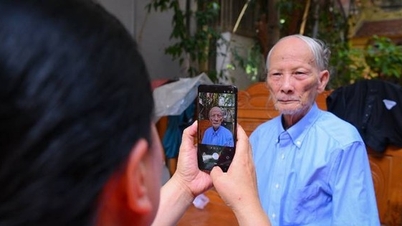
Shortly afterward, the uploader admitted that the image was created using artificial intelligence (AI). This story once again raises concerns about the increasing infiltration of AI-generated content into daily life.
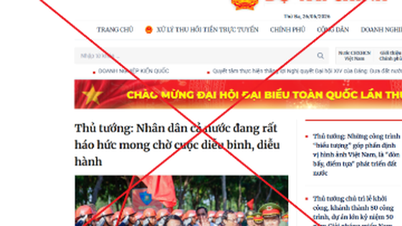
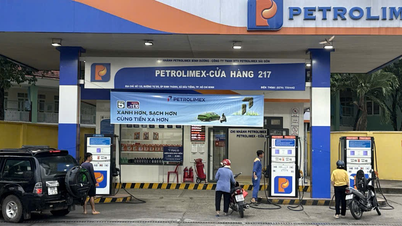
Recently, the internet has witnessed a series of similar incidents: from AI-generated images and videos exaggerating the damage caused by the floods in Central Vietnam at the end of 2025, to an AI-generated image depicting a man fainting at a gas station in April of this year amidst fluctuating fuel prices, or AI-generated images of two victims in a car fire in Da Nang in early May. Worryingly, many social media users quickly shared these images before questioning their authenticity, with some instances reaching hundreds of thousands of shares, creating favorable conditions for the spread of fake information designed to attract views.
Currently, AI tools have gradually become commonplace and accessible; even users without technical skills can create sophisticated images and videos with just a few commands. At the same time, the algorithms of social media platforms have long been optimized to retain users, who favor content that evokes strong emotions, curiosity, or outrage. This synergy causes sensational news to appear more frequently on the homepage, attracting more attention and leading to shares even before verification.
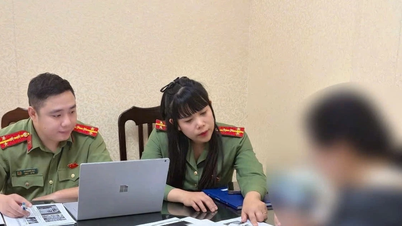
In the digital age, controlling information is not only the responsibility of authorities, but each social media user needs to be self-aware and develop the necessary reflexes when monitoring and receiving the vast amount of information online. Caution and vigilance, the awareness of each individual, will contribute to reducing the proliferation of fake news on the internet. Verifying content before deciding to share it, therefore, has become more important than ever.
Source: https://www.sggp.org.vn/dung-mot-nhip-truc-khi-chia-se-post855342.html
![[Image] Hanoi Police officially crowned champions of V-League 2025/2026](https://vphoto.vietnam.vn/thumb/1200x675/vietnam/resource/IMAGE/2026/05/31/1780244769054_ndo_br_039d561b692be875b13a-jpg.webp)
![[Photo] The General Secretary, President and his wife begin their state visit to the Philippines.](https://vphoto.vietnam.vn/thumb/1200x675/vietnam/resource/IMAGE/2026/05/31/1780230559452_anh-man-hinh-2026-05-31-luc-19-28-11.png)
![[Photo] Admire the coral "masterpiece" amidst the million-year-old heritage of Dak Lak province.](https://vphoto.vietnam.vn/thumb/1200x675/vietnam/resource/IMAGE/2026/05/31/1780221235105_anh-man-hinh-2026-05-31-luc-16-53-27.png)
![[Photo] Solemn bathing ceremony and Buddha procession in Hue](https://vphoto.vietnam.vn/thumb/1200x675/vietnam/resource/IMAGE/2026/05/31/1780228263543_1-jpg.webp)

















![[Video] Sunset at Lap An Lagoon – Where the sun sets over the fishing nets](https://vphoto.vietnam.vn/thumb/340x192/vietnam/resource/IMAGE/2026/05/31/1780192137701_beach-landscape-sea-water-nature-grass-745871-pxhere-com.jpeg)

































































Comment (0)