

 |
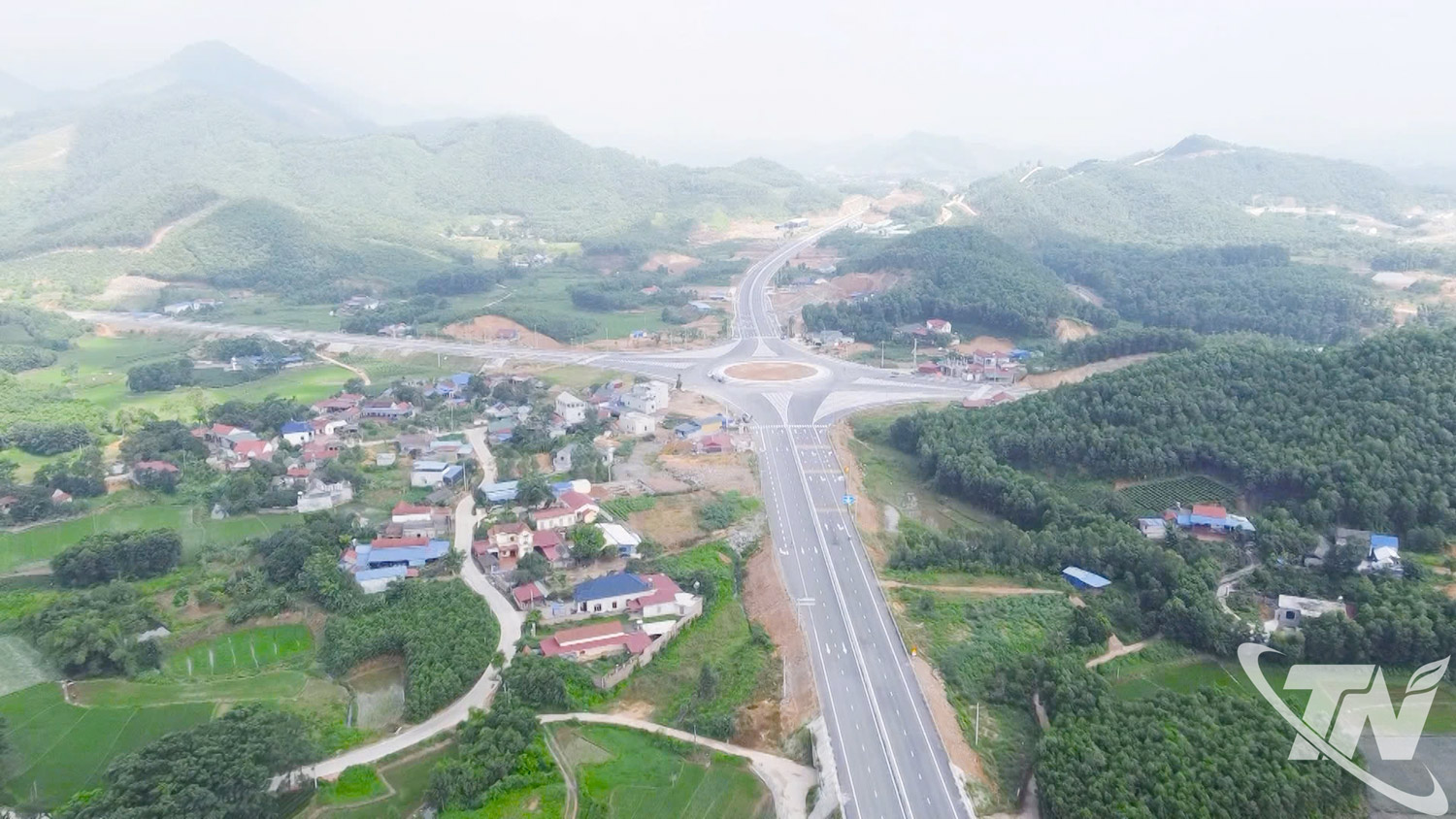
| This road connects the provinces of Bac Ninh , Thai Nguyen, and Phu Tho. |
The pillar of expanding development space.
Thai Nguyen currently plays a central role in politics , economics, and education in the Northern Midlands and mountainous region, and is also a convergence point for many economic corridors. However, the province's development space is still not commensurate with its potential, especially when placed in the context of the new structure after the merger of Thai Nguyen and Bac Kan.
To expand the urban area, a continuous, synchronized, and multi-directional transportation system is required. During the 2026-2030 period, a series of large-scale projects with total investment of tens of trillions of VND are being implemented or are being prepared for investment, such as: the Thai Nguyen - Tuyen Quang connecting route, Hanoi's Ring Road 5 passing through the area, the Bac Son - Nui Coc Lake route, many provincial routes such as DT.266, DT.267, DT.270, DT.261, along with routes serving the Yen Binh and Diem Thuy industrial zones.
These projects are both key transportation infrastructure projects and the framework shaping development space for decades to come. As the province expands, a robust transportation system will help seamlessly connect the northern region, rich in agricultural, forestry, and tourism potential, with the southern region, a center of industry and rapid urbanization.
Shaping the industrial and urban development axis
Over the past 10 years, Thai Nguyen has emerged as a major industrial growth hub in Vietnam. The presence of Samsung Group (South Korea) and many other large FDI investors has made the province an important component of the global supply chain. To maintain this advantage, transportation must become a new driving force, leading the process of industrialization in depth.
Projects such as the southwestern connecting route to Yen Binh 3 Industrial Park, the 47m main road connecting to Ring Road 5, and the Son Cam - Quang Minh - Yen Binh linking routes will form a seamless transportation network between industrial zones and clusters. Once this system is completed, Thai Nguyen will be well-positioned to become a regional logistics center, playing a crucial role in the transshipment of goods for the entire Northern Midlands and Mountainous region.
 |
| In 2025, many key transportation projects will be implemented and constructed in Thai Nguyen province. |
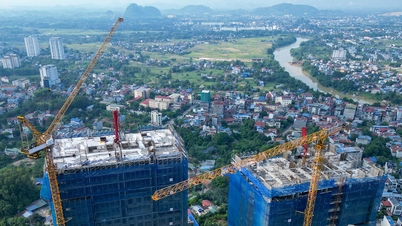
Along with industrialization, the urbanization problem poses many new demands. High rates of population growth due to migration, rapidly changing production technologies, and ever-increasing demands for a higher quality of life require a modern urban transportation system. The extended Bac Son route, new radial axes, regional roads around Nui Coc Lake, and the upgrading of DT.270 and DT.261 are paving the way for the formation of the Thai Nguyen - Song Cong - Pho Yen urban area, with a potential population of 1 million people in the future.
Towards a smart city model, the province needs to promote the application of digital data in traffic management, optimize public transport, reduce congestion, and improve operational capacity. Building smart cities is therefore not just a trend but a mandatory requirement for an industrial and service-oriented province to achieve breakthroughs in the next decade.
Towards inclusive development
Thai Nguyen and Bac Kan (before their merger) possessed unique ecotourism resources. When connected by a synchronized transportation system, the Nui Coc Lake - Tam Dao - ATK Dinh Hoa - Ba Be tourism cluster will become a regional-scale ecotourism axis. The Nui Coc Lake coastal road project, over 30km long, and its accompanying branch lines are opening up space for the development of eco-urban areas along the lake, creating a foundation for new tourism products such as community tourism, tea culture experience tourism, and high-end eco-tourism and resort tourism.
Alongside strategic routes, the province has identified the development of rural and mountainous transportation as an inseparable task. The vast and complex terrain requires priority investment in the highland transportation system to ensure comprehensive coverage.
When provincial roads DT.266, DT.270, DT.261B, along with a series of inter-communal roads in Vo Nhai, Dinh Hoa, Dai Tu, and Phu Luong are upgraded, people in remote areas will have easier access to public services, expanded trade, developed livelihoods, and improved quality of life. This is also a sustainable solution for poverty reduction and narrowing the development gap between regions.
Following the new trend, Thai Nguyen is gradually developing green and smart transportation with clean vehicles, solar-powered lights, bicycle lanes, and the application of artificial intelligence in traffic management. In the long term, the province needs to prepare for future transportation models such as the Thai Nguyen - Bac Kan - Ba Be railway or expressways connecting Cao Bang - Thai Nguyen, creating further breakthroughs in the national transportation network.
Therefore, transportation infrastructure becomes the "golden key" for Thai Nguyen to unlock the door to development in the coming term. With new thinking, new approaches, the consensus of the political system, and the ability to mobilize diverse resources, the province has a solid foundation to create a historic infrastructure boost. Transportation comes first, development follows – this spirit needs to be consistently upheld so that Thai Nguyen can move closer to its goal of becoming a strong growth pole of the northern midland and mountainous region and a modern industrial province in the future.
THAI NGUYEN KEY TRANSPORTATION PROJECT, PHASE 2026-2030 * 14 major projects, with a total investment of over 22,000 billion VND. Specifically: * Inter-regional infrastructure: Ring Road 5 – Hanoi (3,800 billion VND), Thai Nguyen - Tuyen Quang route (3,275 billion VND). * Tourism and service development: Ho Nui Coc Road (5,200 billion VND), Song Cong - Nui Coc tourist road (502 billion VND). * Industrial and logistics development: Connecting route to Yen Binh 3 Industrial Park (1,555 billion VND), connecting Bac Son - Nui Coc Lake (1,251 billion VND). * Upgrading and renovating existing transportation infrastructure: National Highway 17 (1,774 billion VND), Provincial Roads 266, 267, 270, and 261 (from 76 to 739 billion VND). |
Source: https://baothainguyen.vn/giao-thong/202512/tam-nhin-chien-luoc-ve-ha-tang-giao-thong-3933f43/



































![[Video] Sunset at Lap An Lagoon – Where the sun sets over the fishing nets](https://vphoto.vietnam.vn/thumb/1200x675/vietnam/resource/IMAGE/2026/05/31/1780192137701_beach-landscape-sea-water-nature-grass-745871-pxhere-com.jpeg)























Comment (0)