

 |
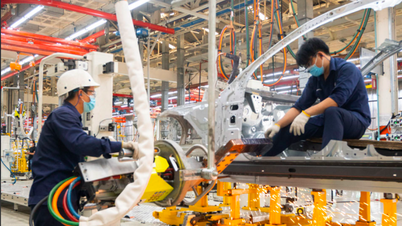
Workers producing export-quality suits at Hung Ha Garment Factory (Garment Corporation 10). (Photo by DANG ANH) |
Besides government support in institutional and policy reforms, businesses need well-structured strategies and proactive innovation to meet the requirements of integration and fulfill commitments in FTAs.
Identifying opportunities and challenges
According to the WTO and Integration Center (under the Vietnam Chamber of Commerce and Industry - VCCI), Vietnam has participated in and negotiated 19 FTAs, of which 16 are in effect with more than 60 global partners. The implementation of these FTAs forms the basis and foundation for Vietnam to become one of the leading countries in the region in participating in bilateral and multilateral economic cooperation frameworks. According to data from the General Department of Customs, in 2023, the total value of goods exports and imports nationwide reached over 681 billion USD, of which exports reached 354.67 billion USD and imports reached over 326 billion USD, resulting in a trade surplus of 28.3 billion USD. In the first four months of 2024 alone, total merchandise exports and imports reached US$238.88 billion (a 15.2% increase compared to the same period last year), of which exports were estimated at US$123.64 billion and imports at US$115.24 billion, resulting in an estimated trade surplus of US$8.4 billion (a US$740 million increase compared to the same period last year).
Favorable export performance and a sustained strong trade surplus since 2023 have created favorable conditions for exchange rate stability, interest rate management, industrial production, and economic expectations. The above results demonstrate the correctness of the Party and State's policy on international economic integration, including participation in FTAs and the Government 's timely guidance in effectively utilizing these FTAs, aiming to promote international economic integration in an effective and efficient manner. This has also significantly improved the competitiveness of the economy and businesses, increased the sustainability of development, and shaped the ability to participate in regional and global value chains and supply chains.
The opportunities offered by FTAs are immense, but Ngo Sy Hoai, Vice President of the Vietnam Wood and Forest Products Association (VIFOREST), noted that businesses need to identify risks and challenges to effectively implement these agreements. We talk a lot about export growth but little about the quality of that growth and the quality of exports. Currently, input costs are increasing, including labor costs, but prices are not keeping pace. Most wood industry businesses produce according to foreign orders, facing significant price pressure.
"Therefore, while the work done is extensive, the value generated is low, and in the long run, this approach is unsustainable. Furthermore, currently, wood exporting businesses are only participating in the global market as individual enterprises or entrepreneurs, not as a national industry. Consequently, there is a lack of linkage between businesses in export activities, resulting in low competitiveness in the global market," Mr. Hoai shared.
Enhance adaptability
In 2024, the region and the world continue to face many risks and unpredictable fluctuations. Many markets are increasingly prioritizing product standards and sustainable development, including combating climate change. In particular, the transition from brown to green production has become a mandatory requirement. Besides price, product quality, and delivery time, greening and sustainable development are especially important competitive criteria demanded by major markets such as the US, the European Union (EU), and Japan from their suppliers. Vietnamese export businesses wanting to survive must overcome the challenge of "greening" their production activities, meeting standards for processing, energy-efficient production, and waste recycling solutions. Furthermore, the trend of trade protectionism is becoming more prevalent as countries erect stricter trade barriers to reduce imports and protect domestic production.
According to Trinh Minh Anh, Chief of the Office of the Inter-Ministerial Steering Committee on International Economic Integration, the effective implementation of FTAs will bring great opportunities for Vietnam to achieve its growth targets. Vietnam needs a well-structured strategy and proactively implements strong reforms starting from its mindset and actions. The State needs to continue improving institutions, policies, and laws to ensure consistency, uniformity, fairness, transparency, non-discrimination, proper procedures, minimize disputes arising with foreign investors, and effectively resolve any disputes that may occur.
Furthermore, there needs to be coordinated efforts from all levels, sectors, localities, and businesses in inspecting and monitoring the implementation of FTAs, based on maximizing domestic resources; promoting institutional reform, improving the quality of human resources, modernizing infrastructure, and enhancing the competitiveness of businesses. With well-structured strategies, a positive and proactive spirit, and strong innovation in both thinking and action, Vietnamese businesses will certainly be able to effectively utilize the benefits that FTAs bring to the new growth phase.
Dr. Nguyen Thi Thu Trang, Director of the WTO and Integration Center (under VCCI), affirmed that the successful negotiation and participation in FTAs have demonstrated the maturity of Vietnam's diplomacy and its capacity for international economic integration. However, this is only a good springboard for economic development; the "sweet fruits" from these opportunities still await businesses with sufficient capacity and initiative to participate more actively and deeply in the international economic arena.
Source
![[Photo] Prime Minister Pham Minh Chinh receives the Chinese Ambassador to Vietnam](https://vphoto.vietnam.vn/thumb/1200x675/vietnam/resource/IMAGE/2026/04/05/1775397481797_ndo_br_dsc-5512-jpg.webp)








































































Comment (0)