1. In the human living space, stones gradually became objects of religious significance and contained sacred elements. Especially from the Neolithic period onwards, colossal stone structures were associated with communal beliefs (Megaliths). Megaliths appeared frequently in European, Asian, and African countries. At this time, stones became an important element in rituals and spirituality, or stones served as burial grounds… These were communal ritual spaces. There, a connection existed between humans and the universe and the divine. One of the world 's most famous structures is the Stonehenge in England. Built approximately 4,500 years ago, the structure is a circle of enormous stones. Stonehenge served astronomy, was a sacred burial place, a place of worship, and a magnificent engineering marvel recognized by UNESCO as a World Heritage Site.
Like many other countries, Vietnam also has natural stone symbols found throughout its countryside. These are sanctified by the local people, primarily to satisfy their sacred belief in nature, and later to fulfill aesthetic needs. These include the "husband and wife" or "male and female" rocks in the middle of the ocean; and symbols of maternal love, marital love, saints, and revered figures in religion on land. Stone is also used by many as a sacred object in terms of spirituality and feng shui in their daily lives.
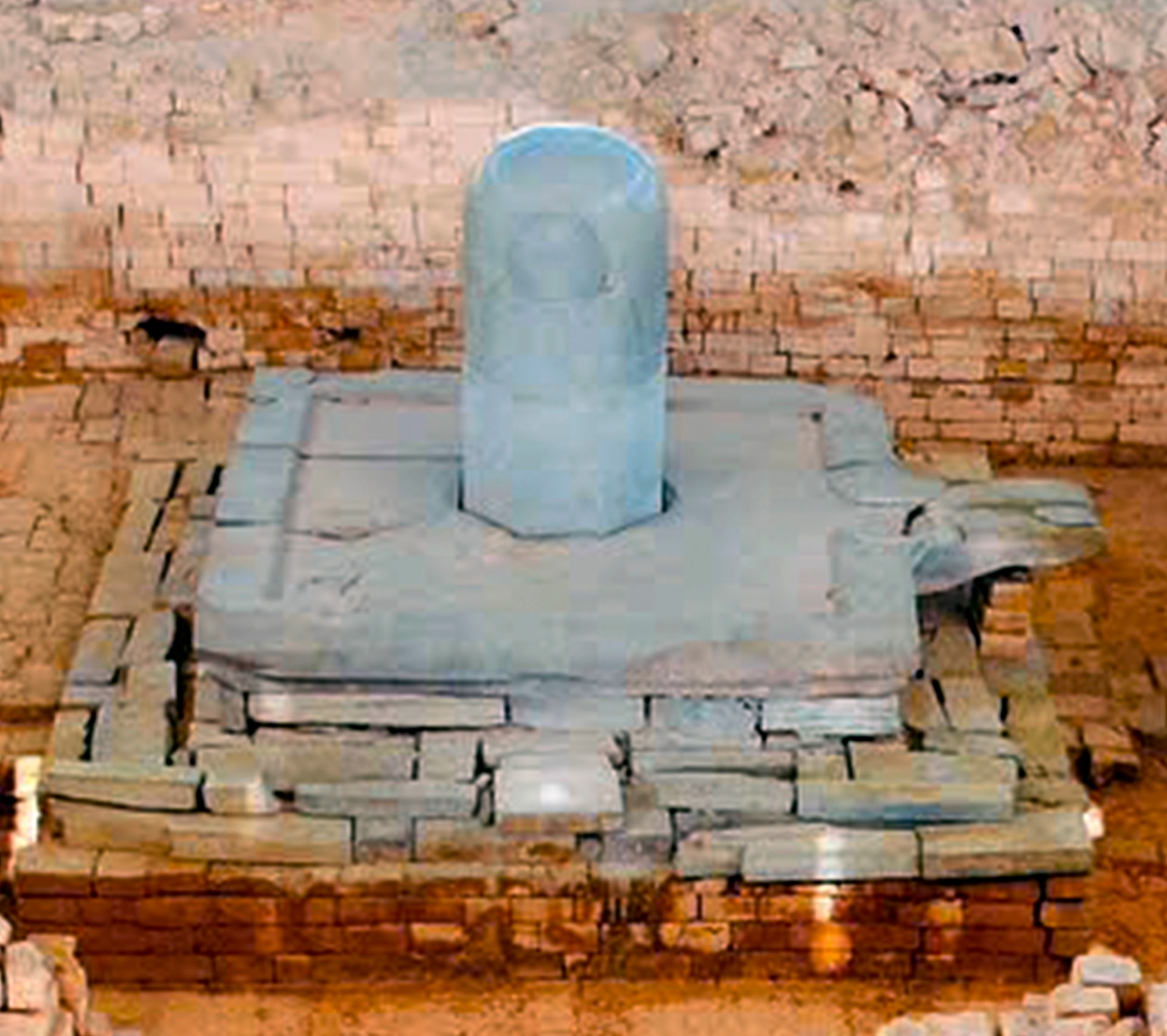
2. From here, stone also entered art through the creative talent of humankind. These are stone paintings, especially stone sculptures. Among them, we want to mention the stone works associated with rituals and worship. Typical examples in Vietnam are the Linga and Yoni idols, symbols of male and female reproductive organs, representing the principles of yin and yang in the universe; the aspiration for procreation and creation, the survival of humankind in relation to all things, and also a characteristic feature in the worship customs of agricultural communities following Hinduism. Linga and Yoni are currently found in many rural areas through archaeological excavations, including at the Cat Tien National Special Archaeological Site in Cat Tien commune, Lam Dong province, dating back to approximately the 6th-11th centuries AD. The Linga idol currently on display is considered the tallest in Southeast Asia at 2.1 meters; while the Yoni has sides measuring up to 2.26 meters. The Linga statue is divided into three parts, each representing one of the supreme deities: Shiva, Vishnu, and Brahma.
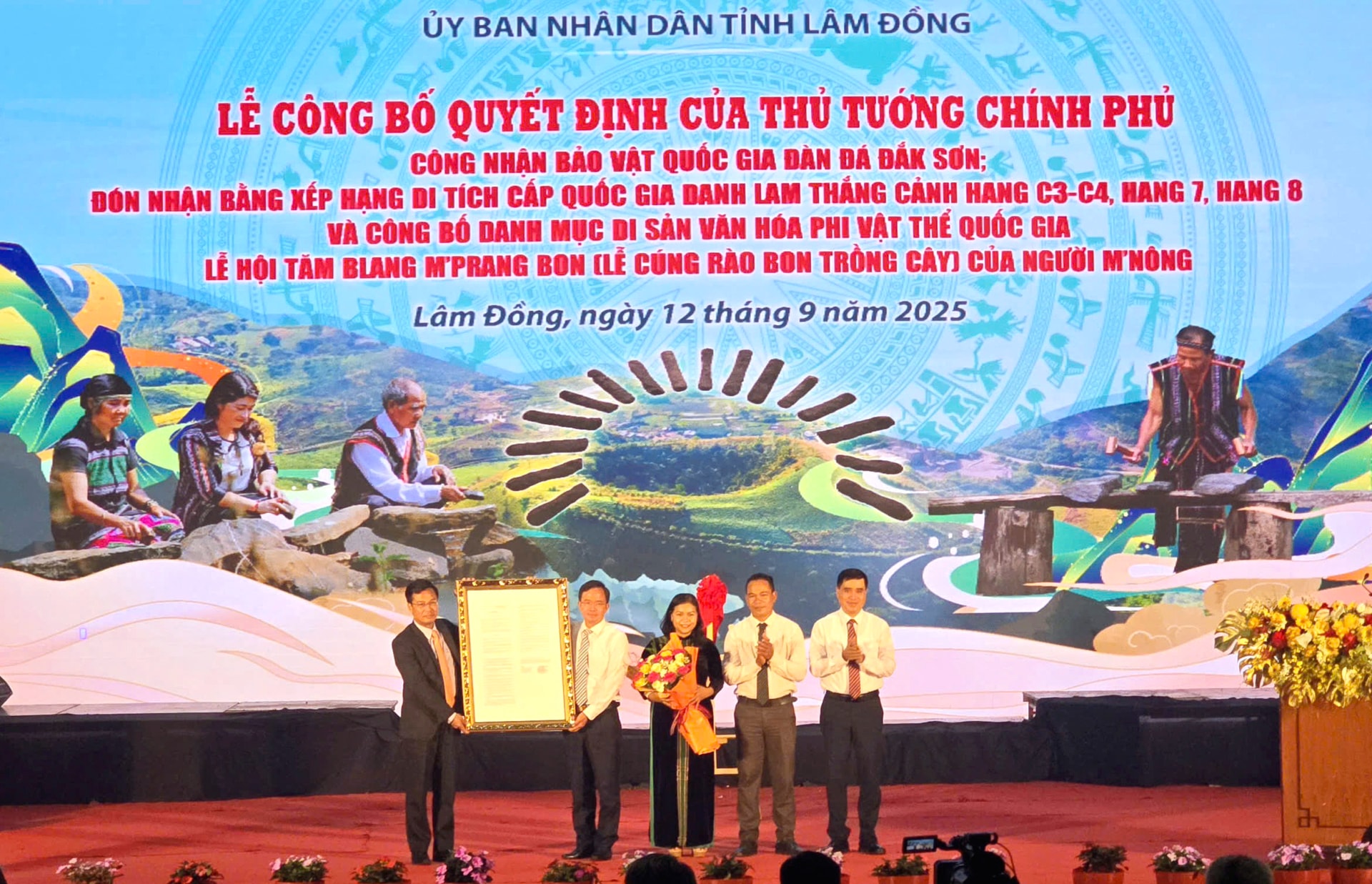
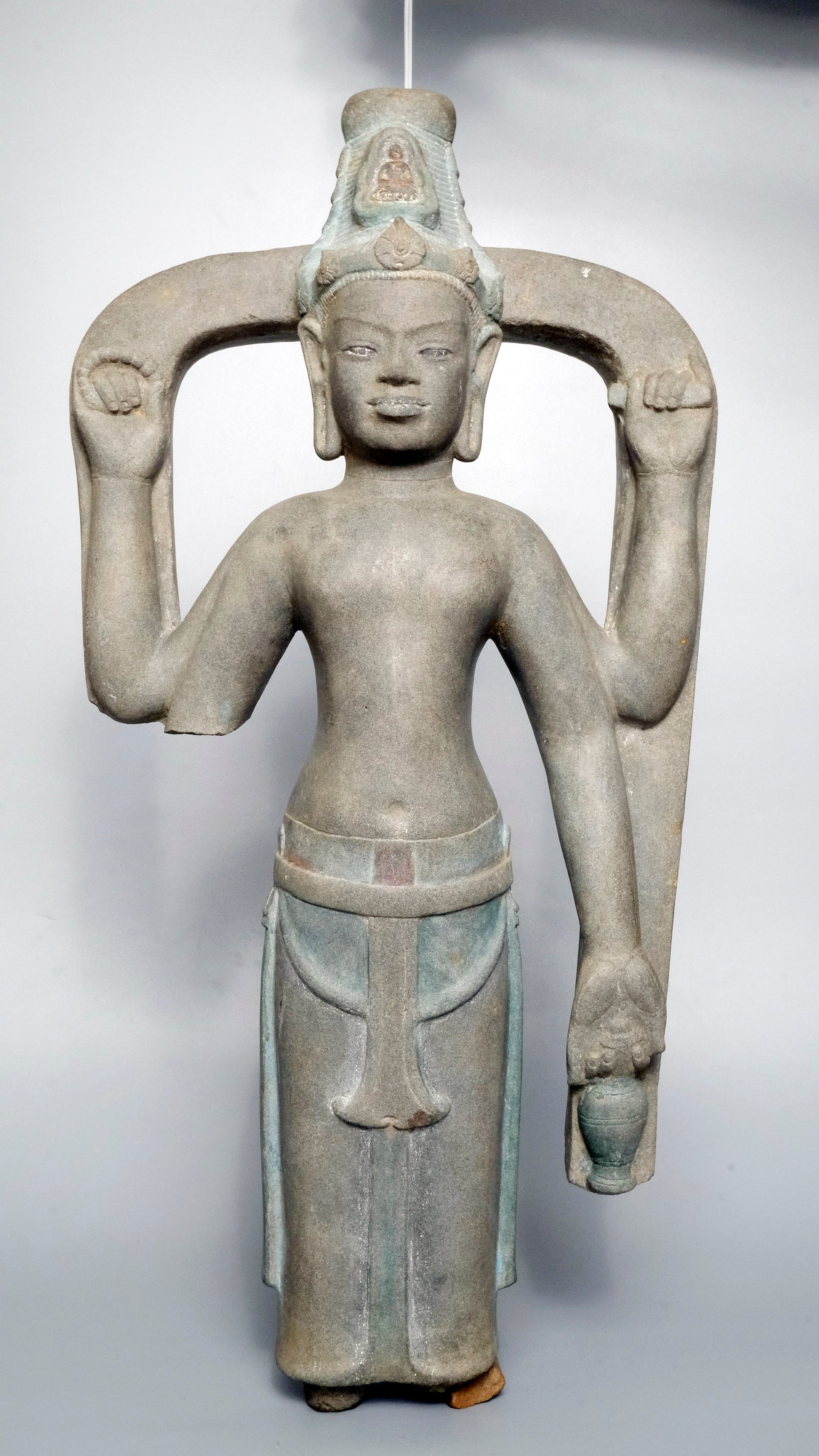
Also in the newly established Lam Dong province, the Avalokitesvara statue from Bac Binh, discovered before 1945, was designated a national treasure by the Prime Minister in the 13th batch in 2024, and the Lam Dong province will hold an official announcement ceremony in September 2025. The Avalokitesvara statue embodies the distinctive artistic characteristics of Cham sculpture and is a valuable document on the history of art, religion, and culture. It serves as a link between the artistic styles of the 8th century and the 11th-10th centuries (the Tra Kieu and Dong Duong artistic styles). While possessing its own unique qualities, the Avalokitesvara statue also reflects the process of cultural exchange and transformation between India and Southeast Asian countries in the first millennium AD.
3. Stone Musical Instruments (Lithophones & Rock Gongs). Stone musical instruments date back to the Neolithic period and belong to the ancient percussion family. Through archaeological excavations, scientists have discovered many stone xylophones in countries in Asia and Europe, dating back to 8,000-10,000 years BCE. Percussion instruments are often associated with community activities, rituals, and customs that are symbolic and sacred.
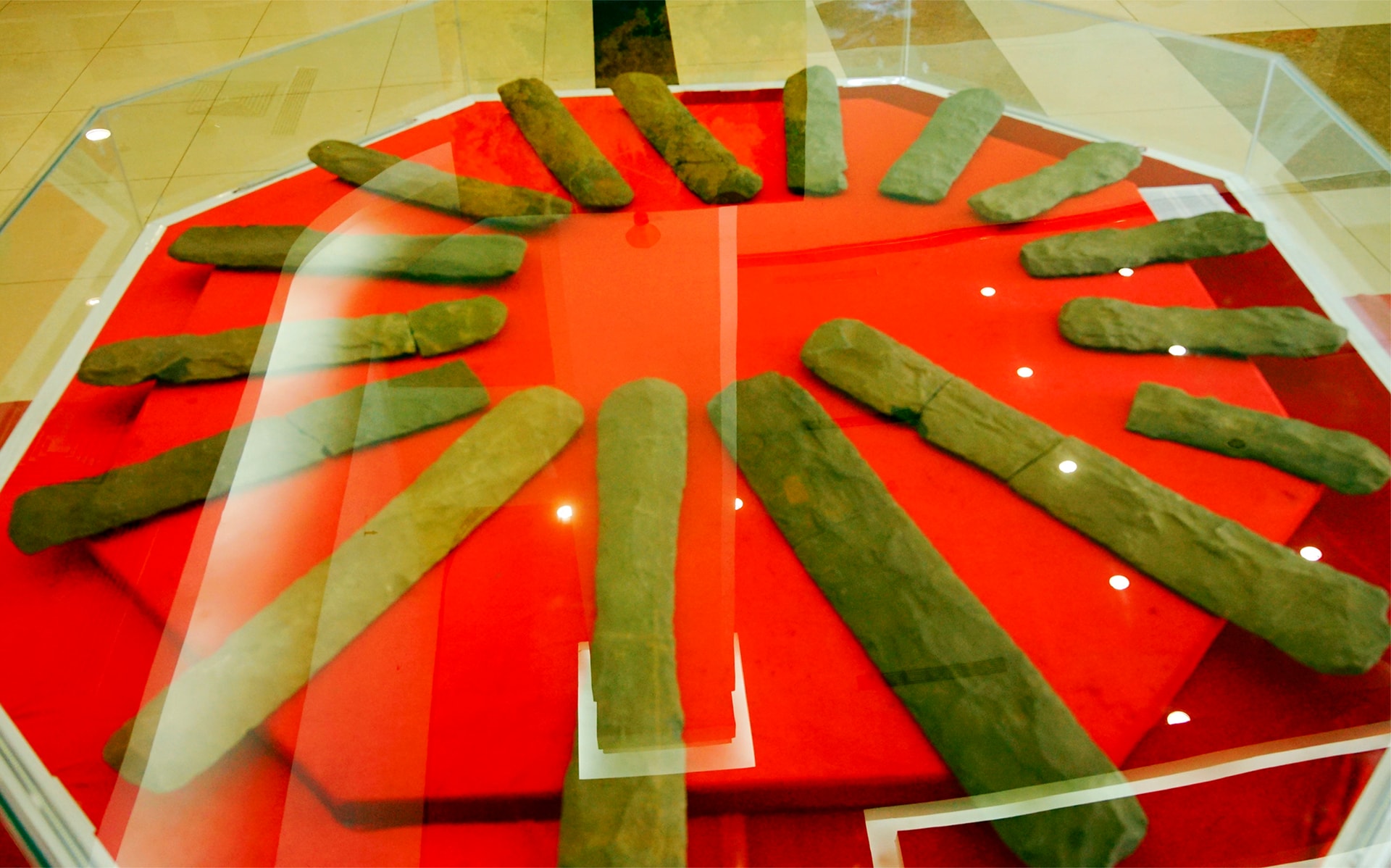
According to Professor Ngo Duc Thinh and musician To Dong Hai, since the discovery of the Ndút Liêng Krăk stone xylophone by French ethnologist Georges Condominas on February 5, 1949, many other stone xylophones have been discovered in Vietnam. In provinces before the annexation, these include the Bù Đơ set in Bao Loc, Lam Dong; the Bắc Ái set in Ninh Thuan; the Bù Đăng Xrê set in Tay Ninh; the Khánh Sơn set in Khanh Hoa; the Đa Kai set in Binh Thuan; the Gò Me and Bình Đà sets in Dong Nai; the Lộc Ninh set in Binh Phuoc; the Tuy An set in Phu Yen; the Đắk Kar set in Dak Lak; and most recently, the Đắk Sơn stone xylophone in the former Dak Nong, discovered in 2014, which was recognized as a national treasure in the 13th round of 2024, with the announcement ceremony scheduled for September 2025.
The Dak Son stone xylophone consists of 16 bars, dating back approximately 3,200-3,000 years. The Dak Son stone xylophone is of exceptional value. At the ceremony announcing it as a national treasure, Associate Professor, Dr. Bui Van Liem - Standing Vice President and General Secretary of the Vietnam Archaeological Association - affirmed: “This is an original artifact, with a clear origin, unique, typical, authentically dated, crafted on-site, of local origin, with historical and cultural value, and is the most distinctive and ancient collection of musical instruments.”



According to authors Ngo Duc Thinh and To Dong Hai, stone xylophones in Vietnam are concentrated in the Southern Central Highlands, South Central, and Southeastern regions. However, they all share a unified pitch range, common craftsmanship, and a similar structure. Stone xylophones consist of many bars, grouped into sets of three. In terms of pitch, these three bars produce three completely consistent pitches.
However, the stone xylophone still raises questions for researchers, such as: who were its owners, one or multiple ethnic groups; is the xylophone a structural instrument with a set of components, and how many units are in a set; and what is the tonal range of a set of stone xylophones?
4. However, it is very interesting that many researchers question the origin of gongs and ancient stone xylophones. According to the late Professor Tran Van Khe, he considered gongs to be a development and variation of stone xylophones, although the materials, manufacturing techniques, and methods of use differed (Paris Journal of Social Sciences, No. 8, 12 - 1981). The three-bar structure of the stone xylophone also perfectly matches the common structure of many gong ensembles of the Central Highlands ethnic groups: M'nong, Raglai, Ma, Gia Rai, Bana…
Based on the above observations, we can explain why in the Central Highlands, where many sets of stone xylophones have been found, gongs are still commonly used. According to Professor Tran Van Khe, "playing stone xylophones using gongs is perhaps closer to the Central Highlands style" and "in the Central Highlands, many ethnic groups play gongs, each with its own style, therefore many unique ways of playing stone xylophones can be found."
Meanwhile, two authors, Professor Ngo Duc Thinh and musician To Dong Hai, affirmed: "What we can agree on is that the stone xylophone is a type of musical instrument with a structure forming a set, like a gong set" (Cultural Colors of the Central Highlands, Tri Thuc Publishing House, p. 58 - 2025). The people of the Central Highlands consider these ancient stone slabs sacred objects that spontaneously produce unique sounds, treasures passed down from their ancestors, and are inextricably linked to the very primitive stone worship customs of the ethnic groups in this region. The stone xylophone has been and continues to be a part of the music within the cultural space of the Central Highlands Gong Culture, which is inscribed by UNESCO as a Masterpiece of Oral and Intangible Cultural Heritage of Humanity. It is a space of community festivals always brimming with sacredness.
PHAN MINH DAO
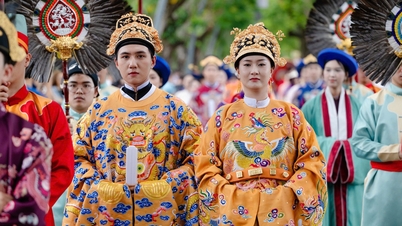
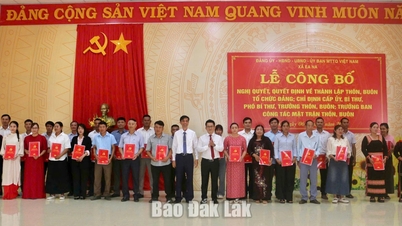
Ceremony to announce the national treasure of the Dak Son stone musical instrument.
The statue of Avalokitesvara - a national treasure.
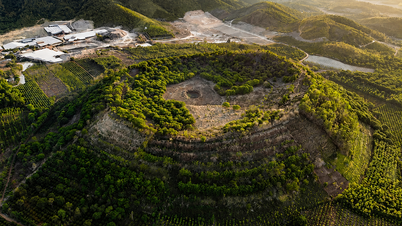
Recorded in Lam Dong province.


The Dak Son stone xylophone is a national treasure recognized in Lam Dong province.
The pair of Linga and Yoni idols are on display at the Cat Tien National Special Archaeological Site.
Lam Dong.
Source: https://baolamdong.vn/tan-man-ve-da-thieng-421710.html
![[Photo] General Secretary and President To Lam working with the Technical and Professional Center, Ministry of Public Security](https://vphoto.vietnam.vn/thumb/1200x675/vietnam/resource/IMAGE/2026/07/06/1783318005842_a1-bnd-1129-2263-jpg.webp)