Listen from the grassroots.
As a locality still facing many difficulties, the lives of a segment of the population in Lien Hiep commune still depend primarily on agricultural and forestry production. Currently, there is still one village without access to the national power grid, and nine villages are in areas with poor signal coverage; the need to develop livelihoods, increase income, and achieve sustainable poverty reduction remains a priority for the people.
 |
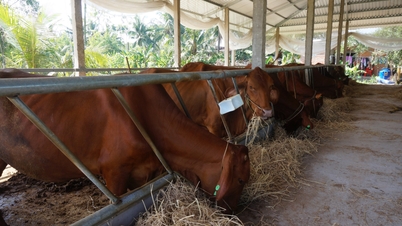
| The leaders of Lien Hiep commune are keeping abreast of the livestock development situation of the people and promptly resolving difficulties at the grassroots level. |
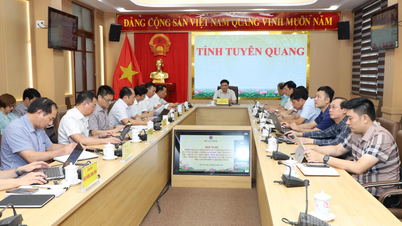
Faced with practical demands, the Party Committee of the commune determined that in order to effectively implement key tasks, it was first necessary to create consensus among the people. To achieve consensus, the Party committee had to listen to the voices from the grassroots.
Accordingly, the Standing Committee of the Commune Party Committee established working groups to oversee specific areas, assigning members of the Standing Committee and the Executive Committee of the Commune Party Committee to monitor and be responsible for each village. These assigned members regularly attend Party branch meetings to understand the situation and guide the Party branches in effectively implementing assigned resolutions and tasks. They also participate in village meetings, engaging in dialogue with the people to understand their thoughts, aspirations, and suggestions. Issues within their authority are directly addressed and resolved; those beyond their authority are compiled and reported to higher authorities for consideration and resolution.
Through interactions, dialogues, and grassroots activities, many opinions and suggestions related to investment in transportation infrastructure, electricity for households, economic development, land use, and the implementation of social welfare policies have been directly reflected by the people to the Party committees and authorities. These opinions and suggestions from the people are received, considered, resolved, or promptly answered and explained, thereby strengthening the people's trust in the local Party committees and authorities.



Comrade Bui Nhat Dai, Permanent Deputy Secretary of the Party Committee of Lien Hiep commune, said: “The commune Party Committee has determined that, in order to create consensus among the people, it is first necessary to build and strengthen the people's trust in the Party committee and the government. Therefore, the locality always focuses on openness and transparency in leadership, management, and the organization and implementation of tasks; ensuring the legitimate rights and interests of the people. When the people clearly understand the Party's guidelines and the State's policies, the implementation of tasks in the locality will be more convenient.”
The effectiveness of dialogue
Through grassroots dialogues, many suggestions and feedback from the people have been received, addressed, or promptly considered and handled by the Party committee and local authorities. Specifically, in Thuong Nguon village, people received guidance and answers to their requests related to crop conversion on production forest land and the issuance of land use right certificates. In Xuan Minh village, feedback regarding the transportation of soil and rocks affecting the environment and traffic was investigated by the local authorities, who requested corrective action. In Thong Nhat village, requests for the construction of a waste incinerator were also discussed and explained in detail based on environmental regulations and the actual conditions of the locality.
Comrade Giàng Seo Sàng, Head of Thượng Nguồn village, Liên Hiệp commune, said: “People have more confidence when their opinions and suggestions are listened to and directly answered by the Party committee and the government. Thanks to this, people understand the local policies better and are more in agreement during the implementation process.”
Furthermore, one of the clearest examples of the effectiveness of dialogue is the implementation of the village reorganization plan, in accordance with the province's policy, which received the approval and support of the people. According to the plan, the commune is expected to reorganize from 27 villages down to 12; of which 3 villages will remain unchanged, and 24 villages will be reorganized into 9 new villages. During the consultation process, concerns related to the names, boundaries, and size of the villages after reorganization were promptly addressed and explained by the Party committee and the government, ensuring consensus during implementation.
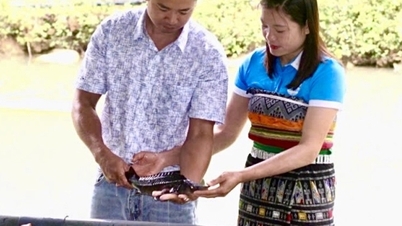
The consensus of the people has also created favorable conditions for the locality to implement socio-economic development tasks. In the first six months of 2026, budget revenue in the area reached 62% of the plan; disbursement of public investment capital reached 56% of the plan. Economic development models such as forest planting combined with medicinal plants under the forest canopy, raising native black pigs, buffaloes, goats, and chickens continue to be maintained and effectively promoted. Some new models such as raising spotted deer, cold-water fish, frogs, and bamboo rats have been initially implemented, contributing to diversifying livelihoods and increasing income for the people. Thanks to the consensus created among the people, for nearly a year, there have been no complaints filed at higher levels in the commune, and security and order have been maintained.
Experience at the Union shows that when people are listened to and involved in the implementation of tasks at the grassroots level, many local policies are implemented more smoothly. This also forms the foundation for localities to continue to leverage the strength of unity and effectively achieve development goals in the future.



Text and photos: Hong Nhung
Source: https://baotuyenquang.com.vn/xa-hoi/202606/tao-dong-thuan-o-lien-hiep-78a3ada/