

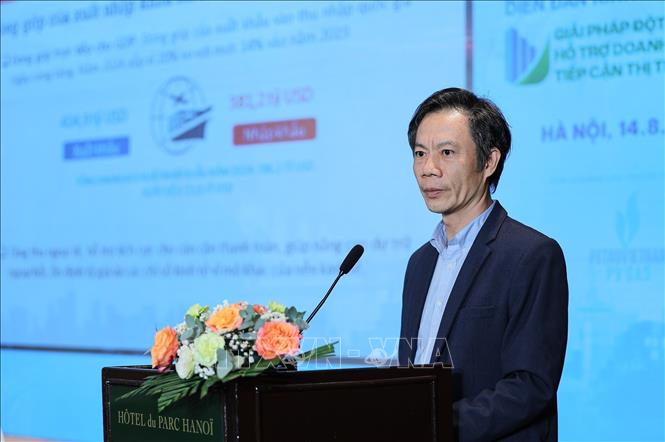
In his commentary on the Draft Political Report of the 13th Central Committee of the Communist Party of Vietnam, Dr. Le Duy Binh, Director of Economica Vietnam, pointed out that practice shows that to achieve high growth targets in the coming years, investment, including public investment, plays a very important role.
Dr. Le Duy Binh argues that public investment needs to be oriented towards greater selectivity and efficiency, acting as "seed capital" for the private sector and a driving force for innovation in the new development phase.
Accordingly, in any economy , although the proportion may vary, public investment is always a major component of aggregate demand. In each country, there are different ways for public investment to demonstrate its role as a driver of growth. For Vietnam, the more important question is how public investment can contribute effectively and sustainably to the goal of high growth in the era of national development.
To ensure that public investment truly becomes a driving force for growth, Dr. Le Duy Binh believes that three key issues need to be clearly identified.
Firstly , the economy is demanding a significant transformation in essential infrastructure, forming the physical foundation for growth and expanding growth opportunities. Infrastructure in transportation, technology, telecommunications, along with energy, water, education , training, and basic social services, plays an extremely important role in the transition to a new growth model, one that relies more heavily on technology, digital transformation, and innovation.
In addition to expanding growth space, every extended road, newly built or upgraded seaport and airport will simultaneously expand markets, increase connectivity between domestic and international markets, and reduce logistics costs. Investing in basic social services such as education, healthcare, and the environment not only improves the quality of growth, ensuring that people benefit from it, but also enhances the quality of human resources for the new growth process.
Secondly , public investment must stimulate private investment by creating a foundation for private investment, acting as seed capital for private investment, improving the investment environment, and encouraging private investment alongside public investment through public-private partnerships and other forms. According to statistics, a 1% increase in private investment will yield an absolute value equivalent to a 2.5% increase in public investment and a 3.5% increase in foreign direct investment (FDI). The pivotal role of public investment in Vietnam's economy in the upcoming development phase is demonstrated in many different aspects as described above.
Thirdly , public investment needs to be closely linked to the goals of productivity, quality, efficiency, and competitiveness of the economy, which is still low, improving the ICOR index, and requiring innovation in the growth model associated with economic restructuring, aiming to transform science, technology, and innovation from being the main driving force. Only then can the economy avoid a situation where growth remains primarily based on capital and labor, and allow the Vietnamese economy to shift towards in-depth growth, avoiding the risk of being trapped in the middle-income trap.
Public investment should increase in both quantity and proportion, but it must also be balanced to avoid putting excessive pressure on the fiscal balance and to prevent the "overwhelming" effect of private capital. Increasing public investment or recurrent expenditure would necessitate increased regular budget revenue, creating pressure and burdens for businesses and citizens, and potentially reducing investment and consumer demand. Therefore, public investment needs to be considered in a context that harmonizes with other factors of aggregate demand and other macroeconomic elements of the economy to suit the context, structure, and objectives of the Vietnamese economy.
Public investment should focus on large-scale, key projects, projects that can change the course of the economy or create major breakthroughs in science and technology, expand growth opportunities, and lay an important foundation for future socio-economic development.
The orientations and solutions outlined by Dr. Le Duy Binh are entirely consistent with the spirit and goals of national development for the period 2026-2030 as defined in the Draft Political Report of the 13th Central Committee of the Communist Party of Vietnam presented to the 14th National Congress.
In terms of economics, the draft sets a target of an average GDP growth rate of 10% or more per year for the period 2026-2030, with GDP per capita reaching approximately US$8,500 by 2030, the digital economy accounting for 30% of GDP, and public investment accounting for about 20-22% of total social investment. Indicators regarding productivity, industry structure, accumulation, and consumption all emphasize the need for efficient use of public resources, considering public investment as the foundation and driving force for the private sector, innovation, and sustainable growth.
Clearly, improving the quality and efficiency of public investment is not just a technical task related to capital allocation or project management, but a prerequisite for realizing Vietnam's aspiration for rapid, sustainable, and self-reliant development in the new era.
Source: https://baotintuc.vn/kinh-te/tao-dot-pha-cho-dau-tu-cong-20251113095606219.htm
![[Image] Overview of the Tam Trinh-Giai Phong connecting road section after land clearance is completed.](https://vphoto.vietnam.vn/thumb/1200x675/vietnam/resource/IMAGE/2026/04/15/1776245679644_ndo_br_dji-0195-jpg.webp)
![[Photo] Capturing each moment at the "People We Meet" photography exhibition.](https://vphoto.vietnam.vn/thumb/1200x675/vietnam/resource/IMAGE/2026/04/15/1776245695648_1-8944-jpg.webp)
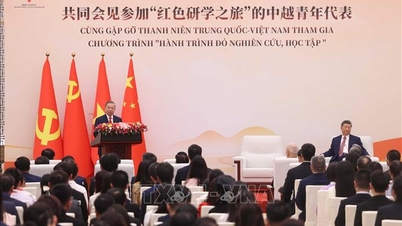
![[Photo] General Secretary and President To Lam and General Secretary and President Xi Jinping meet with youth from both countries.](https://vphoto.vietnam.vn/thumb/1200x675/vietnam/resource/IMAGE/2026/04/15/1776245687540_vna-potal-tong-bi-thu-chu-tich-nuoc-to-lam-va-tong-bi-thu-chu-tich-nuoc-tap-can-binh-gap-go-thanh-nien-hai-nuoc-8702371-jpg.webp)
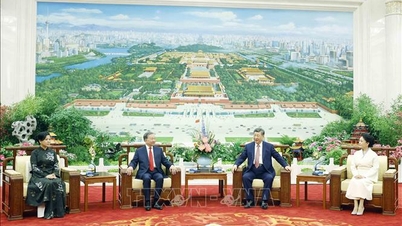
![[Photo] General Secretary and President To Lam and his wife, along with General Secretary and President Xi Jinping and his wife, attending a tea party.](https://vphoto.vietnam.vn/thumb/1200x675/vietnam/resource/IMAGE/2026/04/15/1776245678527_vna-potal-tong-bi-thu-chu-tich-nuoc-to-lam-va-phu-nhan-cung-tong-bi-thu-chu-tich-nuoc-tap-can-binh-va-phu-nhan-du-tiec-tra-8702812-9829-jpg.webp)

![[Image] Current status of the land area of over 5.5 hectares that Ho Chi Minh City is considering reclaiming.](https://vphoto.vietnam.vn/thumb/1200x675/vietnam/resource/IMAGE/2026/04/15/1776245690095_1-3102-8409-jpg.webp)






















































Comment (0)