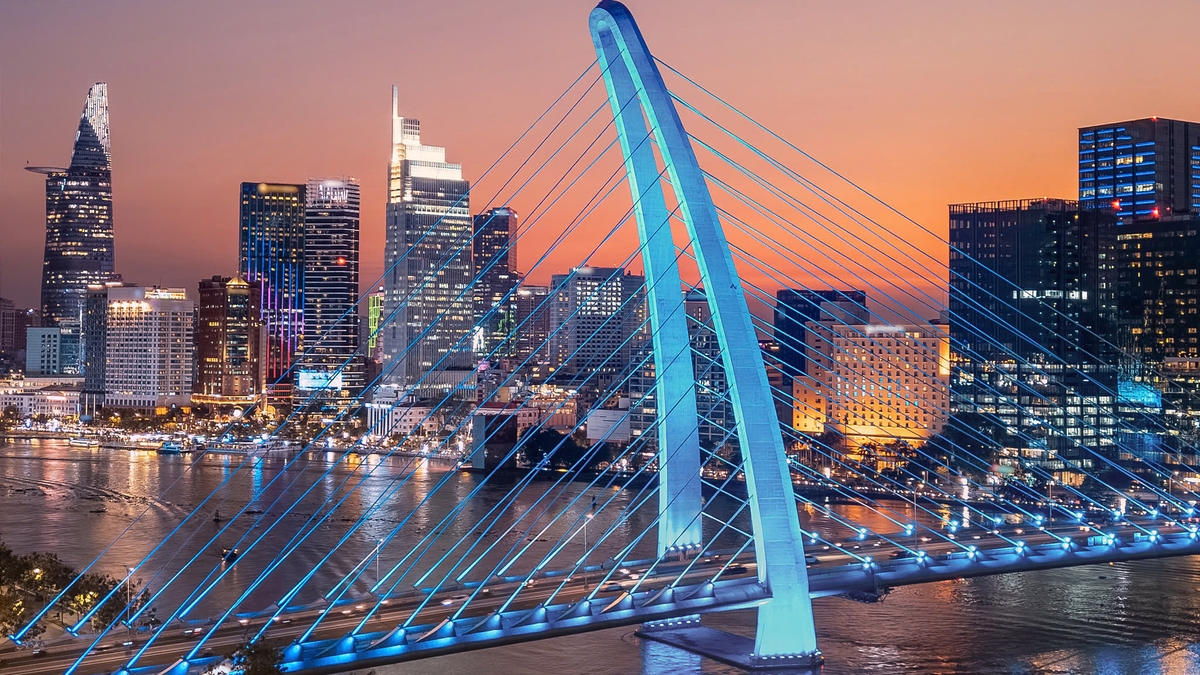
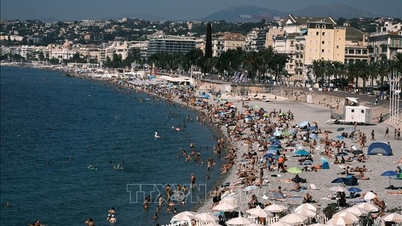
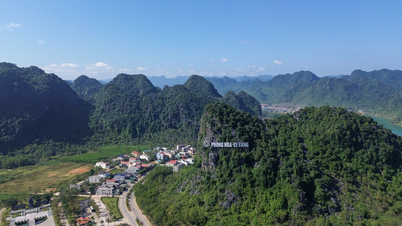
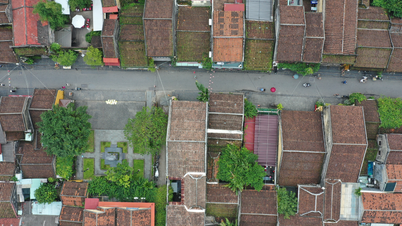
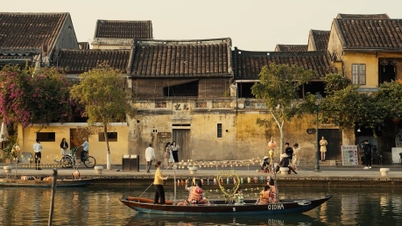
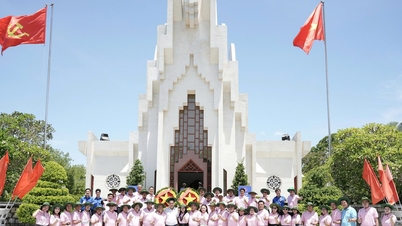
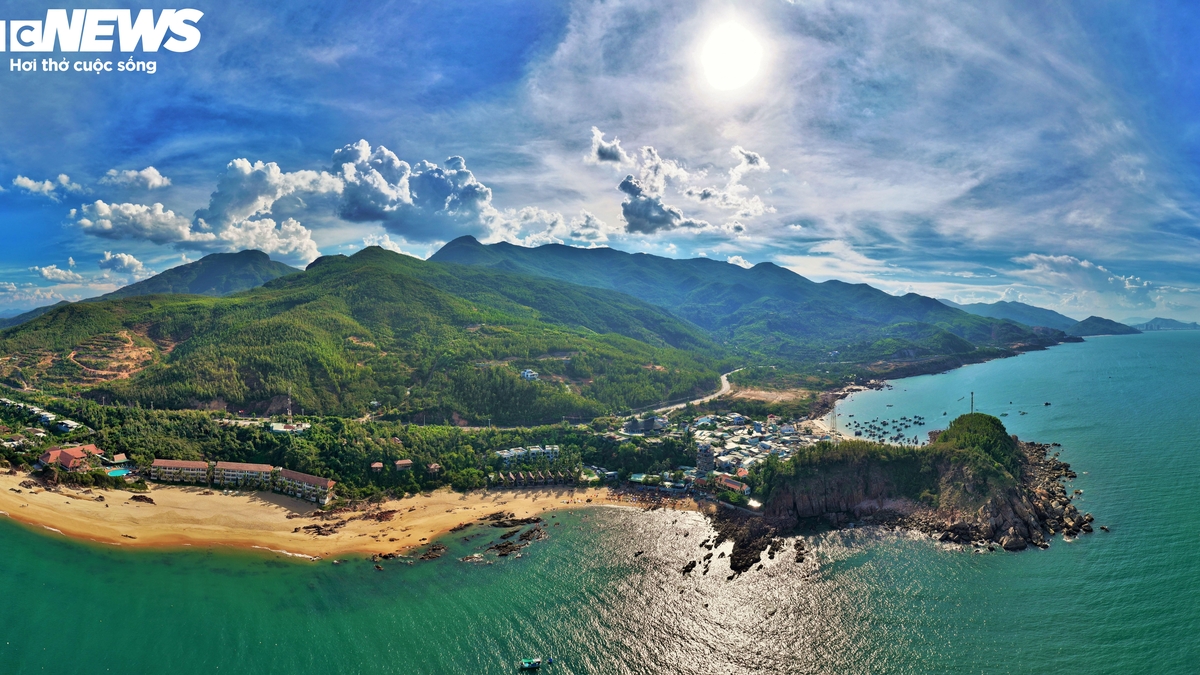
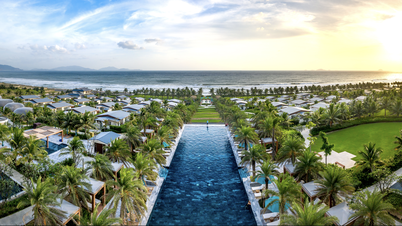
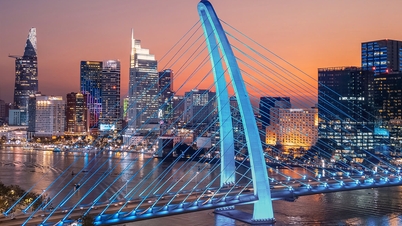
Long Xuyen is one of the dynamic urban centers playing a leading role in the growth of An Giang province . Photo: MINH DUC
Shaping 8 dynamic urban centers
Following the merger, An Giang became a large administrative unit in the Mekong Delta region, with diverse development areas including border areas, plains, coastal areas, and islands. This is a significant historical milestone in the administrative reform process; at the same time, it creates fundamental changes in territorial space, population size, demographic structure, organizational models, land allocation, and new orientations for socio -economic development.
Long Xuyen Ward was established by merging the entire natural area and population of six administrative units. The new Long Xuyen Ward is not only an urban, commercial, and service center but also plays a pivotal role in the Long Xuyen Quadrangle region. Situated between important economic corridors of the Southwest region, and acting as a trade hub within the Long Xuyen Quadrangle, Long Xuyen Ward benefits from its advantageous transportation infrastructure, being located along important waterways and directly benefiting from the Chau Doc - Can Tho - Soc Trang expressway. It also has access to Can Tho International Airport and a vital waterway network. This provides a crucial foundation for promoting trade, developing logistics, and strengthening links with major economic centers such as Can Tho and Ho Chi Minh City.
According to Ms. Doan Thi Huong Ha, Chairwoman of the Long Xuyen Ward People's Committee, the development orientation of Long Xuyen is to be a driving force for the province, a center for commerce, culture, health, and education and training; a university city and a center for human resource training for the province; a comprehensive, specialized urban center, a hub for agriculture, processing industries, services, and agricultural logistics; linked to the rice, seafood, and fruit raw material areas of the freshwater ecological sub-region; and a hub connecting national, inter-regional, and intra-provincial infrastructure.

Besides Long Xuyen, the province has 7 other key urban centers: Rach Gia, Phu Quoc, Chau Doc, Ha Tien, Kien Luong, An Bien, and Giong Rieng. The establishment of these 8 core urban centers is a bold step aimed at optimizing all internal resources, creating a strong ripple effect, and confidently ushering the entire Mekong Delta region into a new era of development.
Regional connectivity infrastructure
According to the Provincial People's Committee, in the plan to develop 8 dynamic urban areas, Rach Gia is envisioned as the administrative, political, economic, cultural, tourism, medical, scientific, technical and technological, and tourism service center of the province; Long Xuyen is the province's key commercial, economic, cultural, and educational center for human resource training. Meanwhile, Phu Quoc is a unique and distinctive coastal and island city; a marine economic zone with a special position. Chau Doc is a riverine and scenic tourist city, a key cultural and religious tourism center of the province and the Mekong Delta region, connected with the Bay Nui area; a provincial-level commercial and service center linked to national defense and security…
Furthermore, the plan also aims to develop Ha Tien as an international border city; an economic center with strong development in border trade, services, and tourism associated with the Ha Tien Border Economic Zone; Kien Luong as a regional transportation hub to promote logistics, import-export, and marine economy; Giong Rieng as a satellite city, developing according to a service and trade urban model, with high-quality rice production and agricultural processing as its foundation; and An Bien as a service urban model with supporting industries and a fisheries economy…
In its strategy for developing dynamic urban areas, An Giang mobilizes resources and focuses on investing in synchronous infrastructure, with transportation as the "backbone." Specifically, this includes the horizontal expressway system such as Chau Doc - Can Tho - Soc Trang and Ha Tien - Rach Gia - Bac Lieu, connecting border cities with the coastal corridor. In particular, the coastal road project connecting An Giang with Ca Mau, along with bridge and road projects, opens up new development opportunities towards the sea for the province.
Besides road transport, upgrading Phu Quoc International Airport to serve the APEC 2027 High-Level Week and renovating Rach Gia Airport to level 4C are strategic steps aimed at directly connecting An Giang with global economic centers.
The province's zoning plans for reclaimed land areas must be consistent with both the provincial plan and the general plans of the localities, while also meeting green criteria; avoiding the use of machinery and vehicles that use fossil fuels; prioritizing the use of renewable energy, researching and attracting investment in wind power, waste treatment, and attracting strategic investors…



The construction and development of dynamic urban areas has profound strategic significance. With thorough planning, strong investment in transportation infrastructure, and a solid foundation from the trade and service sectors, these dynamic urban systems will propel local economies forward, affirming their position as important economic centers and creating a solid foundation for breakthrough development in the future.
Source: https://baoangiang.com.vn/tao-suc-bat-tu-cac-do-thi-dong-luc-a488553.html