

Following a series of tense developments between Warsaw and Kyiv over the ban on Ukrainian grain imports, Polish President Andrzej Duda called for de-escalation of the dispute with his Eastern European neighbor, saying it should not overshadow economic cooperation between the two countries.
“I don’t believe that a political and legal dispute can ruin the achievements you have made,” President Duda said at the Polish-Ukrainian Business Summit in Poznan, in the center-west of the country, on September 22. “I have no doubt that the dispute over grain supply is only a small part of the Polish-Ukrainian relationship and it will not really affect it.”
Mr. Duda's comments came after a tense week between the two neighbors, culminating in Warsaw's unilateral imposition of a ban on Ukrainian grain imports to appease disgruntled Polish farmers, while Kyiv lodged a complaint with the World Trade Organization (WTO).
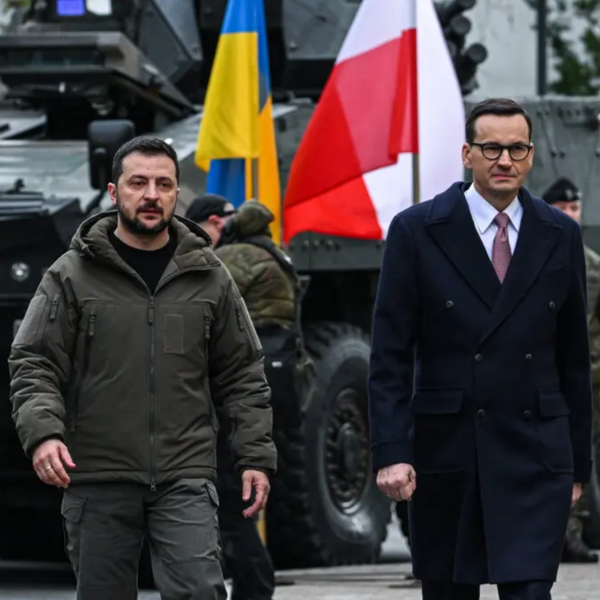
Polish President Andrzej Duda welcomes Ukrainian President Volodymyr Zelensky at the Presidential Palace in Warsaw, Poland, on April 5, 2023. Poland has been the EU's most ardent supporter of Ukraine since Russia launched its military campaign in Eastern Europe. Photo: El Pais
Poland and the Eastern European Union (EU) member states – with the exception of Hungary – have so far been the most consistent supporters of Ukraine within the bloc since Russia launched its military operation in Ukraine last February.
However, now, not only are cracks appearing in this wall of solidarity, but there are even significant feelings of unease between Ukraine and some of its neighbors in Central and Eastern Europe.
The source of tension may stem from the EU lifting temporary trade restrictions on Ukrainian grains and oilseeds since September 15, but more fundamentally from the upcoming contentious elections in Poland and Slovakia, as well as political fragmentation in Bulgaria, and Hungary's foreign policy objectives.
The "Social Solidarity Corridor" is no more.
Ukraine is one of the world's largest producers of grains and oilseeds. Until recently, most of its exports went to regions outside the EU.
However, Russia's "closure" of the Black Sea after withdrawing from the agreement brokered by the United Nations and Turkey means that Ukraine is now cut off from its traditional export routes and forced to rely on other routes such as land transit routes through Poland, Slovakia, Hungary, and Romania within the framework of the EU-established "Socialist Corridor".
Problems have repeatedly arisen, particularly in Poland. Ukrainian grain, instead of being transported across the country to other markets, ends up flooding the Polish market – driving down domestic prices or occupying storage facilities.
Following widespread farmer protests, both Poland and Hungary imposed import restrictions on Ukrainian grain in mid-April, forcing the EU to impose a temporary import ban across the entire union.
This ban remains in place until its expiration on September 15th. The EU views the decision not to extend the ban as a gesture of solidarity with Ukraine. However, in the Eastern EU member states, this issue has long held a very different significance. In Poland, for the ruling Law and Justice Party (PiS), it is about maintaining their power.
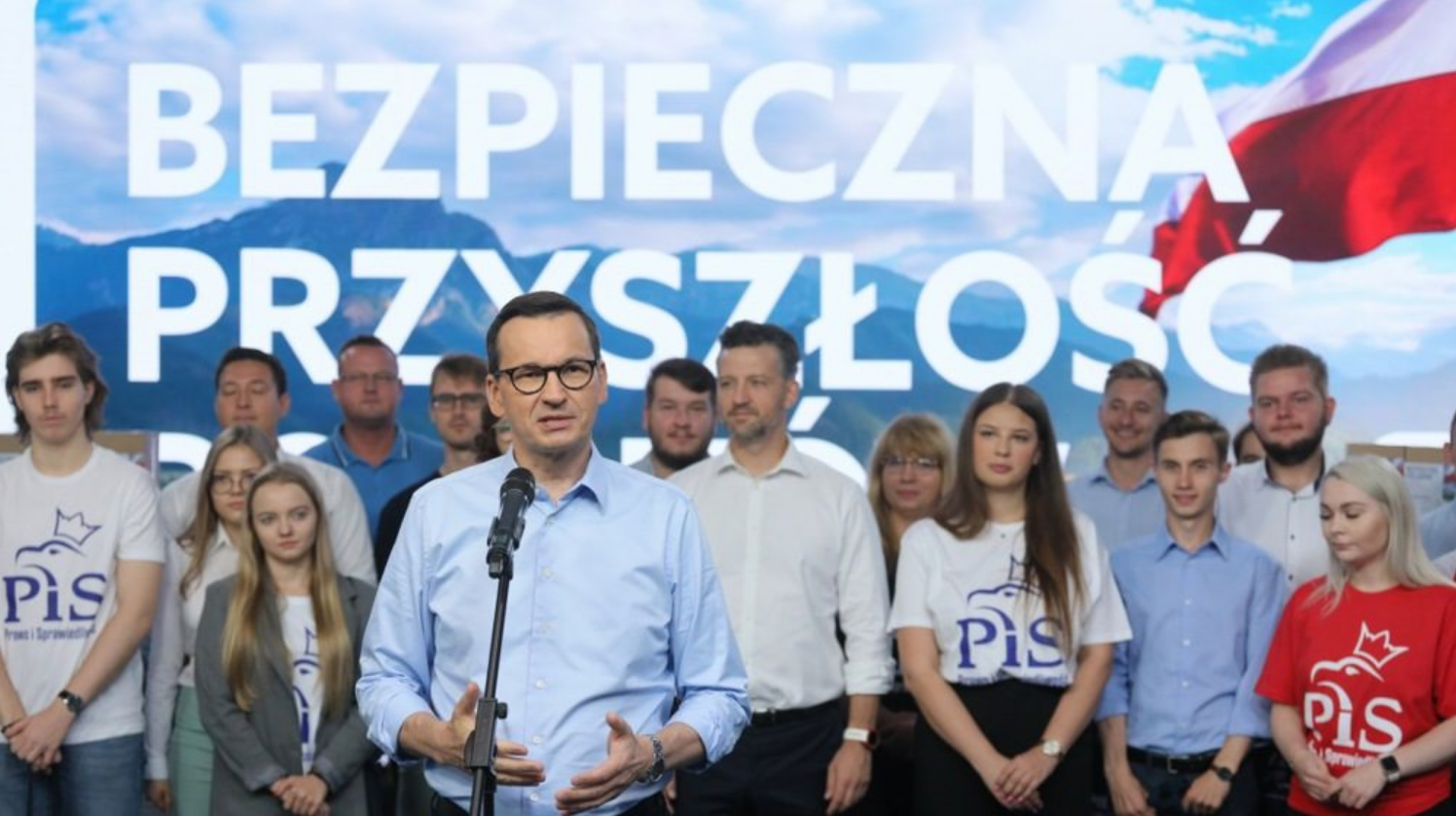
Polish Prime Minister Mateusz Morawiecki speaks at a press conference at the headquarters of the ruling Law and Justice Party (PiS) in Warsaw, September 20, 2023. Photo: Balkan Insight
In what many observers consider a pivotal election, Poles will elect a new parliament on October 15th. Farmers played a crucial role in PiS's two previous electoral victories in 2015 and 2019.
As the general election drew closer, Prime Minister Mateusz Morawiecki was increasingly reluctant to "anger" his farmers, as this would certainly harm his party's electoral prospects. Therefore, after the EU-wide ban – which began in May of this year – expired, Morawiecki's government quickly implemented a unilateral import ban.
However, there is still hope for a compromise: Poland's embargo relates to imports, not transit, of Ukrainian grain.
"A serious battle"
A similar situation is unfolding in Slovakia. The parliamentary elections on September 30th are also linked to grain disputes. Like in neighboring Poland, these elections are considered crucial for Slovaks.
After more than three years under a reform-backed, pro-Western coalition government, Slovakia may witness the return of former Prime Minister Robert Fico. Nominally a social democrat, Fico is in fact a right-wing nationalist with close ties to Hungarian Prime Minister Viktor Orban.
Mr. Fico has repeatedly made statements that are unsupportive of Ukraine and friendly to Russia, and has affirmed that Slovakia will cease military support for Ukraine.
It is possible that the interim government led by acting Prime Minister Ludovit Odor will unilaterally decide to maintain import restrictions on Ukrainian grain to appease voters. Or, more accurately, if Odor allows Ukrainian grain to flood the Slovak market without restrictions, it will push many voters into the arms of right-wing politician Fico.
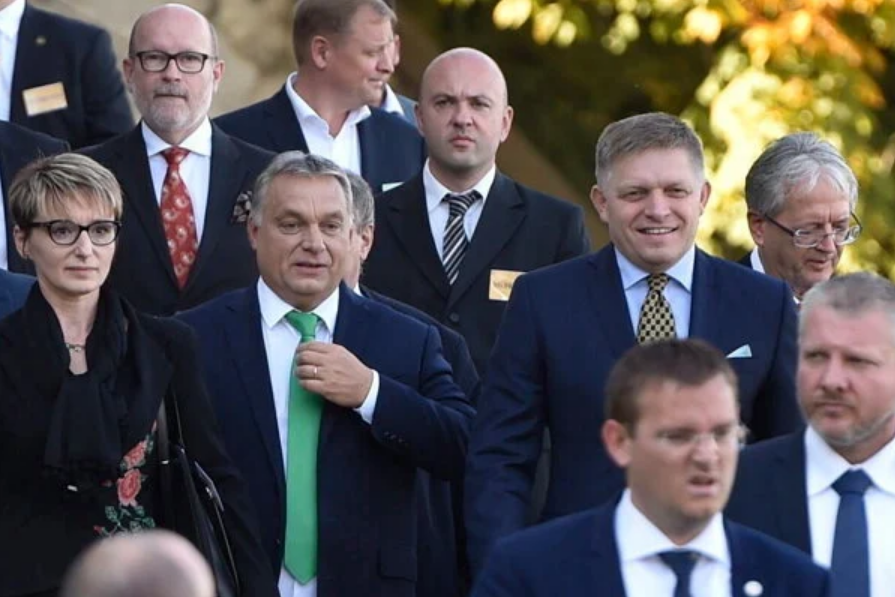
Hungarian Prime Minister Viktor Orban and then-Slovak Prime Minister Robert Fico inaugurated the cross-border bridge over the Danube River between the towns of Komárom (Hungary) and Komárno (Slovakia) on October 17, 2017. Photo: Slovak Spectator
In Hungary, Prime Minister Viktor Orban was correct in predicting a “serious war” between the eastern EU member states and the Brussels-based executive body, even before the EU decided to lift import restrictions on Ukrainian grain.
The nationalist leader is likely to unilaterally decide to maintain the ban on Ukrainian grain imports in order to seek a sense of "alliance" with countries that were once partners of Hungary but have been at odds with Budapest since the conflict in Ukraine broke out.
Because of Orban's "friendly" stance toward Russia, Hungary was largely isolated in the region in terms of foreign policy during nearly 20 months of conflict.
Deep internal divisions
Unlike the three countries mentioned above, Romania is not as strict with imports from Ukraine. Bucharest wants to extend the ban on Ukrainian grain imports, but initially only for 30 days.
Romanian Prime Minister Marcel Ciolacu said on September 18 that his country had given Ukraine a deadline to develop a plan to protect Romanian farmers from the "uncontrolled" flow of grain from Ukraine. In addition to Ukraine's action plan, the Romanian government wants to decide on appropriate measures to protect its own farmers.
With parliamentary and presidential elections scheduled for late 2024 in Romania, the Ukrainian grain issue is not as pressing there as it is in Poland and Slovakia.
However, the far-right Roman National Union (AUR) party is gaining influence in Romania. The AUR has a "pro-Russian" stance, and one of its policies is to unite all Romanians in one country, including those in the northern Bukovina region, which is part of Ukraine.
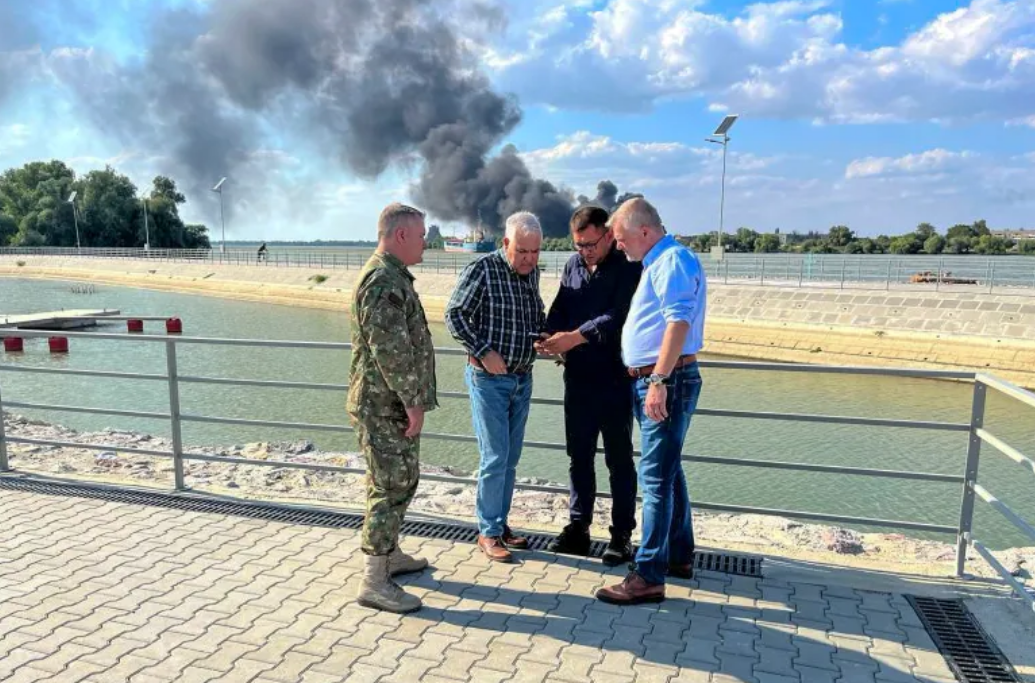
Romanian Defense Minister Angel Tilvar (second from left) visits areas in the Danube Delta near the border with Ukraine on September 6, 2023, amid reports of debris from a Russian drone falling on Romanian territory – a NATO member state. Photo: Al Jazeera
Meanwhile in Bulgaria, the issue of Ukrainian grain is likely to cause sharp divisions within the country. Bulgaria was the only Eastern EU member state to lift import restrictions on Ukrainian grain last week. Farmers across the country are now protesting the decision by the pro-Western government led by Prime Minister Nikolai Denkov.
Bulgaria has just held its fifth parliamentary election in 24 months, and now has a stable ruling majority for the first time in several years. It remains to be seen whether the protests will pose a threat to this stability.
For its part, the European Commission (EC) has decided to adopt a "wait and see" approach. While responsible for the bloc's trade policy, the EC stated that it wants to analyze the measures taken by Poland, Hungary, Slovakia, and Romania.
EC spokesperson Miriam Garcia Ferrer said the EC saw no need to ban imports as there were no longer any distortions in the market. The Commission plans to review the situation for a month. After that, they may take legal action against Poland, Slovakia, Hungary and possibly Romania.
If that's the case, the EC is likely to act after the elections in Poland and Slovakia conclude .
(According to DW and Bloomberg)
Source







































































Comment (0)