

 |
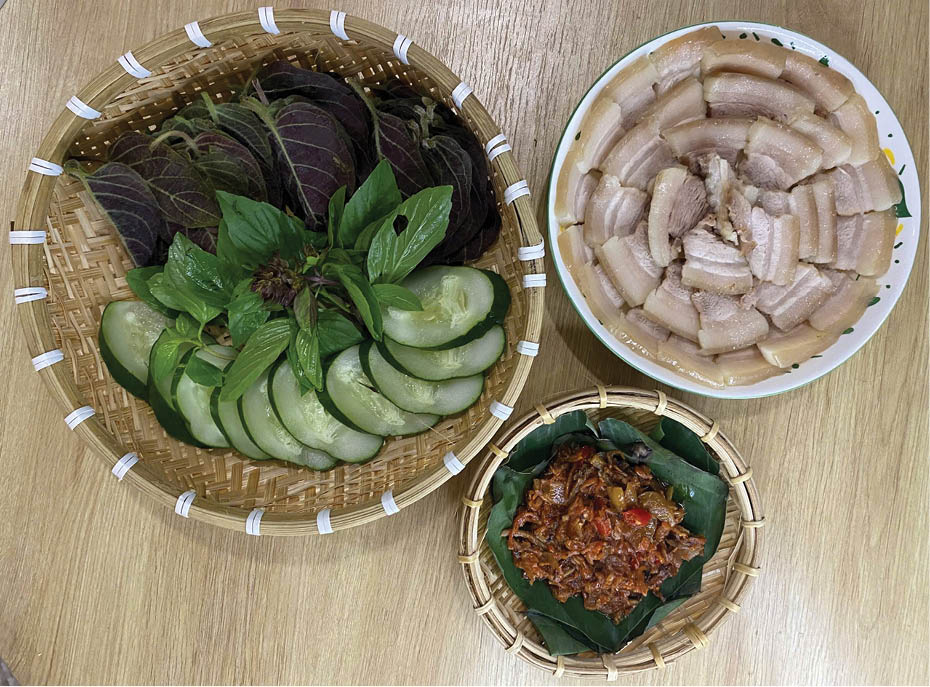
| Huong Can sour shrimp is a familiar side dish in meals that include boiled pork and pickled vegetables. |
The jar of pickled shrimp looks rustic and simple, but making it is a meticulous process requiring immense skill and finesse. This is fitting for the diligent and hardworking nature of the women of Huong Can village.
The season for making fermented shrimp paste coincides with the rainy season. The elderly women rush to the market early to select a batch of fresh, still-splitting, and firm shrimp. After picking out any algae and washing them thoroughly, the shrimp are soaked in white wine for about ten minutes to disinfect, remove the fishy smell, and minimize bacterial contamination that could cause the fermented shrimp paste to spoil during the fermentation process. Finally, the shrimp are drained in a colander.
Once everything is ready, the chef prepares the other ingredients. Garlic is peeled, washed, and thinly sliced. Galangal is cleaned and julienned. Chili peppers are also carefully prepared and thinly sliced. Another important ingredient that makes the sour shrimp dish even more delicious and unique is bamboo shoots. Sometimes you can buy bamboo shoots at the market, and sometimes you can just go to a friendly neighbor's house to find a bunch of bamboo shoots growing among tall, straight bamboo stalks proudly welcoming the wind. The bamboo shoots are cleaned and thinly sliced. Simultaneously, plump, fragrant glutinous rice is washed, soaked, and steamed into sticky rice.
All the above ingredients are mixed together and seasoned (salt, seasoning powder, chili powder) before being placed in clean, sterilized jars. After filling the jars with the fermented shrimp paste, a guava leaf or banana leaf is placed on top, and the lid is closed. In cold weather, the fermented shrimp paste can be eaten after about a week. Once fermented, it can be eaten for twenty days if kept at room temperature, or for several months if refrigerated.
Although the shrimp are tiny, they retain their original shape after fermentation; their color changes from translucent silver to a reddish-brown; and their shells and heads become soft, chewy, and easy to swallow. People in Huong Can rarely call this dish "shrimp paste," but rather "sour shrimp," perhaps because even after fermentation, sour shrimp doesn't have a strong smell and retains a rich, sweet flavor from the shrimp; just the right amount of salt; a fragrant and spicy aroma from garlic, galangal, and chili; and a slight sourness from the fermentation process.
In the chilly late winter, fermented shrimp paste seems to be an indispensable side dish on a hot meal table in the lives of the people of Huong Can. Along with boiled pork and various vegetables and fruits such as herbs, fig leaves, unripe bananas, cucumbers, etc., fermented shrimp paste is added to enhance the rich flavor and reduce the greasiness of the pork belly. This is considered a characteristic dish that makes you eat a lot of rice and prevents boredom during Tet (Lunar New Year) in Huong Can.
One time, a relative who had been away from home for many years came to visit and hastily rushed to the market to buy a bunch of shrimp as big as... prawns, begging my mother to make fermented shrimp paste. "I'm going to take them back to the South to eat later, I'm craving them so much I can't stand it," he said. My mother grumbled, "Oh my goodness, shrimp as big as prawns are too big to eat, how can I make it?" But she still made it out of affection for the relative's kindness. The batch of fermented shrimp paste, which was only considered second or third-rate, turned out to be a precious, cherished hometown delicacy for that relative, according to my mother's expertise.
It can be said that Huong Can village has great potential for culinary development. It has already made its mark with the royal rice cakes and royal tangerines. Unfortunately, to this day, the village's famous sour shrimp paste is still produced on a small scale and in a fragmented manner, failing to establish a brand worthy of a specialty dish from this village rich in cultural and culinary value. Hopefully, in the not too distant future, Huong Can sour shrimp paste will have a well-deserved place on the map of Hue's fermented fish sauces in particular, and Hue's culinary specialties in general.
Source: https://huengaynay.vn/du-lich/am-thuc-hue/tep-chua-huong-can-152183.html


![[Photo] Prime Minister Pham Minh Chinh presides over the conference announcing the establishment of the International Finance Centre in Vietnam.](/_next/image?url=https%3A%2F%2Fvphoto.vietnam.vn%2Fthumb%2F1200x675%2Fvietnam%2Fresource%2FIMAGE%2F2025%2F12%2F21%2F1766309817714_ndo_br_dsc-3400-jpg.webp&w=3840&q=75)

![[Photo] Prime Minister Pham Minh Chinh presides over a meeting on private sector economic development.](/_next/image?url=https%3A%2F%2Fvphoto.vietnam.vn%2Fthumb%2F1200x675%2Fvietnam%2Fresource%2FIMAGE%2F2025%2F12%2F20%2F1766237501876_thiet-ke-chua-co-ten-40-png.webp&w=3840&q=75)



















































































Comment (0)