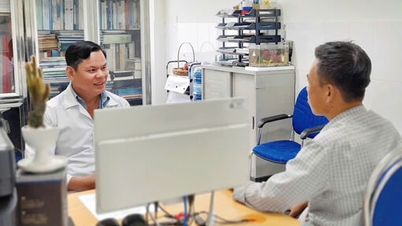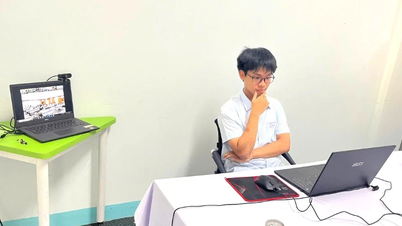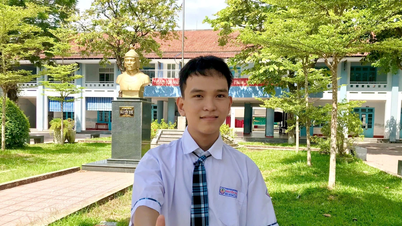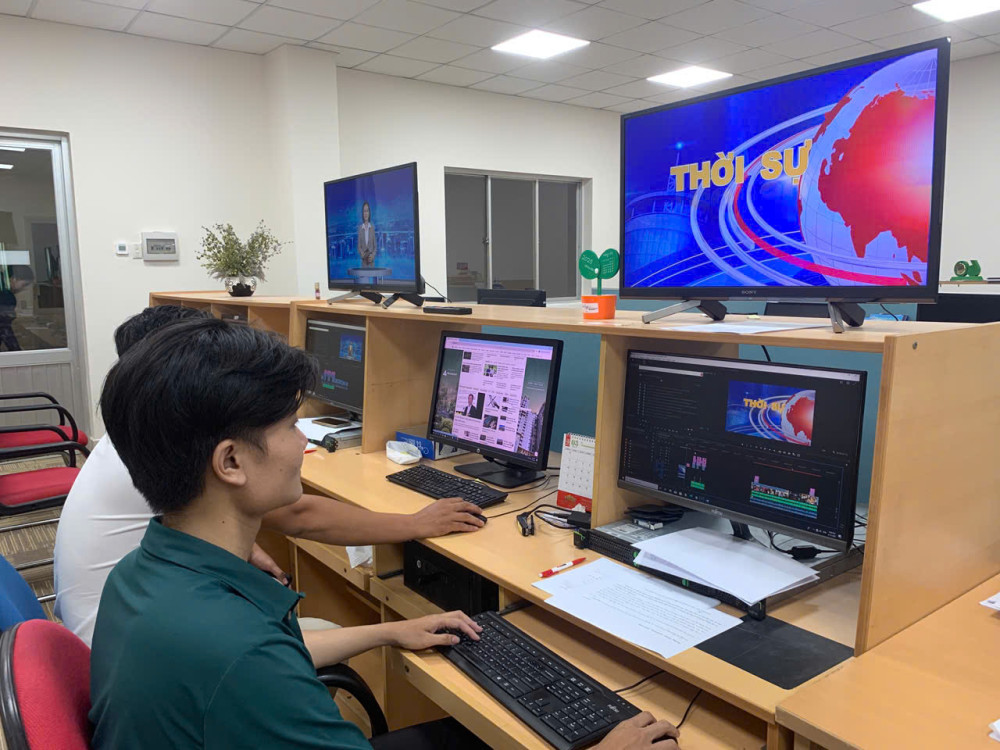
Nguyen Thien An (film editing technician at the Program Production Department of Long An Newspaper and Radio and Television Station) is like a diligent worker bee, carefully attending to every frame.
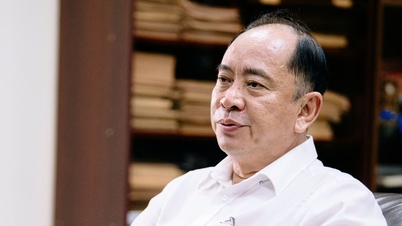
1. From a young age, Mr. Ho Thien Tam (Film Studio Technician, Program Production Department, Long An Newspaper and Radio and Television Station) had a special passion for art. He often watched many films and documentaries from television stations and wondered why they were able to capture such high-quality sound and film so many valuable scenes…
To answer this question, coupled with his immense passion for art , he decided to apply to the Ho Chi Minh City University of Theatre and Film, majoring in directing.
After graduating, he was invited to work as an assistant director for several major television production companies. He lived in Ho Chi Minh City for over 10 years, but in 2021, due to family circumstances, he returned to his hometown and applied for a job at the Long An Newspaper and Radio and Television Station . There, he was assigned as a studio technician, primarily responsible for post-production sound and lighting.



Mr. Tam said: “If you're not in the profession, you might think sound isn't important. On the contrary, for professionals, post-production sound is extremely important. Sound engineers must eliminate background noise and unwanted sounds; adjust frequency and dynamics to make the sound smooth and easy to listen to; and balance and harmonize the sound throughout the film. As for set lighting, it needs to be professionally designed to create depth of space and emotion in each scene, avoiding flat lighting, lack of shadows, or uneven lighting. In particular, set sound engineers need to carefully control the lighting: keylight, fill light, backlight, and lighting effects if needed.”
2. Image quality plays a crucial role in effectively conveying emotions and stories . Images need to be high-resolution (at least Full HD, 4K preferred), properly exposed to avoid overexposure or loss of detail in dark areas. Colors must be realistic and consistent across scenes, and recorded using a flat color profile for easy post-processing. Accurate focus, a well-balanced composition, and good control of depth of field help highlight the subject and guide the viewer's gaze. Furthermore, all camera movements need to be smooth, avoiding uncontrolled shaking. All these elements need to work together seamlessly, not only to create beautiful frames but, more importantly, to contribute to telling a story through images in a deep and professional way.
However, not all cinematographers reach such a professional level. Therefore, the role of editing is extremely important, helping to overcome shortcomings in each frame through technology and creativity.
Nguyen Thien An, a film editing technician at the Program Production Department of Long An Newspaper and Radio and Television Station, shared: “Film editing is not simply about rearranging images, but also about combining sound and special effects to create a logical sequence of images, ensuring aesthetics and conveying authentic, vivid content that attracts viewers. Recognizing this, I researched and boldly utilized new editing software to overcome the limitations of filming while creating the best possible product.”
Although they don't appear in public, the technical team behind the screens plays an incredibly important role in bringing beautiful images, vibrant sound, and a complete radio and television program to the audience.



Le Ngoc
Source: https://baolongan.vn/tham-lang-phia-sau-phong-su-truyen-hinh-a197117.html