The seeds of "false beliefs"
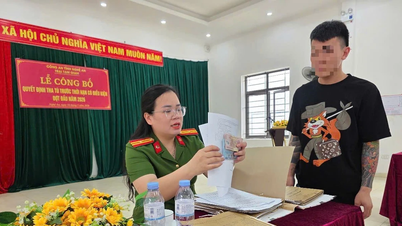
“After being released from prison, I have no home, nothing at all. Only my parents and four children remain. The things I did in the past are in the past. Now I only think about making a living and my family. Now, I always ask the officials before doing anything; if it's wrong, I won't do it anymore. Everything I do must comply with the law,” – the simple words of Mr. Trang A Cho, residing in Muong Nha commune, made us happy for him because of his positive changes. After all, Trang A Cho was once one of the ringleaders and key figures in the complex security and order incident that occurred in Muong Nha in 2011.
This transformation is not just a story of an individual's rehabilitation, but also a vivid testament to the effectiveness of mass mobilization and public relations work, consolidating the "people's support" that the Dien Bien Provincial Police Security force has persistently carried out for many years.
In May 2011, in Huoi Khon village, Nam Ke commune, Dien Bien province, more than 5,000 Mong ethnic people gathered in the deep forest, without any legal organization or control, relying only on vague oral traditions about a non-existent "separate state" and a "promised land" where "you can eat without working."
Behind those empty promises lay a conspiracy to exploit ethnic and religious issues to incite separatist ideologies, divide national unity, and gradually create hotspots of security and order. Among those drawn in at that time, Trang A Cho was one of the most active. With distorted perceptions and blind faith in reactionary rhetoric, he participated in propaganda and mobilization efforts, assisting people in subversive activities.
The particularly complex situation, posing a risk to security and order in Dien Bien province, demanded swift and effective action. To ensure stability while preventing unfortunate consequences for citizens who might be misled or incited, the provincial police force chose the most appropriate path: winning the hearts and minds of the people.
The people are the foundation.
Immediately after assessing and analyzing the situation, the Dien Bien Provincial Police Directorate directed the formation of numerous task forces to closely monitor the area, working through the night to access the scene, review and classify suspects, and separate the misled civilians from the ringleaders and key figures.
In the remote mountains, without electricity or phone signal, and facing harsh living conditions, every interaction carried unpredictable risks. But instead of using coercive measures, the police force persevered in dialogue, explanation, and persuasion. Colonel Ta Van Duong, former Head of the Internal Security Department of the Dien Bien Provincial Police, recalled: "The most difficult thing was not dealing with the resistance, but how to get the people who were being manipulated, enticed, and incited to understand, believe correctly, and side with us…"
In each meeting, which lasted for hours, even days at a time, police officers persistently conveyed explanations and factual evidence to the people. Through this persistent effort, the people gradually realized that no "promised land" can be built on incitement and illusion, and that no freedom exists amidst division and chaos.
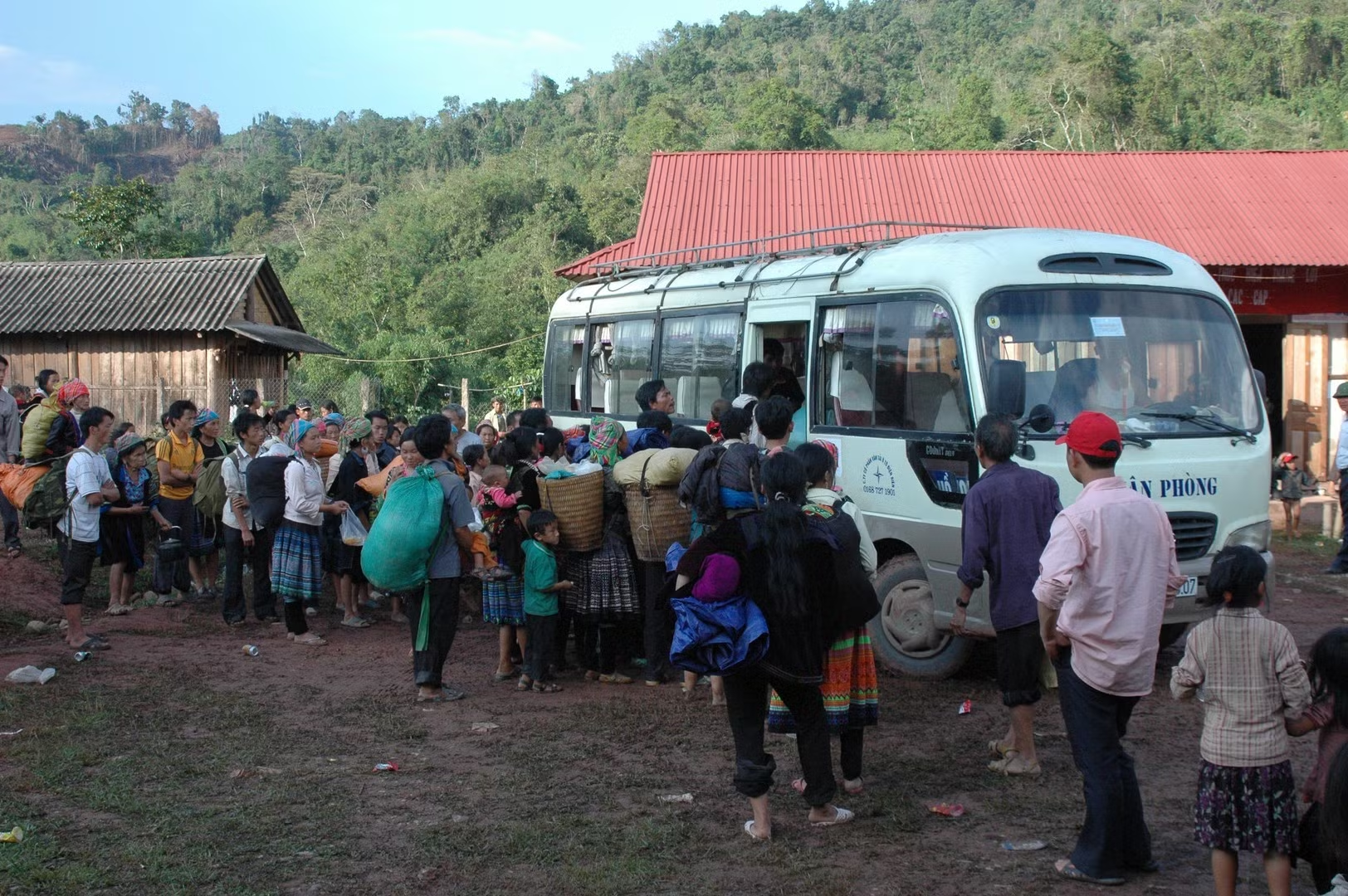
Upon realizing the truth, groups of people began to leave the gathering area. The streams of people descending the mountain grew larger. Vehicles were brought in, and the elderly and children were assisted. Medical personnel arrived promptly to provide examinations and distribute food.


“Many people who rode motorbikes didn’t have enough fuel to get home, so the officers and soldiers mobilized to transport gasoline to fill their tanks. Many who didn’t have money to return home were given money for transportation and a sum to help them stabilize their lives,” recalled Lieutenant Colonel Mùa A Páo, then Head of the Nậm Kè Commune Police and Deputy Team Leader of the Security Team, Mường Nhé District Police.
Fifteen years have passed. Trang A Cho has paid the price for his mistakes with many years of imprisonment. After returning to his hometown, he started over from scratch. Rebuilding his life at an advanced age, he chose the right path: doing what he understood and asking officers for clarification on everything he didn't know to avoid further violations. This transformation is the result of the efforts of police officers in reforming and educating those who had gone astray, like Trang A Cho.
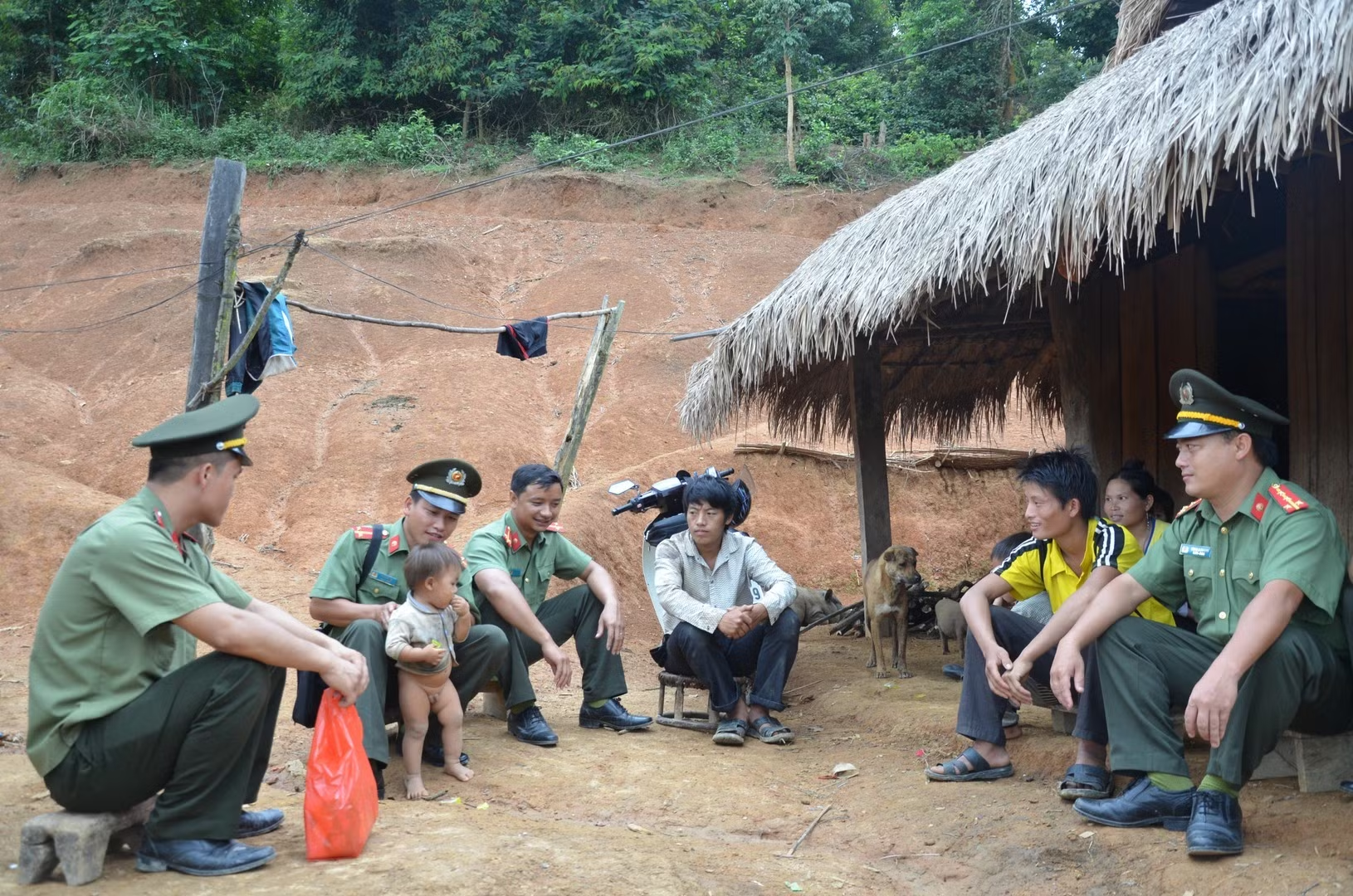
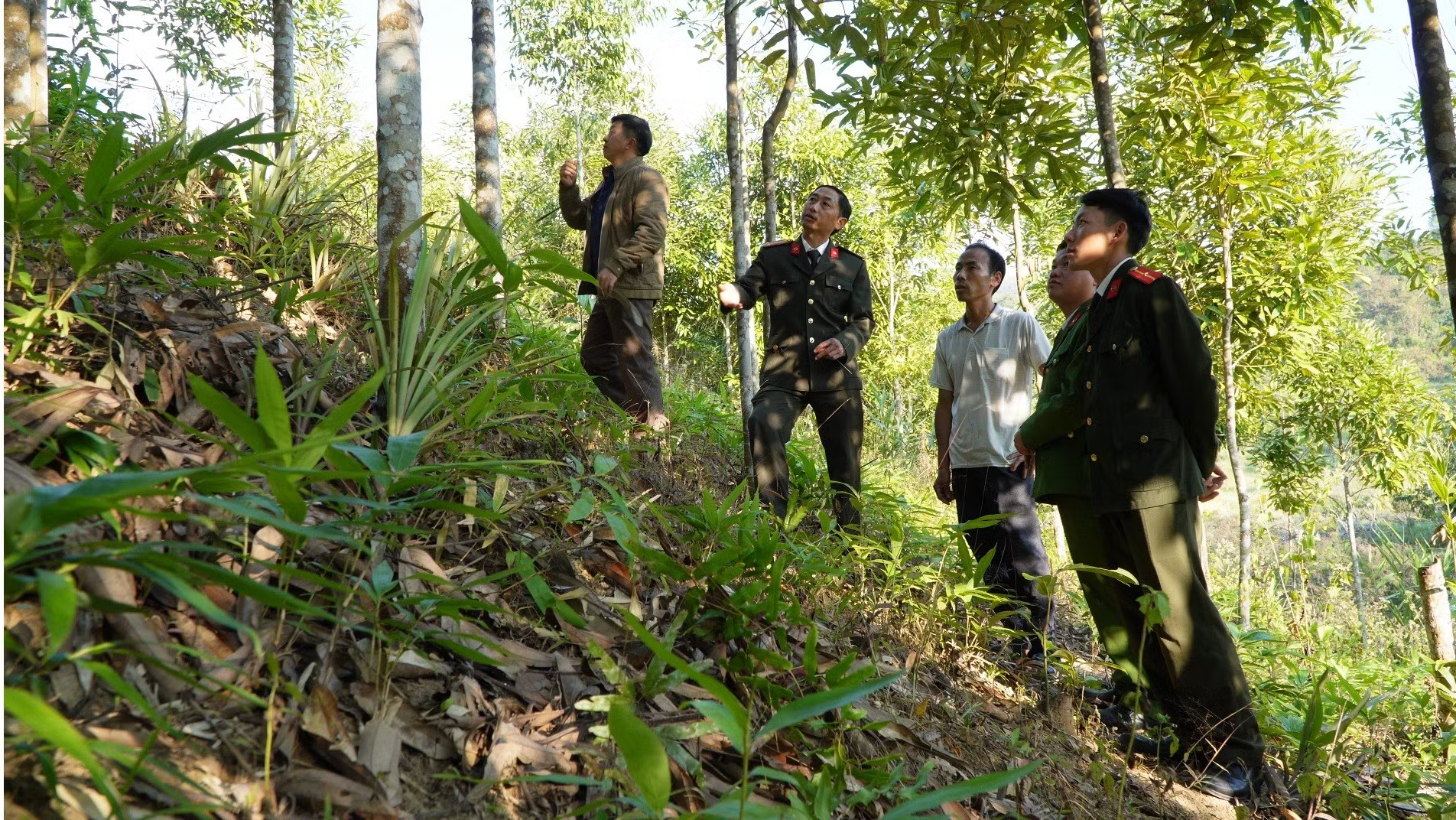
Six months after the incident in Muong Nha, Lieutenant Colonel Vang A Xo, Deputy Head of the Internal Security Department of the Provincial Police, remains dedicated to the area, traveling tirelessly through the villages. During the day, he walks dozens of kilometers, visiting each house, meeting each person, and patiently explaining even the smallest details. At night, he sleeps in simple wooden houses, joining the villagers around the fire, listening to their stories, and helping them understand.
There were days of prolonged jungle rain, slippery paths, and every step meant a fall, but he still trekked through the jungle and crossed streams all day to reach the villagers. He shared: “Initially, the villagers didn’t believe me. But I kept going, eating, living, and working with them with all my sincerity. Then, when they understood, they shook my hand, and at that moment, all the hardships seemed worthwhile…”
Like Lieutenant Colonel Vàng A Xó, Major Giàng A Chù also stayed in this area for nearly two years after the incident occurred. He faced many difficulties, but he persevered patiently, little by little, to get closer to the people. Many small villages, far from the center, are perched precariously on the mountainside, and the only way to reach them is on foot.
There were mornings when we left home before dawn, walking more than 15km through the forest, crossing three streams just to reach a small village with fewer than 10 houses. But sometimes, when we arrived, the whole village was closed, some people were out working in the fields, others were avoiding us. Some said, "The officials have said it so many times, we don't believe them anymore."
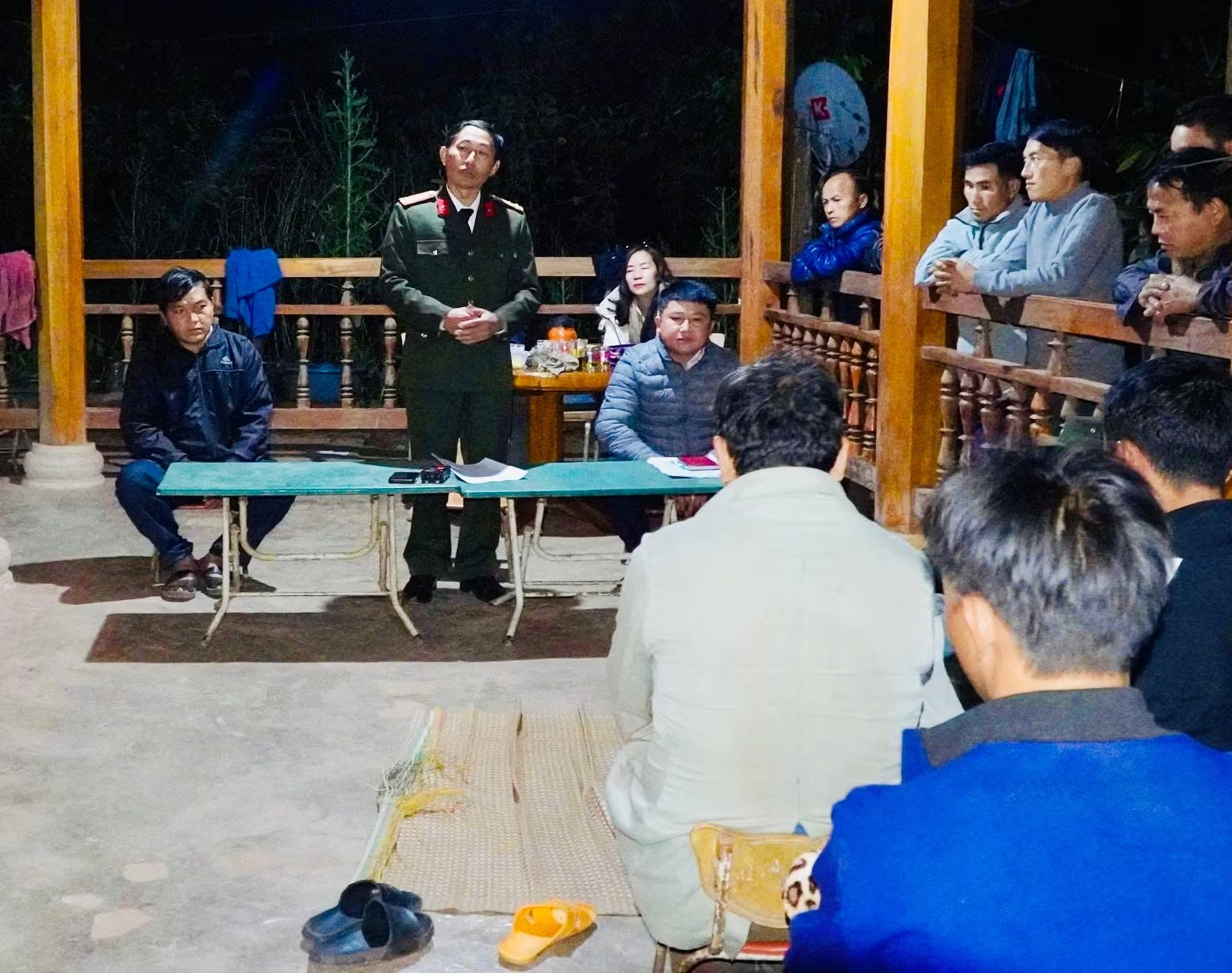
But Major Giàng A Chù didn't give up; he returned the next day. There was no meeting hall, no microphone, just a hastily lit fire in the dirt yard, and he began sharing stories of everyday life. And then, in that small village, no one listened to the bad guys anymore, village meetings became more crowded, children attended school more regularly, and whenever officials came to the village, the doors were no longer closed.
"When we go to the people, we don't just give dry propaganda; we tell real-life stories, about economic development, about children's education, about the harms of violating the law... The people will pay more attention," Major Chu shared.
Being proactive in gathering information, detecting problems early and from afar; being closest to the people by staying close to them, understanding them, and relying on them; and being most effective in handling and resolving issues at the grassroots level, preventing complications from arising. These are the guiding principles and the "Three Best" emulation movement of the Dien Bien Provincial Public Security Security Force.
"Three key principles" for maintaining peace from the root.
Behind the facade of peace are people who have no concept of time. Their journeys last for months, there's no phone signal, and they can't regularly contact their families. Security officers rarely talk about what they've done because some missions are unspeakable and don't need to be named.




Peace is sometimes felt in very simple ways, such as people knowing who to turn to when they need help. Ms. Vang Thi Xuan, wife of Major Giang A Chu, confided: “My husband is away all day, and I handle almost all the household chores, big and small. However, I don’t resent him at all; instead, I understand and share his burden. Because I understand that it’s a difficult but glorious duty.”
There may not be battles, but every step taken by a security officer is a struggle against skepticism, poverty, and the distorted narratives that infiltrate every home and way of thinking. Hostile forces may create "false beliefs," but they cannot build a fire where someone sits waiting; they cannot transform a look of doubt into trust.
It is precisely through being close to the people, understanding the people, and relying on the people that the Dien Bien Provincial Police force has built a "defense line of trust" – though invisible to the eye, it is strong enough to maintain peace in every village in the Northwest highlands today and in the future.
Over the years, the Security forces of the Dien Bien Provincial Police have proactively detected and advised on the early and remote resolution of hundreds of cases related to ethnic and religious security; preventing the emergence of hotspots and preventing hostile forces from exploiting and inciting the masses. Thousands of officers have been deployed to the grassroots level; hundreds of propaganda and mobilization sessions are organized annually, contributing to the firm consolidation of "the people's support" in the far west of the country.
Source: https://cand.vn/thang-sau-o-muong-nhe-post813863.html