

 |
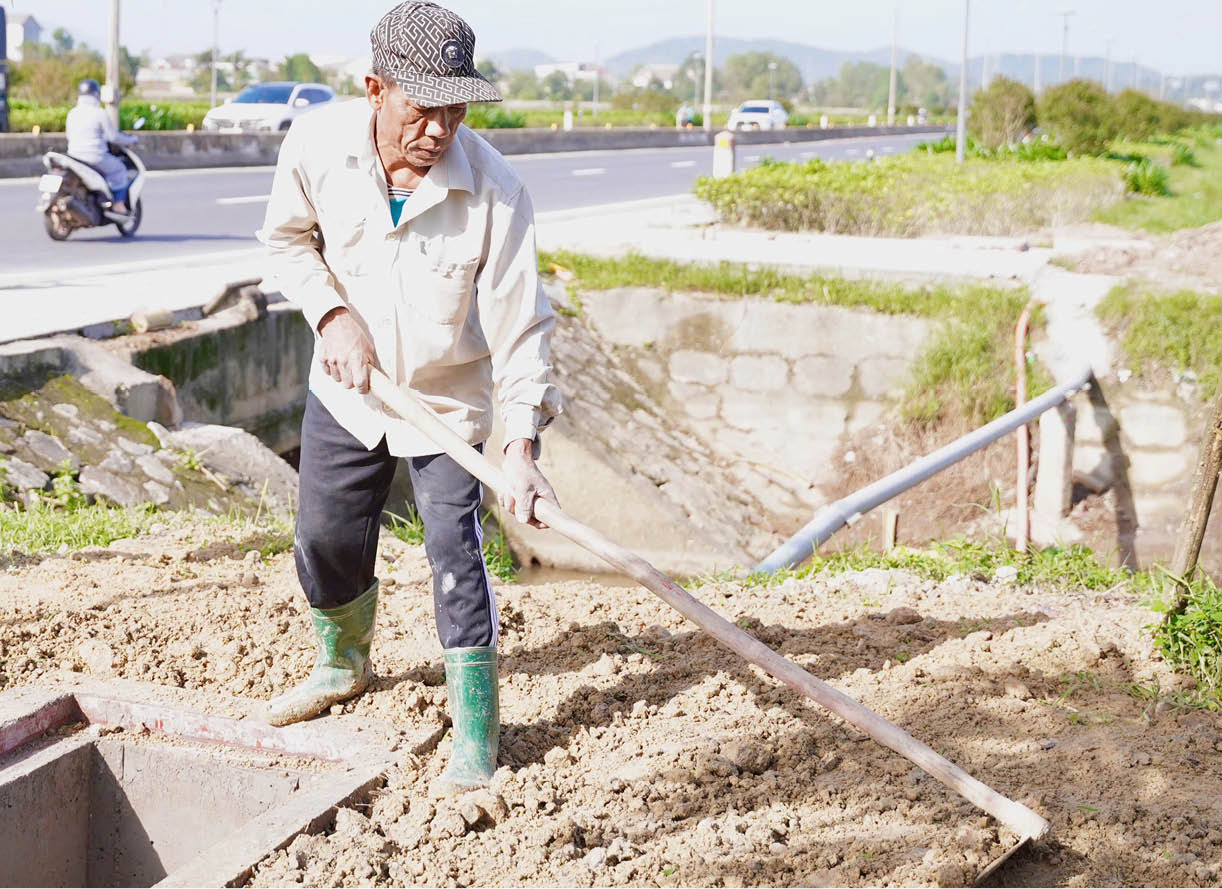
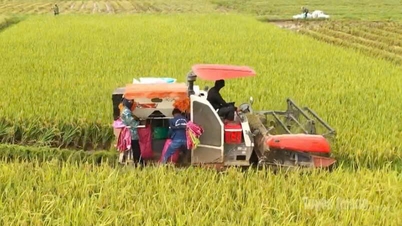
| People in Thanh Thuy are heading to the fields to prepare the land for planting the winter-spring rice crop. |
Mr. Tran Van Tuan, a long-time farmer in Thanh Thuy, shared: “The weather is so unpredictable; if we don't take precautions, we risk missing out on work. This year, we're taking advantage of the situation to plant early, both to keep up with the planting season and to avoid the late cold spell.” Mr. Tuan is not alone; many households here have also started working in the fields early to repair irrigation canals and embankments, build dikes to retain water, and prepare the land.
Although the floods caused significant damage, they also brought a considerable amount of silt, making the soil more porous and nutrient-rich. Understanding this, farmers in Thanh Thuy did not miss the opportunity. They took advantage of the rare sunny days to prepare the land and contacted cooperatives to order seeds. High-quality seeds were purchased by the ward government and cooperatives from the City's Seed and Livestock Joint Stock Company to ensure sufficient supply for production as soon as all the fields were ready.
Besides the proactive efforts of the people, the villagers also hope that the State will have a policy to support the provision of seeds for households that suffered heavy losses in the recent floods. "Everyone faces difficulties, but if we receive some additional support in terms of rice seeds, it will ease some of our worries," Mr. Tuan said.
Mr. Tran Trung, Vice Chairman of the Thanh Thuy Ward People's Committee, said that the meteorological forecast for the coming period is expected to be complex, with the possibility of severe cold spells, especially in the plains and midland areas. Therefore, Thanh Thuy Ward has quickly implemented an early production plan for the 2025-2026 winter-spring crop, and simultaneously registered for reserve seed sources to mitigate damage caused by floods. The canal and pumping station systems in the area have also been repaired to ensure uninterrupted irrigation for the entire cultivated area.
This year, Thanh Thuy ward plans to plant over 1,500 hectares of rice during the winter-spring season. This is the most important production season of the year, determining a large portion of the local rice yield. To minimize damage from extreme weather, the Ward's Department of Economy , Infrastructure and Urban Development has provided specific guidance on rice varieties and planting schedules to farmers.
For rice cultivation, the locality strives to use certified rice varieties on 95% of the planted area. In the variety structure, short-day varieties account for over 95% of the area, including many familiar varieties with stable quality such as DT100 (KH1), HG12, J02, TBR97, Khang Dan, DT39, HN6, HG244, TH5…
These varieties have the advantage of a short growing season, suitable for the predicted weather patterns of late cold spells and early hot weather. At the same time, using short-duration varieties helps farmers proactively avoid minor floods in the middle months of the year.
In addition, cooperatives are also required to consider the rational arrangement of long-duration, medium-duration, and short-duration crop varieties depending on the conditions of each field. High-yielding, high-quality varieties are prioritized, while varieties that have been cultivated for many years and are often susceptible to pests and diseases are advised to be limited.
In addition, the ward has boldly encouraged the introduction of several new rice varieties that have been recognized and have established consumption linkages, such as Ha Phat 3, TBR225, VNR20, DB6, etc., in order to gradually diversify the range of varieties and ensure market outlets for agricultural products.
To ensure productivity and synchronized harvesting, the local authorities have arranged a general planting schedule so that the rice flowers bloom concentrically between April 10th and April 20th. Each cooperative will develop a specific schedule for each field and rice variety, paying particular attention to low-lying areas and areas with delayed drainage. The ward also requires cooperatives to stockpile additional seeds and assist in collecting and storing seeds for farmers in case of unusual weather fluctuations.
Source: https://huengaynay.vn/kinh-te/thanh-thuy-vao-vu-dong-xuan-som-160552.html





![[Photo] National Assembly Chairman Tran Thanh Man successfully concludes his participation in IPU-152](https://vphoto.vietnam.vn/thumb/1200x675/vietnam/resource/IMAGE/2026/04/18/1776502638199_vna-potal-chu-tich-quoc-hoi-ket-thuc-tot-dep-chuong-trinh-tham-du-ipu-152-8709975-jpg.webp)

































































Comment (0)