To resolve this "bottleneck," the Ministry of Health is aggressively implementing comprehensive and groundbreaking solutions, hoping to create a strong impetus to bring the essence of traditional medicine closer to the people and ensure fair social welfare benefits.
The paradox of health insurance spending on traditional medicine.
Over the years, the network of traditional medicine clinics and hospitals has been gradually strengthened. Professional quality and the ability to combine Eastern and Western medicine have been increasingly improved. According to Dr. Vu Manh Ha, Permanent Deputy Minister of Health, there are currently 5 traditional medicine hospitals under the Ministry of Health and other ministries and agencies; 61 provincial-level traditional medicine hospitals; a system of traditional medicine departments in general hospitals; and nearly 84% of commune health stations providing traditional medicine examinations and treatments. By 2025, the number of health insurance-covered examinations and treatments in this field is expected to reach approximately 7 million visits, accounting for 3.3% of the total number of examinations and treatments nationwide.
Health insurance policies for traditional medicine are becoming increasingly comprehensive. The list of covered items has been expanded to include 229 types of traditional medicines and 349 traditional medicinal herbs. As a result, the percentage of people accessing traditional medicine is expected to grow significantly by 2025. Specifically, at the commune level, the rate of outpatient visits is projected to reach 24.4%, and outpatient treatment 25.6%; at the district level, it is projected to reach 16.3%, with inpatient and outpatient treatment rates of 9% and 9.3% respectively; and at the provincial level, it is projected to reach 11.1%, with inpatient and outpatient treatment rates of 9.8% and 13.7%.
Our country has abundant medicinal resources. However, the proportion of spending on traditional medicine accounts for only about 5.42% of the total health insurance drug expenditure, which is far too low compared to the minimum target of 20% by 2025 and 30% by 2030.



Regarding this issue, Ms. Tran Thi Trang, Director of the Health Insurance Department (Ministry of Health), stated that the biggest obstacle lies in the outdated list of drugs covered by health insurance, issued since 2015, which has not been updated in a timely manner according to the current Pharmaceutical Law. While modern medicine has over 1,000 active ingredients covered, traditional medicine is limited to only 229 groups of traditional medicines and 349 traditional herbs. Furthermore, the lack of uniformity in the scientific names of medicinal herbs, the classification of registration numbers between chemical drugs and medicinal herbs, and the cumbersome online insurance claims assessment mechanism are creating significant pressure on the settlement and payment process at healthcare facilities.
Furthermore, the provision of health insurance-covered medical examinations and treatments using traditional medicine faces significant obstacles related to the management mechanism and card allocation. For example, the Central Acupuncture Hospital – a leading specialized facility – was initially assigned a target of 35,000 health insurance cards, but by the end of 2025, it had only reached 18,363 cards. Notably, groups requiring long-term treatment and intensive rehabilitation, such as the elderly, face difficulties accessing specialized facilities due to complex referral procedures from lower-level hospitals. Patients often arrive at specialized facilities very late, reducing the effectiveness of clinical interventions and increasing out-of-pocket costs.
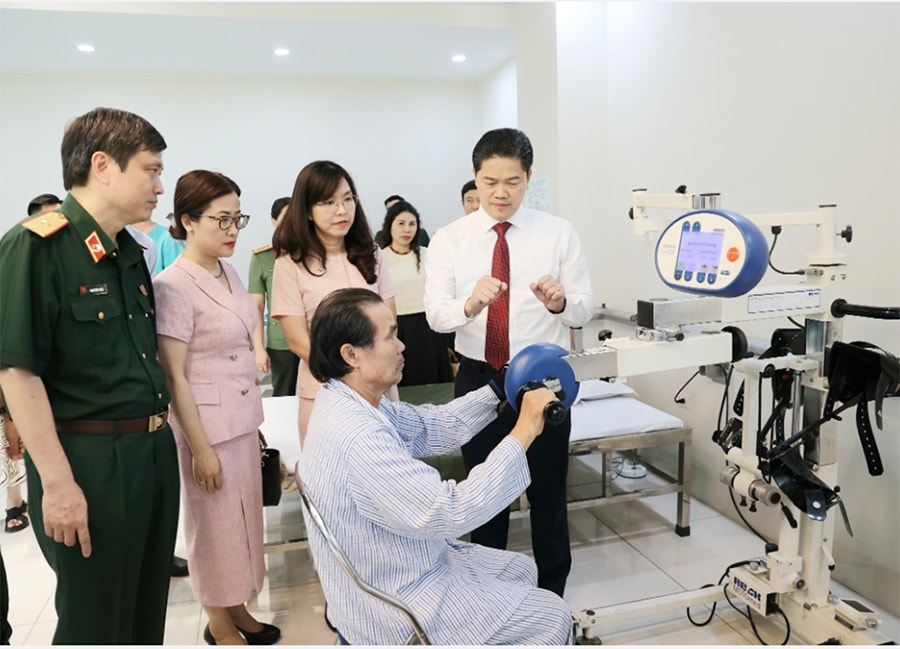
Similarly, at the Military Traditional Medicine Institute, the rate of patients referred to other hospitals or who voluntarily seek inpatient care in 2025 is projected to reach 49.87%. The cumbersome referral process inadvertently wastes valuable time for early rehabilitation intervention for patients. Representatives from the Military Traditional Medicine Institute pointed out that many effective traditional Vietnamese herbal remedies, such as apple leaves and fig tree bark, remain outside the health insurance coverage list. Furthermore, treatments like acupuncture currently lack a separate list of medications, creating difficulties for the hospital.
A breakthrough to bring traditional medicine closer to the people.
According to Dr. Vu Manh Ha, Permanent Deputy Minister of Health, to realize the view that "the key to bringing traditional medicine closer to the people is to integrate technical services and authentic traditional remedies into the comprehensive coverage list of national health insurance," the Ministry of Health is assigning the Health Insurance Department to coordinate with relevant departments and agencies to implement a comprehensive set of breakthrough solutions.
Specifically, regarding solutions to expand the list of medicines and medicinal herbs, the Ministry of Health urgently requested the amendment of Circular No. 05/2015/TT-BYT; consideration of adding 94 new types of medicines and 5 new types of medicinal herbs; prioritizing domestically produced, high-quality traditional medicines to reduce dependence on imports; and research into specific mechanisms for fresh medicines, traditional prescriptions, and the addition of acupuncture medicines.



Along with that, there are solutions to reform the registration and referral mechanism for specific chronic diseases, and to revise Circular No. 01/2025/TT-BYT detailing and guiding the implementation of some articles of the Health Insurance Law, in a way that allows people to proactively choose to register for initial examination and treatment at traditional medicine facilities that match the actual capacity of the facility. In particular, the Ministry of Health is developing a "technical referral" mechanism specifically for a list of specific diseases that are strengths of traditional medicine (musculoskeletal, neurological, stroke rehabilitation, cerebral palsy, digestive, dermatological...).
Furthermore, the health sector will pilot new and advanced health insurance payment methods such as fixed-rate or package-based payment (DRG) for outpatient and day treatment at traditional medicine facilities. Simultaneously, it will operate a centralized data center and apply information technology in auditing to optimize and increase transparency of the Health Insurance Fund.
Source: https://hanoimoi.vn/thao-go-nut-that-bao-hiem-y-te-cu-hich-dua-y-hoc-co-truyen-ve-gan-dan-1159457.html

![[Photo] "Hanoi Lotus Festival" honors the lotus flower that has been associated with Vietnam for thousands of years.](https://vphoto.vietnam.vn/thumb/1200x675/vietnam/resource/IMAGE/2026/06/27/1782516943048_sen-ha-noi-2026-minh-duy-1-jpg.webp)