


Too many instances of the word "hesitation".
The Hai Ha Tea Business was established in 2010 when Mr. Ha Quang Hai decided to leave his job as a factory worker to open a clean tea processing facility. Born and raised in Tan Cuong ( Thai Nguyen ), Mr. Hai was closely associated with tea plantations and tea harvesting from a young age, understanding the value of each tea bud. But achieving success in this field was a completely different story.
Starting with just a small plot of land and meager capital, Mr. Hai hired more workers, purchased raw materials from tea growers in the area, and was determined to build a traditional tea processing facility. Thanks to the handcrafted production process using traditional methods, Hai Ha tea products gradually became known to many customers inside and outside the province. For many years, Mr. Hai's business remained small-scale due to a lack of capital. Currently, the facility maintains a stable workforce of 10 employees, ensuring an income of 8-10 million VND per person.
“Initially, I could borrow from relatives and friends to buy basic equipment like tea rolling machines. But to expand production, I needed more capital to invest in an automated production line and expand the workshop. However, banks couldn't lend because my business lacked legal basis,” Mr. Hai shared.
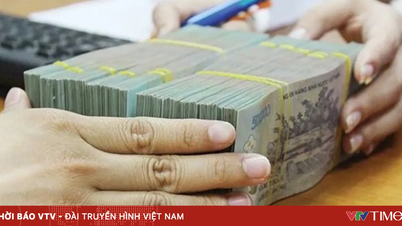
According to the 2015 Civil Code, Vietnamese law only recognizes two legal entities: individuals and legal entities. Household businesses are classified as individuals, therefore they cannot participate in formal credit transactions. They also lack the eligibility to sign long-term contracts, cannot participate in bidding, and are unable to protect their property rights under legal regulations. According to the Vietnam Chamber of Commerce and Industry (VCCI), over 60% of small household businesses cannot access bank loans due to a lack of collateral. They are forced to borrow from relatives, friends, or informal credit institutions at high interest rates. Mr. Hai is not alone in facing this capital problem.
Besides capital difficulties, Hai Ha household businesses also face obstacles in administrative procedures. Even though their products meet quality standards, the process of obtaining licenses, undergoing food safety inspections, filing taxes, and registering businesses is extremely complex and convoluted for those involved. Sometimes, procedures have to be redone from scratch before they are even completed due to changes in legal regulations. According to the Central Institute for Economic Management Research (CIEM), cumbersome and opaque administrative procedures are a major barrier for small businesses. This is especially true in the food processing industry, where regulations on food hygiene and safety are always strict and constantly changing.
Mr. Minh, the owner of a coffee shop in Hai Ba Trung district (Hanoi), shares a similar view. His shop stands out thanks to its comfortable atmosphere and high-quality products. Although there are many competitors in the area, his shop always has the most customers. When it first opened, the shop only had a few employees, and he managed everything himself. After a few years of development, the shop now has 10 employees and stable revenue. "At this rate, I will expand to another branch. However, I am still hesitant to convert into a business because I fear the complications with legal procedures and issues related to taxes and insurance..." Mr. Minh shared.
Even after overcoming the capital and procedural barriers, it's still too early to say anything definitive. Some experts believe that models like Mr. Hai's will need additional management knowledge. Operating a small-scale production unit is vastly different from an industrial or corporate production model. Increased product output also means the need to find markets. At this point, the ability to connect with large businesses in the supply chain becomes crucial...
To enable household businesses to "grow bigger"
Currently, Vietnam has approximately 5.2 million household businesses, contributing over 24% to GDP and playing a crucial role in many sectors, from agriculture and industry to trade and services. Unleashing the potential of the private sector in general and household businesses in particular is a complex challenge. In reality, many household businesses, even those eligible to establish enterprises, choose to maintain their current business model for both objective and subjective reasons.
Resolution No. 10-NQ/TW of the Party sets a target of having at least 1 million private enterprises in Vietnam by 2020 and at least 2 million by 2030. To date, the number of private enterprises is only around 940,000. This shows that the solutions to encourage household businesses to transform into enterprises have not been thorough or effectively implemented.
Household businesses are still hesitant to grow because they fear being "given a hard time," even though the procedures for establishing a business have been significantly simplified. People like Mr. Minh have almost lost all motivation to take even one step further. "The problem isn't that household businesses don't want to grow, but that the institutional framework isn't attractive enough for them to dare to grow and be able to grow. When we reform the business environment so that all household businesses see that running a proper business is a reliable path, with less risk and more opportunities, then they will proactively step out of their current 'comfort zone'," asserted Dr. Nguyen Si Dung.
To promote the transformation from household businesses to enterprises, specific support policies are needed, such as: disseminating information about the benefits of the transformation, providing training courses, consulting services, and tax reductions for a certain period, along with administrative procedure reforms. During this process, state management agencies need to support household businesses in improving their business management skills. Simultaneously, they should facilitate connections between household businesses and the business ecosystem, including large and small domestic and foreign enterprises. Creating this linkage will help businesses secure stable inputs for production and easily sell their products. If this is achieved, the government's goal of reaching 2 million enterprises in the near future will be entirely feasible.
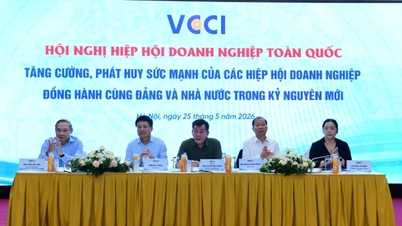
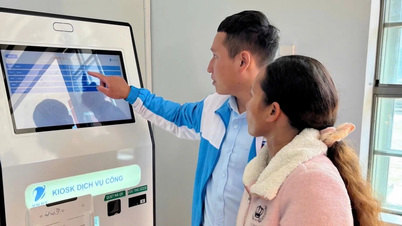
According to Mr. Dau Anh Tuan, Deputy Secretary General of the Vietnam Chamber of Commerce and Industry (VCCI), Vietnam needs to strengthen the application of technology in administrative processes and build a unified online public service system nationwide. At the same time, there needs to be a strict and transparent monitoring mechanism for the reform results of administrative agencies, as well as clear measurement of the value received by businesses. Mr. Tuan also emphasized the need to create a fair competitive environment between private enterprises, state-owned enterprises, and foreign-invested enterprises. Private enterprises currently face disadvantages in accessing land and bank loans compared to other business sectors. Private enterprises mainly depend on bank loans with high interest rates, making it difficult to expand their scale.
Regarding funding sources, Dr. Can Van Luc, an economic expert, stated that there are five important sources of capital in the current economy, with bank credit accounting for 50%. The remainder comes from channels such as bonds, stocks, investment funds, and public investment. Dr. Luc recommended that businesses diversify their capital raising channels, improve access to finance, and practice transparent governance to help banks accurately assess and facilitate unsecured loans.
The fundamental shift in business model ultimately depends on the owner. Under different circumstances, they will choose the model that best suits them to maximize profits. A truly favorable business environment encompasses many factors, but it remains a prerequisite for encouraging people to engage in business, produce, and enrich themselves, contributing more to the country.
Source: https://nhandan.vn/thao-vong-kim-co-cho-ho-kinh-doanh-post880189.html























































































Comment (0)