Heartland Tri-State Bank in Kansas, USA, was forced to suspend operations on July 28 after becoming insolvent.
The Kansas State Bank Commissioner's office closed Heartland Tri-State Bank and designated the Federal Deposit Insurance Corporation (FDIC) to take over the bank. The FDIC said the deal would cost the Deposit Insurance Fund $54.2 million, but it was the least costly solution.
To protect Heartland's customers, the FDIC agreed to take over all of the bank's deposits and transfer them to Dream First Bank, also in Kansas.
This means that the four Heartland Tri-State branches will reopen as normal under the Dream First name on July 31st, and customer accounts will automatically be transferred to the new bank.
The FDIC stated that Heartland Tri-State Bank had total assets of approximately $139 million and total deposits of $130 million as of March 31, 2023. Dream First Bank also agreed to purchase “essentially all” of Heartland Tri-State’s failing assets.
Lenders will also be largely unaffected, because the FDIC and Dream First Bank are signing an agreement to share the losses, according to the FDIC.



According to the Kansas State Bank Commissioner's Office, the insolvency of Heartland Tri-State Bank is an isolated incident that does not affect the banking sector in Kansas, and Kansas banks remain stable.
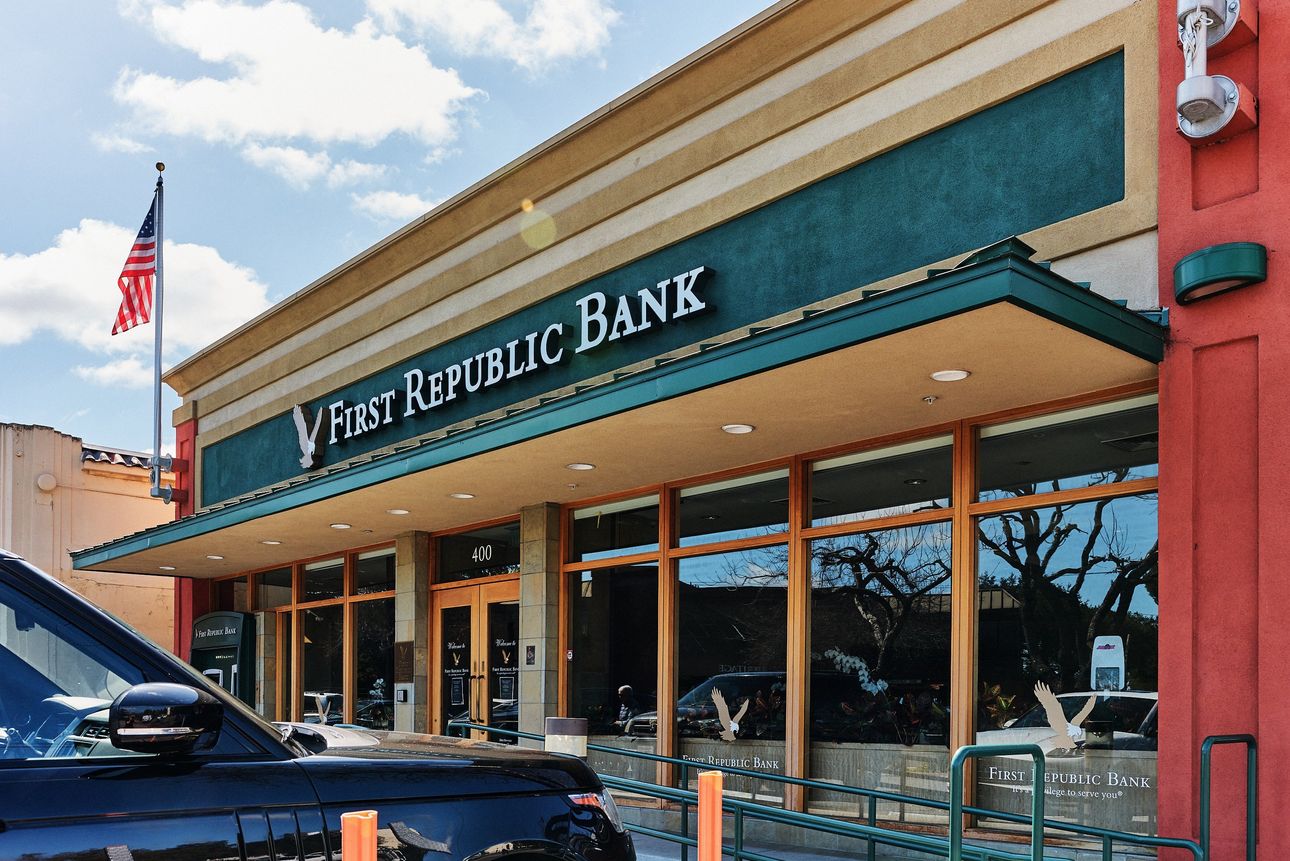
The bankruptcies of First Republic, Silicon Valley, and Signature banks this year have rocked the banking industry, prompting lawmakers to introduce new laws to protect customer deposits and stabilize the financial system. (Photo: Wall Street Journal)
The collapse of Heartland Tri-State Bank is the fifth bank failure in the US in 2023. On May 1st, regulators seized First Republic Bank and sold all of its deposits and assets to JPMorgan Chase, the largest bank in the US. Notably, First Republic collapsed despite receiving a $30 billion bailout from 11 of the nation's largest banks in mid-March.
Previously, cryptocurrency bank Silvergate also announced a voluntary liquidation plan on March 8th due to prolonged losses caused by the failure of the FTX cryptocurrency exchange.
Silicon Valley Bank (SVB), a prominent bank for tech startups and venture capital in the San Francisco Bay Area, was also shut down by US regulators two days later.
On March 12, New York officials closed Signature Bank to quell the escalating financial crisis fueled by Silicon Valley bank closures.



Following Washington Mutual's failure during the 2008 global financial crisis and subsequent acquisition by JPMorgan, First Republic, Silicon Valley Bank, and Signature Bank became the second, third, and fourth largest banks to collapse in U.S. history, respectively.
The collapse of Heartland Tri-State Bank inflicted less damage on the Deposit Insurance Fund (DIF) than the failures of other banks earlier this year. Silicon Valley Bank and Signature Bank caused an estimated $15.8 billion loss to the DIF, while First Republic caused a $13 billion loss .
Nguyen Tuyet (Based on Cryptopolitan, American Banker, CNN)
Source
![[Image] National conference summarizing one year of operation of the overall organizational model of the political system, the three-tiered government model.](https://vphoto.vietnam.vn/thumb/1200x675/vietnam/resource/IMAGE/2026/07/01/1782882811691_ndo_br_1-jpg.webp)