According to historian Yến Thọ (Lê Đức Thọ), when identifying the port city at Cửa Việt, the Cánh Hòm river section flows straight from Gia Độ village to Mai Xá and then empties into a vast lagoon area stretching from Mai Xá through Giáo Liêm and Việt Yên. To the northeast is the inner edge of the outer sand dune strip, Đại Trường Sa, on which lie the villages of Hoàng Hà (to the north) and Bạch Câu (to the south).
Mai Xá village is located to the south, on the outer edge of the inner sand dune, also known as Tiểu Trường Sa, on the left bank of this ancient river branch; while to the north is Lâm Xuân village, situated along the Cánh Hòm river. In the middle of this vast lagoon area, Mai Xá market is located above, and Bạch Câu market is below.
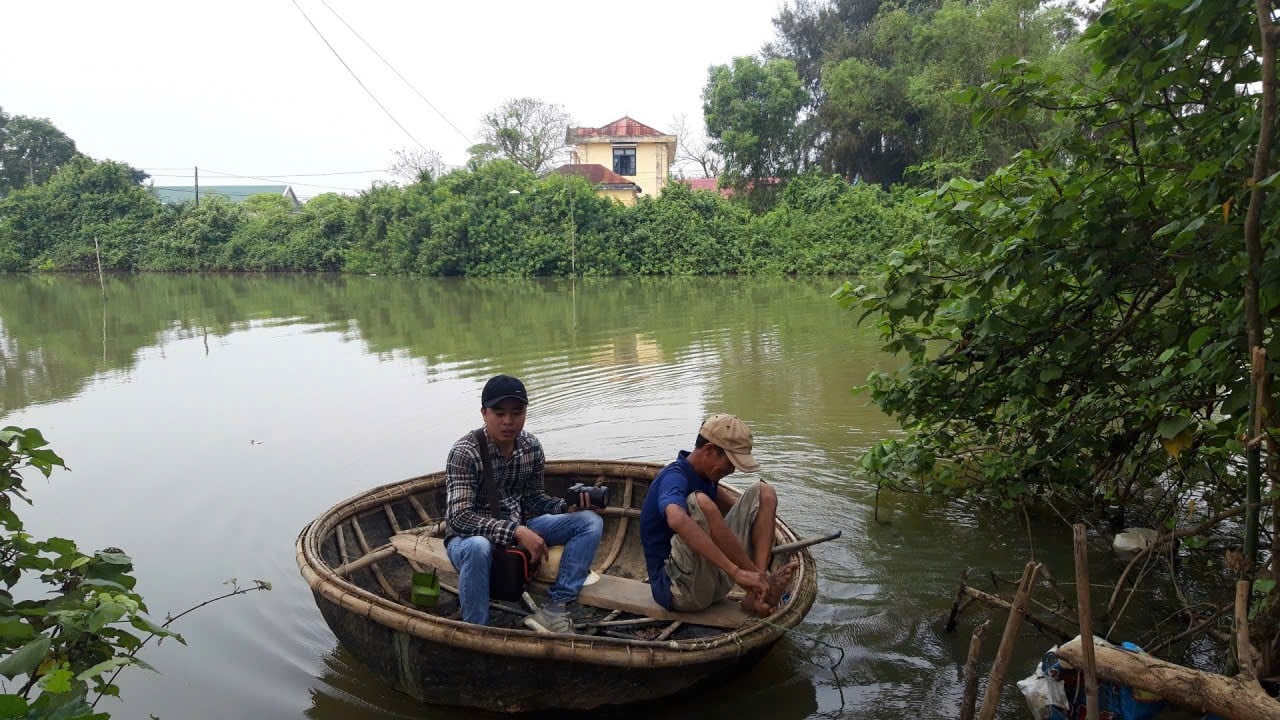 |
| The Canh Hom River flows through Xuan Long village, Ben Hai commune - Photo: PXD |
Mai Xá Market is also known as Phường Hàng Market. The name Phường Hàng evokes a Nôm word associated with a gathering place for goods—a remnant of a once bustling trading post. From the beginning of the 19th century, Mai Xá Market gradually declined in importance in the regional market, but it still retains the scene of "very crowded shops, a bustling market in the morning, and the local product being the canarium fruit, commonly called the carambola fruit." In the old Mai Xá village, there was a district in Nhà Cong ward, which later became state-owned land. This was probably a military outpost guarding a strategically important river mouth, where the Mai Xá trading post was a bustling trading hub.
The village also has the Dong Truc Temple. Legend has it that once, when Lord Nguyen's ship entered the Sac Tan Xuan area, it encountered fierce storms. The Lord asked if there was a sacred place in the region where he could pray, and the villagers pointed to Dong Truc. After praying there, the weather calmed and the sea became still. He then ordered the people to build a temple called Dong Truc Temple, following the old custom. Historical records state that before the Mai Xa canal was dug, "this place was prone to unpredictable storms, and ships often sank," showing that the waterways from Cua Viet to Mai Xa in the 16th-17th centuries were very treacherous.
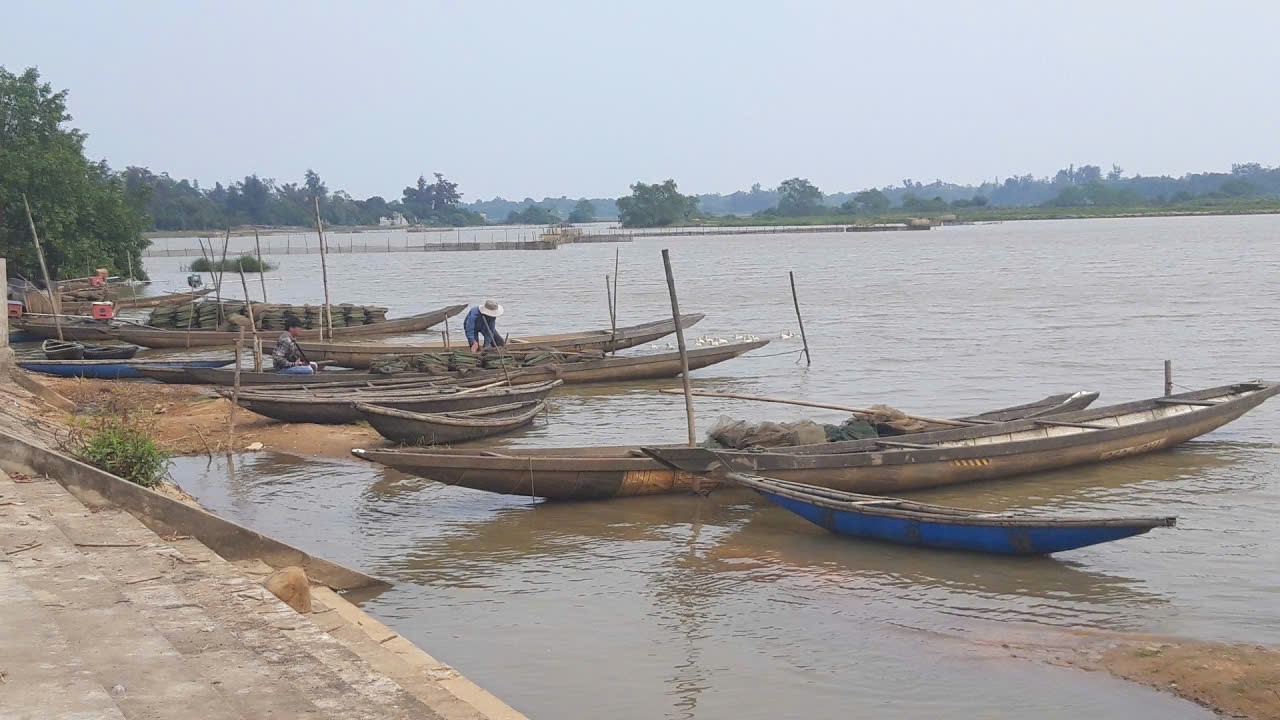 |
| The Canh Hom River flows through Bach Loc village, Ben Hai commune - Photo: PXD |
Gio Linh is not only home to ancient villages with long-standing traditions, but also shines brightly in the flow of modern history. People in Quang Tri and throughout the country still feel deeply moved when recalling the story of the courageous mother in Gio Linh who went to retrieve the head of her son, murdered by the enemy during the resistance against the French. History is often not just solemn, static pages of a book, but is vibrant and immortal in the consciousness of the people.

It was also from this land that the famous song "Mother of Gio Linh" was born, becoming a monument of tragic and resonant sound that has echoed for decades: "The old mother tills the land to plant potatoes, raising her children to fight the enemy day and night...". This place is also the homeland of contemporary writers and poets such as the poet Nguyen Tien Dat, with many memorable poems, including verses that express poignant emotions: "Oh, you with gray hair, come here and let's talk about sweet things."
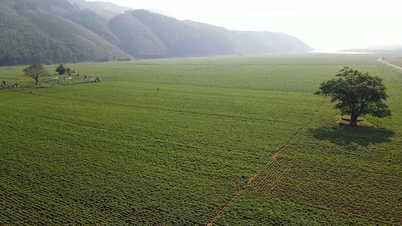
Traveling south from the former Gio Thanh commune (now part of Cua Viet commune) to the former Gio My commune (now part of Gio Linh commune), travelers will notice the characteristic hydrogeological structure of the eastern coastal region of Quang Tri. These are flat, lush green rice fields, watered by the river; interspersed among them are mounds of earth and hills with dense clumps of trees growing in the middle of the village fields.
Alongside these are winding sand dunes and hills, occasionally interspersed with patches of lush green crops and vegetation, even during the dry and windy season. Somewhere along the river, we still see images of hardworking villagers enjoying themselves fishing in the ponds connected to the Cánh Hòm River. These are the charming aspects of a rustic countryside that, in a few decades, may only remain in the memories of the elderly or in the nostalgic feelings of those far from home, no matter where they may be.
In the former Gio My commune, there is a place that cannot be overlooked: Hill 31, a link in the McNamara electronic barrier of the US military before 1975. This is a sand dune located in the middle of a plain, in an extremely strategic military position. Therefore, the US military built a military base here, taking advantage of the high altitude to control the area and prevent the advance of our army and people. But they could not stop the power of people's war and the indomitable fighting spirit of our army and people.
This hilltop has been recognized as a provincial-level historical site. The remaining tree stumps on this hilltop stand as witnesses of nature, etching into the heart of Mother Earth the history of a region steeped in hardship and marked by war. Visiting here is also a way to contemplate, understand, and appreciate the value of "peace and tranquility."
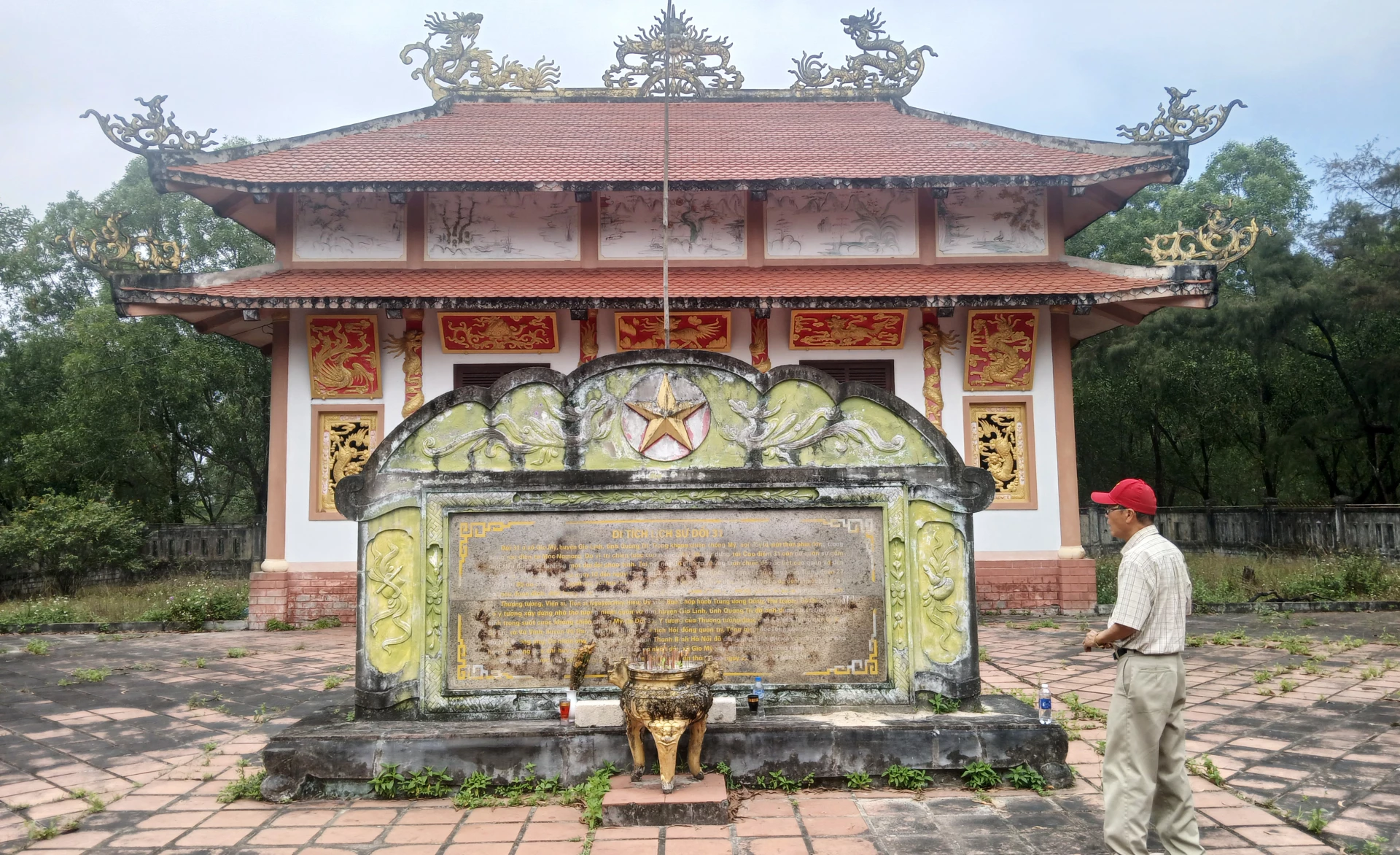 |
| The historical site of Hill 31 is now located in Gio Linh commune - Photo: PXD |
The journey continues through many villages to the far northeast of Gio My commune (formerly), a commune with a long and wide territory, where you will encounter a village related to Lam Xuan, bordering the headwaters of the Canh Hom River. Here, the Canh Hom River has also been divided by the road network.
Returning to the village at the end of the river to reminisce about the village at the beginning is also a fascinating experience. This connection stems from history: In the past, the villagers of Lam Xuan, when practicing their traditional mat-making craft, often went to the Gio My (old) area to buy sedge grass. This area was once considered a source of raw materials for a famous craft village in Lam Xuan. This was also a mutually beneficial relationship in agricultural production and the development of the craft village in the past for the residents. In the stories of the elders, the old stories are still recounted quite clearly, as if they happened just yesterday.
"In the future, no matter what happens..." as the great poet Nguyen Du once wrote, even amidst countless changes and upheavals, the beautiful values of our homeland, our flesh and blood, must be cherished, preserved, and promoted. We should reflect on our birthplace to become useful members of society. This is not only the aspiration of our ancestors but also the desire of future generations. What our homeland has nurtured will surely be like the fresh water that irrigates the fields, like the alluvial soil of the rivers that creates bountiful harvests, tirelessly enriching the ever-green land of Quang Tri.
Pham Xuan Dung
Source: https://baoquangtri.vn/van-hoa/202606/theo-con-nuoc-canh-hom-3525a31/
![[Image] Schools organize meetings and introduce teaching models to students admitted to grade 10.](https://vphoto.vietnam.vn/thumb/1200x675/vietnam/resource/IMAGE/2026/06/25/1782368077271_ndo_br_z7970052192242-1ec8daeb77a6eed1a4e9f58c564ddd3e-jpg.webp)
![[Photo] General Secretary and President To Lam receives Palestinian Ambassador Saadi Salama](https://vphoto.vietnam.vn/thumb/1200x675/vietnam/resource/IMAGE/2026/06/25/1782365384740_a1-bnd-9423-8322-jpg.webp)

![[Image] Ho Chi Minh City: Ma Lang area, Chicken-Rice Market about to change its appearance](https://vphoto.vietnam.vn/thumb/1200x675/vietnam/resource/IMAGE/2026/06/25/1782377698627_ndo_br_m1-jpg.webp)