Traffic congestion
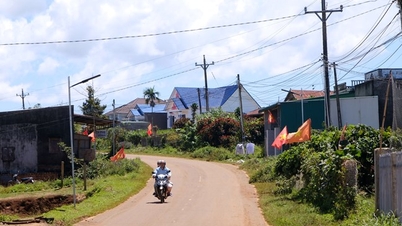
Ms. Dinh Thi Hang (residing in Ta Lang residential area, Hai Van ward) recounted that at the end of 2025, her family had to evacuate for over a month to avoid floods at her parents-in-law's house. Although her house was only about 100 meters from her parents-in-law's, they couldn't return after the floods because the DT601 road was blocked by a landslide.
According to the Da Nang Infrastructure Maintenance Board (Department of Construction), consecutive heavy rains from the end of October to the beginning of November 2025 caused landslides and embankment collapses at many locations along the DT601 road section passing through Hai Van ward.
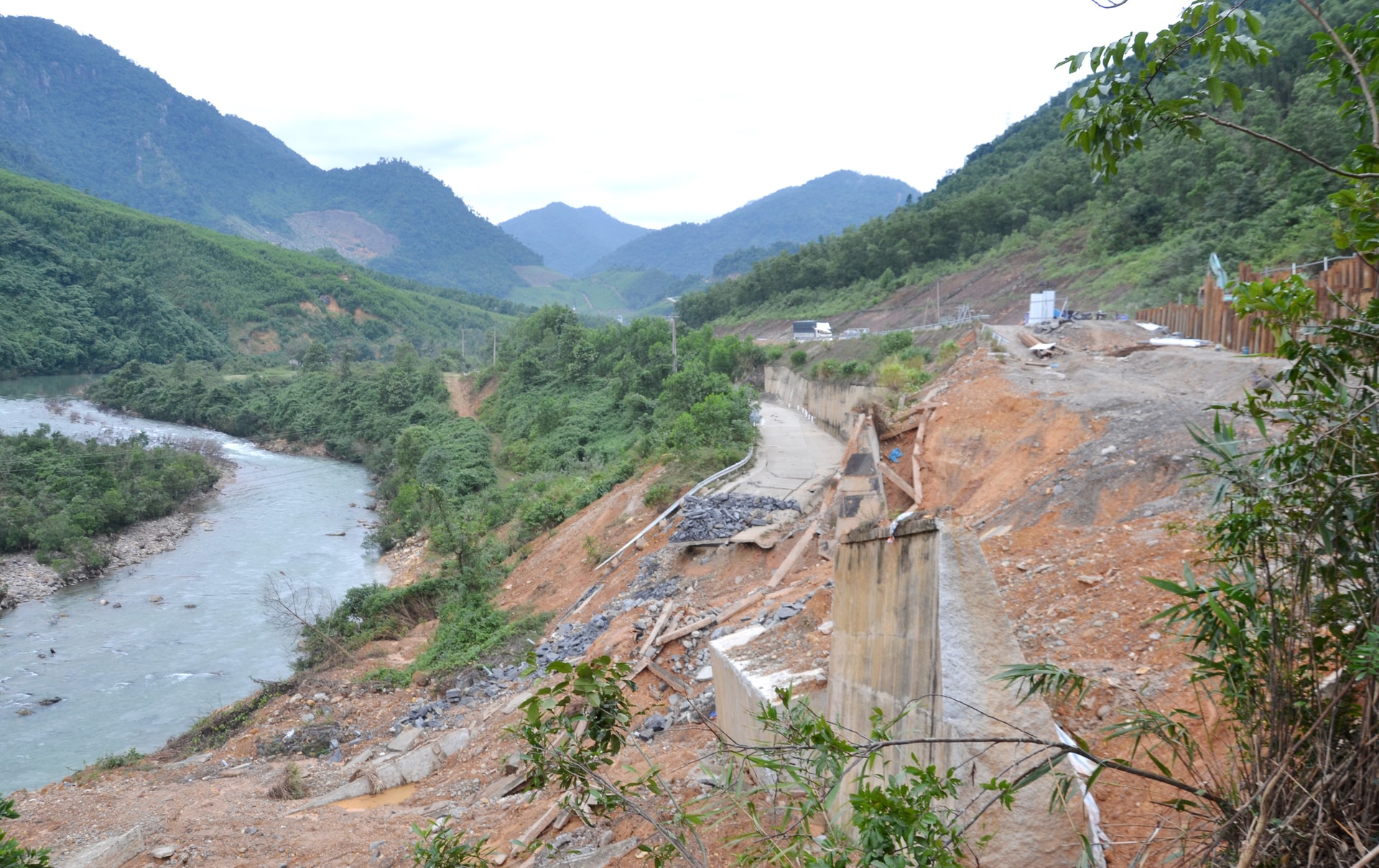
The most serious landslide occurred at kilometer 20+100 of the DT601 road, in Ta Lang residential area, isolating seven households located to the west. At this point, the embankment and slope of the La Son-Tuy Loan expressway (from kilometer 50+700 to kilometer 50+800) collapsed, causing the roadbed of the parallel DT601 road below to slide and resulting in the road being cut off.
During the process of clearing landslides to open the expressway, soil and rocks from the embankment of the expressway spilled onto and covered the surface of the DT601 road, from kilometer 30+150 to kilometer 30+650. The final section of the DT601 road also completely subsided over a length of about 50m and a depth of 7m.
At the end of 2025, National Highway 14E, specifically the section passing through Phuoc Hiep commune, was also cut off for an extended period between kilometer markers 84+500 and 84+700. Prolonged heavy rain caused hundreds of thousands of cubic meters of soil and rocks to slide from the right-hand slope onto the roadbed, even overflowing the low hills on the left and spilling into the Dak Mi hydroelectric reservoir; this resulted in broken power poles, washed-away culverts, and severed roads. Residents of Phuoc Hiep who wanted to travel to the eastern communes were unable to do so. People living near the Tay Giang sub-border gate (Hung Son commune) were also cut off due to frequent landslides on Provincial Road 606.
Mr. Tran Ngoc Thanh, Deputy Director of the Department of Construction, shared that in 2025, Da Nang was continuously affected by typhoons No. 1, No. 10, No. 12, and No. 13. These typhoons weakened upon making landfall but caused prolonged periods of rain, leading to deep flooding and large-scale landslides, resulting in road closures and severe damage to transportation infrastructure, especially before, during, and after typhoon No. 12.
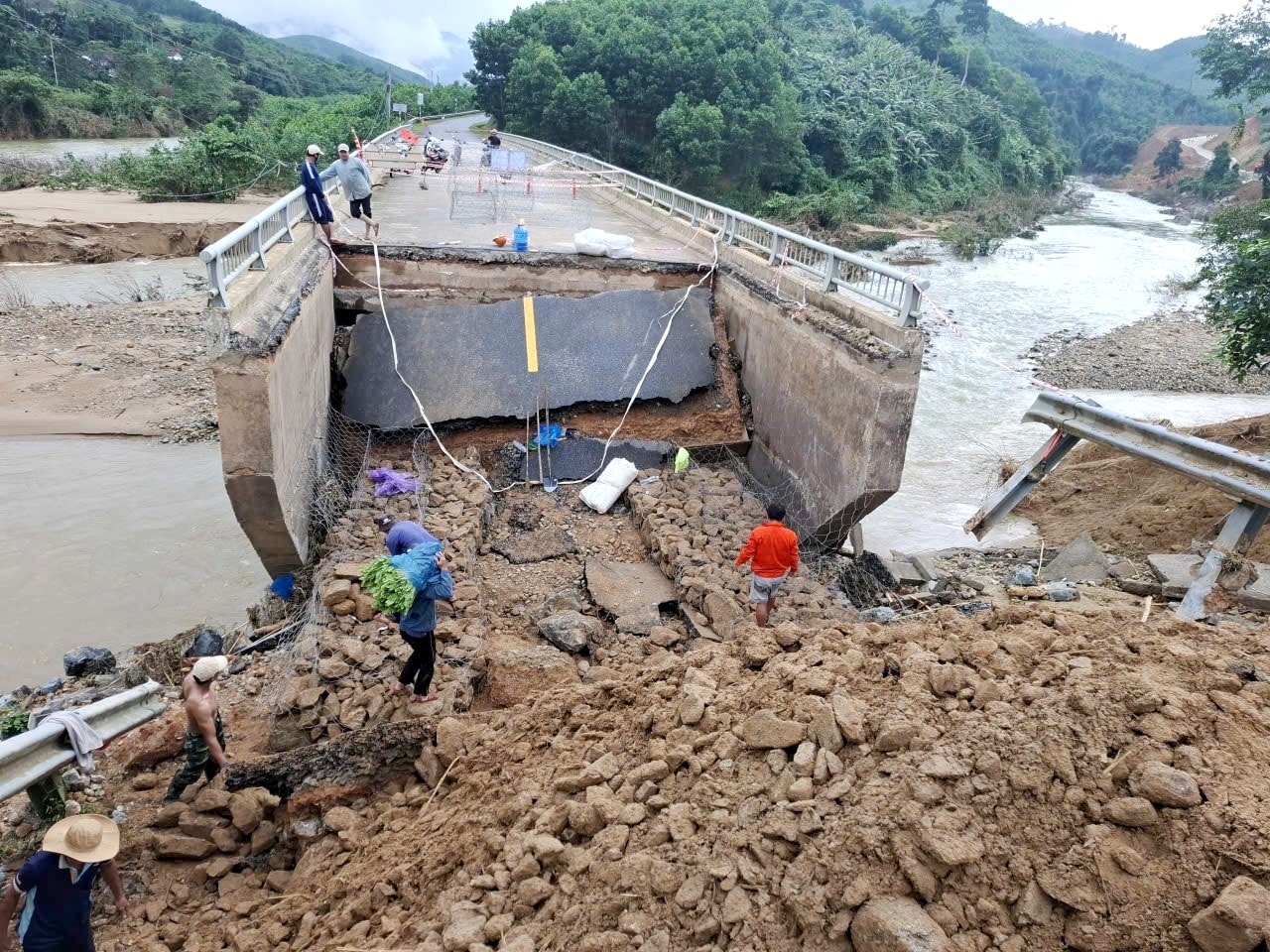
Many national highways, provincial roads, and local roads such as National Highway 40B, National Highway 14H, National Highway 14E, Provincial Roads 606, 615, 615B, and 601 have bridges, culverts, and spillways that have been washed away or damaged; landslides and rockfalls on the embankment have covered the road surface; landslides on the slope, subsidence of the road surface, and road breaks have occurred…



Statistics show that there are approximately 1,235 landslide points on the roads, some of which are large and recurring; 52 bridges and 245 culverts are damaged.
Weaknesses of transportation infrastructure
The Da Nang Bridge and Road Construction Joint Stock Company was assigned by the Department of Construction to manage, maintain, and repair road infrastructure comprising 475 sections and routes with a total length of over 532.6 km. Due to the prolonged historical floods from October 23, 2025, many roads under the company's management suffered landslides, affecting roadbeds, sidewalks, and embankments, impacting traffic flow. These include Nam Ky Khoi Nghia (Ngu Hanh Son ward), Nhu Nguyet (Hai Chau ward), Vo Nguyen Giap, Hoang Sa, and DRT (Son Tra ward), and especially the DT601 route through Hai Van ward and the DT602 route through Lien Chieu and Hoa Khanh wards.
According to Mr. Tran Tu Hai, Deputy Director of Da Nang Bridge and Road Construction Joint Stock Company, damage to road infrastructure is unavoidable when faced with objective causes, namely climate change causing rainfall in Da Nang to exceed historical records, setting new flood peaks, and unexpected flash floods, along with the complex topography and geology of the mountainous area. Deep, prolonged flooding combined with heavy vehicle traffic destroys the asphalt road surface structure.
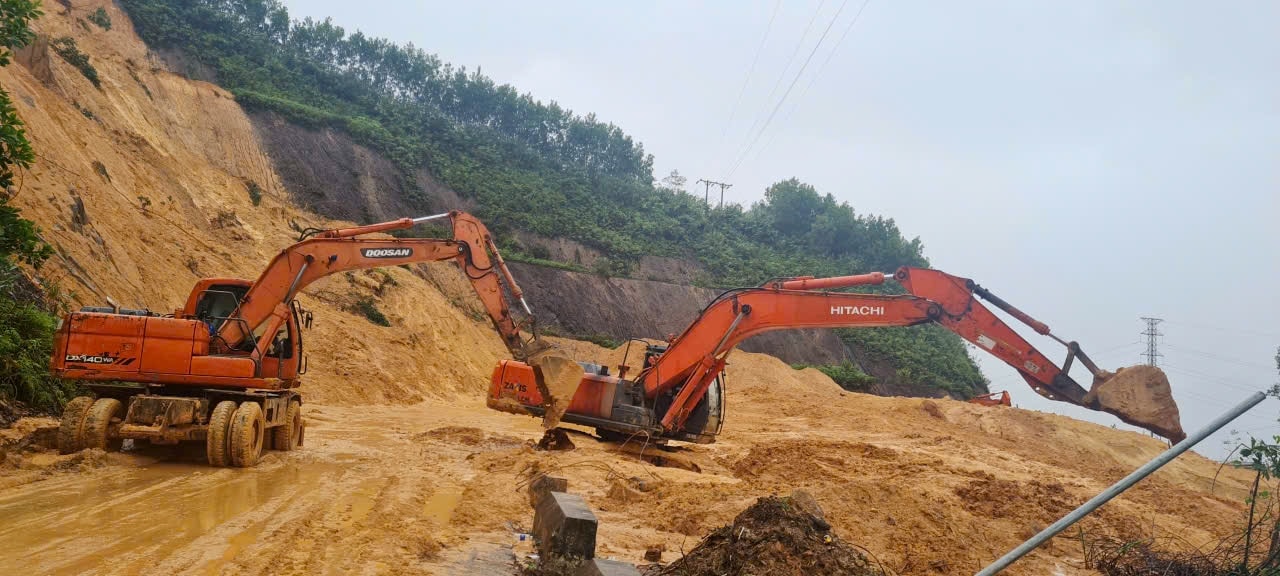
According to Mr. Tran Ngoc Thanh, Deputy Director of the Department of Construction, many roads were built a long time ago according to low technical standards, with weak roadbeds and not fully reinforced. Facing natural disasters, these sections of roads immediately become the most vulnerable targets.
In mountainous areas, the use of combined culverts and spillways was previously the most cost-effective solution. However, these culverts and spillways are very low-lying; even a single heavy rainstorm can cause flooding, disrupting traffic. The culverts and spillways also directly receive sediment, sand, and debris, leading to damage when the floodwaters recede.
Many roads have drainage ditches and culverts that are too small, designed based on outdated hydrological data. During extreme heavy rainfall, this system cannot drain water quickly enough, turning the road surface into "artificial rivers," eroding the embankment, and causing water to accumulate and seep deep into the road's foundation, destroying it from within.
Mr. Nguyen Dai Phuc, Head of the Road Management and Maintenance Department (Quang Nam Transport Construction Joint Stock Company), said that the terrain has very steep slopes on the hills and mountains, and the distances are short; conversely, most of the roads closely follow the existing mountain slopes due to historical reasons, leading to very strong water flow during the rainy season.
Another reason is that most of the hills in the area are covered with acacia trees, which have shallow, fibrous roots that do not hold the soil. Furthermore, to harvest the acacia, people build temporary roads for trucks to transport the wood up the hills, creating drainage channels for rainwater, which contributes to landslides...



In 2025, the total damage to Da Nang's transportation infrastructure caused by floods and heavy rains is estimated at around 900 billion VND.
The budget for repairing the damage, managed by the Department of Construction, is approximately 176 billion VND (excluding Ho Chi Minh Highway, expressways, National Highway 1, and Truong Son East Highway).
The transportation sector has directed the remediation efforts in two phases: Phase 1 focuses on resolving traffic congestion and ensuring smooth traffic flow; Phase 2 involves implementing emergency repair projects and mitigating the consequences of natural disasters by advising the City People's Committee to issue 18 emergency construction orders.
Source: https://baodanang.vn/thiet-hai-nang-do-thien-tai-3340698.html
![[Photo] Overview of the renovation and upgrading of the Ho Chi Minh Museum - Ho Chi Minh City Branch](https://vphoto.vietnam.vn/thumb/1200x675/vietnam/resource/IMAGE/2026/06/24/1782287051250_ndo_br_01-jpg.webp)
![[Image] Paris's oldest bridge goes viral after transforming into a giant cave.](https://vphoto.vietnam.vn/thumb/1200x675/vietnam/resource/IMAGE/2026/06/24/1782283441197_ndo_br_dsc05314-jpg.webp)


![[Photo] Opening Ceremony of the 13th National Congress of the Ho Chi Minh Communist Youth Union](https://vphoto.vietnam.vn/thumb/1200x675/vietnam/resource/IMAGE/2026/06/24/1782286753905_ndo_br_1-8510-jpg.webp)