

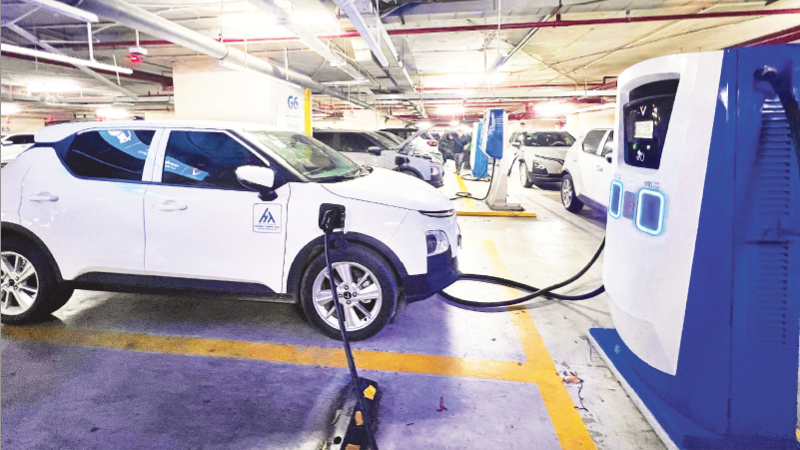
These shortcomings not only create difficulties for consumers but also pose a major challenge in achieving the national energy transition goals.
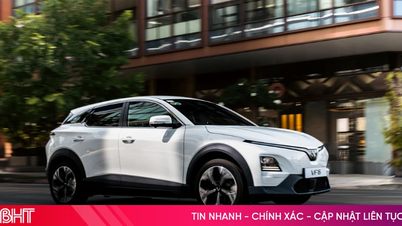
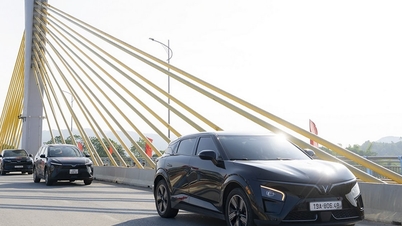
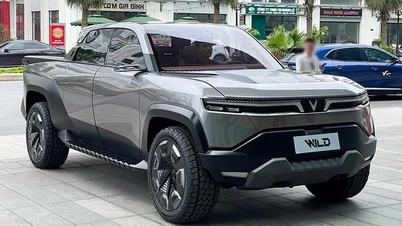
According to a report by the Ministry of Industry and Trade in coordination with other agencies. Ministry of Science and Technology In 2023, Vietnam consumed 15,676 electric cars. In the first six months of 2024 alone, this number reached 17,536 vehicles. Domestically, several companies are producing and assembling electric cars, such as VinFast, Hyundai Thanh Cong, Thaco , TMT, etc.
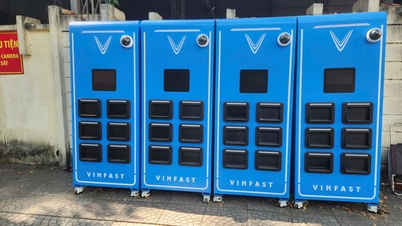
With the rapid development of the electric vehicle industry, many businesses are ready to invest in the market for equipment and services for electric vehicles, especially charging stations for electric cars. Currently, the most widespread electric vehicle charging station system in Vietnam belongs to VinFast, with approximately 150,000 stations installed nationwide.
The electric vehicle charging station market is basically divided into several main groups: The group of authorized charging stations are those installed at car dealerships or sold bundled with vehicles for customers to install at home. The group of public charging stations includes companies like EV One, EverCharge, etc., providing charging services in parking lots, shopping malls, and residential areas. The group specializing in providing home charging includes companies such as EverEV, GreenCharge, StarCharge, Autel, etc.
To ensure the safety of the system. national power grid For electric vehicle users, countries around the world have developed and enacted laws and mandatory technical regulations for electric vehicle charging stations, including Europe, the United States, China, Singapore, Saudi Arabia, Qatar, and India. Electric vehicle charging stations, when manufactured and sold, must meet technical requirements, be tested for safety indicators, and be assessed for safety by independent certification organizations before being put into operation.
However, in Vietnam today, the development of comprehensive regulations and strict technical criteria for building charging stations, as well as managing and ensuring safety and convenience for businesses and citizens, has not been timely.
Furthermore, due to the lack of a comprehensive plan for the charging station network, the construction of charging infrastructure is currently almost entirely left to individual businesses, leading to fragmentation, a lack of standardization, and overlapping interests. As a result, people face significant difficulties in finding convenient and safe charging points.
Mr. Mai Huy Duc (Giang Vo Ward, Hanoi) said that after dinner, he hurriedly went to look for an electric car charging station in the Nguyen Cong Hoan street area. According to the app's map, the nearest point was a fast charging station located in a basement. He went to a shopping mall. But when he got there, there were no charging points, so he had to drive all the way down to the Tay Mo area to wait for two hours to charge. Anh Duc recounted that once, while on a business trip, his car's battery was almost dead and he couldn't find any charging points on the way back, so he had to call for roadside assistance.
Another problem is that to build a public charging station, businesses have to "knock on the doors" of many agencies, from requesting land and electricity connections to fire safety and construction permits. According to Mr. Nguyen Van Khoi, Head of the Standards Department (National Committee for Standards, Metrology, and Quality), solving the problem of the shortage of charging stations requires the involvement of all relevant ministries and specialized management agencies to build a legal framework on power grid infrastructure planning, planning of charging station construction sites, regulations on electrical installation systems for charging stations to ensure safety, fire safety, and environmental protection... At the same time, specific regulations on the safety and functionality of charging stations, charging plug standards, regulations on the verification of measuring instruments for measuring equipment used in the buying and selling of electricity from charging stations, and the collection and processing of batteries after their lifespan are needed...
The Ministry of Science and Technology is currently leading the development of the draft National Technical Standard (QCVN) on electric vehicle charging stations. This standard aims to ensure electrical safety, protect property and people's health, and create a legal framework for businesses to invest in electric vehicle infrastructure.
The draft is based on the international standard IEC 61851-1:2017, currently applied in many countries worldwide. Accordingly, electric vehicle charging stations must meet several important technical requirements, such as: protection against electric shock, with a device to cut off power in case of overload or short circuit; ensuring electromagnetic compatibility (EMC) to avoid interference with other electrical equipment; the electrical connection system between the vehicle and the station must be safe, secure, and conform to the specified plug standard. In addition, the power meter integrated into the charging station must also be inspected and approved like a regular electricity meter, to facilitate transparent electricity trading.
The standard also clarifies the conformity assessment method and the responsibilities of the parties involved in manufacturing, assembling, importing, and trading charging stations. Mr. Nguyen Van Khoi also stated that the standard will be issued this year. It is expected that in July 2026, the national standard will be mandatory for imported vehicles, and then one year later (July 2027) for domestically produced and assembled electric vehicles (EVs), aiming to give domestic businesses time to innovate and upgrade their technology lines.
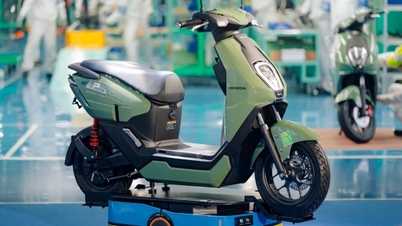
The draft regulations also encourage businesses to voluntarily adopt them ahead of schedule to proactively prepare and improve product quality. After the regulations for car and truck charging stations are implemented, an impact assessment will be conducted to further expand them to electric bicycles and electric motorcycles in the future.
The development and promulgation of the aforementioned set of standards will create a clear legal framework, remove obstacles for businesses, and help management agencies easily control the quality of charging station infrastructure. However, a major shortcoming remains: the lack of open connectivity between vehicles and charging stations. charging station.
In reality, some car manufacturers install their own proprietary communication codes, preventing other brands' vehicles from charging even though they use the same connector standard. According to experts, it is necessary to synchronize technical, planning, and legal solutions from a state management perspective to ensure that charging stations are open, creating conditions for the electric vehicle market to develop transparently and efficiently, and guaranteeing the rights of citizens when buying and using electric vehicles, thereby building green transportation in Vietnam.
Source: https://baoquangninh.vn/thieu-ha-tang-sac-cho-xe-dien-3366439.html






























































































Comment (0)