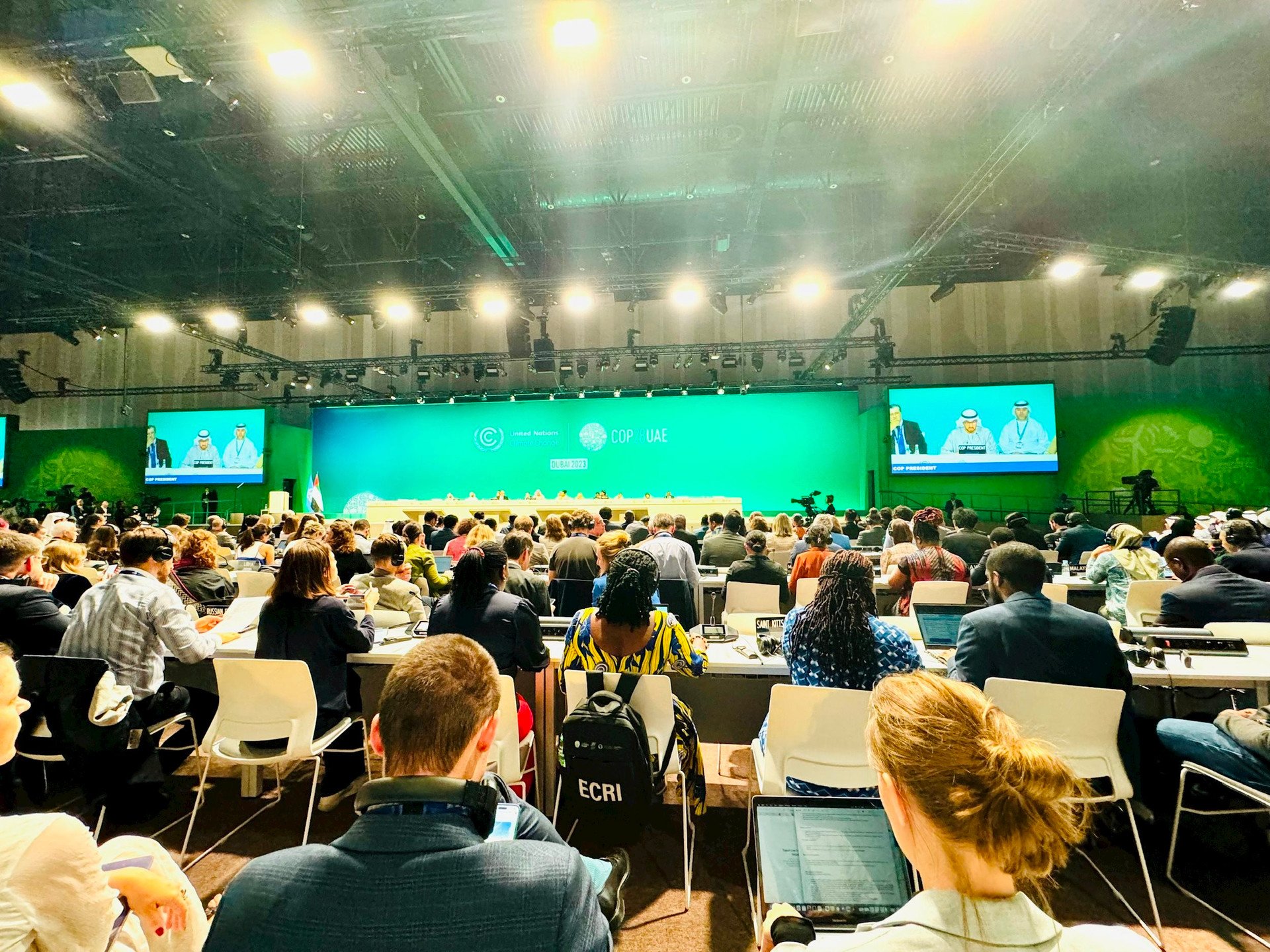
By laying the groundwork for a rapid, fair, and just transition, the COP28 agreement is seen as signaling the “beginning of the end” of the fossil fuel era.
Striking the gavel to conclude the conference, COP28 President Sultan Al Jaber described the agreement as a “true victory” of unity, solidarity, and cooperation; a victory for those who are sincere and genuine in addressing the global climate challenge. It is a historically proud achievement in the process of ensuring a better future for humanity and the planet.

Simon Stiell, Secretary-General of the United Nations Framework Convention on Climate Change (UNFCCC), emphasized: "From now on, all governments and businesses need to translate commitments into tangible results. In the crucial years ahead, the determination of all Parties will be the most important driving force."
The Global Efforts Assessment (GTS) decision is considered the most important outcome of COP28. The GST encompasses all elements under negotiation and can be used by countries to develop stronger climate action plans for the period leading up to 2030 – with the overarching goal of keeping global temperature rise below 1.5°C by the end of the century compared to pre-industrial levels.
Speaking at the session, the US President's Special Envoy for Climate Change, John Kerry, stated that the GST has sent a strong message to the world about the need to maintain the 1.5°C target, and that the next updated Nationally Determined Contributions (NDCs) of countries must be consistent with this target. Specifically, this includes tripling renewable energy; doubling energy efficiency; and accelerating efforts toward phasing out coal-fired power plants that do not implement emission reduction measures. “For the first time in history, there has been a decision to shift from coal to clean energy, consistent with the goals of the Paris Agreement on climate change,” John Kerry expressed, emphasizing that climate finance requires policies and support for partners and developing countries to have a climate-resilient and sustainable future.



Scientific reports indicate that global greenhouse gas emissions need to be reduced by 43% by 2030, compared to 2019 levels, to limit global warming to 1.5°C.
In the short term, the Parties need to set ambitious emissions reduction targets across the entire economy, encompassing all greenhouse gases, sectors and categories, and consistent with the 1.5°C limit when submitting their NDCs in 2025 for the period up to 2035.
Regarding the Loss and Damage Fund, the Parties reached a historic agreement on the operation of the Loss and Damage Fund on the very first day of the Conference. To date, the Parties have committed a total of more than $700 million to the Fund.
Regarding global adaptation goals, the Parties agreed on the Global Adaptation Goals (GGA), which reflect the need for financial support, technology, and capacity building to achieve these goals.
Regarding climate finance – one of the key topics of the conference – the Green Climate Fund (GCF) received a record total of new funding commitments at COP28, reaching $12.8 billion from 31 countries, with further contributions still expected.


The governments of eight countries have announced new commitments to the Least Developed Countries Fund and the Special Climate Change Fund totaling more than $174 million. Meanwhile, new financial commitments to the Adaptation Fund amount to nearly $188 million.
Regarding climate empowerment and gender action plans, the Parties reiterated the essential role of empowering all stakeholders to participate in climate action; particularly through the climate empowerment action plan and the gender action plan.
Negotiations on an "enhanced transparency framework" at COP28 laid the groundwork for a new era in the implementation of the Paris Agreement. The UNFCCC introduced and tested transparency reporting and assessment tools at COP28. Final versions will be made available to the Parties by June 2024.
Source


![[Photo] Prime Minister Le Minh Hung presides over the thematic session on promoting science and technology development and innovation.](https://vphoto.vietnam.vn/thumb/1200x675/vietnam/resource/IMAGE/2026/06/23/1782207872934_ndo_br_dsc-1724-jpg.webp)