

 |
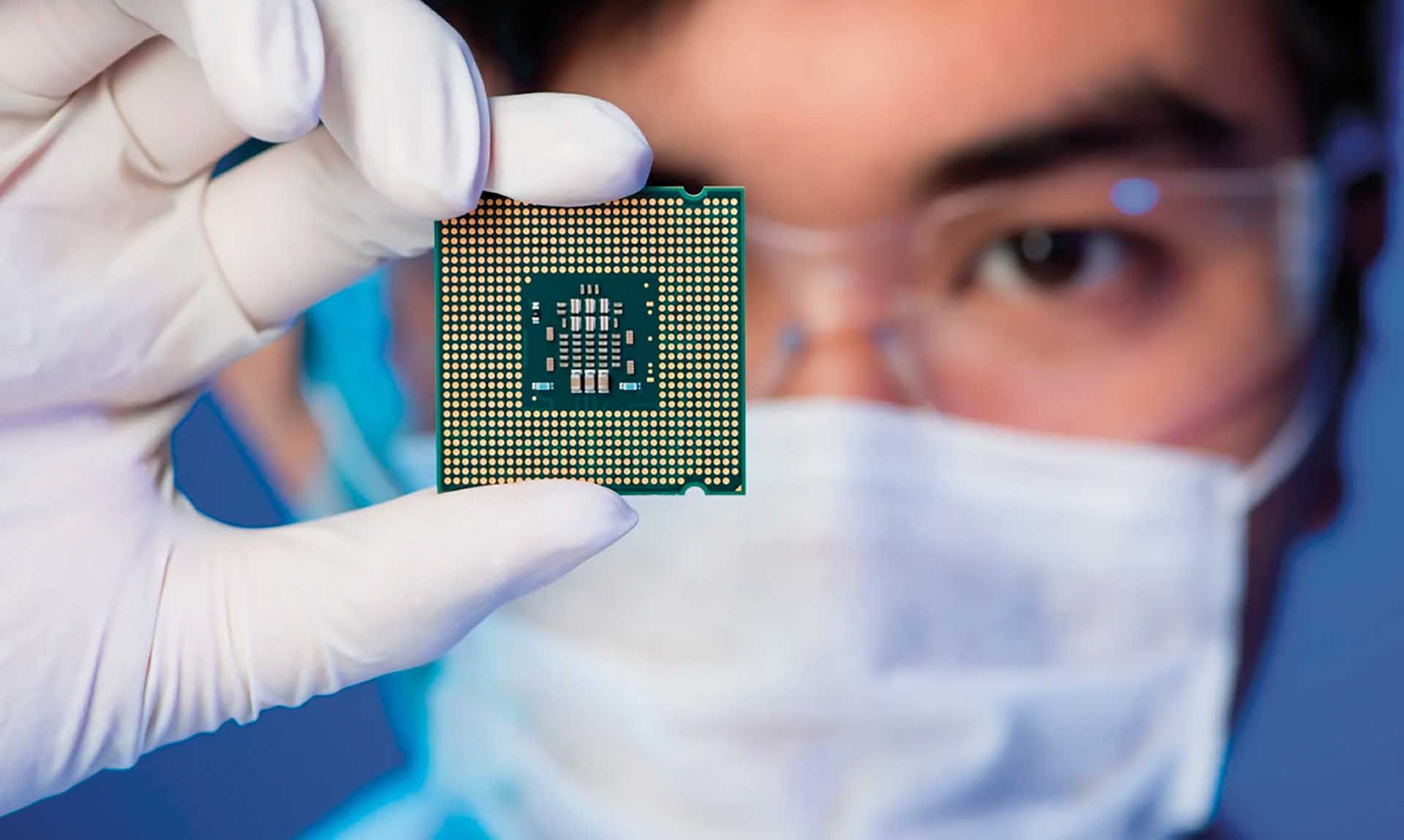
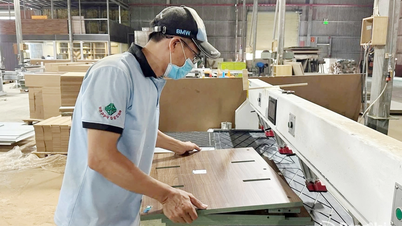
| Strong diplomatic relations will be key to unlocking opportunities for semiconductor businesses in Vietnam, enabling them to participate more deeply in the regional and global semiconductor supply chain. (Source: iStock) |
The semiconductor industry is currently one of the most important strategic industries globally. Sharing his views at the Conference on Economic Diplomacy for National Development, within the framework of the recent 32nd Diplomatic Conference, Deputy General Director of Viettel Military Telecommunications Group, Dao Xuan Vu, emphasized the opportune moment for Vietnam to deeply participate in the global semiconductor supply chain.
The semiconductor industry is a multinational industry; no single country or company can be completely self-sufficient or fully control 100% of its value chain. In the context of the disruption of the global semiconductor supply chain during the Covid-19 pandemic, the US-China trade war, and the efforts of the US and several other countries to restructure their semiconductor supply chains, this presents an unparalleled opportunity for Vietnam.
Great potential, but also significant challenges.
According to statistics, the global semiconductor industry reached $600 billion in 2022, and is projected to reach and surpass $1 trillion by 2030 with an average annual growth rate of double digits.
The semiconductor industry is considered one of the backbone and core industries for economic development because it is the foundation for the development of other industries such as electronics, automation, telecommunications, and information technology. Currently, many countries around the world are striving to build a semiconductor industry to enhance the self-reliance of their national industries.
According to assessments by experts, consulting organizations, the American Semiconductor Industry Association, and based on research and analysis by the Ministry of Foreign Affairs in collaboration with foreign experts, Vietnam has significant potential to participate in and develop the semiconductor industry due to its stable political system and favorable geographical location; the government is particularly interested in promoting the development of this sector. Relevant ministries and agencies are currently developing strategies, policies, and action plans to promote the semiconductor industry.
In particular, the Prime Minister has shown great interest in and frequently raised the issue of semiconductor development cooperation in high-level meetings with countries that have developed semiconductor industries, such as the United States and Japan.
Furthermore, Vietnam possesses a young and promising workforce with reasonable labor costs and a strong foundation in engineering and technology, making it well-suited to the semiconductor industry. Currently, Vietnam has over 8,000 people working in the semiconductor sector, including 5,000 engineers for design and 3,000 engineers and workers for chip packaging and testing.
Vietnam is also considered a country with many highly qualified scientists, experts, and engineers in the semiconductor field living and working abroad.
In fact, with the semiconductor ecosystem gradually forming, several major global semiconductor companies such as Intel, Samsung, and Amkor have invested in Vietnam. To date, more than 40 foreign semiconductor companies have established branches or subsidiaries in Vietnam. Some domestic enterprises with significant resources, such as Viettel and FPT, have begun participating in chip design.
In terms of human resources, many universities in Vietnam, such as Vietnam National University, Hanoi, Vietnam National University, Ho Chi Minh City, and Hanoi University of Science and Technology, have the capacity to train human resources for the development of the semiconductor industry.
Another highly valued potential is Vietnam's rare earth reserves, estimated at around 22 million tons, ranking second in the world after China. Rare earths are strategic raw materials for semiconductor production, essential for many high-tech industries.
However, based on practical experience, Mr. Dao Xuan Vu stated that Vietnam is considered to have great potential for developing the semiconductor industry, but successfully participating in the global supply chain faces many challenges and obstacles.
The first obstacle is that semiconductor technology is an industry with limited access, from design software to machinery, materials, and manufacturing processes.
This is also a field that demands high-quality and highly specialized human resources. Design requires knowledge in related fields, while manufacturing requires operating engineers with many years of experience. In reality, although Vietnam currently has 5,000 design engineers, they are mainly involved in the inspection and testing of designs within the branches and offices of foreign companies.
Meanwhile, securing funding for the design, investment, and operation of manufacturing plants also presents a significant challenge. For example, the estimated cost of investing in a 28nm semiconductor chip manufacturing plant is approximately $10 billion, requiring short-term depreciation. This necessitates a sufficiently large market and sales volume to offset the very high investment and operating costs. However, the output market largely depends on a few large chip designers and electronics manufacturers.
Furthermore, developing this high-tech sector requires a complete and synchronized ecosystem alongside the manufacturing plants. A semiconductor chip manufacturing plant needs more than 200 types of equipment and nearly 1,000 types of auxiliary materials and supplies, which the current Vietnamese semiconductor ecosystem lacks, and there are no domestic suppliers for semiconductor chip manufacturing plants.
Another major challenge is the inadequate infrastructure for semiconductor manufacturing plants, which require a significant amount of electricity and water for production.
The key to unlocking opportunities for Vietnamese businesses.
Appreciating the Ministry of Foreign Affairs' proactive research on the semiconductor markets of other countries and its support for domestic businesses in connecting with the American Semiconductor Industry Association and semiconductor corporations in the US and Japan, a representative from Viettel Group stated, "The information we have accessed has helped us determine a suitable strategy for participating in the semiconductor industry."
Specifically, for example, the Ministry of Foreign Affairs has supported businesses in accessing valuable information from foreign sources; as well as independent research reports from the Ministry of Foreign Affairs on the development of the semiconductor industry in countries such as the US and Japan, or the Prime Minister's roundtable discussion with 10 leading Japanese semiconductor companies on December 16th, which also helped expand semiconductor cooperation opportunities for Vietnamese businesses...
Therefore, the Deputy General Director of Viettel Group has high expectations for the connecting role of the Ministry of Foreign Affairs in supporting and accompanying Vietnamese businesses participating in the regional and global semiconductor supply chain.
“To overcome the aforementioned challenges, in addition to the determination and efforts of each enterprise, it is essential to have the guidance and support of the government, ministries, and especially the Ministry of Foreign Affairs in the initial stages to connect and concretize cooperation opportunities, connect and mobilize international resources, and establish cooperative relationships in the semiconductor sector at the government level to create conditions and a framework for enterprise-level cooperation.” Mr. Dao Xuan Vu “requested” very specifically:
Firstly, we need to promote collaboration with companies to build semiconductor chip manufacturing plants in Vietnam, thereby gradually developing the domestic semiconductor ecosystem. This will provide a foundation for domestic semiconductor companies to have market opportunities and determine appropriate investment and development roadmaps.
Secondly, we will continue to develop working programs with governments and major semiconductor companies to learn about the specific policy mechanisms needed to support the development of the semiconductor industry in Vietnam.
Thirdly, the semiconductor industry's output market is heavily dependent on large electronics manufacturers and semiconductor chip design companies, so it is suggested that the Ministry of Foreign Affairs, the Ministry of Planning and Investment, and other relevant ministries and agencies develop a trade promotion plan to seek output markets for Vietnam's semiconductor industry.
Finally, strengthen connections and collaborative research and production with semiconductor companies and experts abroad.
"We believe that in the semiconductor sector, strong diplomatic relations will be key to unlocking opportunities for semiconductor businesses in Vietnam, contributing to Vietnam's deeper participation in the regional and global semiconductor supply chain," Mr. Dao Xuan Vu affirmed.
Source

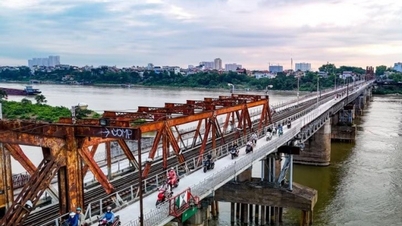
![[Photo] Life on both banks of the river returns to its bustling pace on the day the Long Bien Bridge opens to traffic.](https://vphoto.vietnam.vn/thumb/1200x675/vietnam/resource/IMAGE/2026/05/28/1779949763708_cau-long-bien-minh-duy-7-3610-jpg.webp)

![[Photo] The heat at the fireworks display site on the opening night of the Da Nang International Fireworks Festival 2026](https://vphoto.vietnam.vn/thumb/1200x675/vietnam/resource/IMAGE/2026/05/27/1779889741485_ndo_br_z7872039145157-fecaba5112f39e8352544099d7ef4738-5140-jpg.webp)








































































Comment (0)