European countries are repeatedly recording record-high temperatures—a warning from nature about the ever-present threat to the planet if humanity does not take action with commensurate speed and scale.
Extreme heatwaves, severe weather events, and catastrophic floods or droughts are occurring with increasing frequency.
The Danish Meteorological Institute announced that it had recorded the highest temperature ever in the European country, at 36.6 degrees Celsius. Poland also issued a level 3 heat warning, the highest level, from June 27 to 29.
Meteorologists say the current heatwave is unlike anything Poland has experienced in over 100 years, breaking all-time temperature records in some regions.
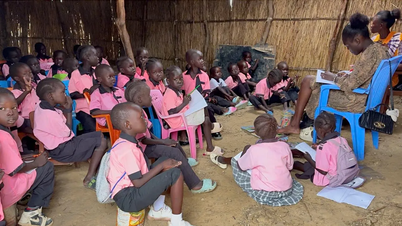
According to statistics, more than 1 billion children globally are currently facing the simultaneous impact of at least three extreme weather events. A series of temperature records have been broken consecutively.
Simon Stielll, Executive Secretary-General of the United Nations Framework Convention on Climate Change (UNFCCC), stated that the intense heatwave currently scorching Europe is a warning sign of climate change.
This is also the price of pollution caused by the burning of fossil fuels.


What is happening in Europe is just one part of a larger global picture encompassing a range of extreme weather events. The world is not lacking in warnings about the severity of climate change.
Many meetings have been held, and many commitments have been made. However, it's worth noting that the gap between words and actions remains unbridgeable, partly due to the seemingly insurmountable conflicts of interest between countries.
The 30th Conference of the Parties to the United Nations Framework Convention on Climate Change (COP30) in Brazil last year exposed this reality. After much debate, the final agreement at COP30 failed to provide a clear plan for phasing out fossil fuels.
This has led to disappointment in many countries. The reason is the intense conflict between two groups of interests: on one side are countries with significant interests in fossil fuels, wanting to secure their core energy interests; on the other side are countries heavily affected by climate change and are demanding a drastic elimination of fossil fuels.
Simon Stiell recently warned that if the world does not stop burning massive amounts of coal, oil, and gas, extreme heat will only get worse.
The COP31 conference, taking place in Türkiye this year, is expected to return to in-depth discussions on the issue of fossil fuels – one of the main causes of greenhouse gas emissions.
Climate finance is another thorny issue. According to the United Nations Environment Programme (UNEP) Climate Adaptation Gap 2025 report, developing countries will need between $310 and $365 billion per year to adapt to climate change between now and 2035.
However, current actual spending is merely a drop in the ocean, only about 1/12 of the required amount. The uncertain global economic context, with the impact of conflicts in the Middle East, and the need to prioritize social welfare goals such as responding to refugee flows and recovering from the Covid-19 pandemic, makes sharing financial responsibility even more difficult.
For poorer countries, any effort, from transitioning to renewable energy to deploying infrastructure to adapt and protect communities from risks, requires significant financial investment.



Through the climate crisis that is worsening year after year, "Mother Nature" is sending urgent messages to humanity.
The world is not only waiting for bolder, more decisive commitments, but also for a clear and transparent roadmap outlining the scale, resources, and methods for implementing the agreed-upon measures to protect the planet.
Source: https://nhandan.vn/thong-diep-khan-tu-thien-nhien-post972120.html