The Vietnam Democratic Party was officially established.
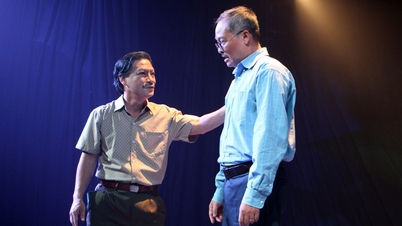
According to the Nhan Dan newspaper, on June 30, 1944, the Vietnam Democratic Party was founded in accordance with the policy of the Indochinese Communist Party to unite intellectuals, the national bourgeoisie, and patriotic classes to participate in the cause of national liberation.
Immediately after its establishment, the Vietnam Democratic Party joined the Viet Minh Front, contributing to the defeat of the Japanese fascists' and puppet regime's attempts to win over intellectuals and the bourgeoisie.
Following the August Revolution of 1945, this organization continued to stand alongside the Communist Party of Vietnam in the two resistance wars as well as the process of national reconstruction.
In July 1988, after the country was unified and its historical mission was completed, the Vietnam Democratic Party voluntarily announced its dissolution.
The Chương Dương bridge is now open to traffic.
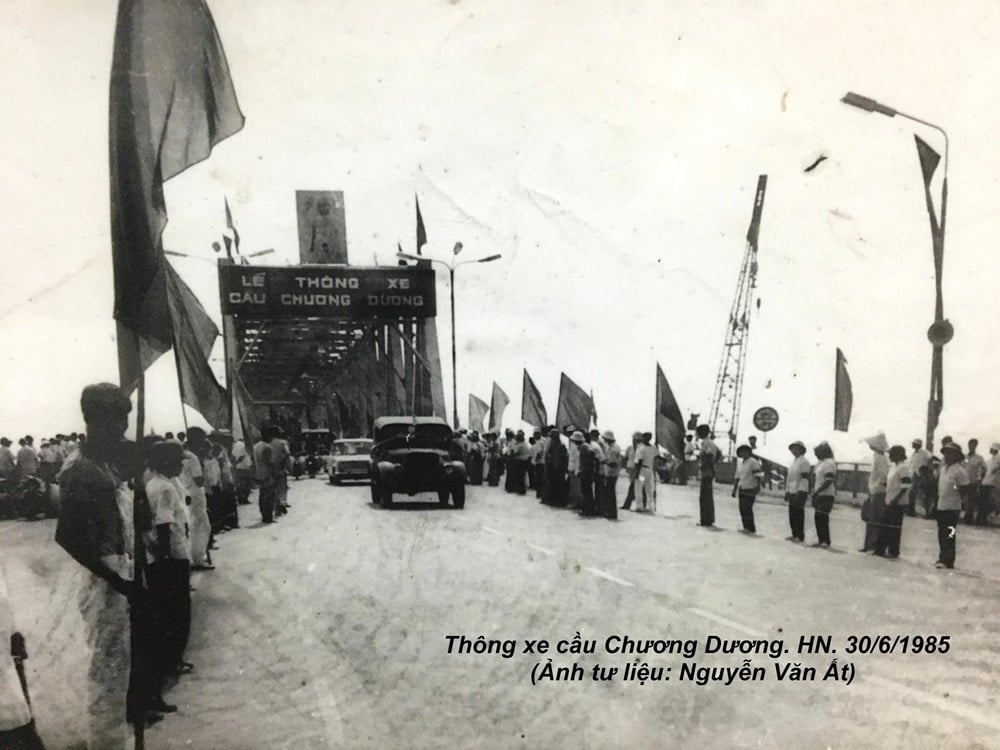
On June 30, 1985, the Chuong Duong Bridge was officially opened to traffic after nearly two years of construction. This was the first large steel bridge designed, manufactured, and constructed entirely by Vietnamese engineers and workers, marking an important milestone in the maturity of the country's bridge and road construction industry.
The bridge, over 1.2 km long and nearly 20 m wide, connects the former Hoan Kiem District with the former Long Bien District, helping to alleviate pressure on the Long Bien Bridge and expand development space towards the east of Hanoi. In the context of a country still facing many difficulties after the war, the completion of this project held special significance, demonstrating the Vietnamese people's mastery of science and technology.
Even today, despite the addition of many modern bridges to the capital, the Chuong Duong Bridge remains a symbol of self-reliance and resilience, and a cherished memory for generations of Hanoians .
Vietnam and the EU sign the EVFTA, opening a new phase of economic cooperation.
On June 30, 2019, in Hanoi, Vietnam and the European Union (EU) officially signed the Vietnam-EU Free Trade Agreement (EVFTA) and the Vietnam-EU Investment Protection Agreement (EVIPA).


The EVFTA agreement, which came into effect on August 1, 2020, has become a crucial driving force in promoting bilateral trade and expanding export markets for Vietnamese goods. Trade turnover between Vietnam and the EU has continuously grown in subsequent years, confirming the effectiveness of the agreement.
Along with the EVFTA, the EVIPA Agreement is expected to strengthen protection and create a stable and transparent investment environment for investors from both sides. By the end of 2025, EVIPA had been ratified by 20 out of 27 EU member states and is continuing to complete the procedures to come into full effect.
The statue of President Ho Chi Minh was unveiled in Saint Petersburg.
On June 30, 2023, the Saint Petersburg city government, in coordination with the Vietnamese side, held an inauguration ceremony for a statue of President Ho Chi Minh to commemorate the 100th anniversary of his first visit to Petrograd (now Saint Petersburg) in 1923.
The 3-meter-tall statue, located at the intersection of Ho Chi Minh Street and Enlightenment Avenue, became the fifth statue of President Ho Chi Minh in the Russian Federation. The monument not only holds cultural significance but also symbolizes the traditional friendship between Vietnam and the Russian Federation.
The inauguration of the statue on the occasion of the 100th anniversary of President Ho Chi Minh's historic journey further affirms his role in laying the foundation for the friendly relationship between the two nations.
Hong Kong returns to China.
On the night of June 30, 1997 (early morning of July 1, local time), the United Kingdom officially handed Hong Kong back to China after 156 years of administration.
The handover ceremony took place at the Hong Kong Convention and Exhibition Centre with the attendance of many high-ranking leaders from both sides. From that moment, Hong Kong became a Special Administrative Region of China under the principle of "one country, two systems," maintaining its own economic system, legal system, and way of life for 50 years.
This is considered one of the most significant geopolitical events of the late 20th century, marking the end of British colonial rule and ushering in a new era of development for Hong Kong.
London Tower Bridge inaugurated.
On June 30, 1894, Tower Bridge was officially inaugurated after eight years of construction on the River Thames.
This structure uniquely combines suspension and bascule bridge design, featuring two towers in a distinctive Gothic architectural style. The central span can be raised almost vertically to allow large ships to pass through, making it one of the outstanding engineering achievements of the late 19th century.



For over 130 years, Tower Bridge has not only served as a transportation link but has also become a famous symbol of London, appearing in countless films and works of art, and attracting millions of visitors every year.
"Gone with the Wind" is now available to readers for the first time.
On June 30, 1936, the novel Gone with the Wind by American author Margaret Mitchell was officially published.
Set against the backdrop of the American Civil War and the Reconstruction era, the novel tells the story of Scarlett O'Hara and Rhett Butler, quickly becoming a publishing sensation with millions of copies printed in a short period. In 1937, the book won the prestigious Pulitzer Prize for fiction.
In 1939, the film adaptation of the same name won 8 Academy Awards, contributing to making Gone with the Wind one of the most influential literary and cinematic works of the 20th century, translated into dozens of languages and still reprinted worldwide today.
Source: https://baovanhoa.vn/doi-song/thong-xe-cau-chuong-duong-241532.html
![[Photo] General Secretary and President To Lam works with the Party Committee of the Government on the work of preventing and combating storms, floods, extreme natural disasters and climate change.](https://vphoto.vietnam.vn/thumb/1200x675/vietnam/resource/IMAGE/2026/06/29/1782729441945_a1-bnd-0385-9454-jpg.webp)

![[Image] A look back at the capital's preparations for the century-long master plan.](https://vphoto.vietnam.vn/thumb/1200x675/vietnam/resource/IMAGE/2026/06/29/1782750453122_quy-hoach-100-nam-minh-duy-1-2118-jpg.webp)