The flood season in the Mekong Delta usually begins from August to November each year. During this time, water from the upper reaches of the Mekong River pours down, inundating the rice fields, making it impossible to see the banks. The floodwaters bring with them fertile silt that enriches the fields, along with seasonal produce such as snakehead fish, water hyacinth, sedge, water chives, water lilies... and various flowers and vegetables that are "famous" in the cuisine of the Mekong Delta, used to prepare many delicious traditional dishes.
The flood season is one of the most picturesque and unique times of year in the Mekong Delta. It's also the season when water lilies bloom profusely throughout the waterways of Long An province.
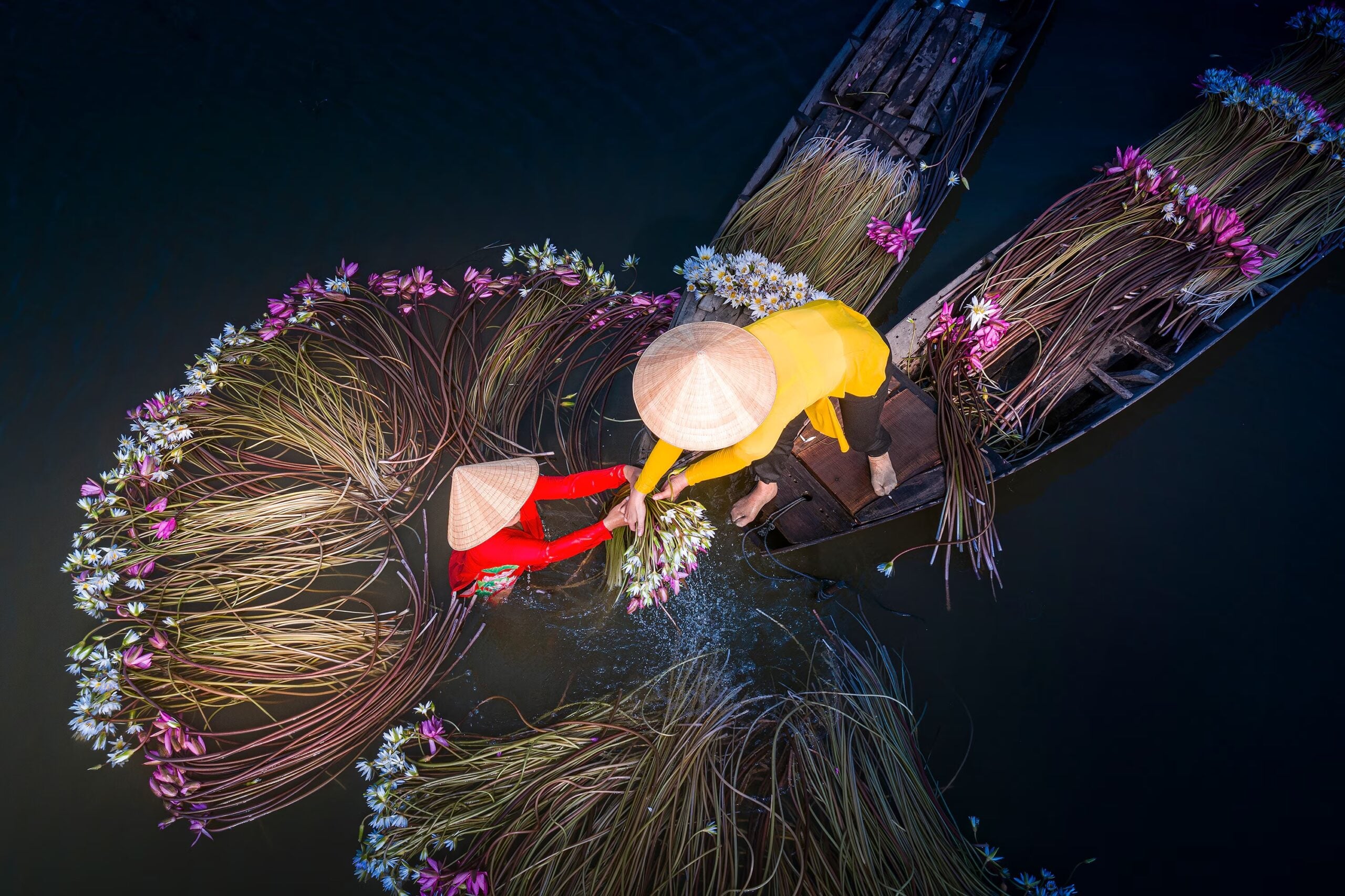
Harvesting water lilies during the flood season. Photo: Vietnam.vn
Water lilies are the most popular "specialty" vegetable in the Mekong Delta, growing wild everywhere from rivers and canals to rice fields and wetlands. In some places, people cultivate water lilies for vegetable harvesting, but most of them grow and develop wild. During the flood season, the vast fields of An Giang , Dong Thap, Long An, etc., are covered with water lilies of various colors: purple, white, and pink. People in the countryside are accustomed to seeing the waterlogged fields (formerly harvested rice paddies) full of water lilies. Amidst the vibrant purple and large flowers are the smaller white and pink "ghost water lilies." During the dry season, the roots of these "ghost water lilies" hide deep underground, "sleeping" until the floodwaters return to "come back to life."
Water lilies usually bloom, displaying their vibrant colors in the morning, and close their petals after noon. Some varieties bloom at night. "Ghost water lilies" often rise with the rising water, their stems sometimes reaching several meters in length. People in the Mekong Delta, mostly women, often wake up at dawn to paddle out to the fields to pick water lilies to sell at the market or prepare dishes such as water lily salad, sour soup, fish sauce hotpot, or thinly sliced and eaten raw with various vegetables dipped in fermented fish sauce. The long, slender, juicy, crisp, and slightly crunchy stems of the water lily make for a delicious addition to any dish. Water lilies are indispensable in hotpots or sour soups in the countryside. Stir-fried water lily calyxes with garlic are also very tasty.

Women standing next to boats laden with water lilies. Photo: Vietnam.vn
Arriving in Moc Hoa, Long An during the flood season, from September to December, it's not difficult to spot farmers paddling boats to harvest water lilies, a "specialty" vegetable that grows wild everywhere, from rivers and canals to rice fields and low-lying ponds.
During the flood season, water lilies bloom profusely. At this time, the locals are busy harvesting the water lilies to sell the stems for food, or arranging them into boats overflowing with flowers to attract tourists for sightseeing and experience.
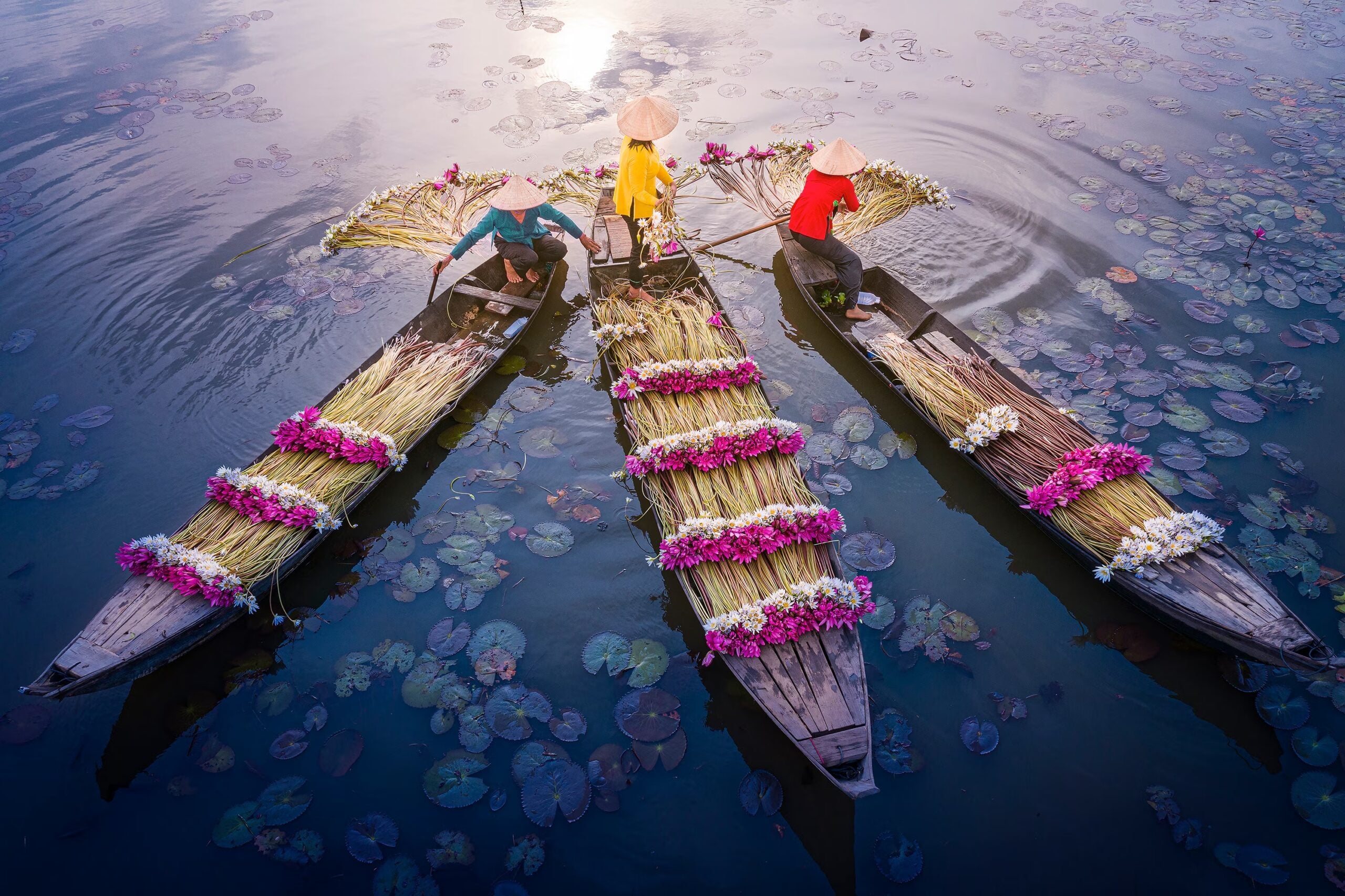
Water lily season in Moc Hoa, Long An. Photo: Vietnam.vn
In Moc Hoa, Long An, the cultivated water lilies have thick stems, large flowers, and a length of 1.5 to 2 meters. Wild water lilies (also known as ghost water lilies) have thinner stems, measuring 3 to 6 meters in length. These water lilies have soft stems but possess remarkable resilience. As the water level rises, the water lilies grow taller as well.
As floodwaters inundate the fields in the upstream areas of Long An province, farmers harvest water lilies to earn extra income.
In the Mekong Delta, most people, especially women, often wake up at dawn to paddle their boats out to the fields to pick water lilies to sell at the market.
During the flood season, in the Dong Thap Muoi region, along the provincial roads through Hong Nguy (Dong Thap) or Moc Hoa (Long An), you can easily spot locals selling rolls of fresh water lilies just harvested from the fields, still smelling of mud. The price is about 10,000 VND per kilogram of water lilies.



Interestingly, tourists can admire the beautiful scenery of the flooded fields of water lilies while also joining the village girls in scooping/pulling water lilies onto boats, or jumping into the water with them to sort and wash the freshly picked bunches. Water lilies only bloom beautifully for a few days before wilting, "making way" for the buds that will bloom one after another throughout the season until the water in the fields gradually recedes. The water lily buds/roots then "go dormant," only waking up in the next flood season, giving way to farmers to plow, sow, and plant the new rice crop.
In recent years, Moc Hoa has become a popular destination for photographers and tourists participating in colorful "water lily tours." Visitors can ride motorboats or rowboats with village girls wearing conical hats, checkered scarves, and traditional Vietnamese blouses to explore vast fields of water lilies or patches of water lilies growing among the melaleuca trees, showcasing their beauty in the green canals reflecting the sky and clouds.
Diem Giang



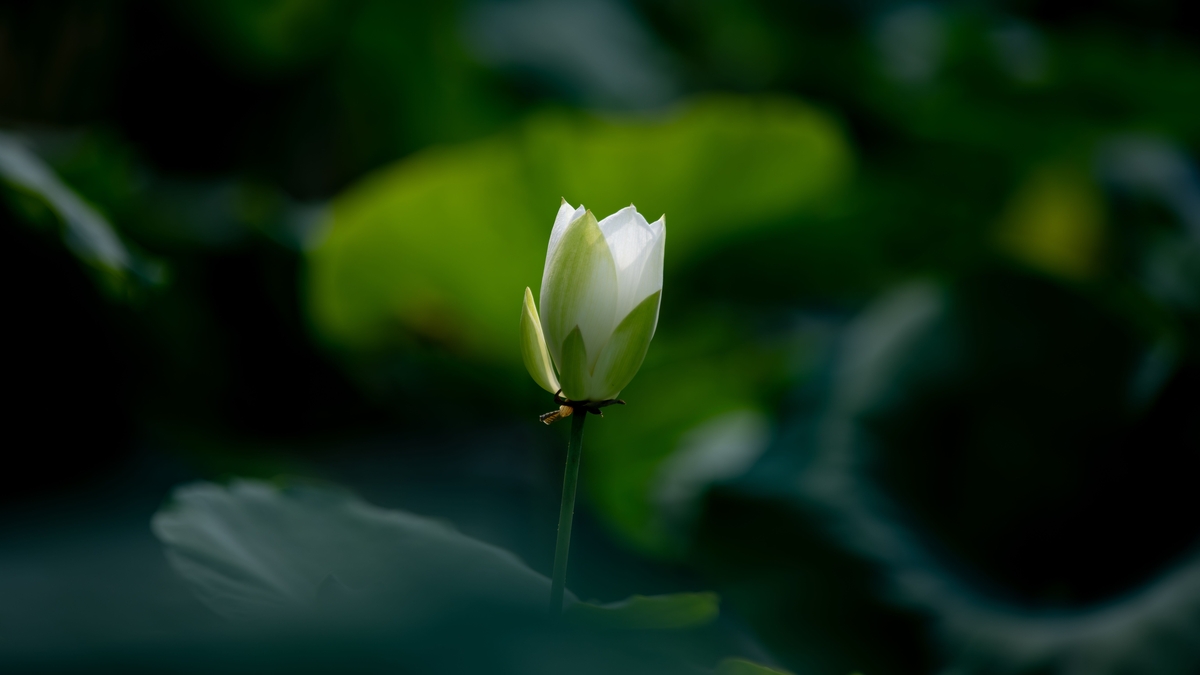
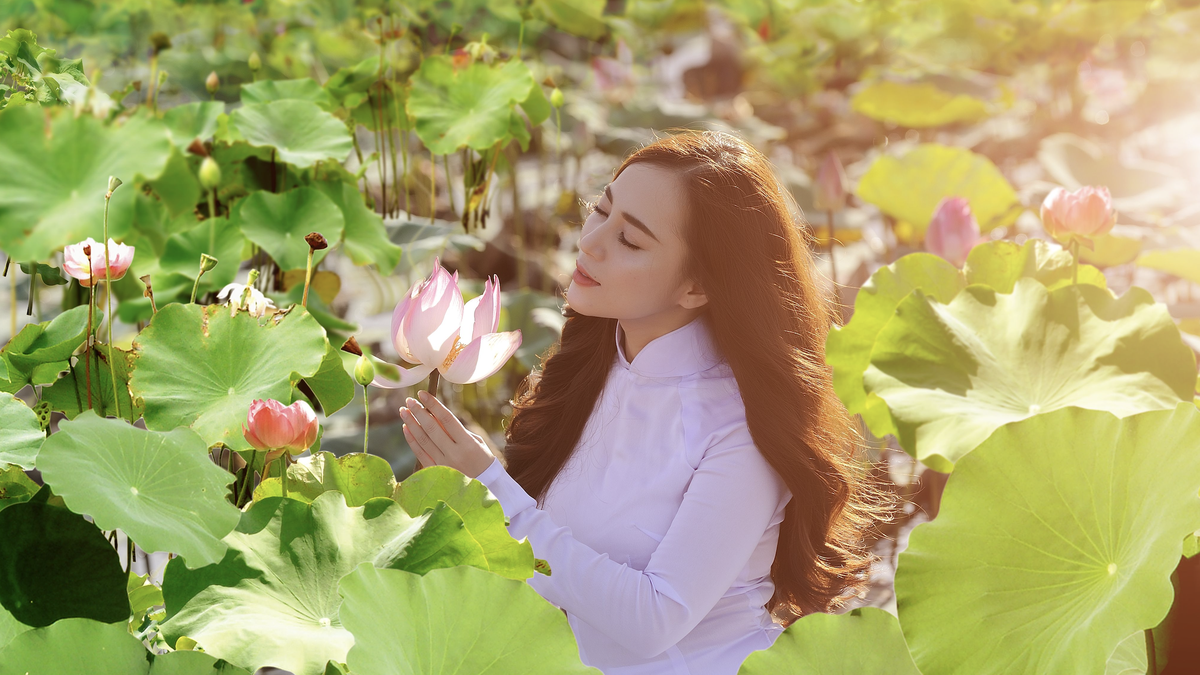
![[Photo] "Hanoi Lotus Festival" honors the lotus flower that has been associated with Vietnam for thousands of years.](https://vphoto.vietnam.vn/thumb/1200x675/vietnam/resource/IMAGE/2026/06/27/1782516943048_sen-ha-noi-2026-minh-duy-1-jpg.webp)