|
The owner of Thanh Vân's traditional rice roll restaurant ( Hanoi ) has been honored by Michelin Guide 2026 in the Gourmand Bib category. Photo: Tran Hien . |
Orion Grove (an American citizen) finds it hard to forget the simple, affordable dishes recommended by locals during his visits to Vietnam. The Michelin Guide is a valuable resource when he's in the US, Greece, or even Vietnam. But the red emblem in front of each eatery doesn't guarantee a memorable meal.
"Sometimes the best food isn't found in Michelin-starred restaurants, but in a small alley or in a family kitchen," he told Tri Thức - Znews.
Orion is not an isolated case. More and more travelers are discovering Vietnamese cuisine through social media and recommendations from locals, rather than relying solely on guides or international rankings like the Michelin Guide.
Where does Michelin lead diners?
Unlike Orion, Kanishchev Maksim (31 years old, Russian nationality) is not a tourist, but has lived and worked in Hanoi for 4 years. He has experienced many restaurants on the Michelin list, but gradually no longer considers it an important criterion when choosing a place to eat.
 |
Kanishchev Maksim poses for a photo in front of the Hanoi Opera House. Photo: Provided by the interviewee . |
Maksim acknowledges that Michelin-starred restaurants generally use better ingredients and have more refined presentation. However, in terms of taste, he doesn't perceive a significant difference compared to many local eateries.
"Michelin isn't my priority when looking for a place to eat," he shared.
For Lee Kwang Soo (a South Korean national), Michelin stars are highly valued when he searches for restaurants in South Korea, Japan, or Europe. However, in Vietnam, he prioritizes recommendations from local families and local food communities on social media.
After experiencing many Michelin-starred establishments such as Pho 10 Ly Quoc Su, Pho Khoi Hoi, and Banh Cuon Ba Hoanh, Kwang Soo assessed these restaurants as having consistent quality and being suitable for international tourists. However, his most memorable culinary experiences often come from lesser-known local eateries.
 |
Lee Kwang Soo at a roasted pork sandwich shop in Hanoi. Photo: Provided by the interviewee . |
Not only international tourists, but many Vietnamese diners have also gradually changed their approach to Michelin after their initial curiosity about this prestigious culinary guide.
When Michelin first appeared in Vietnam, Nguyen Quynh Anh (29 years old, residing in Hanoi) closely followed the published lists. A few years later, that excitement gave way to more familiar choices: a restaurant recommended by friends, an establishment she stumbled upon on the street, or a casual eatery included in the Michelin Selected list.



Through numerous experiences, Quynh Anh realized that Michelin doesn't just judge food based on whether it's delicious or not, but also on many other criteria. Even so, what draws her to a restaurant is still its reputation for flavor, rather than the symbols displayed outside the door.
"Michelin might have piqued my curiosity, but it wasn't the deciding factor," she said.
Globally, in an analysis published in 2025, The Economist magazine noted that the Michelin Guide is no longer "the sole taste shaper" as diners increasingly seek recommendations from TikTok, Instagram, Yelp, or TripAdvisor instead of relying solely on traditional guides.
Meanwhile, a 2025 survey by Belle Communication—a US-based media and market research company—showed that 73% of Gen Z and Millennials had visited a restaurant after seeing content on social media. This demonstrates that Michelin remains a prestigious designation, but has become just one of many reference points for modern diners.
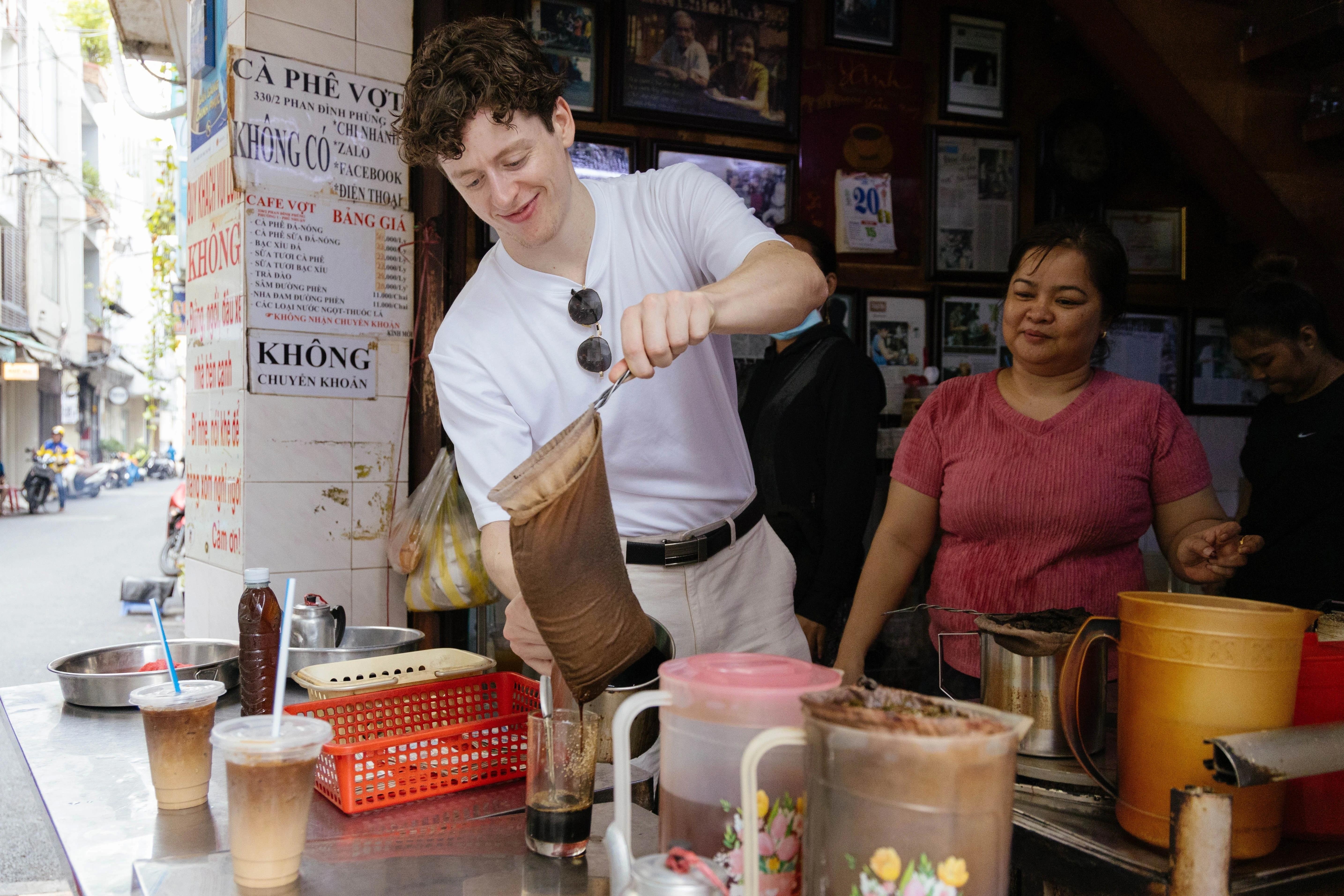 |
Stephen Turban (from the US) experiences brewing Vietnamese filter coffee in Ho Chi Minh City, 2024. Photo: Phuong Lam . |
Michelin does not guarantee business success.
From a market perspective in Vietnam, Mr. Hoang Tung, Chairman of F&B Investment, believes that the Michelin Guide remains one of the most influential rating systems in the culinary industry.
In the early days of Michelin's existence, the media effect was very strong. Many restaurants became "must-try" destinations and saw a surge in customers after being named.
After four years, the market has become more familiar with Michelin, so the effect is no longer as explosive as before.
"Nevertheless, Michelin remains an important guarantee of quality, helping restaurants enhance their brand reputation, attract customers, and create a competitive advantage in the market," he stated.
Appearing in the Michelin Guide is a recognition of culinary quality at a particular time, but it does not guarantee sustainable business success. The Michelin Vietnam 2026 list shows that 10 establishments that were honored the previous year have been removed from the system, including some restaurants that have ceased operations entirely.
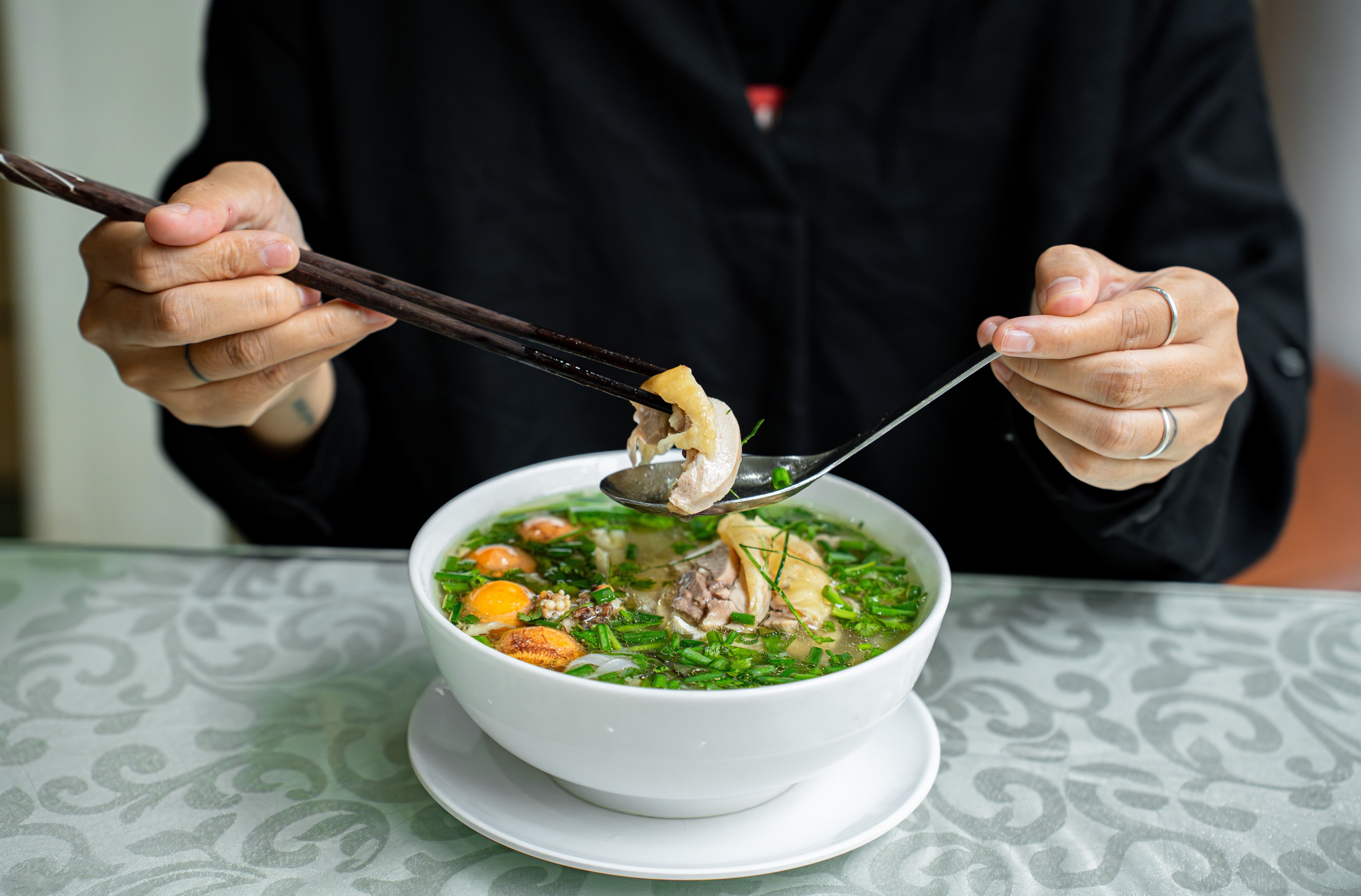 |
A special bowl of chicken pho costs 160,000 VND at Huyen Huong chicken pho restaurant (Hoan Kiem ward, Hanoi), which was recently honored with a Michelin Selected award (for excellent quality) on June 4th. Photo: Tran Hien. |
Notably, the Chi Mo pho restaurant and lounge in Ho Chi Minh City announced its closure just one day before being named in the Michelin Guide's Gourmand Bib category. These cases demonstrate that Michelin's ratings reflect the dining experience, but are not a "guarantee" of revenue, customer numbers, or the long-term viability of a business.
According to experts, Vietnamese people's restaurant selection behavior has changed significantly. While previously it was mainly based on word-of-mouth and media, today diners' decisions are more heavily influenced by social media platforms like TikTok, Facebook, Instagram, Google Maps, and food delivery apps.
Meanwhile, a segment of customers seeking unique culinary experiences or international tourists often consult reputable rankings such as TripAdvisor or the Michelin Guide.



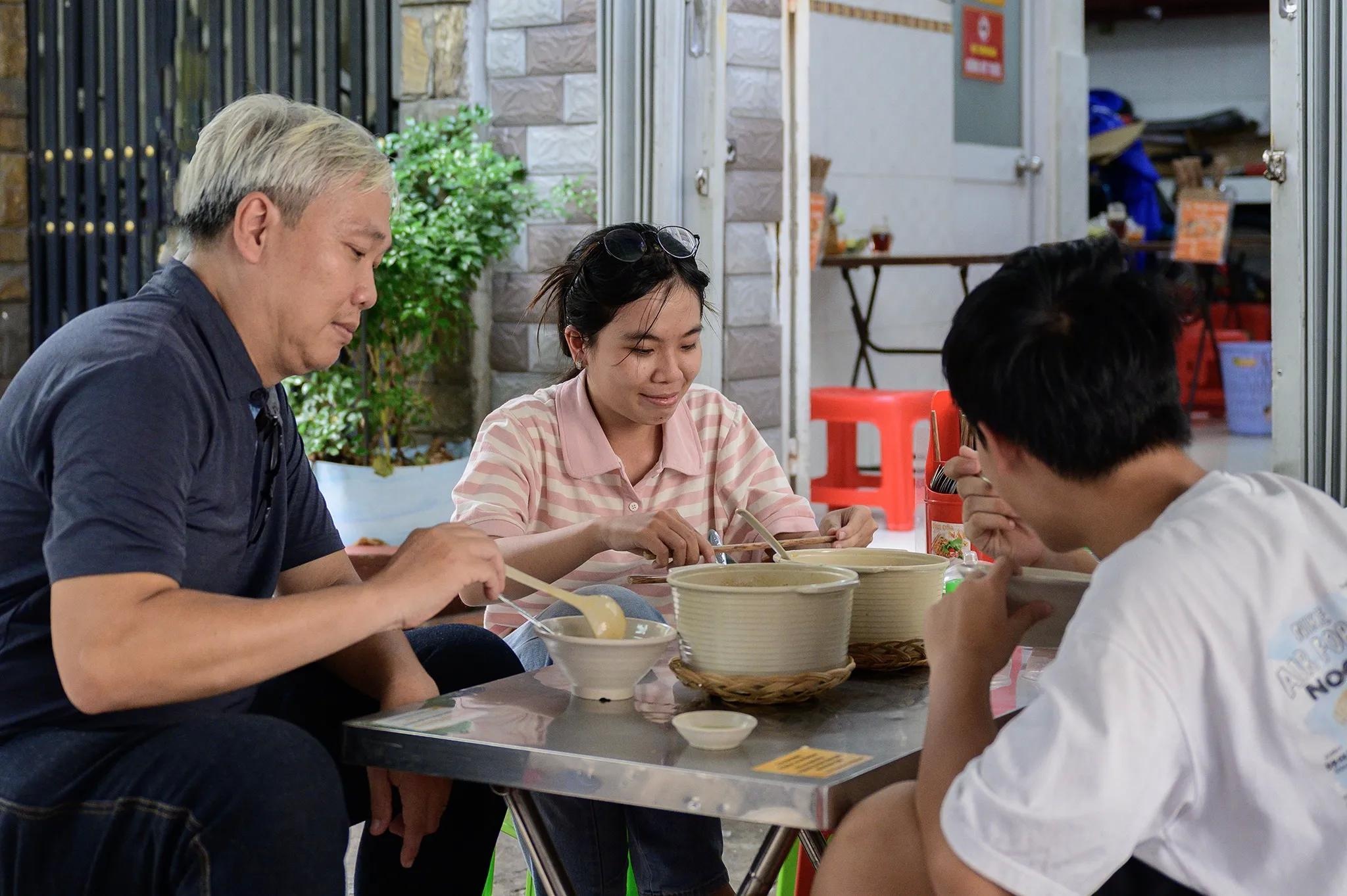 |
After the restaurant was included in the Bib Gourmand list (delicious and affordable restaurants), Bà Ba's crab noodle soup restaurant (Chợ Quán ward, Ho Chi Minh City) was packed with customers on the afternoon of June 5th. Photo: Hoài Bảo. |
However, Mr. Hoang Tung believes that the increasing number of Vietnamese restaurants being honored by Michelin still has a positive significance for Vietnamese cuisine.
According to him, Michelin not only helps promote Vietnamese cuisine but also contributes to bringing the image of Vietnam closer to international tourists. However, the important thing is not how many restaurants achieve Michelin status, but the ability to transform delicious dishes into strong brands and cultural stories that can spread globally.
"Michelin can make a restaurant more famous, but it is the customers who decide whether that brand will last. The most important star is not the Michelin star, but the star in the hearts of the customers," he said.
Source: https://znews.vn/thuc-khach-tin-michelin-den-dau-post1658182.html
![[Image] Schools organize meetings and introduce teaching models to students admitted to grade 10.](https://vphoto.vietnam.vn/thumb/1200x675/vietnam/resource/IMAGE/2026/06/25/1782368077271_ndo_br_z7970052192242-1ec8daeb77a6eed1a4e9f58c564ddd3e-jpg.webp)


![[Image] Ho Chi Minh City: Ma Lang area, Chicken-Rice Market about to change its appearance](https://vphoto.vietnam.vn/thumb/1200x675/vietnam/resource/IMAGE/2026/06/25/1782377698627_ndo_br_m1-jpg.webp)

![[Photo] General Secretary and President To Lam receives Palestinian Ambassador Saadi Salama](https://vphoto.vietnam.vn/thumb/1200x675/vietnam/resource/IMAGE/2026/06/25/1782365384740_a1-bnd-9423-8322-jpg.webp)