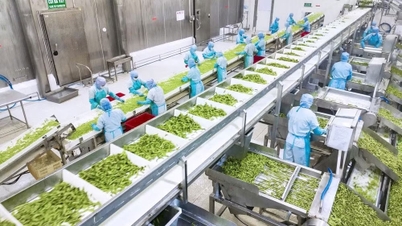
Increase the import of raw materials for production reserves.
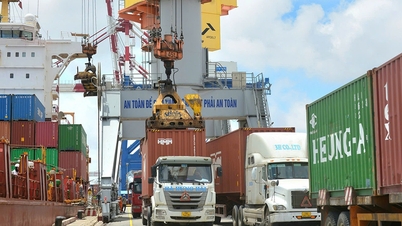
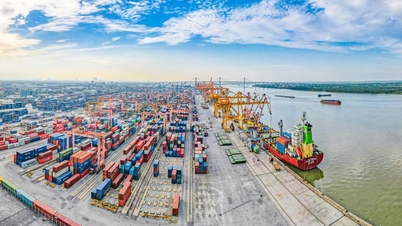
In 2025, Vietnam's total import and export turnover reached over 930 billion USD, with a trade surplus of over 20 billion USD. However, from the beginning of 2026 until now, the trade deficit has continuously increased, reaching 16.8 billion USD as of June 15th. This reversal has surprised many. However, a deeper analysis of the data reveals that the import and export picture is not overly concerning.
Firstly, the trade deficit has slowed down as imports decelerated while exports began to accelerate. Specifically, in the first 15 days of June, Vietnam's total import and export turnover reached US$51 billion. Of this, imports reached US$26.98 billion, an increase of over 1% compared to the first half of May; conversely, exports reached approximately US$24.21 billion, an increase of 15.2%. According to the Customs Department, while the trade deficit increased sharply in the early months of this year, exports have recently taken the lead. The data shows that both sides of trade are expanding, but at different rates. This is due to the volatile developments in the global market. The growth in imports not only reflects an expansion in scale but also shows that the spread of growth has improved, as the driving force is no longer concentrated on a few single product groups but has expanded to many sectors.
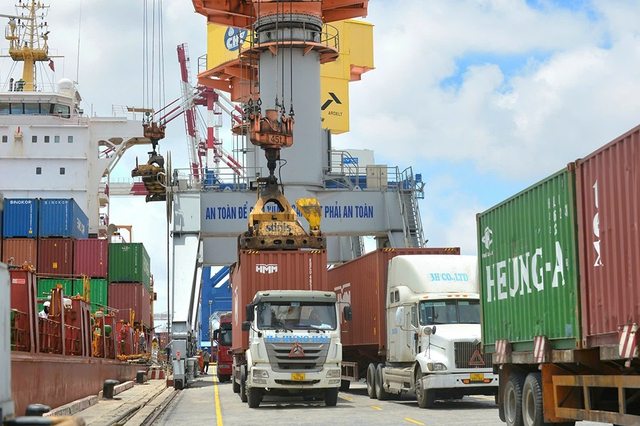
According to experts, a trade deficit of $17 billion in the past six months is not excessively large, given Vietnam's goal of achieving a total trade turnover of $1 trillion.
PHOTO: DAO NGOC THACH
Secondly, exports across many sectors rebounded strongly in the first half of June. Specifically, the computer, electronic products and components sector reached $7.3 billion, up 21%; telephones and components reached $2.6 billion, up 21%; machinery and equipment also reached nearly $2.9 billion, up 12.5%; electrical wires and cables increased by 19%; and household electrical appliances increased by nearly 20%. This shows that the production cycle is not only recovering in core industries but also spreading to supporting industries, equipment, and household goods. Notably, textile and garment exports reached approximately $1.74 billion, up 25%, and footwear reached $1.1 billion, up 5.2%. These are positive signs, reflecting a more synchronized activation of the production cycle.
Professor Vo Xuan Vinh, Director of the Institute for Business Research (University of Economics Ho Chi Minh City), commented: The figure of 17 billion USD in trade deficit in less than 6 months may sound surprising at first; but a closer look at the data reveals that it reflects the reality of the international market and the trend of preparing raw materials to accelerate exports in the remaining months of the year. Firstly, the sharp increase in the trade deficit is partly due to the escalating conflict in the Middle East, which has driven up oil prices, pushing up logistics costs and consequently driving up commodity prices. Data shows that gasoline imports have increased, as Vietnam has switched to using biofuels, leading to increased imports of ethanol and raw materials for ethanol production. Specifically, gasoline imports increased by nearly 59%, liquefied petroleum gas by nearly 89%; and ethanol imports by over 213%.


"Part of the recent trade deficit is seasonal. The sharp increase in imports is mainly due to FDI enterprises. This sector increased imports of machinery, equipment, and components for processing and export. While Vietnamese businesses saw an increase in imports, their exports also increased, maintaining a fairly good balance. This is not to mention that strong sectors like agricultural products continue to maintain a fairly good trade surplus," Professor Vo Xuan Vinh analyzed, emphasizing that, based on these factors, the figure of 17 billion USD in the past six months is not excessively large, especially in the context of Vietnam aiming for a total trade turnover of 1,000 billion USD.
Businesses are optimistic about growth and expansion.
Based on the realities of production, Mr. Pham Xuan Hong, Chairman of the Board of Directors of Saigon Garment Company No. 3, shared: "Everything is still difficult with high input costs, from raw materials to worker wages. Businesses that employ a large workforce, such as textile and garment companies, are under pressure to retain employees. However, according to Mr. Hong, fortunately, the current market outlook remains quite optimistic. In the three largest markets for Vietnamese textiles and garments – the US, EU, and Japan – demand for new clothing has rebounded in the US market after a period of consumer austerity. With the easing of military tensions in the Middle East and Russia- Ukraine , businesses are hoping that other important markets like the EU and Japan will also soon recover. Furthermore, the textile and garment industry is expanding exports to new markets."
"With the current optimistic trend, Saigon Garment 3 and other businesses in the industry have the potential to achieve a growth rate of over 10% this year. If not for the recent fluctuations, the growth rate could reach 20-30%," Mr. Pham Xuan Hong commented.
Similarly, in the wood processing industry, imports reached nearly $1.5 billion in the past five months, a 20.4% increase compared to the same period in 2025. Notably, imports from the US market saw the strongest increase, rising 2.1 times compared to the same period last year and accounting for a 22% market share. Some wood processing businesses reported that the beginning of the year is usually a low season, but in the past five months, exports reached $7.1 billion, a 4.4% increase compared to the same period in 2025. This is a positive sign for the peak six months at the end of the year. Significantly, exports are facilitated by a strong increase in raw wood imports from the US. This addresses issues related to origin of goods and helps balance trade between the two countries. Thanks to increased raw material imports from the US, orders from this market have also increased. In 2025, wood exports are expected to reach over $17 billion, a 5.7% increase compared to the same period last year. The US is the most important market, accounting for 55% of the total market share.
Professor Vo Xuan Vinh emphasized: Increasing imports of raw materials and machinery to expand production and business chains will generate revenue for businesses, improve workers' incomes, and contribute back to the economy. Another noteworthy factor is the significant increase in imports from the US market. This is a solution for businesses seeking a more sustainable future for Vietnamese goods in this important market and also demonstrates the positive and effective cooperation between the governments of the two countries.
Businesses have a positive assessment of business prospects.


According to the Customs Department, in the first half of June 2026, Vietnam's total import and export turnover reached approximately 51 billion USD, an increase of 7.27% compared to the first half of May 2026. Cumulatively, up to June 15th, total trade turnover reached 496.65 billion USD.
According to the "Business Outlook 2026" report by UOB Bank (Singapore), business sentiment in Vietnam is recovering strongly. Specifically, 85% of businesses have a positive outlook, a significant increase from 48% the previous year. This confidence is driving companies to proactively diversify their supply chains and increase investment. Accordingly, 80% of Vietnamese businesses plan to expand their operations overseas in the next two years, while also prioritizing the establishment of new production facilities domestically.
In 2025, Vietnam's import and export activities will reach a record high with a turnover exceeding 930 billion USD, an increase of 18.2% compared to 2024; placing Vietnam in the top 15 global trading powers. Notably, the trade surplus will exceed 20 billion USD.
Source: https://thanhnien.vn/nhap-sieu-17-ti-usd-tu-dau-185260624174822387.htm

![[Photo] General Secretary and President To Lam attends the Central Public Security Party Committee Conference](https://vphoto.vietnam.vn/thumb/1200x675/vietnam/resource/IMAGE/2026/06/24/1782302063612_a1-bnd-9302-9166-jpg.webp)
![[Photo] The 13th National Congress of the Youth Union conducts personnel work.](https://vphoto.vietnam.vn/thumb/1200x675/vietnam/resource/IMAGE/2026/06/24/1782299943080_ndo_br_1-6868-jpg.webp)

![[Photo] Opening Ceremony of the 13th National Congress of the Ho Chi Minh Communist Youth Union](https://vphoto.vietnam.vn/thumb/1200x675/vietnam/resource/IMAGE/2026/06/24/1782286753905_ndo_br_1-8510-jpg.webp)