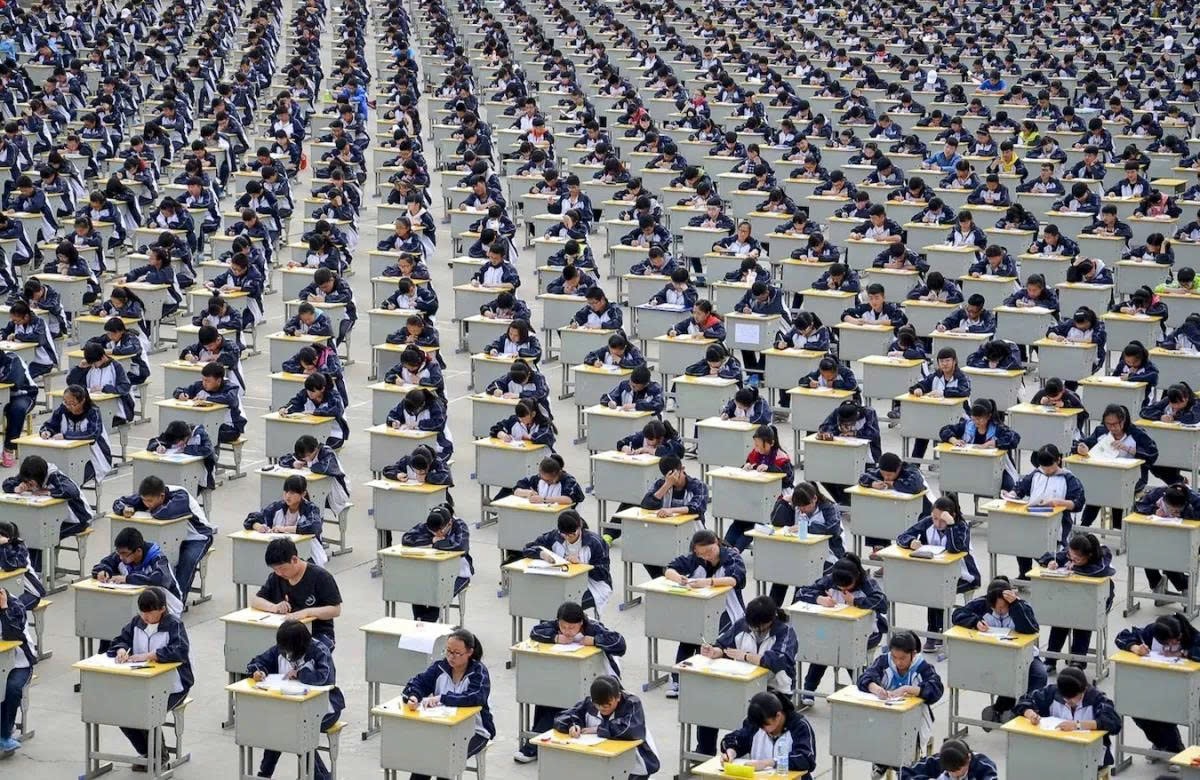
Last week, approximately 12.9 million Chinese students took the college entrance exam (gaokao), one of the most competitive exams on the planet, which is considered to determine the careers and futures of the candidates.
According to Asia Times, China is increasing investment in the exam, which is seen as a pillar of educational equity and social stability. Beijing is also linking the exam to national priorities. For example, this year's addition of new specializations in artificial intelligence (AI), advanced robotics, rare earth science, and low-level economics directs exam candidates toward strategic gaps in the workforce.
From traffic control to AI-based anti-cheating systems, China strives to ensure a fair and smooth process. The Global Times asserts that, since its restoration in 1977 after a decade, the university entrance examination is not only a selection process but also a crucial driver of national development and social mobility.
Meanwhile, analysts argue that the continuous examination provides China's higher education institutions with high-quality students, training a large number of experts to serve national strategy, economic development, and technological innovation, while fostering a social culture that values knowledge and upholds fairness.
Every November, South Korea enters one of its most stressful periods of the year, for the national college entrance exam that shapes education, employment, and even social prospects.


Last year, over 500,000 South Korean students took the national college entrance exam, also known as the Suneung exam. This exam is considered crucial in determining the outcome of 12 years of diligent study for those aspiring to attend top universities.
To ensure the exam is highly effective and to help candidates focus on the English listening comprehension section, the South Korean government suspended all aircraft takeoffs and landings nationwide throughout the exam period.
In India, nearly 20 million students enter their final year of high school each year. They all hope to score high enough on the graduation exam to secure a place at one of the country's more than 600 universities. However, the competition for admission to Indian universities is extremely fierce, with only about 20% of students who take the exam actually gaining admission.
Indian parents are also known for having high expectations of their children, believing that qualifications are like a safer "passport" to enter the labor market and secure a livelihood.
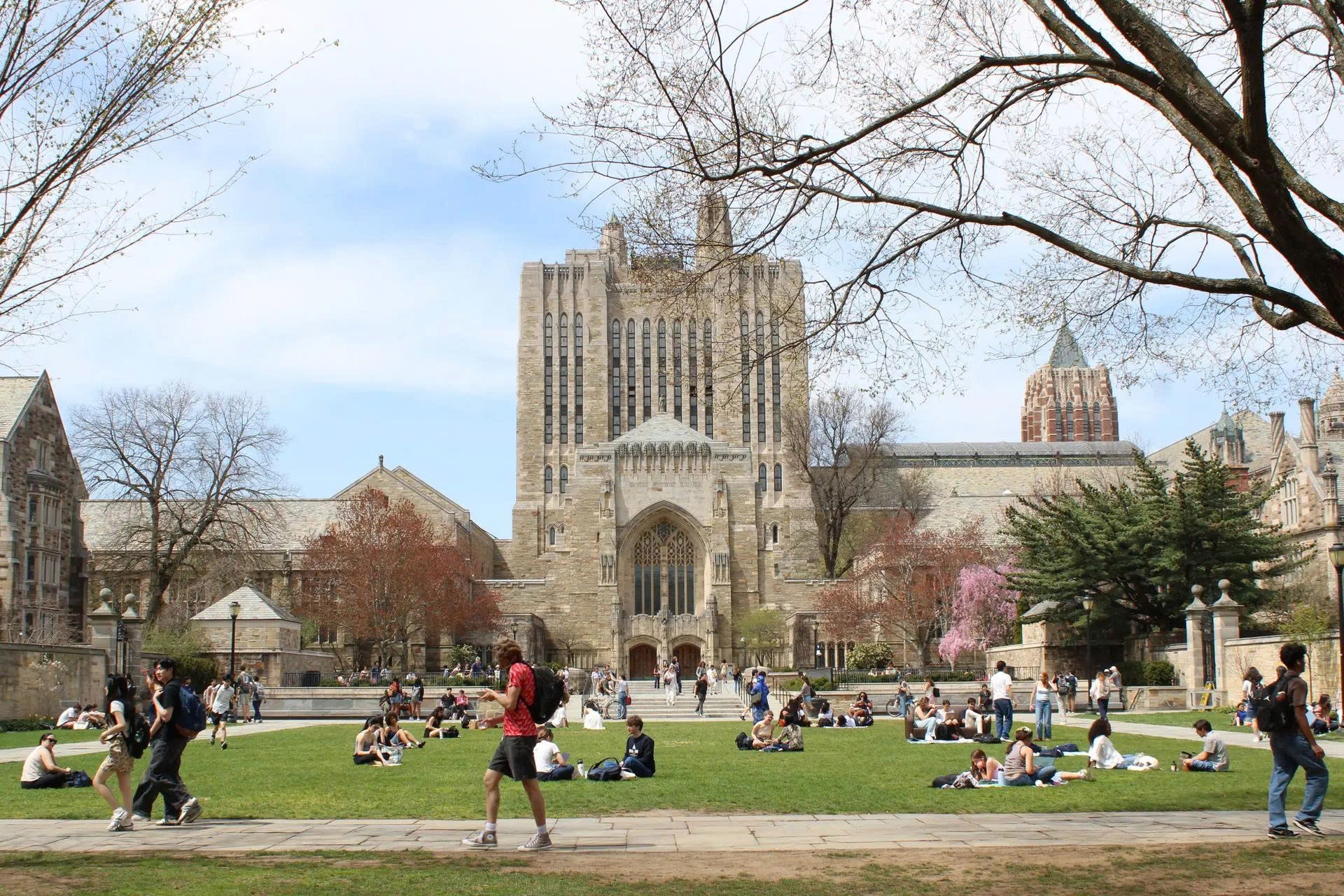
However, on the other side of the Pacific, about 90% of ranked four-year universities in the US no longer require the SAT/ACT exams. These standardized tests assess academic ability and are a mandatory or important measure in college applications in the US, widely recognized by many top universities worldwide.
However, after dropping the exam requirement during the pandemic, the system is now being reconsidered. Many prestigious universities such as Yale, Harvard, MIT, and Dartmouth have reinstated exams or returned to requiring SAT scores because they found transcripts and letters of recommendation "easily manipulated."



This spring, more than 1,000 University of California (UC) faculty members called for the system to reinstate math requirements, citing a knowledge gap so severe that faculty members are having to reteach middle school-level math.
While the essay is considered the "heart" of a US college application, Many education experts are concerned that an increasing number of applicants are using AI to brainstorm ideas, create outlines, or draft personal essays.
Source: https://baodanang.vn/thuoc-do-cong-bang-trong-cuoc-dua-tri-thuc-3340143.html
![[Photo] General Secretary and President To Lam receives Palestinian Ambassador Saadi Salama](https://vphoto.vietnam.vn/thumb/1200x675/vietnam/resource/IMAGE/2026/06/25/1782365384740_a1-bnd-9423-8322-jpg.webp)


![[Image] Ho Chi Minh City: Ma Lang area, Chicken-Rice Market about to change its appearance](https://vphoto.vietnam.vn/thumb/1200x675/vietnam/resource/IMAGE/2026/06/25/1782377698627_ndo_br_m1-jpg.webp)

![[Image] Schools organize meetings and introduce teaching models to students admitted to grade 10.](https://vphoto.vietnam.vn/thumb/1200x675/vietnam/resource/IMAGE/2026/06/25/1782368077271_ndo_br_z7970052192242-1ec8daeb77a6eed1a4e9f58c564ddd3e-jpg.webp)